Thypoch Simera 75mm f/1.4 Put to the Test on Nikon Zf and Fujifilm APS-C Bodies Through Mirrorless Adapters

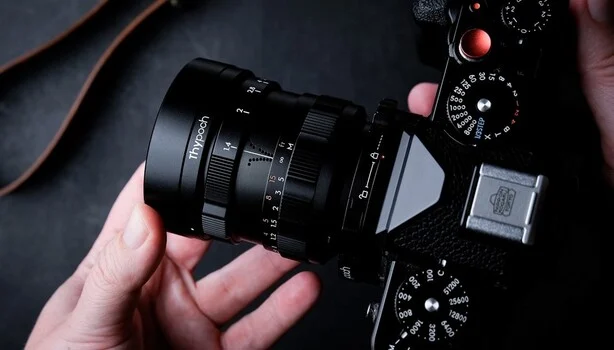
The intersection of classic rangefinder optics and modern mirrorless camera systems has birthed a thriving niche in contemporary photography. Rangefinder lenses, traditionally designed for the ultra-slim Leica M mount, possess a distinct mechanical charm and unique optical signatures that many digital photographers seek to replicate. Among the manufacturers bridging this gap is Thypoch, a relatively young optics brand that has steadily built a reputation for crafting vintage-inspired, all-metal manual-focus glass. Its latest entry, the Thypoch Simera 75mm f/1.4, offers a compelling focal length that isolates subjects effectively without requiring the photographer to back across an entire room.
Designed natively for the Leica M mount, the lens features an all-metal construction encompassing the barrel, mount, focus ring, and aperture ring. However, because it is a manual-focus lens equipped with a mechanical rangefinder coupling mechanism, a significant portion of its target audience will inevitably use it via adapters on mirrorless bodies from brands like Nikon and Fujifilm. This cross-system deployment raises critical questions regarding optical performance, mechanical compatibility, and how well the lens preserves its native characteristics when subjected to non-native sensor stacks.
To evaluate these performance metrics, reviewer Andrei Dima mounted the Thypoch Simera 75mm f/1.4 on a full-frame Nikon Zf and various Fujifilm X-series APS-C bodies. His rigorous field test sheds light on the practical implications of adapting vintage-styled glass to modern digital bodies, detailing where the optical formula excels and where it encounters physical or digital limitations.
Mechanical Build Quality and Handling in the Field
The construction of the Thypoch Simera 75mm f/1.4 immediately evokes classic mid-century optics, relying heavily on a robust, all-metal exterior. Both the focus and aperture rings offer tactile resistance that appeals to traditionalists. The focus ring turns with notable smoothness and possesses a generous rotational throw, a critical design choice that allows photographers to nail precise focus at an ultra-fast aperture of f/1.4 without excessive micro-adjustments.
The aperture ring operates with distinct, satisfying clicks by default, providing clear physical feedback when changing exposure values. However, Thypoch has engineered a mechanical de-clicking switch onto the lens body, allowing videographers to achieve smooth, silent exposure transitions while filming—a thoughtful inclusion for hybrid shooters.
Despite its premium tactile qualities, the lens exhibits certain mechanical omissions that require careful handling in adverse weather environments. The Simera 75mm f/1.4 lacks comprehensive weather sealing and does not feature a protective rubber gasket at the lens mount interface. Furthermore, inspection of the barrel reveals small microscopic tolerances and openings near the focus scale where moisture and dust could potentially infiltrate the internal elements. Consequently, deploying this lens in heavy rain or dusty environments demands heightened vigilance from the photographer.
Video shooters will also need to account for optical physics when using the lens for moving images. The Simera 75mm f/1.4 exhibits noticeable focus breathing, a phenomenon where the framing changes slightly as the focus distance is adjusted. While this does not detract from the rich, cinematic rendering style suited for video production, it makes complex focus pulls visually distracting unless carefully managed in post-production or accommodated by deliberate framing choices.
Optical Performance on Full-Frame: The Nikon Zf Evaluation
Mounting the Thypoch Simera 75mm f/1.4 to the full-frame Nikon Zf via a simple mechanical adapter reveals impressive capabilities, particularly given its challenging f/1.4 maximum aperture. On the Zf’s 24-megapixel sensor, the center of the image displays exceptional sharpness right out of the box at f/1.4, accompanied by robust detail reproduction and strong micro-contrast.
This performance challenges the common industry trend where ultra-fast manual lenses suffer from pronounced softness and glowing aberrations at their widest apertures. Dima identifies the Simera 75mm f/1.4 as the strongest wide-open performer among the Simera lineup he has tested.
Corner performance, however, tells a different story initially. At f/1.4, the extreme edges and corners of the frame lag noticeably behind the stellar central sharpness. While optical design limitations at such a wide aperture play a role, Dima notes that manufacturing tolerances or alignment variations in third-party mount adapters may also contribute to uneven edge performance. As the lens is stopped down, sharpness spreads rapidly across the frame, achieving near-perfect corner-to-corner crispness by f/4.
The lens’s color rendering represents one of its most striking attributes. Images captured on the Nikon Zf exhibit a distinctly vintage aesthetic characterized by rich contrast and warm color transitions, which complements the retro-inspired physical design of the camera body itself. Unsurprisingly, optical aberrations are present when shooting wide open. Both lateral chromatic aberration and mechanical vignetting make appearances at f/1.4, though testing demonstrates that both optical flaws recede rapidly as the aperture is closed down by a stop or two.
The Engineering Reality of Adapting Leica M Lenses to Mirrorless Systems
To understand why adapted rangefinder lenses behave differently across various camera bodies, it is essential to examine the underlying optical engineering and flange focal distances. The Leica M mount possesses an exceptionally short flange focal distance of 27.8 millimeters. In contrast, the Nikon Z mount sits at just 16 millimeters, while the Fujifilm X mount resides at 17.7 millimeters.
Because the Leica M distance is significantly longer than modern mirrorless mounts, an M-to-Z or M-to-FX adapter is essentially a precision-engineered hollow metal tube with zero optical elements inside. This simplicity is precisely why M-mount glass has surged in popularity among mirrorless shooters seeking mechanical purity. Manufacturers such as Thypoch, TTArtisan, 7Artisans, and Light Lens Lab have increasingly tailored their optical formulas not exclusively for traditional Leica rangefinder bodies, but with the thriving adapted mirrorless market firmly in mind.
However, a fundamental technical hurdle exists beneath the surface: sensor stack architecture. Leica digital camera sensors are engineered with exceptionally thin cover glass specifically calibrated to handle the steep light angles characteristic of rangefinder lenses. Conversely, mainstream mirrorless camera sensors—including those from Nikon and Fujifilm—typically feature thicker sensor cover glass.
When light rays strike the edges and corners of a thick sensor stack at an oblique angle, the glass refracts the light, often leading to corner smearing, loss of resolution, and color shifting. This phenomenon impacts wide-angle rangefinder lenses far more severely than short telephotos, because ultra-wide focal lengths project light toward the corners at much sharper angles. Nevertheless, short telephotos like a 75mm can still experience minor edge degradation due to this optical mismatch.
Fortunately, modern mirrorless bodies offer built-in software features that significantly mitigate the friction of using manual glass. On the Nikon Zf, photographers can input the specific focal length into the non-CPU lens data menu. This ensures that the camera’s In-Body Image Stabilization (IBIS) system functions accurately for a 75mm focal length. Furthermore, combining modern electronic aids such as focus peaking and high-magnification electronic viewfinder views makes achieving critical focus at f/1.4 vastly more reliable than relying solely on the physical distance markings on the lens barrel.
Performance on APS-C Sensors: The Fujifilm Experience
Transitioning the Thypoch Simera 75mm f/1.4 to an APS-C sensor body, such as a Fujifilm X-series camera, alters the operational parameters of the lens. Due to the 1.5x crop factor inherent to APS-C sensors, the 75mm focal length yields an effective full-frame field of view of approximately 112 millimeters. This transforms the optic from a standard short telephoto into a tight portraiture and detail-isolation tool.
Performance metrics shift accordingly when evaluated on the smaller sensor format. When shot wide open at f/1.4, images maintain acceptable levels of detail and contrast, but exhibit a softer rendering compared to full-frame results. To match the wide-open sharpness delivered by the Nikon Zf, photographers using APS-C bodies will generally need to stop the lens down to f/2. Beyond this aperture threshold, optical performance between the full-frame and crop-sensor systems equalizes considerably.
Chromatic aberration, however, becomes more pronounced on the smaller APS-C format. High-contrast edges and backlit subjects readily trigger purple fringing and color artifacts, requiring proactive planning from photographers working in challenging lighting conditions.
Beyond basic sharpness and aberration control, Dima’s evaluation encompasses several specialized optical traits. The lens incorporates a sophisticated 16-blade aperture diaphragm, designed specifically to render smooth, circular sunstars when pointed at intense light sources at narrow apertures. The bokeh transition—the aesthetic quality of the blur as focus falls off from the subject—displays a smooth, gradual roll-off characteristic of high-end portrait optics. Flare behavior is also manageable when shooting wide open, adding a controlled, atmospheric vintage haze rather than destroying image contrast entirely.
Finally, the lens offers a minimum focus distance of 60 centimeters (approximately 2 feet). For a 75mm manual-focus rangefinder lens, this represents an impressively close focusing capability, as traditional Leica rangefinder mechanisms are mechanically limited to roughly 70 or 80 centimeters due to the constraints of the rangefinder cam patch. This closer working distance expands the creative potential of the lens, allowing for tight macro-style detail shots that would otherwise require dedicated macro extension tubes.
Broader Industry Implications and Market Impact
The enthusiastic adoption of manual-focus rangefinder lenses on modern mirrorless cameras highlights a broader psychological and creative shift within the contemporary photography market. As autofocus algorithms driven by artificial intelligence become increasingly ubiquitous and infallible, a distinct counter-culture of photographers is deliberately seeking out gear that slows down the creative process.
Lenses like the Thypoch Simera 75mm f/1.4 cater directly to this desire for tactile engagement. By forcing the operator to manually estimate or visually confirm focus, select physical aperture stops, and embrace minor optical imperfections like vintage contrast curves and gentle wide-open aberrations, these products reintroduce a deliberate, contemplative pace to digital image-making.
Furthermore, the willingness of independent optical manufacturers to design lenses optimized for cross-platform adaptation democratizes high-end optical aesthetics. Photographers invested in Nikon Z, Fujifilm X, Sony E, or Canon RF ecosystems no longer need to purchase an expensive Leica rangefinder body to experience the distinct mechanical and visual rewards of fast M-mount glass.
As review data from field tests like Dima’s demonstrates, while technical compromises such as edge softening, focus breathing, and sensor stack refraction must be navigated, the overall optical and artistic rewards often outweigh the hurdles. The Thypoch Simera 75mm f/1.4 stands as a testament to this philosophy, proving that classic optical charm can successfully cross the digital divide when paired with the right tools, techniques, and modern mirrorless camera bodies.