Unearthing Wisconsin’s Glacial Past: Backpacker Magazine Takes on a 25-Mile Stretch of the Iconic Ice Age Trail

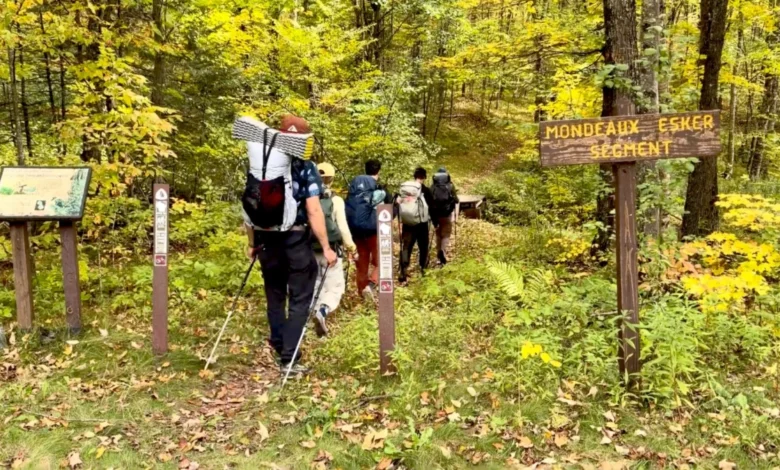
Wisconsin possesses a unique geographical identity that sets it apart within the American Midwest. Home to more than 15,000 lakes and upwards of 460,000 acres of dedicated state parks and natural areas, the state serves as a living museum of Pleistocene history. Glaciologists widely regard Wisconsin as the global textbook example of the last major glacial period, featuring striking landforms carved by the retreating Laurentide Ice Sheet thousands of years ago. To experience this natural heritage firsthand, editors from Backpacker magazine traveled to the Badger State in September to traverse a prominent segment of the Ice Age Trail, the state’s premier long-distance hiking route.
The expedition, which spanned approximately 25 miles from Jerry Lake to Mondeaux Flowage, offered the editorial team a comprehensive look at the diverse ecosystems, geological marvels, and logistical nuances of the trail. While seasoned thru-hikers often look to high-alpine routes in the Rocky Mountains or the Pacific Crest Trail for rugged terrain, the Backpacker team’s journey underscored the distinct value of mid-altitude, culturally rich trails that highlight America’s lesser-sung wilderness areas.
Main Facts of the Expedition and Route Characteristics
The Ice Age Trail is a thousand-mile-long footpath entirely within Wisconsin that traces the edge of the continental glacier as it existed roughly 15,000 years ago. Designated as one of only eleven National Scenic Trails in the United States, the route connects terminal moraines, eskers, kettles, and glacial lakes, offering a continuous ribbon of protected land for outdoor recreation.
During their September excursion, the Backpacker crew focused on a heavily wooded, water-rich section in the state’s heartland. Associate Editor Will Brendza, speaking on behalf of the team during the trek, highlighted the trail’s dual appeal for both novice and advanced backpackers. According to field observations, the terrain is characterized by relatively gentle elevation profiles. Rather than punishing climbs and high-altitude passes, hikers encounter manageable rolling hills, extensive networks of wooden boardwalks, and flat segments that allow for sustained pacing.
However, a lack of steep elevation does not equate to a passive hiking experience. The trail surface demands constant attention from participants due to a dense matrix of exposed roots, glacial erratics, and rocky soil. This combination keeps hikers mentally engaged while allowing them to slip easily into a meditative rhythm, or "flow state," surrounded by dense canopies of birch, oak, and mixed northern hardwoods.
Chronology of the September Trek
Planning and preparation for the late-summer expedition began months in advance, aligning with the peak of the Midwest’s autumn transition.
Early September: The Backpacker editorial team arrived in Wisconsin to assess regional trail conditions, meet with local land stewards, and establish base camps near the Chequamegon-Nicolet National Forest region.
Mid-September: The team commenced their 25-mile trek from Jerry Lake. Day one involved navigating long, narrow eskers—winding ridges of sediment deposited by glacial meltwater streams—which provided elevated pathways high above adjacent wetlands.
Mid-September (Days Two and Three): The team skirted numerous glacial lakes, utilizing intermittent boardwalks to traverse low-lying peat bogs and waterlogged forest floors. Wildlife encounters during this phase included white-tailed deer, red foxes, various snake species, and migratory bird populations preparing for autumn southerly flights.
Late September: The expedition concluded at Mondeaux Flowage. The timing coincided with the onset of early fall foliage, where the upper canopy transformed into vibrant hues of orange, red, and gold, showcasing the quintessential aesthetics of a Northwoods autumn.
Supporting Data and Environmental Context
The Ice Age Trail is managed through a collaborative public-private partnership involving the National Park Service, the Wisconsin Department of Natural Resources (DNR), the Ice Age Trail Alliance (IATA), and countless private landowners who grant easements across their properties. This complex administrative framework is necessary because the trail is not contained within a single federal jurisdiction; rather, it weaves through municipal parks, county forests, state lands, and private agricultural plots.
Geologically, the landscape traversed by the Backpacker team represents a masterclass in geomorphology:
Eskers: Long, serpentine ridges of sand and gravel formed by meltwater tunnels beneath stagnant glacial ice.
Kettles: Depressions left behind when blocks of buried glacial ice melted, many of which now form pristine, landlocked kettle lakes.
Moraines: Accumulations of unsorted glacial debris that mark the furthest advance or stationary pauses of the ice sheet.
Water management remains a key operational factor for backpackers on this section of the trail. While the route frequently brings hikers into close proximity with scenic lakes, natural flowing creeks and rivers are sparsely distributed along certain stretches. Consequently, hikers must strategically plan their hydration stops, leveraging filtration systems at designated lake access points or boardwalk crossings, particularly during drier summer and early autumn months. Furthermore, because portions of the Ice Age Trail utilize connector paths on local asphalt and gravel roads, travelers must alternate between deep wilderness immersion and brief stretches of rural roadside walking.
Official Responses and Stakeholder Perspectives
Representatives from conservation organizations and outdoor recreation advocacy groups have long championed the Ice Age Trail as an accessible gateway to environmental education.
"The Ice Age Trail is unique because it meets people where they are," noted a regional trails coordinator familiar with the route. "You don’t need mountaineering experience or specialized alpine gear to experience a profound wilderness connection here. At the same time, because it touches so many different communities and ecosystems, it requires a high level of community stewardship and inter-agency cooperation to maintain."
Local tourism boards in Wisconsin have similarly emphasized the economic and recreational benefits of long-distance hiking routes. Small towns situated along or near the trail corridor frequently report steady seasonal patronage from through-hikers and section-hikers who rely on local outfitters, grocery stores, and lodging facilities during resupply stops.
Broader Impact and Implications for the Outdoor Industry
The Backpacker magazine feature highlights a broader shift in the outdoor recreation industry toward regional and historical trails. As iconic western national parks face rising visitor congestion, permit bottlenecks, and the impacts of climate-driven phenomena like seasonal wildfires, outdoor enthusiasts and media outlets are increasingly spotlighting the ecological and recreational merits of mid-tier and eastern trails.
The Ice Age Trail offers several distinct advantages in the current outdoor tourism landscape:
Accessibility: Its proximity to major Midwestern population centers makes it logistically feasible for weekend warriors and families, reducing carbon footprints associated with long-distance travel to remote mountain ranges.
Educational Value: By translating complex glacial geology into an interactive, on-the-ground experience, the trail serves as an outdoor classroom for earth sciences.
Inclusivity: The moderate physical demands of flatland hiking lower the barrier to entry for beginners, fostering a broader demographic of participants in backpacking and long-distance trekking.
As the Ice Age Trail continues to progress toward eventual completion—with dedicated volunteers closing remaining gaps between discontinuous segments year after year—national media coverage from publications like Backpacker ensures that Wisconsin’s glacial masterpiece receives recognition on a national scale. The expedition from Jerry Lake to Mondeaux Flowage ultimately proved that grand wilderness adventures do not require towering mountain peaks; sometimes, they are found in the quiet, tree-lined folds of an ancient, ice-sculpted earth.