The Architectural Legacy and Cultural Significance of the Hassan II Mosque in Casablanca

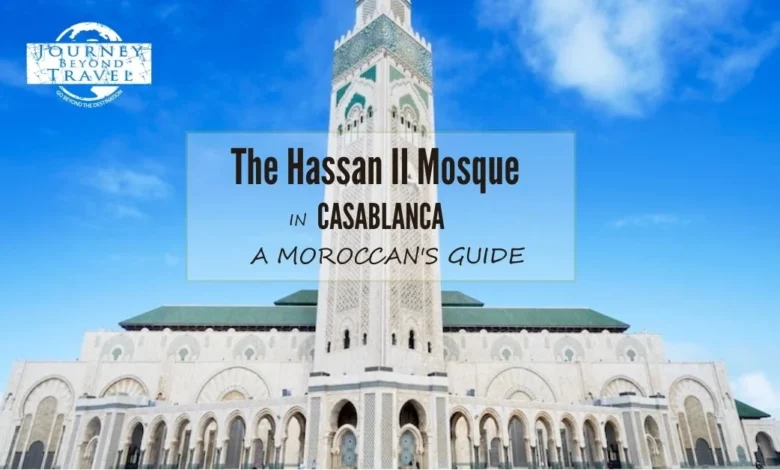
Casablanca, a city often mythologized by mid-century cinema, serves as the economic and industrial engine of Morocco. While international audiences may fixate on the nostalgic, monochrome imagery of Hollywood, the city’s contemporary identity is anchored by a structure that rises above the Atlantic coastline: the Hassan II Mosque. As a profound symbol of Moroccan national identity and a rare point of intersection between Islamic heritage and international tourism, the mosque represents a monumental achievement in modern architecture and collective civic effort.
Chronology and Construction: A National Endeavor
The conception of the Hassan II Mosque was a direct response to the desire of the late King Hassan II to provide Casablanca with a religious landmark of global stature. The project was not merely a state-sponsored commission but a national undertaking that relied heavily on public participation.
Construction began in 1986, with the official inauguration occurring on August 30, 1993, to commemorate the Prophet Muhammad’s birthday. The project was designed by the French architect Michel Pinseau and executed by the massive Moroccan conglomerate Bouygues. The mobilization of labor was extensive, involving over 6,000 master craftsmen—or maalems—who dedicated years to the intricate tilework, wood carving, and plastering that define the mosque’s interior.

The funding structure was notable for its reliance on a nationwide subscription campaign. Recognizing that the cost of such an endeavor—estimated at the time to be approximately $585 million—required broad support, the government organized a public appeal. Millions of Moroccans, from affluent urbanites to rural farmers, contributed funds. This grassroots investment cemented the mosque as a "people’s project," transforming it from a royal vision into a tangible representation of Moroccan collective identity.
Architectural Specifications and Engineering Feats
The Hassan II Mosque is one of the largest religious structures in the world. It occupies a total area of nine hectares, with the prayer hall alone spanning 20,000 square meters. Its most defining feature, however, is its location. Perched on a promontory over the Atlantic Ocean, the mosque fulfills the Quranic verse: "His throne was upon the water."
The engineering behind the structure is a fusion of traditional Moroccan motifs and modern technology. The minaret stands at 210 meters (689 feet), making it the second-tallest minaret in the world. At the top of this tower, a laser light points toward Mecca, providing a modern technological orientation for the faithful.
Inside, the structure demonstrates a mastery of natural material integration:

- Cedarwood: Sourced from the Middle Atlas Mountains, the intricate ceiling carvings required thousands of hours of manual labor.
- Marble: Primarily extracted from Agadir, the marble provides a cooling, resilient flooring that remains temperate even in the heat of the Moroccan summer.
- Granite: Used for structural support, the granite was sourced from the region of Tafraoute.
- Zellij: The geometric mosaic patterns are composed of thousands of hand-cut tiles, showcasing the traditional palette of Fez and Marrakech.
A particularly innovative feature is the retractable roof, which can be opened to provide natural ventilation. Additionally, the prayer hall is equipped with underfloor heating, a necessity for the damp, cool mornings characteristic of the Casablanca coastline.
A Rare Gateway for Non-Muslim Visitors
In Morocco, the vast majority of mosques remain closed to non-Muslims. The Hassan II Mosque is a notable exception to this national custom, serving as a cultural bridge for international visitors. This accessibility policy is managed through highly structured, guided tours that prioritize the site’s status as an active place of worship.
Visitors are required to adhere to strict guidelines to maintain the sanctity of the space. This includes the removal of footwear, which is stored in provided plastic bags, and a dress code requiring modest attire—shoulders, chests, and knees must be covered. For women, head coverings are typically provided if not already worn. These protocols are not merely decorative but serve as a practical orientation to Islamic etiquette and respect for the congregants.
The Academy of Traditional Arts: Safeguarding Heritage
The impact of the Hassan II Mosque extends beyond its physical walls. To ensure the preservation of the traditional crafts used in the mosque’s construction, the Academy of Traditional Arts (Académie des Arts Traditionnels) was established adjacent to the site in 2012.

The Academy serves as an educational hub, offering specialized training in ten disciplines, including ironwork, leatherwork, jewelry, and calligraphy. By bridging the gap between historical techniques and modern vocational training, the Academy ensures that the maalems who built the mosque leave behind a successor generation. This institutional commitment acts as a safeguard against the erosion of traditional Moroccan artistry in an increasingly digitized world.
Economic and Societal Implications
The presence of the mosque has significantly altered the tourist landscape of Casablanca. Before its construction, Casablanca was often treated by travelers as a transit hub rather than a destination. Today, the mosque is the city’s primary cultural anchor, drawing hundreds of thousands of visitors annually.
From an urban planning perspective, the area surrounding the mosque, known as the Corniche, has seen revitalized development. The increased foot traffic has stimulated the local economy, supporting a range of services from transport—specifically the petit taxi network—to hospitality and dining establishments like the historic La Sqala.
However, the mosque’s primary function remains religious. The complex can accommodate 25,000 worshippers inside and another 80,000 on the exterior plaza. The sheer scale of these gatherings, particularly during the holy month of Ramadan, serves as a testament to the mosque’s role as the "beating heart" of the city.

Strategic Recommendations for Future Visitors
For those planning a visit, logistics require careful consideration. Due to the high volume of interest, tours are strictly scheduled, generally beginning at 9:00 AM. It is advisable to consult the official website of the Hassan II Mosque Foundation or authorized tour operators to confirm specific departure times, as these may shift based on religious observances or official state events.
Travelers are encouraged to visit during the early morning hours. This timing provides two advantages: the light, which interacts with the marble and zellij work to create a distinct visual depth, and a reduction in the density of crowds. Visitors should be mindful that on Fridays, the mosque’s accessibility is limited to accommodate congregational prayers.
Conclusion: A Monument to the Future
The Hassan II Mosque stands as a synthesis of Morocco’s past and its aspirations for the future. It is a structure that demands respect—not only for its aesthetic grandeur but for the collective will that brought it into existence. By maintaining the Academy of Traditional Arts and continuing to welcome a diverse array of international visitors, the mosque functions as a living document of Moroccan culture. It does not merely look back at a bygone era; it serves as a functional, evolving center that continues to define the skyline and the spirit of Casablanca.