The tragic avalanche that struck the base camp of Himlung Himal last Sunday has proven to be a complex and harrowing ordeal, shifting from a narrative of total loss to one of narrow survival and grueling recovery. While initial reports—driven by the overwhelming scale of the destruction—suggested that no one had escaped the slide, subsequent investigations have confirmed that 11 individuals survived the disaster. These survivors were located in tents pitched just outside the direct path of the avalanche, sparing them from the lethal impact that claimed the lives of 16 others.
The incident has sent shockwaves through Nepal’s mountaineering community, raising critical questions about safety protocols, base camp placement, and the inherent risks of climbing during the post-monsoon season. As recovery operations continue in the shadow of the 7,126-meter peak, the details of the event provide a sobering look at the fragility of human presence in high-altitude environments.
A Chronology of the Disaster
The avalanche occurred on a quiet Sunday, catching the base camp staff entirely off guard. Witnesses later described the event not as a sweeping force that carried away the camp, but as a massive, silent accumulation of snow that buried the structures under four meters of dense, solidified debris. Because the camp was blanketed rather than swept, the victims were trapped instantly in their tents.
The gravity of the situation was realized almost immediately by those who survived. As the survivors emerged from their own tents, they were faced with a landscape that had been transformed into a featureless white expanse. The 11 survivors, having been positioned on the periphery of the avalanche’s trajectory, were physically unharmed but left to witness the aftermath of the catastrophe.
Following the event, the Nepal National Mountain Guides Association (NNMGA) spearheaded the initial search efforts. A team led by the renowned climber Mingma G arrived on-site to assess the viability of a rescue operation. After locating four bodies, the initial search was suspended. Mingma G concluded that the snowpack was too deep and unstable to allow for manual excavation with the resources available, determining that the remaining victims were inaccessible until the natural melting process could assist in their recovery.
The Shift in Recovery Strategy
The decision to pause the search was met with significant distress by the families of the victims and the trekking agency managing the expedition, Himalayan Holidays Trek & Expeditions. The collective pressure from these stakeholders prompted a reassessment of the recovery strategy.
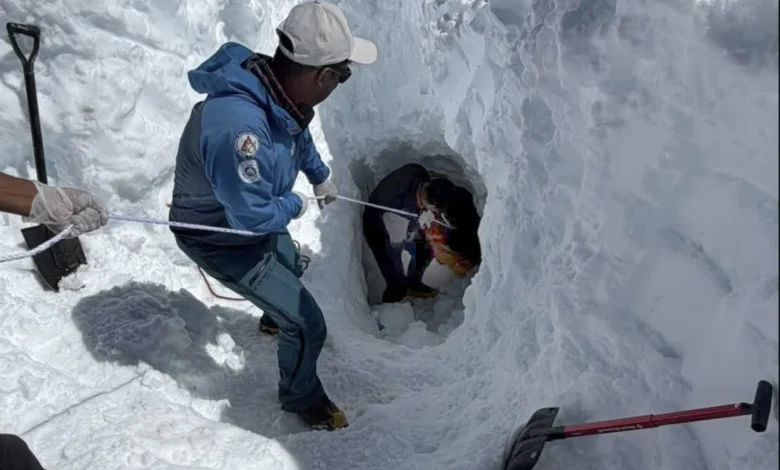
A renewed effort was launched, characterized by a more intensive approach to excavation. This time, the team was led by experienced rescuers Pasang Kaji Sherpa and Bikram Karki, who were supported by a larger contingent of 10 additional personnel. Recognizing that traditional shoveling would be insufficient, the team employed a tunneling strategy. By cutting deep, reinforced galleries into the snow, the rescuers were able to systematically probe the buried camp.
The efficacy of this approach was quickly demonstrated. Yesterday, the team successfully recovered three bodies, followed by an additional eight earlier today. Including the four bodies located during the initial search, the total number of recovered victims stands at 15. As of the latest reports, one individual remains missing, with search operations continuing despite the difficult conditions and the fading light as evening descends over the Himalayas.
The Anatomy of a High-Altitude Tragedy
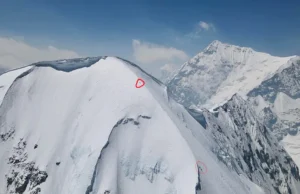
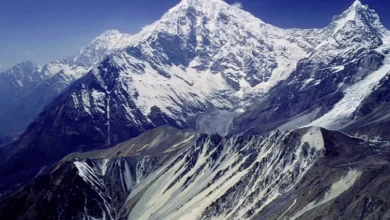
Himlung Himal, located in the Manaslu region of Nepal, is a popular objective for mountaineers due to its accessibility and the technical challenge it offers. However, the mountain is notorious for its volatile snow conditions, particularly during the transition from the monsoon season to winter.
Data from the Nepal Department of Tourism indicates that Himlung serves as a critical training ground for climbers preparing for 8,000-meter peaks. The base camp is traditionally established in a location considered safe from known avalanche paths. However, climate shifts and unseasonal weather patterns have rendered historical safety data increasingly unreliable. The fact that the camp was buried under four meters of snow suggests an event of significant magnitude, likely triggered by a cornice collapse or an icefall higher up on the mountain’s slopes.
The survival of the 11 individuals is attributed entirely to their positioning. Mountaineering base camps are often decentralized, with tents spread out to provide space and reduce the impact of noise. In this instance, that lack of density proved to be the difference between life and death. While the central hub of the camp was obliterated, the peripheral tents remained structurally intact, though they were partially obscured by the fringe of the avalanche debris.
Official Responses and Industry Impact
The Nepal National Mountain Guides Association has been at the forefront of the recovery, providing the technical expertise required to operate in such high-risk environments. Their involvement underscores the professionalization of the rescue sector in Nepal, which has evolved rapidly in the last decade.
Himalayan Holidays Trek & Expeditions, the outfitter overseeing the camp, has faced the difficult task of communicating with families while managing the logistics of the recovery. The firm has committed to supporting the families of the kitchen staff and the guides who perished, highlighting the risks faced by the support staff who often spend more time in high-altitude base camps than the climbers themselves.
From a regulatory standpoint, the tragedy has renewed the conversation regarding the oversight of base camps. The Department of Tourism, which issues permits for expeditions, is expected to face pressure to re-evaluate site selection criteria for future seasons. Currently, the department’s list of permits shows that at least one more expedition, consisting of six foreign members, remains scheduled to visit Himlung. This ongoing activity highlights the tension between the commercial interests of the mountaineering industry and the necessity of ensuring safety in increasingly unpredictable alpine conditions.
Analytical Implications for Future Expeditions
The Himlung disaster serves as a stark reminder of the limitations of mountain forecasting. While meteorologists can predict snowfall, the micro-climates of individual mountains—and the specific dynamics of snow accumulation in hidden gullies—remain difficult to model with high precision.
Industry analysts suggest that the "tunneling" recovery method, while effective in this case, highlights the desperate need for better specialized rescue equipment at base camps. Many expeditions arrive with minimal equipment for large-scale disaster response, focusing primarily on climbing gear. This incident may prompt a shift toward mandatory safety caches and more rigorous training for support staff in avalanche rescue techniques.
Furthermore, the survival of the 11 individuals provides a valuable case study for base camp layout. If such events are becoming more frequent, future expeditions may be required to utilize remote sensing technology to analyze slope stability before pitching tents, or to adopt a more dispersed layout to minimize the impact of a single avalanche path.
Conclusion
As the sun sets on Himlung Himal, the recovery team continues its work, focused on locating the final missing individual. The transition from a presumed mass casualty event to a rescue operation has been a testament to the perseverance of the Nepali guides and the support staff on the ground.
The legacy of this event will likely be felt in the coming months as the government reviews the safety guidelines for Himalayan expeditions. For the families, the focus remains on the closure provided by the recovery of their loved ones. For the broader mountaineering community, the event serves as a somber reflection on the dangers inherent in the pursuit of high-altitude objectives and the ever-present, unforgiving nature of the mountains. As the search for the final victim concludes, the industry must grapple with the reality that even in the most well-planned expeditions, the mountain dictates the terms of engagement.