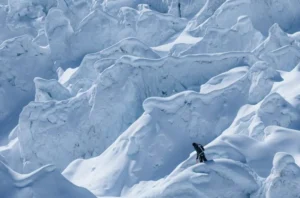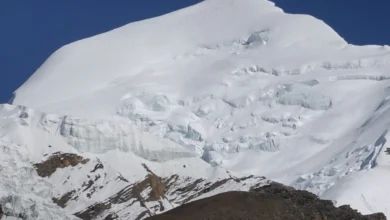
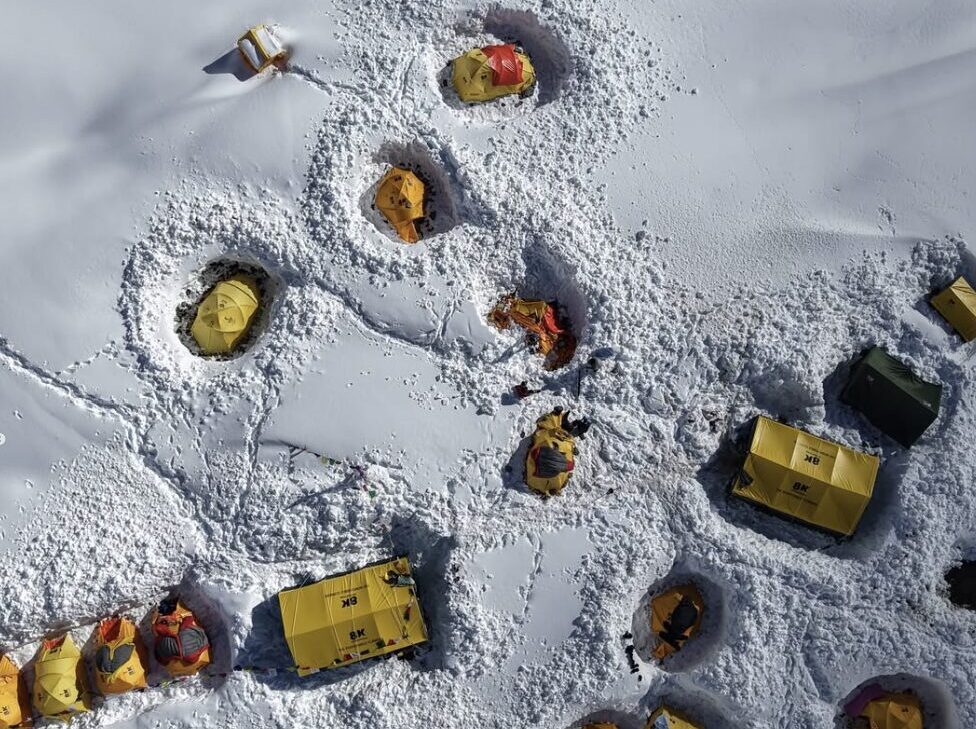
The autumn climbing season in the Himalayas has reached a definitive turning point as extreme weather conditions forced an abrupt end to operations on Mount Manaslu, while expeditions on other high-altitude peaks, including Everest, Dhaulagiri, and Makalu, persist under cautious observation. The decision to abandon Manaslu comes after record-breaking permit numbers collided with a severe, sustained storm system that left base camps buried and routes compromised, effectively ending the season for hundreds of climbers and local support staff.
The Collapse of the Manaslu Season
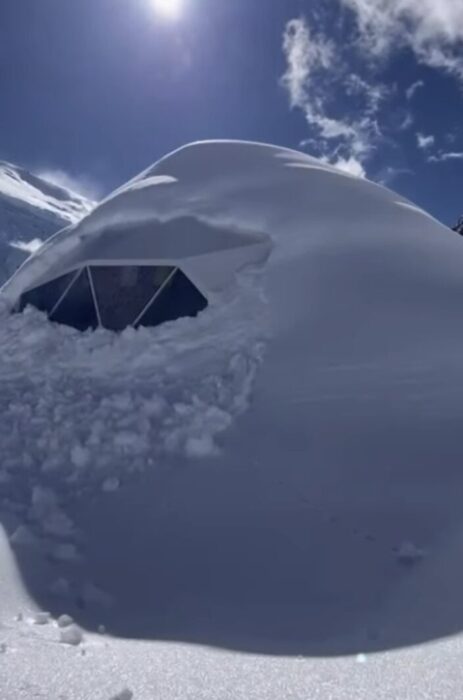
Manaslu, often viewed as the primary target for autumn mountaineering in Nepal, saw an unprecedented surge in interest this year. Official figures from the Department of Tourism confirmed that permits for the 8,163-meter peak reached an all-time record of 500. This massive influx of climbers and support personnel placed significant logistical pressure on the mountain’s infrastructure. However, the meteorological instability of the past week rendered these logistical efforts moot.
The transition from a high-stakes expedition to a mass withdrawal was swift. Throughout the previous weekend, outfitters like Summit Force and Madison Mountaineering held onto the hope that a weather window might allow for a late-season summit push. By Monday, the reality of the situation—characterized by deep snow accumulation, damaged infrastructure, and persistent avalanche risk—forced a consensus among operators. Nga Tenji Sherpa of Summit Force formally confirmed the closure, citing that continuing the expedition was no longer safe or practical. Caroline Pemberton, representing the agency, reiterated that the primary mandate remains the safety of climbers, guides, and support staff, all of whom have now retreated from the mountain.
The economic implications of this cancellation remain a subject of debate within the climbing community. With hundreds of climbers having paid substantial fees for logistics, oxygen, and high-altitude support, the abrupt end to the season raises complex questions regarding refund policies and the financial liability of outfitters when faced with "acts of God" or force majeure events.
Dhaulagiri: A Study in Patience
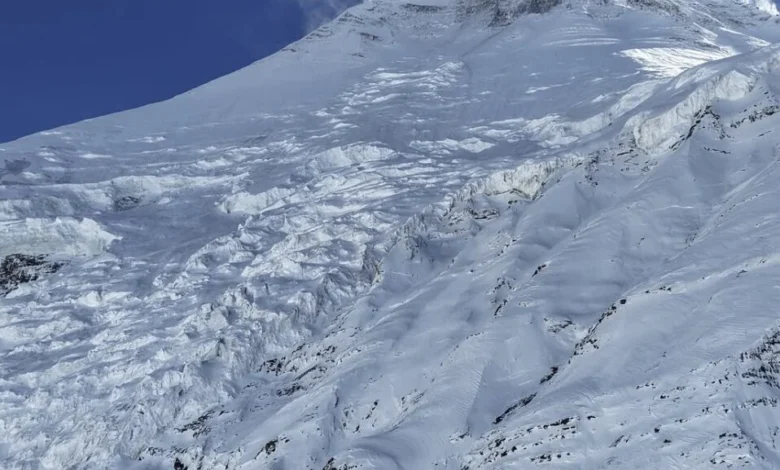
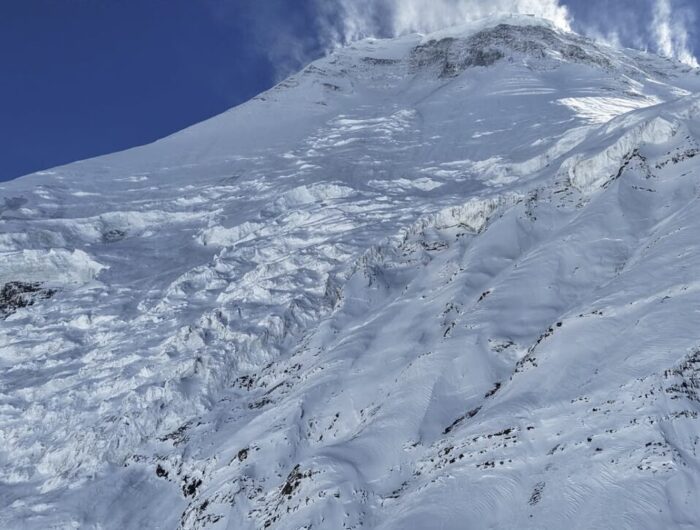
In contrast to the total cessation of activity on Manaslu, the 8K Expeditions team at the base of Dhaulagiri continues to operate in a state of strategic waiting. Paul Clarke, a key voice from the expedition, has documented the volatile conditions through drone surveillance. Recent data from the North Face indicates that while the mountain is heavily laden with snow, the presence of high-velocity winds may be acting as a natural clearing mechanism.
The tactical approach adopted by the Dhaulagiri teams is one of cautious assessment. Clarke reported that massive, spontaneous avalanches have occurred well away from the standard climbing route, serving as a reminder of the mountain’s current instability. The team plans to hold their position for another four to five days before attempting to establish a presence at Camp 1. This delay is intended to allow for snow settlement and a clearer evaluation of the route’s integrity.
The arrival of legendary Polish mountaineer Andrzej Bargiel, who has traveled to Nepal with the explicit goal of a high-altitude ski descent, adds a layer of professional intensity to the Dhaulagiri mission. While Bargiel has yet to release a detailed itinerary, his presence suggests a high level of confidence in the potential for a successful window, provided the mountain stabilizes.
Everest and Makalu: The Russian-Led Contingents
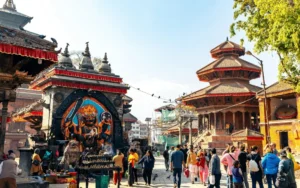
While the traditional climbing season winds down, interest in alternative, high-risk endeavors remains high. A Russian team has confirmed plans for a non-supplemental oxygen (no-O2) ascent of Everest via a non-standard route. The group is currently en route to Namche Bazaar, the central hub for Khumbu expeditions. This attempt is notable for its commitment to alpine-style climbing, which eschews the heavy infrastructure and fixed ropes common in commercial Everest expeditions.
Similarly, a three-member Russian team, including climbers Denis Aleksander and Artem Tsensenivski, is preparing for an alpine-style attempt on Makalu. Their path to this expedition was altered by the closure of Manaslu, where they had initially intended to undergo high-altitude acclimatization. Their ability to pivot to Makalu underscores the adaptability required for elite-level mountaineering in the modern era.
Broader Impact on Nepalese Tourism
The closure of major peaks has had a cascading effect on the wider regional tourism sector. The Manaslu Circuit, including the challenging Larke Pass, has officially reopened to trekkers. Tourism associations report that while trails remain snow-covered and require slow, deliberate navigation, the pristine conditions and clear skies are drawing hikers back into the region.
The Khumbu region remains fully accessible, with a steady influx of trekkers arriving in Lukla. Many are using the trek to Namche Bazaar as a base for scaling smaller 6,000-meter peaks, which remain viable despite the volatile weather that hampered the 8,000-meter expeditions. However, not all routes are equally stable; the Thorong La pass in the Annapurna Circuit and the path to Tilicho Lake remain closed due to significant snowfall and potential avalanche hazards, according to local authorities.
Chronology of Events: September 2026
- Late September: A severe storm system settles over the Himalayas, causing extensive snow accumulation on Manaslu and Dhaulagiri.
- September 25-26: Madison Mountaineering and other major outfitters officially cancel their Manaslu expeditions.
- September 27: Paul Clarke (Dhaulagiri) uses drone technology to assess upper-mountain conditions, identifying significant wind-loading and avalanche activity.
- September 28: Summit Force, led by Nga Tenji Sherpa, formally announces the end of their season on Manaslu, ensuring all personnel are safely accounted for.
- September 29: Andrzej Bargiel arrives in Kathmandu to begin preparations for his Dhaulagiri ski-descent attempt.
- September 30: Regional tourism boards confirm the reopening of the Manaslu Circuit, while noting that certain high-altitude passes in the Annapurna range remain closed due to safety concerns.
Fact-Based Analysis
The 2026 autumn season will likely be remembered for its meteorological severity and the resulting operational paralysis on Manaslu. The record-high permit numbers represent a growing trend of commercialization in Himalayan climbing, which, when coupled with unpredictable climate patterns, creates significant risks for both the climbers and the local mountain guides.
The divergence between the outcomes on Manaslu and Dhaulagiri illustrates the highly localized nature of Himalayan weather. While Manaslu’s topography and specific storm track proved catastrophic for current infrastructure, Dhaulagiri’s microclimate offers a narrow, albeit uncertain, path forward. The shift toward smaller, alpine-style expeditions—as evidenced by the teams headed to Everest and Makalu—suggests that as commercial base-camp models become increasingly vulnerable to climate volatility, the future of high-altitude mountaineering may lean back toward self-sufficient, lighter, and more agile teams capable of reacting to changing mountain conditions in real time.
As the season progresses, the international climbing community will watch the Dhaulagiri and Makalu attempts closely. If successful, these expeditions will serve as a testament to the resilience of human endeavor against the backdrop of an increasingly unpredictable and unforgiving high-altitude environment.