
The landscape of international travel connectivity has undergone a massive structural shift over the past several years, driven by the rapid adoption of embedded electronic SIM (eSIM) technology. For decades, international travelers venturing to Europe relied heavily on physical pre-paid SIM cards purchased either upon arrival at a foreign airport or ordered ahead of time through specialized online retailers. While these physical cards served their purpose, they frequently introduced logistical friction: finding a store, trading out micro-chips with miniature metal tools, risking the loss of domestic SIM cards, and navigating language barriers in foreign retail kiosks. Today, newer smartphones increasingly feature integrated eSIM architecture, allowing users to digitally download and instantly activate local and regional mobile data profiles. This technological evolution has drastically simplified cross-border travel, though it introduces new considerations regarding carrier networks, data caps, validity windows, and device compatibility.

Understanding the Necessity of Mobile Data in Modern Europe
Navigating contemporary European infrastructure without reliable, high-speed mobile data is no longer a viable option for most tourists. While the romanticized notion of traveling completely unplugged persists, the reality of modern European travel heavily mandates constant internet connectivity. From booking transit systems and displaying QR code restaurant menus to accessing real-time public transportation schedules, digital railway passes, and ridesharing applications like Uber, mobile data functions as an indispensable utility rather than a luxury. Free public Wi-Fi hotspots, once viewed as a reliable alternative, remain notoriously sparse, insecure, and functionally inadequate for managing day-to-day travel logistics. Consequently, securing a robust, uninterrupted mobile data stream has become the foundation of effective trip planning.

The Financial Pitfall of Traditional Domestic International Plans
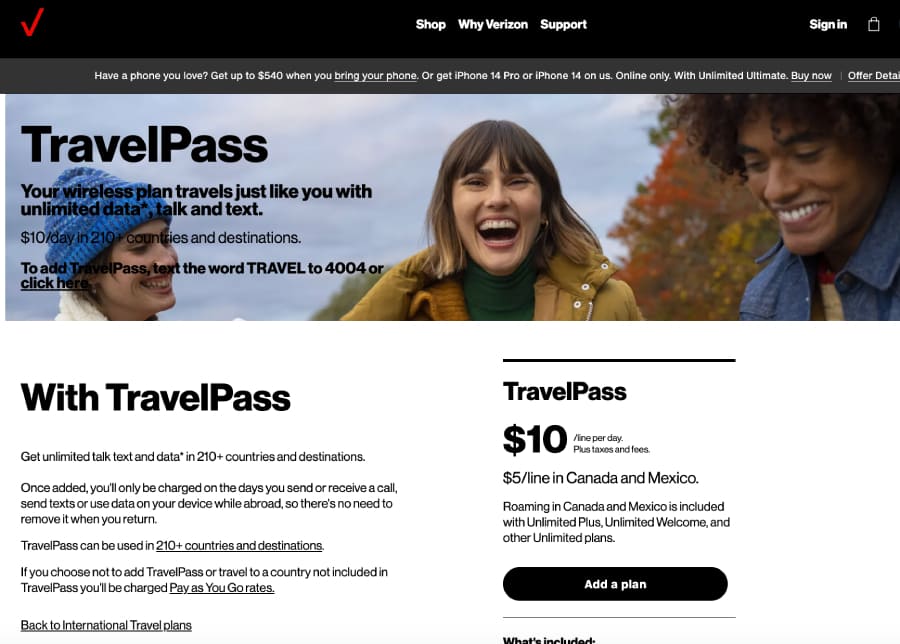
For travelers originating outside of Europe—particularly in North America and Australia—domestic carriers frequently market international roaming add-ons and day passes. However, an objective economic analysis reveals these options to be severely overpriced and restrictive. Major U.S. carriers such as AT&T and Verizon routinely charge approximately $10 per day for international day passes, accumulating substantial costs over multi-week itineraries. Alternatively, monthly international passports offered by these providers deliver meager data allocations, such as 2GB to 6GB, before imposing exorbitant overage fees scaling up to $30 per gigabyte.

Other carriers, such as T-Mobile, include international roaming features on specific tiers, but these are frequently throttled down to sluggish 2G speeds after a modest threshold is met—rendering data-heavy applications like navigation software and digital boarding passes frustratingly slow. In stark contrast, third-party prepaid regional eSIM providers offer comprehensive high-speed data packages at a fraction of the cost, usually averaging between $2 and $5 per day. This economic disparity has fueled the mass migration of savvy travelers toward specialized third-party European eSIM providers.
Comparative Analysis of Top European eSIM Providers and Plans
The abolition of intra-European Union mobile roaming fees represents a major regulatory advantage for travelers. Under EU telecommunications regulations, a data plan acquired in one member state functions seamlessly across all other member states without incurring roaming penalties. This regulatory framework enables providers to offer comprehensive regional coverage. Several prominent providers currently dominate the market, each catering to different consumption patterns and travel durations.
Orange Holiday Europe eSIM (50GB and 30GB Variants)
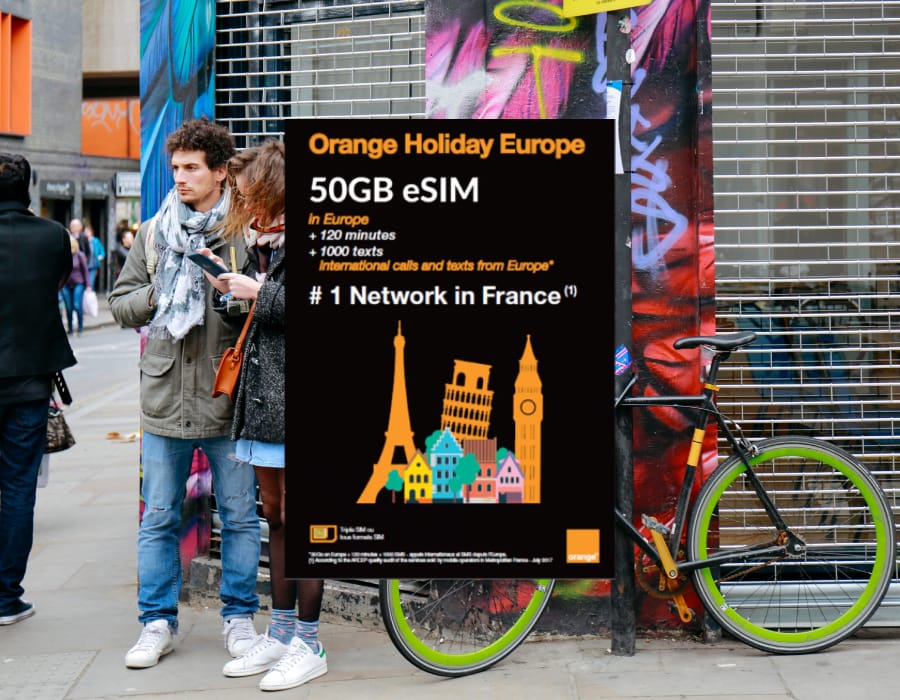
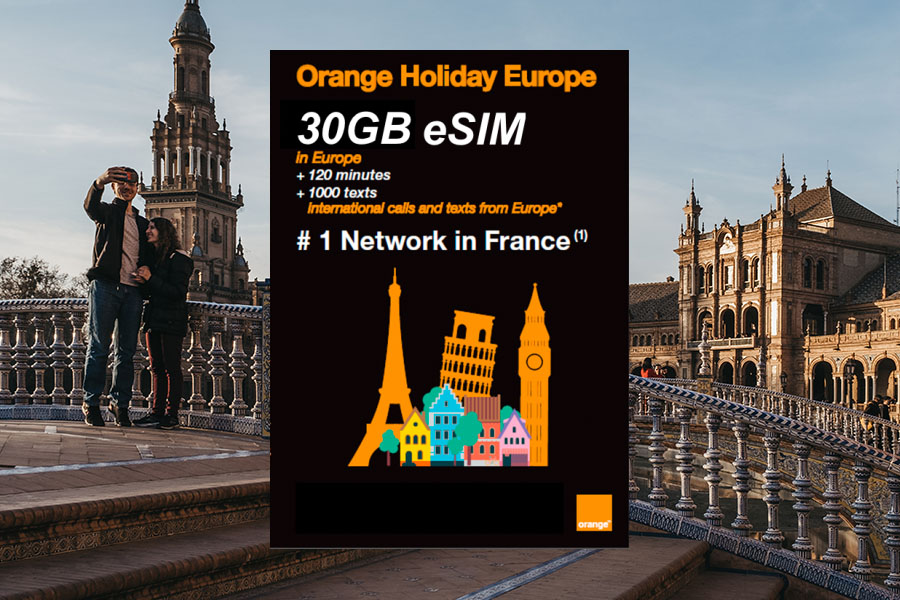
Operated by Orange, one of Europe’s premier telecommunications conglomerates, the Orange Holiday Europe lineup is widely regarded as the gold standard for network reliability and speed. The comprehensive 50GB plan, priced at approximately $59.90, operates on a 28-day validity window and targets heavy data consumers. Crucially, Orange provides a genuine French mobile phone number that supports international voice calling and text messaging across Europe, alongside mobile hotspot tethering capabilities. A standard 30GB version is also available for approximately $49.90 with a strict 14-day validity window. While the shorter validity period requires careful timing, the sheer speed and network coverage of France’s primary carrier make it exceptionally popular.

Holafly Unlimited Data eSIM
Holafly has established a prominent market presence by offering flexible, unlimited data packages tailored to trips ranging from 1 to 90 days. Priced dynamically based on duration—averaging $2.50 to $5.00 per day—Holafly addresses the anxieties of high-consumption users who fear exhausting fixed data caps. However, travelers should note that Holafly plans generally restrict hotspot sharing or impose daily limits on tethering, making these plans best suited for individual smartphone usage rather than multi-device management.
Bouygues My European eSIM
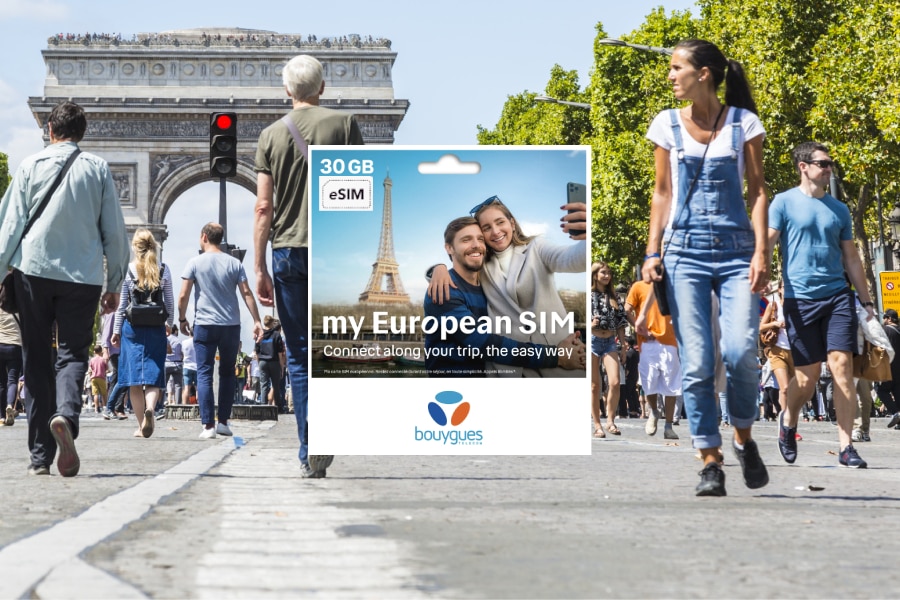
As a major French competitor to Orange, Bouygues Telecom offers a competitive alternative through its My European eSIM package. Priced competitively, this plan includes 30GB of high-speed data and a 30-day validity window, coupled with unlimited voice calls within Europe. This extended timeframe addresses the limitations of shorter 14-day plans, making it an ideal solution for month-long backpacking itineraries and extended European vacations.
Orange Holiday Zen and Smart Comfort X Alternatives
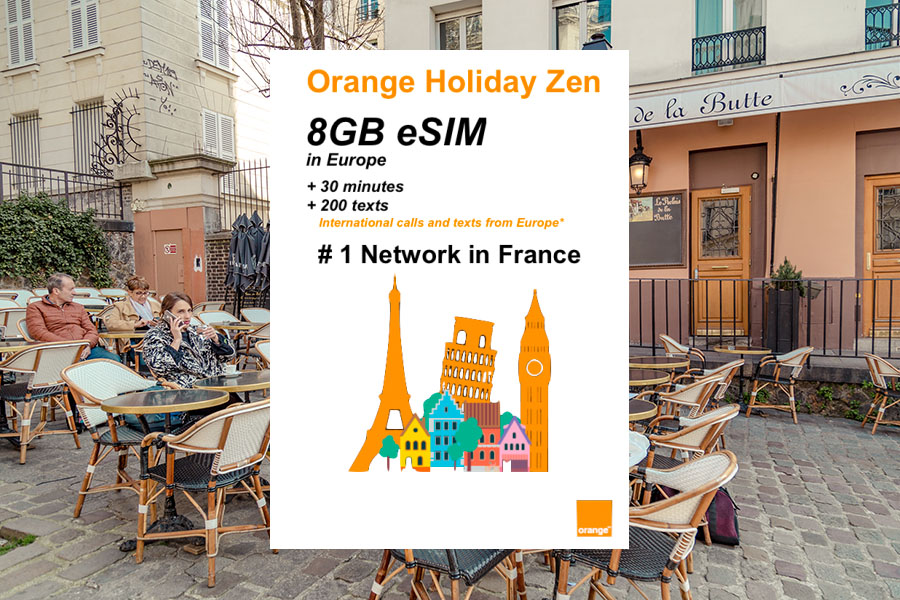
For moderate data users, the Orange Holiday Zen plan delivers 15GB of data alongside unlimited European calls and texts for a lower price point. Conversely, budget-conscious travelers seeking minimal data provisions often select the Smart Comfort X eSIM. Operating as an international aggregator rather than a direct carrier plan, Smart Comfort X routes connectivity through local partner networks such as Bouygues in France, O2 in Germany, and Telefónica in Spain. While economical, it provides a modest 5GB data cap and omits traditional voice and text capabilities, requiring users to rely on VoIP applications like WhatsApp for communication.
Technical Mechanics: What is an eSIM and How Does It Function?

An embedded subscriber identity module (eSIM) is a programmable digital SIM chip permanently soldered onto a smartphone’s motherboard by the manufacturer. Rather than inserting a physical piece of plastic, users scan a Quick Response (QR) code or install a carrier application to download network credentials directly into the device’s secure hardware.
This architecture introduces several structural benefits:
- Instant Digital Delivery: Consumers can purchase plans online from anywhere globally and receive activation profiles instantly via email, eliminating shipping logistics.
- Dual-SIM Functionality: Modern smartphones support simultaneous active profiles, allowing users to maintain their domestic phone number for crucial two-factor authentication text messages and banking security alerts while running a secondary regional eSIM for local data.
- Elimination of Physical Hassles: Users no longer risk losing physical SIM cards, nor do they require specialized metal ejection tools to swap chips when crossing international borders.
Device Compatibility and Industry Shifts
Smartphone manufacturers have systematically accelerated the integration of eSIM technology. Essentially all iPhones manufactured since 2019, including the iPhone 11 series and newer, feature dual-SIM capabilities combining a physical nano-SIM slot with an integrated eSIM.
A notable milestone occurred with the release of the iPhone 14 and subsequent generations in the United States, which completely eliminated the physical SIM tray in favor of dual-eSIM-only architecture. International iterations of these devices, however, continue to maintain hybrid physical and electronic configurations. Within the Android ecosystem, flagship devices manufactured by Samsung, Google, and other major developers since 2020 universally incorporate robust eSIM support.
Geographic Caveats: The United Kingdom and Switzerland
While European Union roaming regulations streamline cross-border data usage, travelers must exercise caution regarding non-EU jurisdictions. Switzerland and the United Kingdom remain outside the formal European Union regulatory framework. Consequently, certain regional data providers and aggregated international eSIM profiles may exclude Switzerland or incur additional roaming tariffs. Major carrier-backed plans, such as those offered by Orange, generally maintain bilateral roaming agreements covering Swiss and British networks, but consumers must thoroughly review plan specifications prior to purchase to prevent unexpected connectivity losses.
Operational Best Practices for Seamless Travel Connectivity

To maximize the efficiency of an international eSIM plan, travelers must adhere to specific technical protocols:
- Device Unlocking: Smartphones must be factory unlocked. Devices restricted by domestic carrier software locks will reject foreign network profiles until officially unlocked by the home service provider.
- Strategic Timing of Activation: Because validity countdowns initiate immediately upon activation, users should complete the digital installation process over home Wi-Fi prior to departure but delay final network activation until physically arriving at their European destination.
- Data Conservation Strategies: To prevent rapid depletion of data allowances, users should configure operating system settings to restrict background data sync for heavy applications, download offline regional maps via navigation utilities like Google Maps, and leverage hotel Wi-Fi for media uploads and large software downloads.
- Redundancy Measures: Carrying a portable external battery charger—such as an Anker PowerCore unit—is strongly advised, as continuous GPS tracking, screen illumination, and cellular network polling significantly accelerate battery consumption during active tourism.
Conclusion

The transition toward embedded digital SIM architecture represents a permanent evolution in international telecommunications. By eliminating predatory roaming fees imposed by domestic home carriers and replacing cumbersome physical micro-chips with instant digital provisioning, prepaid European eSIM data plans have transformed international travel accessibility. Through careful evaluation of data consumption habits, itinerary length, and regional network coverage maps, modern travelers can secure reliable, high-speed connectivity across Europe efficiently and cost-effectively.
Related posts: