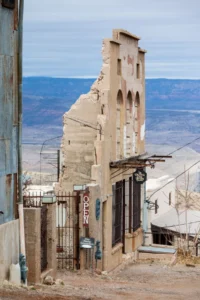
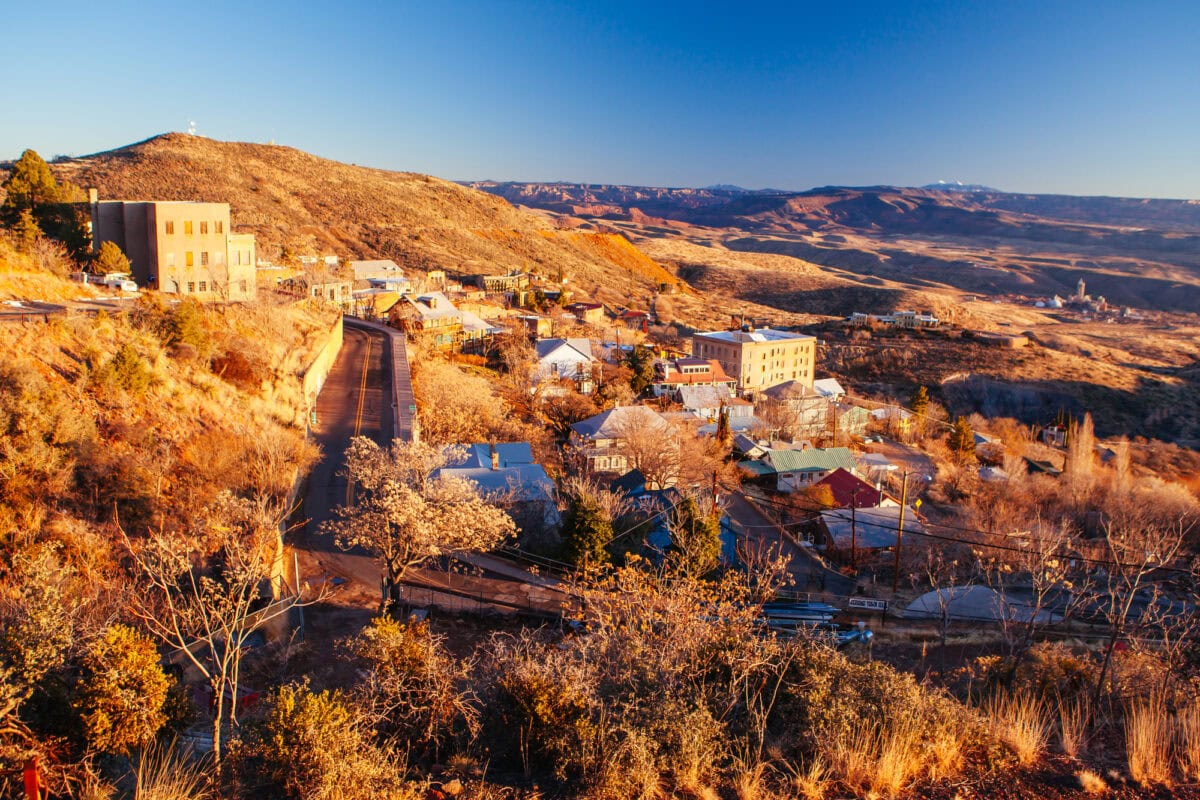
Jerome, Arizona, stands as the most prominent example of a preserved copper-mining ghost town in the United States. Perched precariously on the side of Cleopatra Hill in the Black Hills of Yavapai County, the town serves as a living laboratory of Western industrial history. From its origins in the late 19th century to its contemporary status as a National Historic Landmark District, Jerome offers a complex narrative of boom-and-bust cycles, environmental adaptation, and modern economic reinvention.
Chronology of a Mining Powerhouse
The history of Jerome is inextricably linked to the United Verde Copper Company, which began large-scale operations in 1883. During the peak of the copper boom in the 1920s, the town flourished as a vital economic engine for the Arizona Territory and later the state. At its zenith, the population reached approximately 15,000 residents, supported by a dense infrastructure of saloons, mercantile stores, and medical facilities.
The decline of the town was as rapid as its ascent. As global copper demand fluctuated and high-grade ore reserves were depleted, the United Verde mine officially ceased operations in 1953. The exodus was nearly total, leaving the community vulnerable to total abandonment. However, the town was saved from complete dissolution by a post-1960s influx of artists, historians, and entrepreneurs who recognized the architectural value of the remaining structures. In 1967, the federal government recognized this cultural significance by designating the central area a National Historic Landmark District.
Mining Infrastructure and Geological Challenges
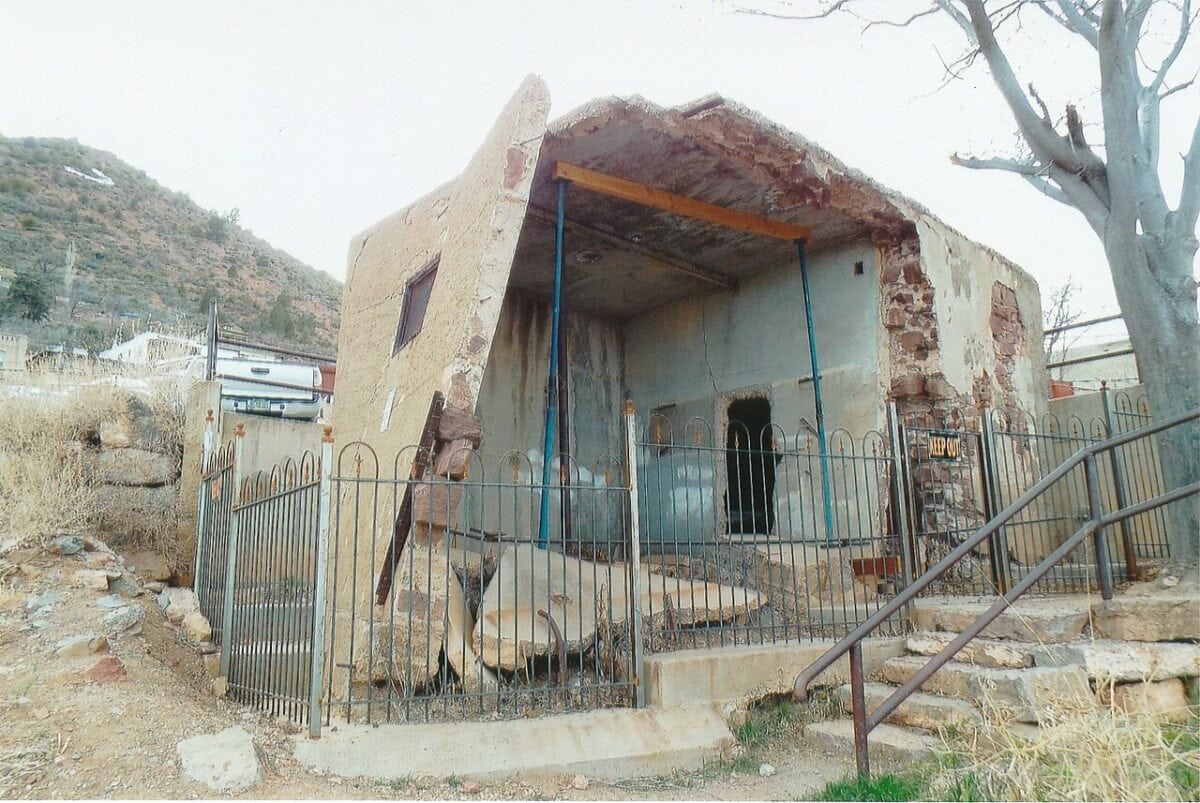
Jerome is defined by its extreme topography, which presents constant engineering challenges. The town is built upon the Verde Fault, and early mining techniques involved extensive underground excavation that effectively hollowed out the mountain. This "Swiss cheese" effect created long-term instability. The most iconic evidence of this geological stress is the "Sliding Jail," a reinforced concrete structure that moved approximately 225 feet from its original foundation following a subterranean dynamite blast in 1938. Today, the jail serves as a physical monument to the volatility of the landscape.
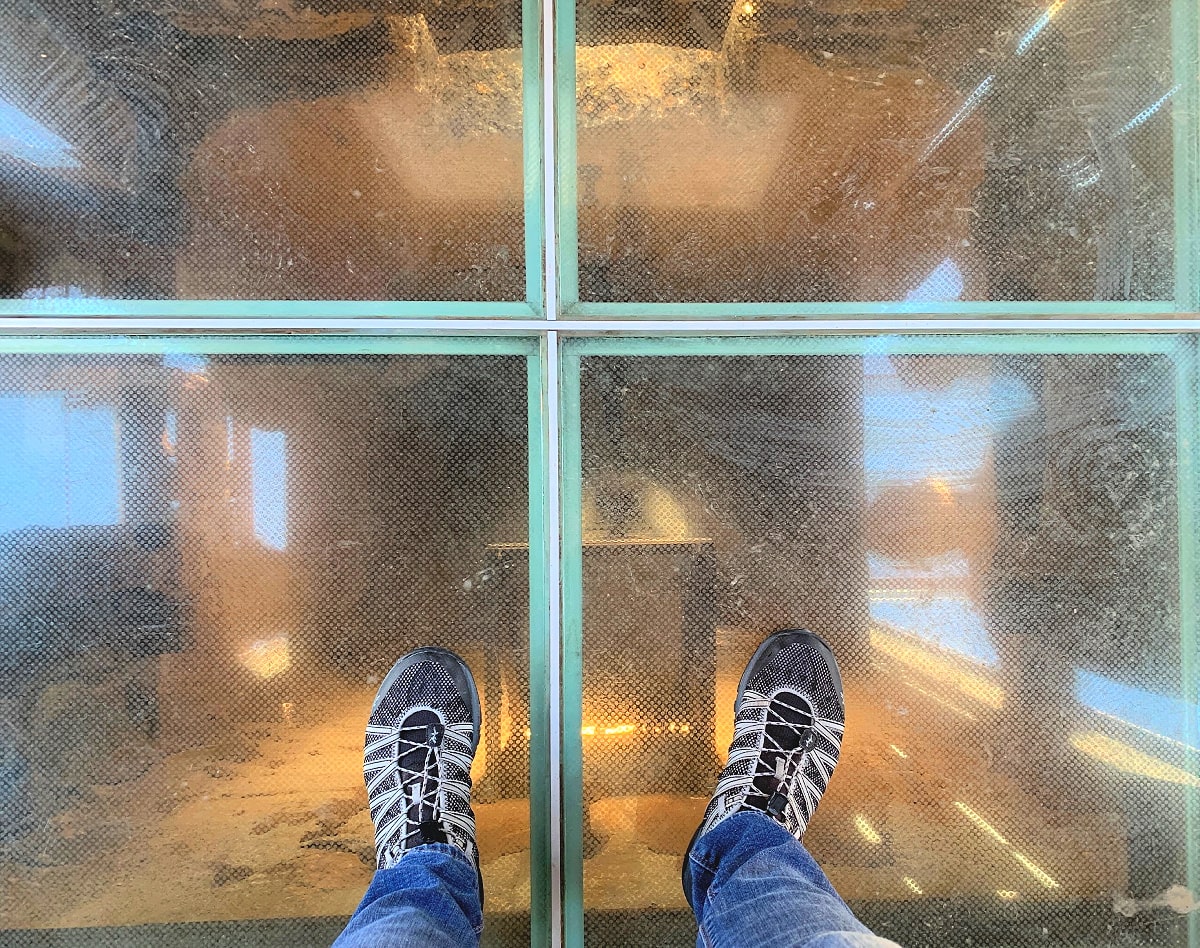
The Audrey Headframe Park serves as another critical site for understanding the scale of the extraction industry. The headframe, which supported the hoisting machinery for the 1,900-foot-deep United Verde mine shaft, remains one of the largest wooden structures of its kind in the region. Restoration efforts at this site are currently underway to ensure the structural integrity of this industrial artifact, highlighting the ongoing cost of preserving a town built on a shifting mountainside.
Educational and Cultural Anchors
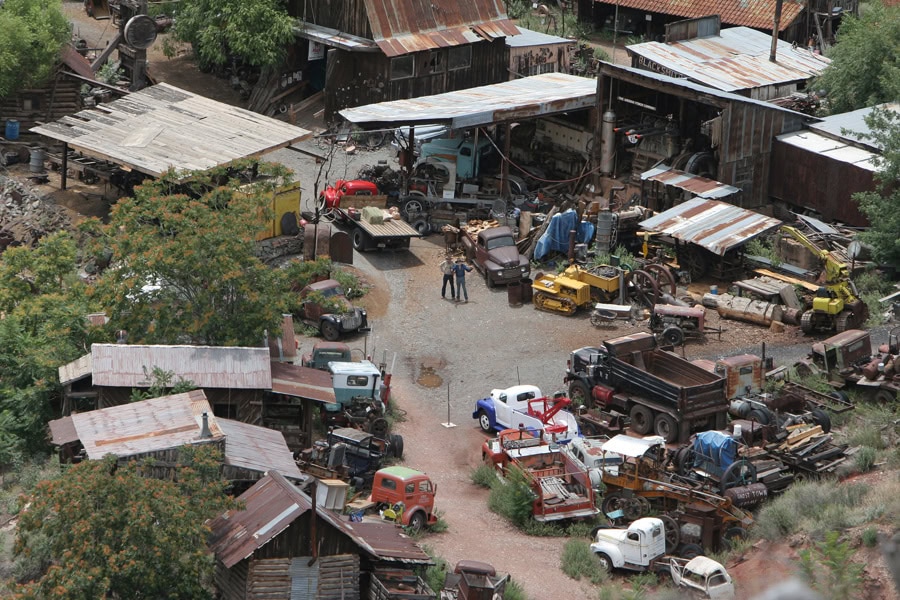
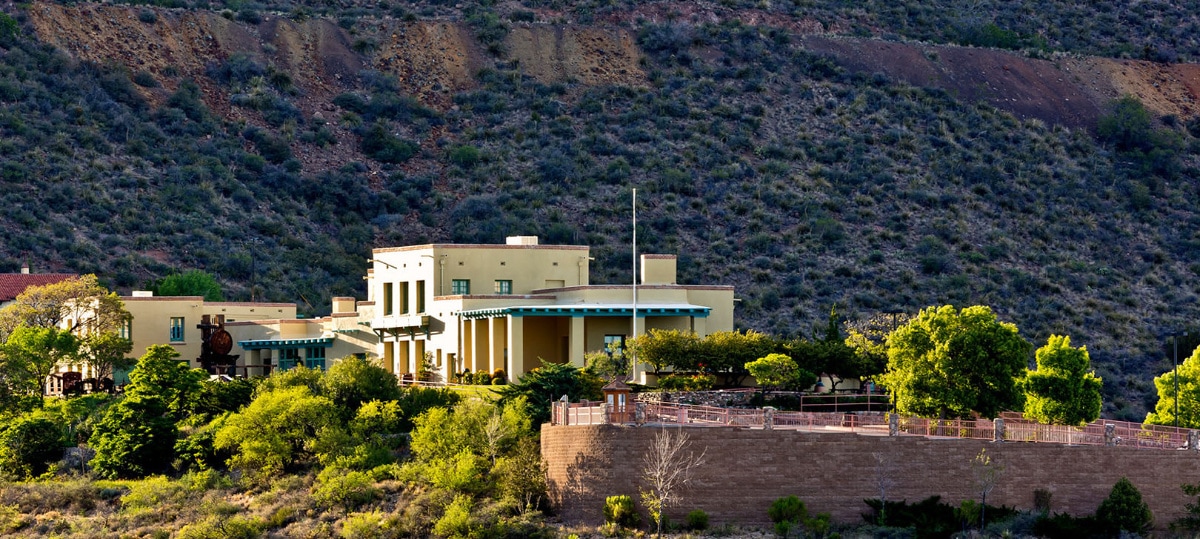
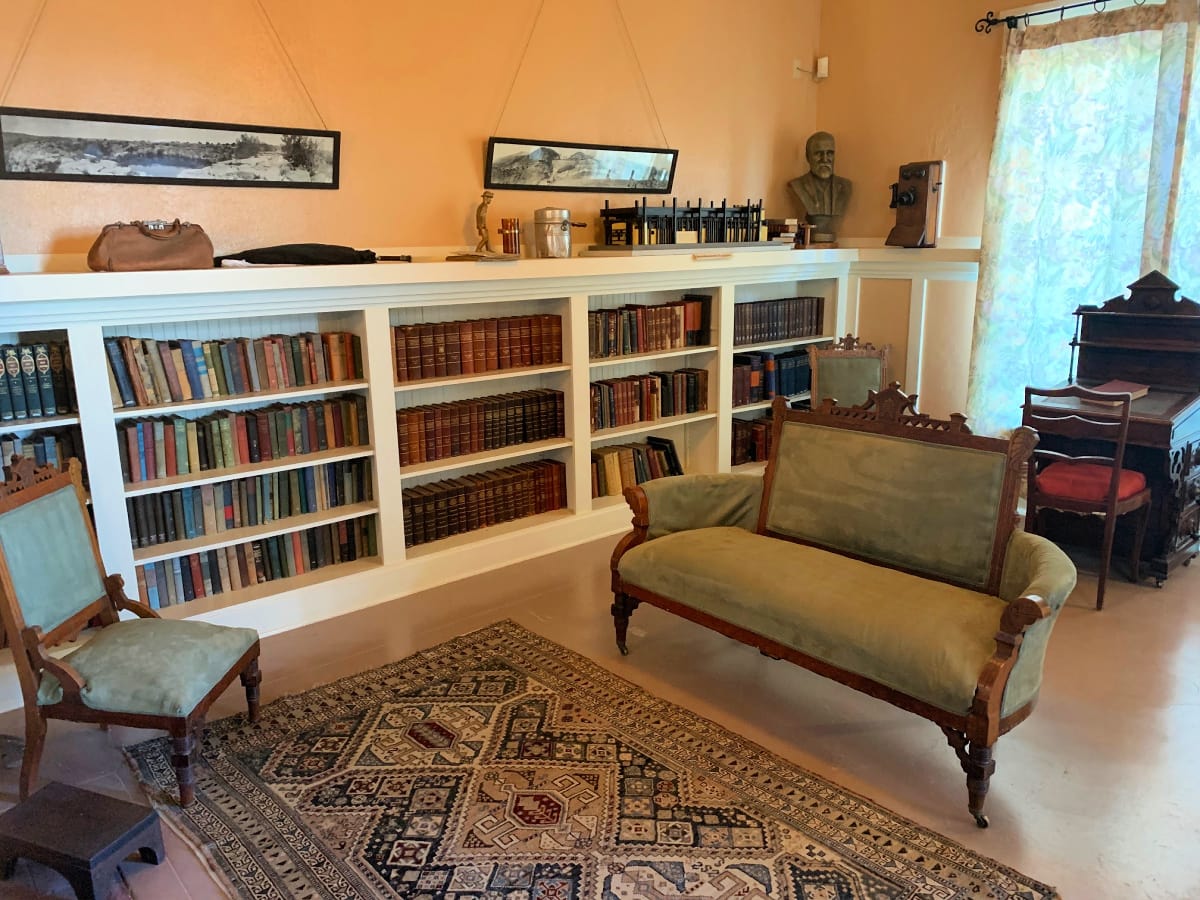
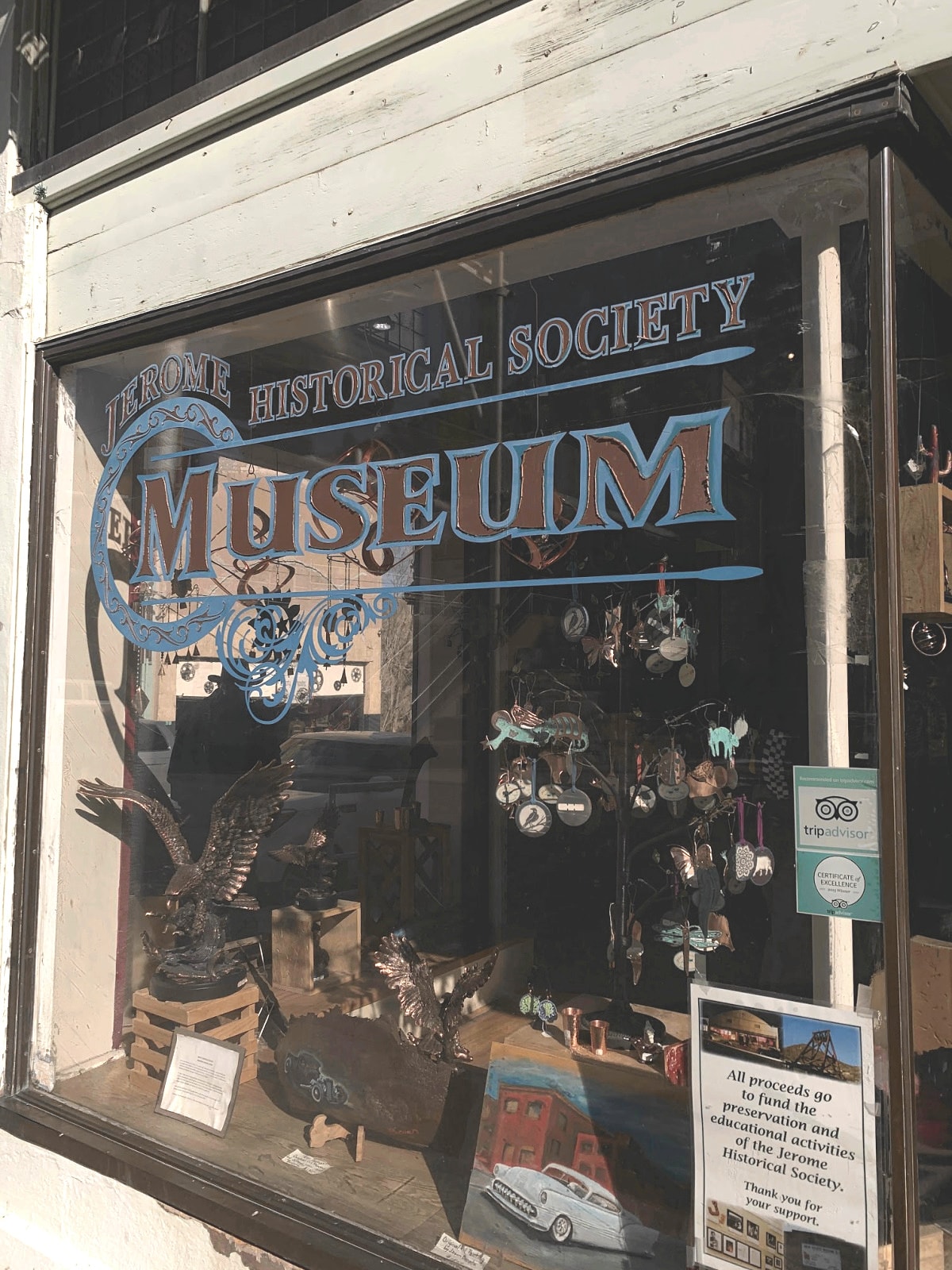
The preservation of Jerome’s history is anchored by two primary institutions: the Jerome State Historic Park and the Jerome Historical Society Mine Museum. The State Historic Park is housed within the Douglas Mansion, a 1916 structure built by the owners of the United Verde mine. The mansion provides a comprehensive look at the life of the mining magnates, while the Mine Museum on Main Street offers a more granular perspective on the daily lives of the working-class miners and their families.
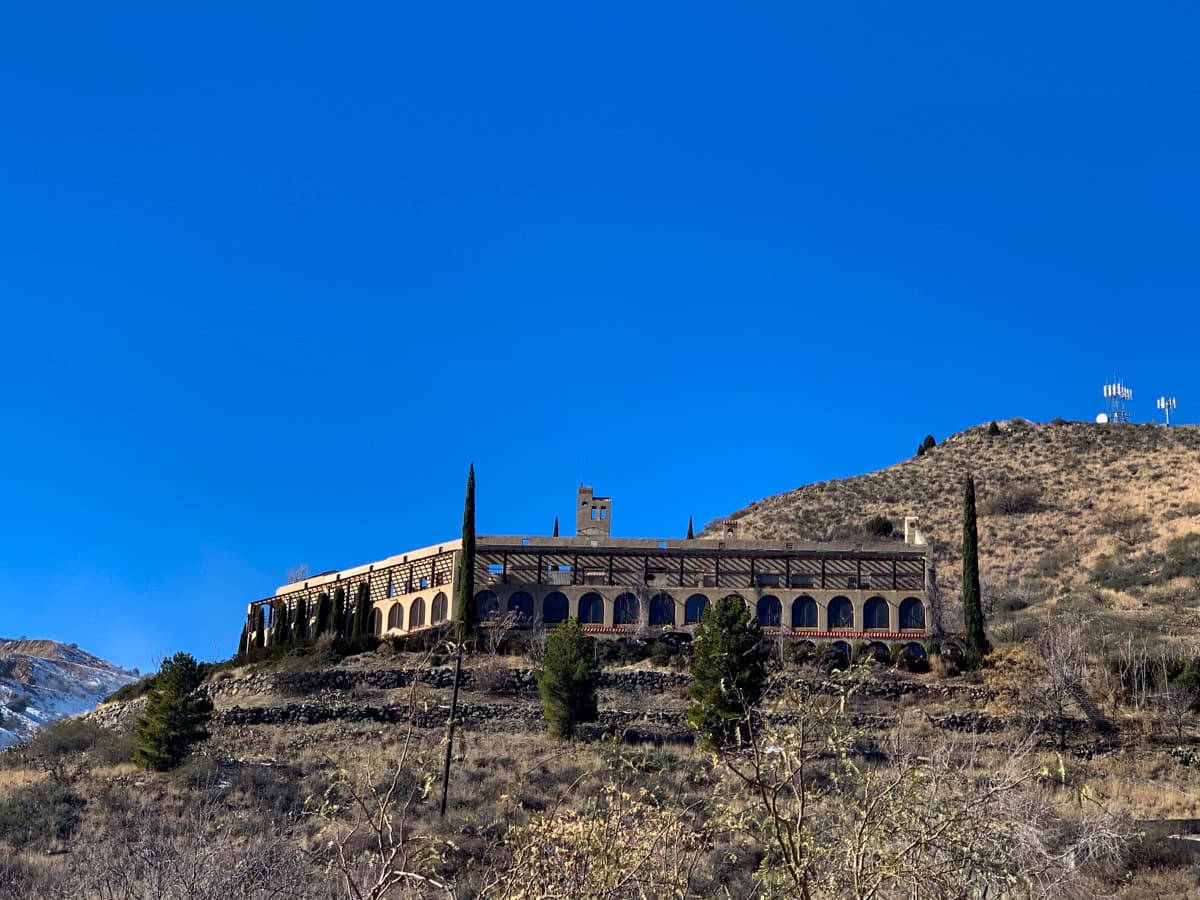
The Gold King Mine Museum, located in the nearby Haynes settlement, offers an alternative view of the industrial era. Unlike the state-run facilities, this museum provides a hands-on experience with vintage machinery, including a massive collection of 1900s-era vehicles and a functional blacksmith shop. This site serves as a vital record of the mechanical ingenuity required to sustain a remote mining camp in the early 20th century.
Modern Economic and Social Transformation
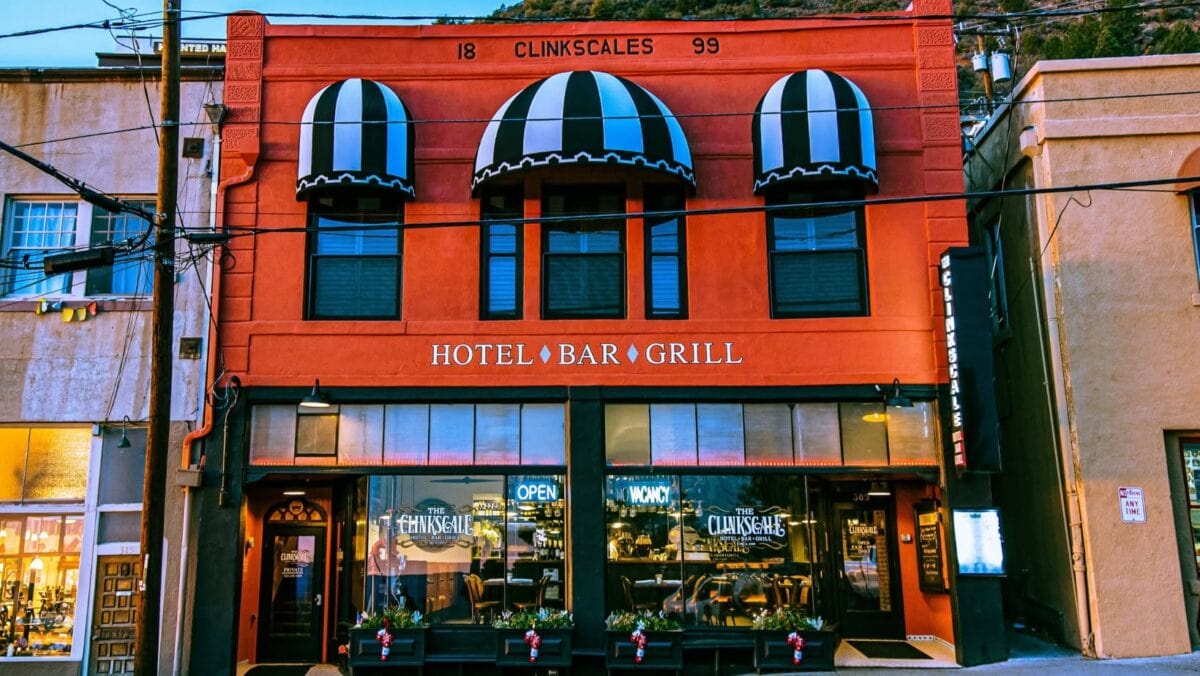
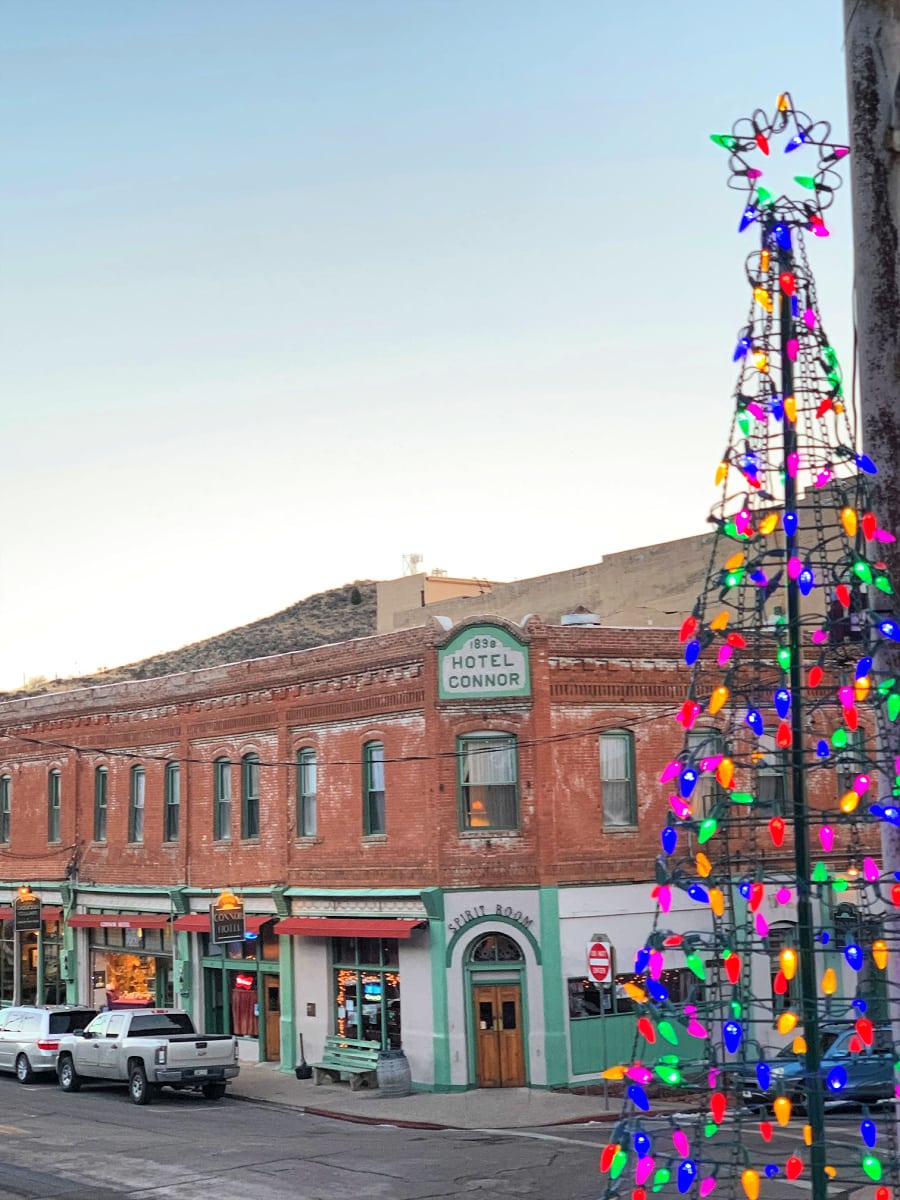
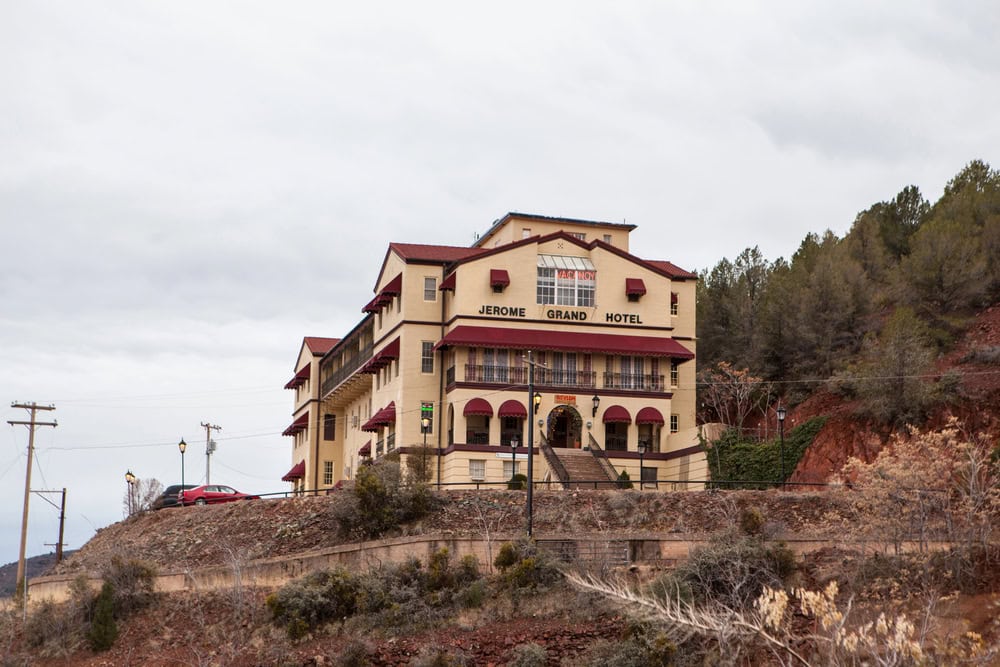
The transition from a "wicked" mining town to a creative enclave has been driven by the adaptive reuse of historic buildings. The Little Daisy Hotel, once a dormitory for shift workers, has been converted into a luxury event space, symbolizing the shift from industrial labor to the experience-based economy. Similarly, the Clinkscale Hotel and the Connor Hotel have been restored to serve a tourism market, blending 19th-century architecture with modern hospitality standards.
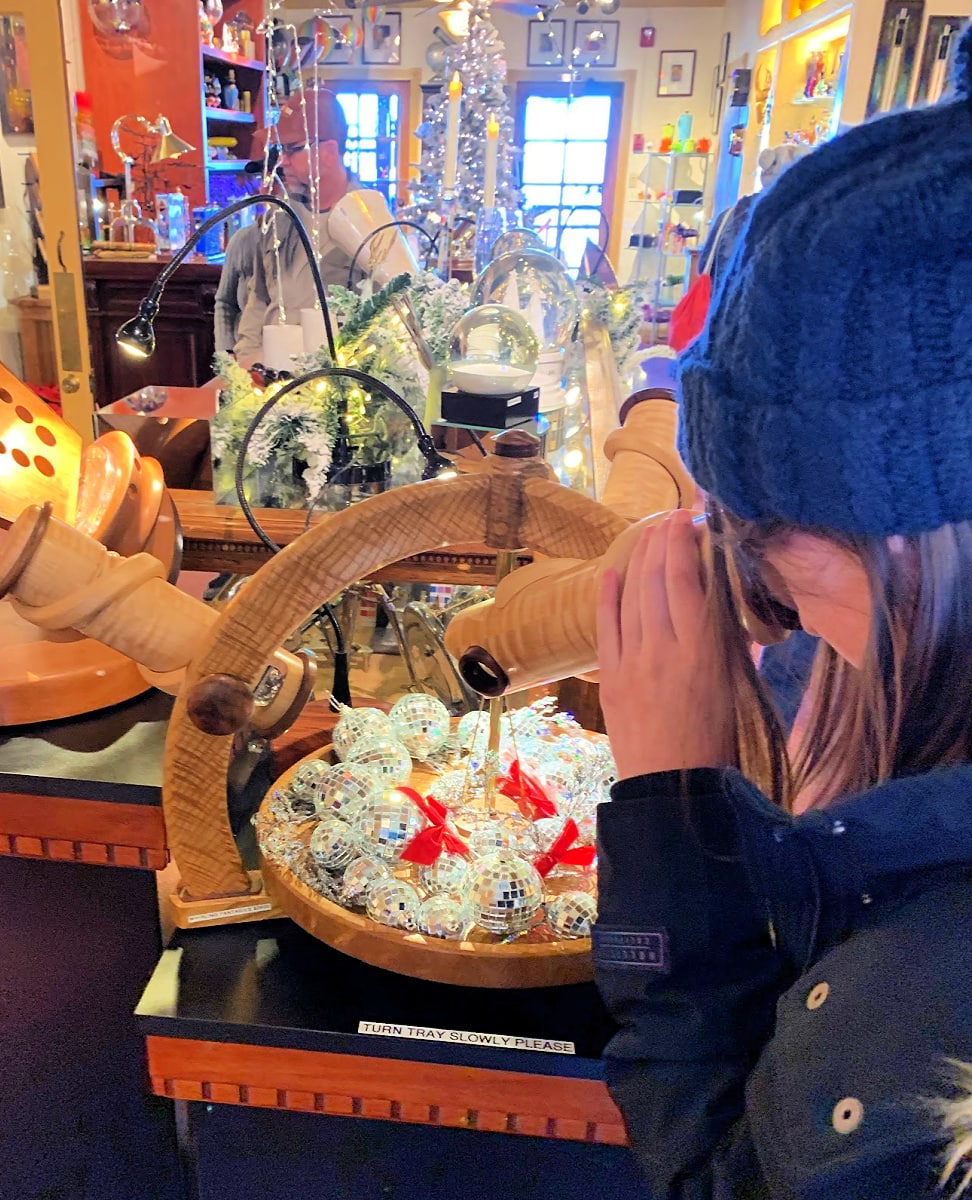
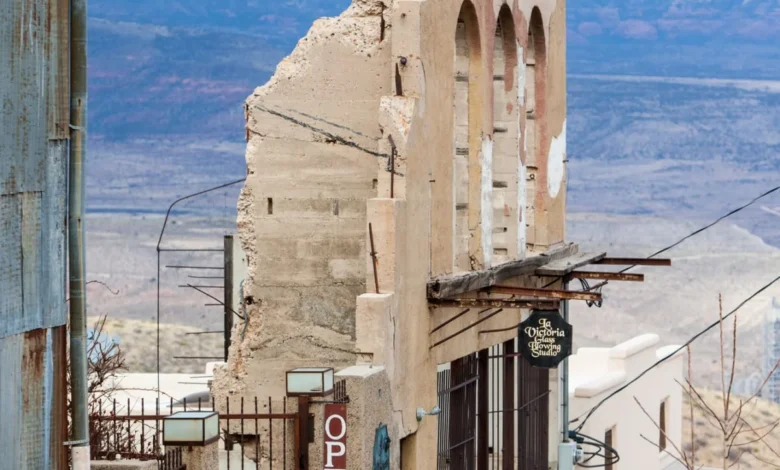
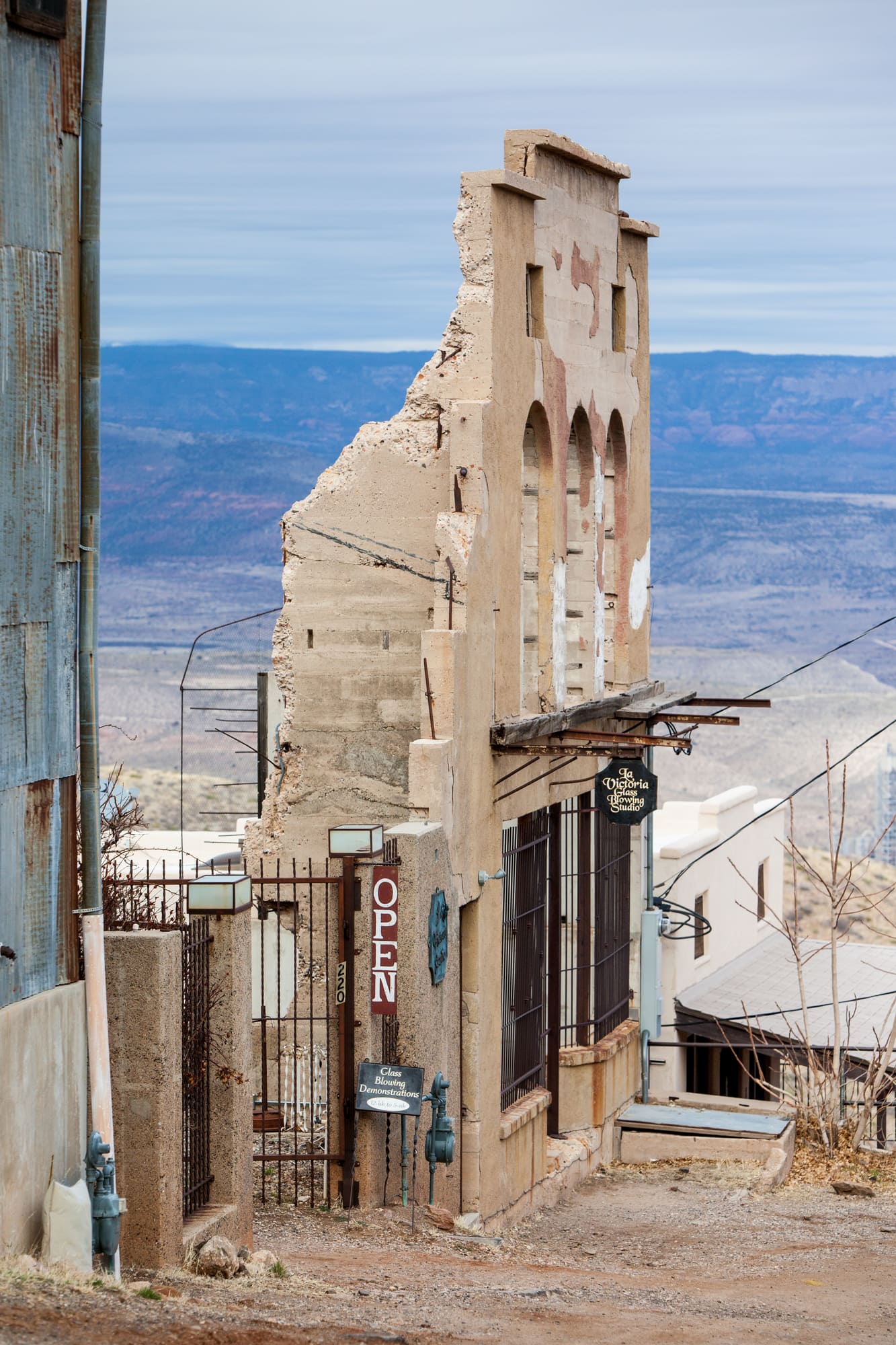
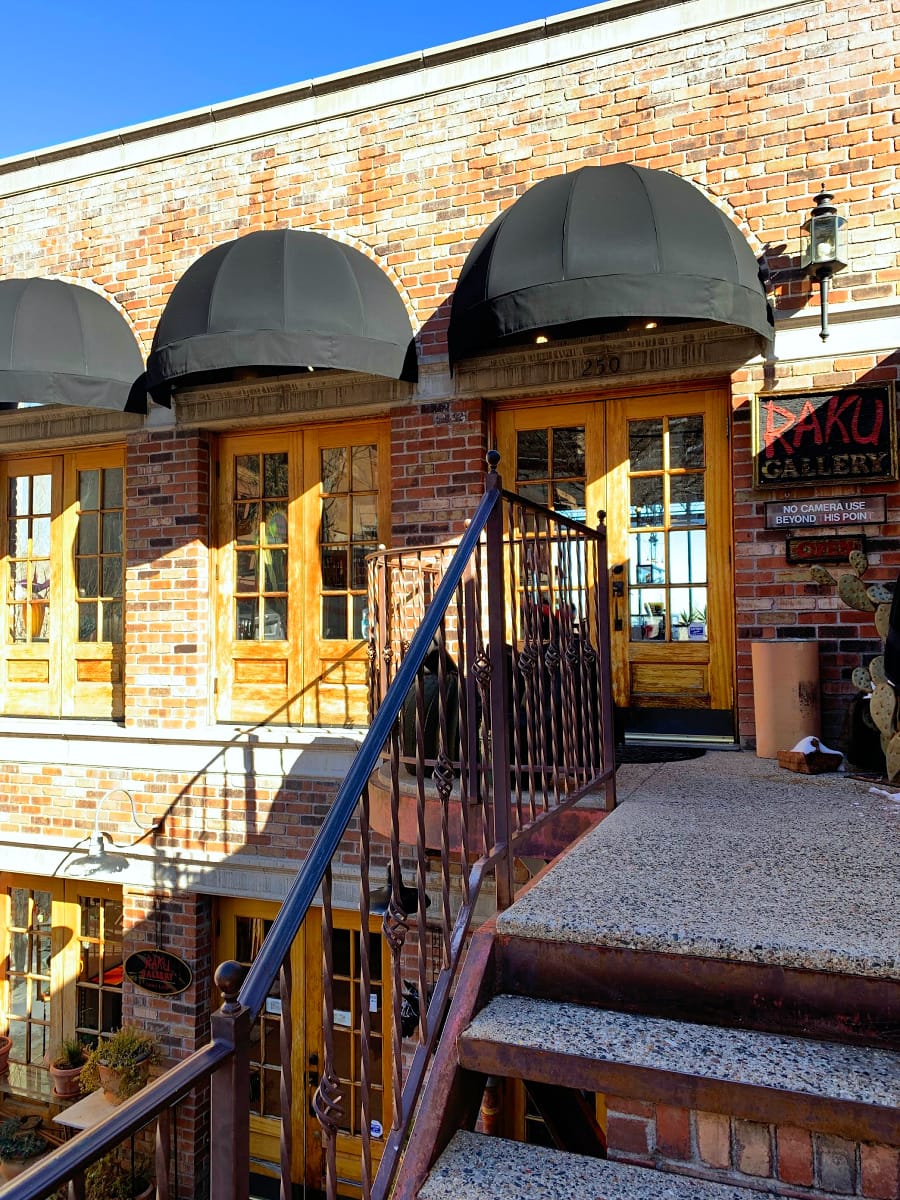
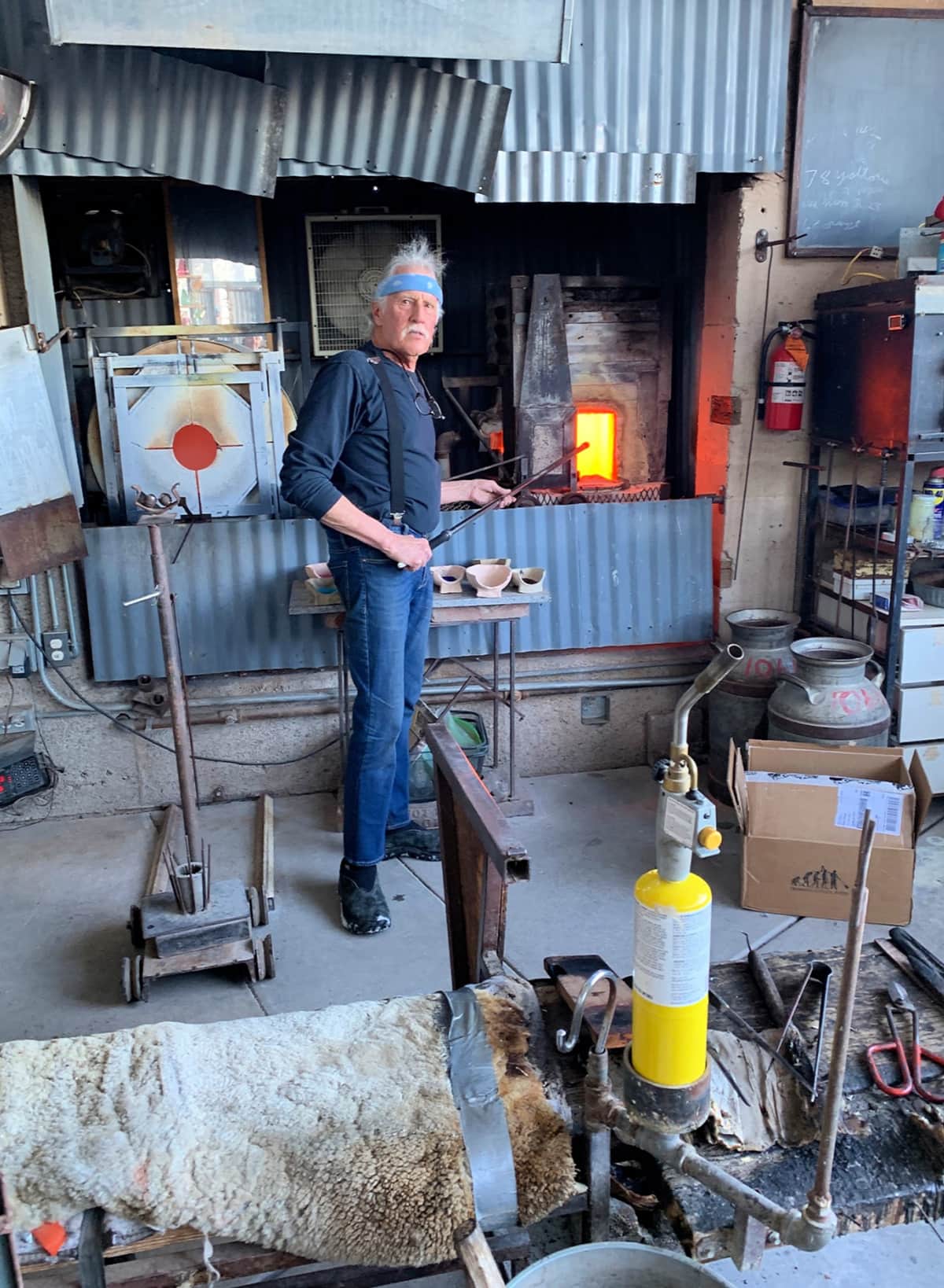
The artistic community has become the town’s primary social engine. The First Saturday Jerome Artwalk serves as a key indicator of this sector’s health, drawing visitors from across the Verde Valley and Phoenix metropolitan area. This movement is supported by local institutions like the Raku Gallery and La Victoria Glass Blowing Studio, where artisan traditions are maintained through active demonstrations.
Culinary and Hospitality Landscape
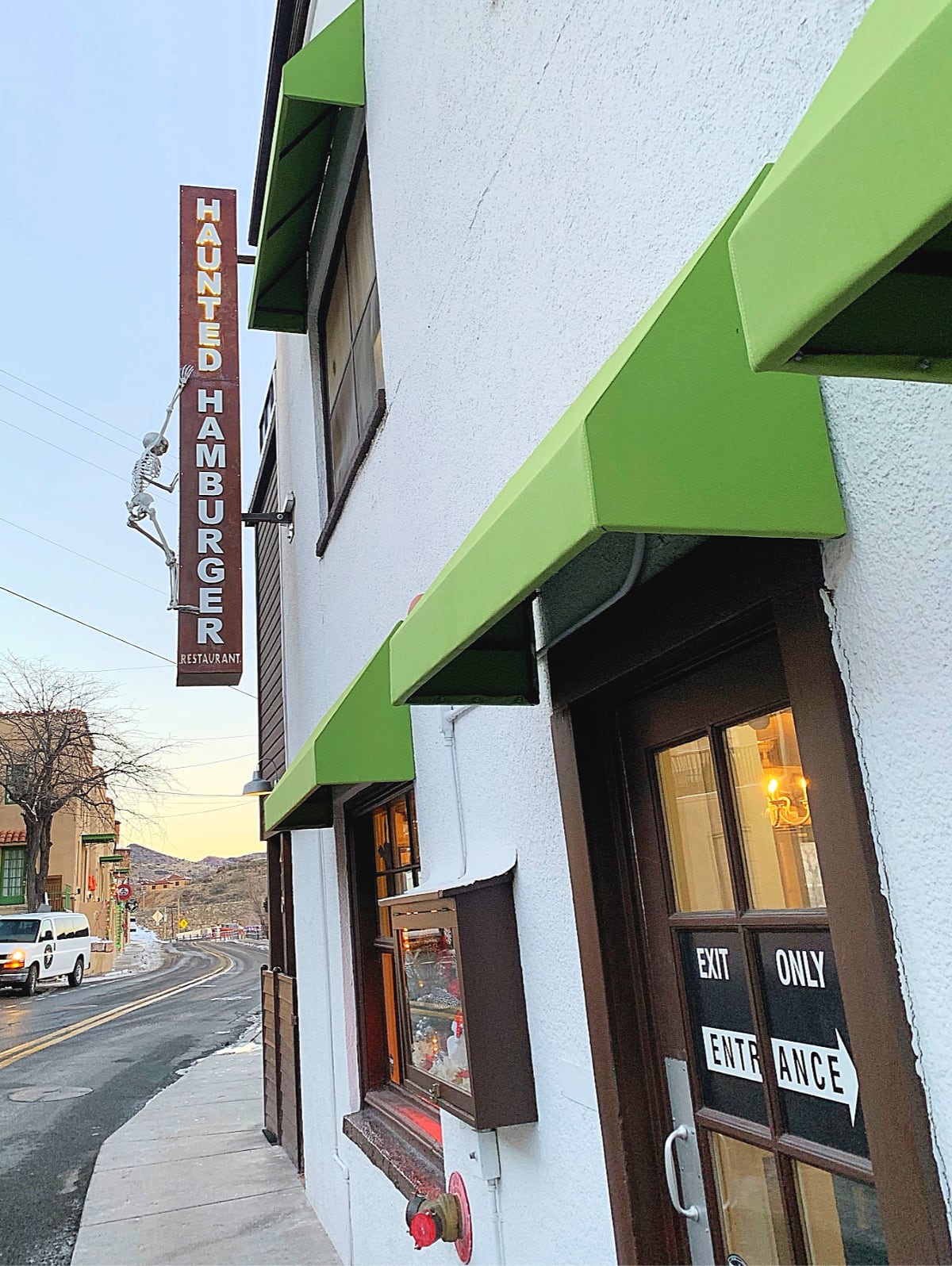
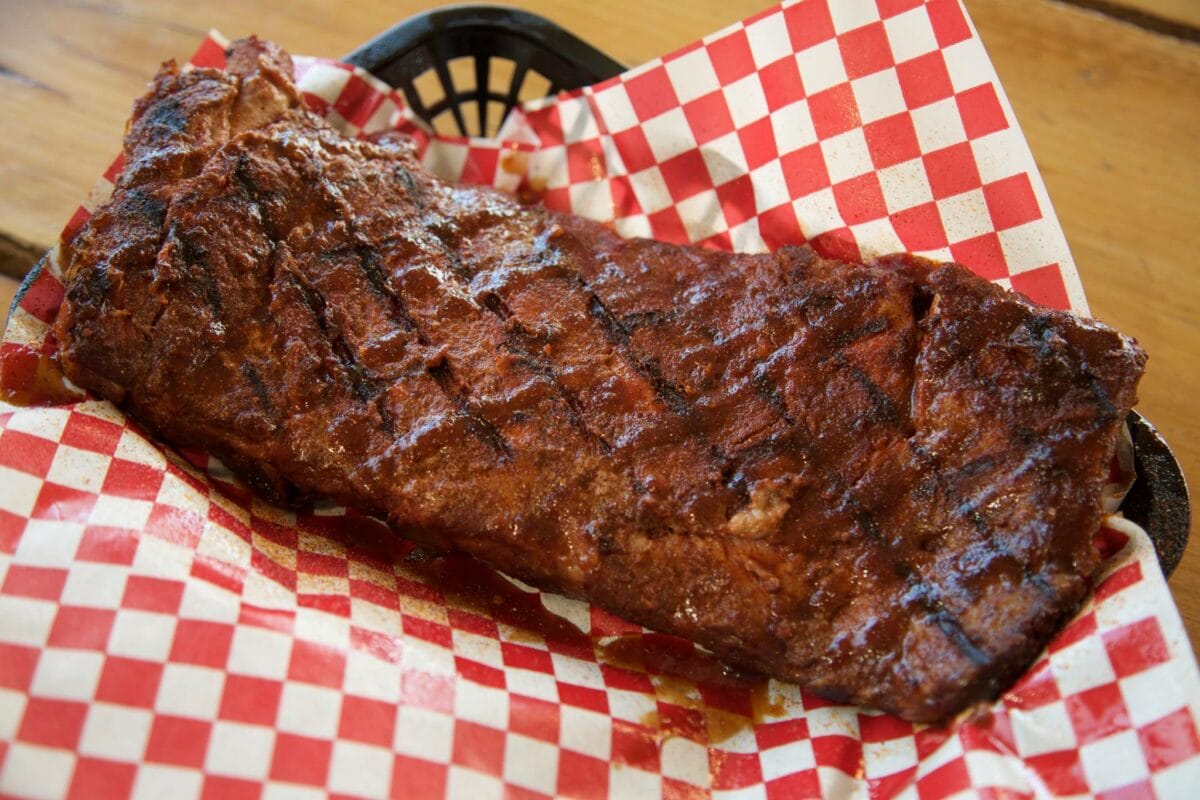
The dining scene in Jerome frequently leverages the town’s history as a selling point. The Haunted Hamburger, for instance, utilizes a narrative of local folklore—specifically reports of phantom activity during its construction—to establish its brand. Conversely, Bobby D’s BBQ occupies the space formerly known as the English Kitchen, which was established in 1899 by Chinese-American immigrant Charley Hong. The preservation of the original hand-painted signage on the building’s exterior serves as a reminder of the diverse cultural demographics that populated the early mining camp.
Economic Implications of Tourism
The shift toward a tourism-based economy has provided the revenue necessary to maintain the town’s aging infrastructure, yet it introduces new logistical pressures. Parking remains a perennial challenge in a town designed for foot traffic and pack animals rather than modern vehicles. The municipality has had to balance the preservation of its historical aesthetic with the need for modern public facilities, including parking lots and waste management systems that do not compromise the integrity of the historic district.
Broader Impact on Arizona’s Heritage
Jerome functions as a key component of Arizona’s "Mining Heritage Corridor." Its ability to sustain a year-round population of roughly 500 while attracting thousands of annual visitors is a testament to the success of adaptive reuse strategies. Experts in urban planning and historical preservation often cite Jerome as a model for how rural, single-industry towns can survive the inevitable closure of their primary resource extraction base.
The ongoing preservation of the town is a collaborative effort between the state of Arizona, private property owners, and the Jerome Historical Society. Each entity plays a role in managing the delicate balance between the town’s status as a functioning community and its role as a museum of the American West. While the "wicked" days of the 24 saloons and the underground gambling dens are long gone, the legacy of that era continues to inform the town’s character and economic viability.
Future Considerations
As climate and geological conditions evolve, the long-term stability of Jerome’s hillside structures remains a point of focus for local government. The town’s reliance on tourism makes it particularly sensitive to regional economic downturns, yet its unique status as a "living" ghost town provides a level of market insulation that standard tourist destinations lack. The continued focus on authentic historical storytelling, rather than purely performative or commercialized "ghost" themes, will likely remain the primary driver for Jerome’s sustainable growth in the coming decades.
In summary, Jerome represents the resilience of the American frontier. By transforming its industrial scars into cultural assets, it has ensured its place in the historical narrative of the United States. Whether through the preservation of the Douglas Mansion or the continued operation of the local galleries and museums, the town continues to provide an essential service: the bridge between the harsh realities of 19th-century extraction and the intellectual curiosity of 21st-century visitors.
Related posts: