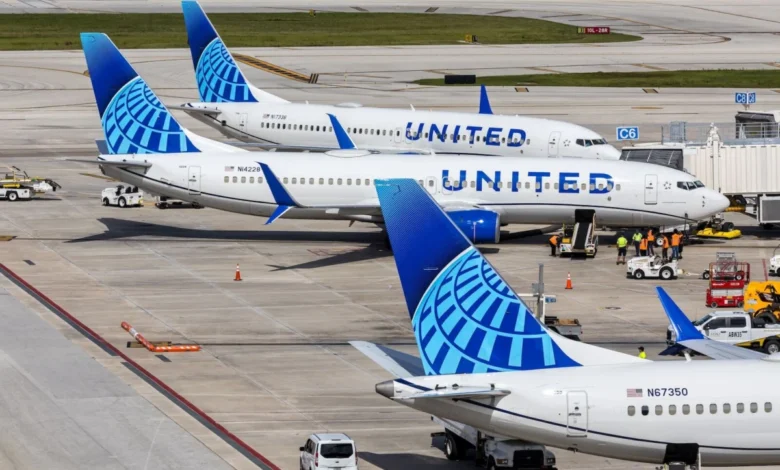
The aviation industry is currently navigating a significant technological crossroads as generative artificial intelligence evolves from a research tool into an autonomous agent capable of executing complex financial transactions. United Airlines has officially moved to restrict the use of third-party AI agents from accessing its booking, ticketing, and distribution systems, marking a pivotal moment in the relationship between commercial aviation and emerging automation. This policy shift, which restricts automated systems from finalizing reservations or modifying existing itineraries, highlights the tension between consumer convenience and corporate security protocols.
The Mechanism of the Ban and the Definition of an Agent
To understand the scope of United’s new directive, it is essential to distinguish between a passive AI tool and an active AI agent. Traditional AI interfaces, such as standard versions of ChatGPT or Gemini, function primarily as information synthesizers. They ingest vast datasets—flight schedules, pricing trends, and airport logistics—to provide users with recommendations. In this capacity, these tools serve as sophisticated search engines.
An AI agent, however, represents a shift toward autonomy. These systems are granted permissions to interact with third-party platforms on a user’s behalf. By accessing login credentials for loyalty programs like MileagePlus, these agents can theoretically initiate bookings, manipulate payment methods, and manage reservations without further human oversight. United’s policy update serves to prohibit these "unauthorized" agents from completing the final leg of the travel journey: the financial transaction and the contractual agreement.
Chronology of the Policy Shift
The integration of AI into travel planning has accelerated rapidly since the widespread public adoption of large language models in late 2022. By mid-2024, travel technology startups began rolling out "agentic" capabilities that promised to handle the end-to-end booking process.
- Q1 2024: Rise of "AI Travel Agents" that offer to book flights, hotels, and rental cars by accessing user accounts.
- Q3 2024: Increased reports of AI-driven errors, including unauthorized loyalty point redemptions and booking discrepancies.
- November 2026: United Airlines formally codifies its policy, explicitly barring unauthorized third-party AI agents from its booking and distribution ecosystems.
- Current Status: The airline remains in an observational phase, stating that it will monitor the evolution of AI security standards before considering any future integration.
Regulatory and Security Imperatives
United’s justification for the ban is rooted in a combination of consumer protection and regulatory compliance. Airline travel is a highly regulated sector, governed by the Federal Aviation Administration (FAA) and the Department of Transportation (DOT).
A critical concern involves the "check-in" process. When a passenger checks in, they are legally required to acknowledge safety protocols, including the declaration of hazardous materials and prohibited items. United argues that an autonomous AI agent, which may lack the capacity to verify the physical contents of a bag, could bypass these critical safety acknowledgments. By clicking through these disclosures on a user’s behalf, an AI agent could inadvertently place the passenger—and the airline—in violation of federal law.
Furthermore, there is the issue of data integrity. Allowing third-party agents to access personal loyalty accounts creates a significant surface area for cyber vulnerabilities. If a third-party AI service suffers a data breach, sensitive customer information—including travel patterns, credit card data, and frequent flyer credentials—could be compromised. By restricting access, United is effectively creating a "walled garden" to ensure that the chain of command between the passenger and the airline remains unbroken.
Competitive Landscape and Industry Divergence
The industry is far from unified in its approach to AI integration. While United has opted for a restrictive stance, other major carriers are experimenting with varying levels of partnership.
Southwest Airlines, for instance, has taken an aggressive, integration-focused approach. In October 2024, the airline announced a direct integration with ChatGPT, providing the AI platform with real-time access to its flight inventory. This collaboration allows the AI to provide accurate, up-to-date data directly from the source, minimizing the risk of hallucinations or outdated pricing.
Delta Air Lines has adopted a more decentralized philosophy, permitting the use of third-party tools but shifting the liability entirely onto the consumer. Under Delta’s terms of service, users who choose to employ AI assistants do so at their own risk, accepting responsibility for any booking errors, lost funds, or unauthorized changes. American Airlines has similarly acknowledged that some AI tools can facilitate purchases, though it has remained opaque regarding which specific platforms have been granted authorized access to its backend systems.
Economic Implications and Control
Beyond the technical and safety concerns, industry analysts suggest that the ban also reflects a strategic desire for the airlines to maintain control over the retail experience.
For decades, the airline industry has fought to move customers away from third-party aggregators and toward direct-booking channels. Direct bookings allow airlines to collect valuable customer data, upsell ancillary services (like seat upgrades or baggage packages), and avoid paying commissions to travel agencies.
An AI agent that acts as an unbiased middleman could fundamentally disrupt this dynamic. If an AI model is trained to prioritize the lowest price across all carriers, it could diminish the brand loyalty that airlines spend billions to cultivate. By serving as an intermediary, an AI agent could commoditize air travel, stripping away the unique value propositions of individual carriers and turning flights into a purely price-based competition.
Moreover, the operational strain on airline servers cannot be overlooked. A surge in automated queries from thousands of AI agents simultaneously "scraping" for the best price could potentially degrade the performance of booking engines, leading to increased server costs and latency for legitimate human users.
The Path Forward for Consumers
For the average traveler, the impact of United’s policy is minimal in the short term. Passengers can continue to utilize AI tools for research, itinerary planning, and price comparison. The restriction applies only to the final "buy" button.
Security experts generally support the airline’s cautious approach. As AI models become more capable, the risk of "prompt injection" attacks—where malicious actors trick an AI into performing unauthorized tasks—grows. Until there are robust, industry-standard protocols for authenticating and securing AI-to-business communications, the "human-in-the-loop" model remains the safest way to manage high-stakes transactions.
Looking ahead, the tension between AI efficiency and corporate control is likely to resolve through the development of "Authorized AI Partners." Just as travel sites like Kayak and Google Flights have secured formal API agreements with airlines, the next generation of AI agents will likely need to be "vetted" by airlines to operate within their systems. Until then, United’s policy serves as a reminder that in the world of global aviation, the convenience of automation must be balanced against the rigid requirements of safety and the necessity of keeping the passenger directly accountable for their travel choices.
As the technology continues to mature, the definition of an "unauthorized agent" may become more fluid, potentially opening the door to a future where AI and airlines work in tandem—provided that the security, data privacy, and regulatory concerns currently identified by United can be comprehensively addressed. For now, the mandate is clear: the final decision to board a flight, and the responsibility that comes with it, remains firmly in the hands of the human traveler.