The Ultimate Guide to European Travel Connectivity: Navigating eSIM Data Plans, Costs, and Technology in 2024


Modern international travel has undergone a silent digital revolution, fundamentally altering how visitors navigate, communicate, and manage logistics across foreign borders. For decades, bridging the digital divide while traveling abroad meant hunting down tiny physical SIM cards at airport kiosks, swapping out domestic microchips with foreign carriers, and risking the loss of one’s original carrier connection. Today, the widespread adoption of embedded subscriber identity modules—commonly known as eSIMs—has streamlined mobile connectivity, allowing international travelers to download and activate cellular profiles digitally before ever boarding a flight.
As European tourism continues to surge post-pandemic, reliable, high-speed mobile data has transformed from a luxury into a fundamental travel utility. Navigating the labyrinth of international cellular options requires an understanding of technical compatibility, regional pricing structures, and the distinct operational advantages that digital SIM cards offer over traditional domestic carrier roaming packages.

The Essential Need for Mobile Data in Contemporary Europe
The operational reality of modern European travel heavily relies on constant internet connectivity. Long gone are the days when paper train schedules, physical city maps, and printed restaurant reservations sufficed for a seamless vacation. Today’s European infrastructure integrates digital solutions into nearly every consumer touchpoint.
High-speed mobile data is required for accessing digital railway passes, navigating complex municipal transit systems via real-time mapping applications, calling rideshare vehicles like Uber, and viewing restaurant menus via QR codes. Furthermore, an increasing number of European hospitality and dining establishments mandate digital payment methods processed directly through smartphones, while major cultural institutions and sports venues utilize entirely digital ticketing systems. Relying strictly on public Wi-Fi networks is no longer a viable strategy; public hotspots are often sporadic, notoriously insecure, and notoriously difficult to locate reliably in historic city centers.

The Pitfalls of Traditional Domestic International Roaming Plans
For travelers originating from North America or Australasia, relying on domestic mobile providers—such as AT&T, Verizon, or T-Mobile—often proves to be the costliest and least efficient method for securing overseas connectivity. Major domestic carriers frequently market international day passes or global add-on packages, but these options carry severe financial and operational drawbacks.
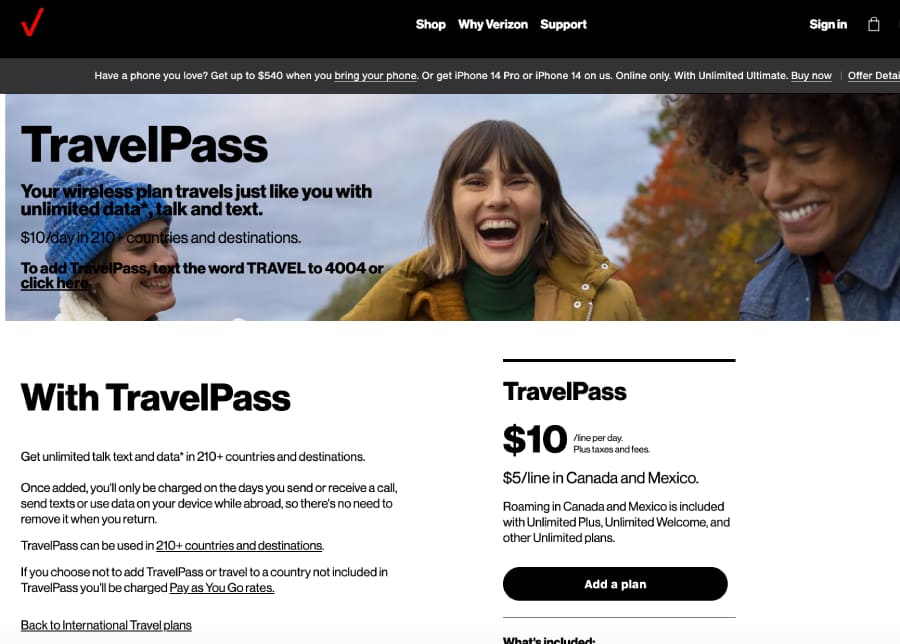
Standard international day passes typically cost approximately $10 per day, accumulating rapidly over a standard two-week European holiday and easily exceeding $140 per user. Alternatively, monthly international plans offered by legacy carriers frequently impose strict data caps, often restricting speeds to sluggish 2G networks once a meager 2GB to 5GB threshold has been breached. Consumers attempting to load high-resolution maps or process digital payments on throttled 2G connections frequently experience severe latency issues. Consequently, legacy international roaming plans can cost up to five times more than prepaid regional eSIM alternatives while delivering significantly inferior performance.

Comparative Analysis of Top eSIM Providers for Europe
The market for prepaid European eSIMs has expanded rapidly, introducing specialized regional providers and official third-party retailers that partner directly with major continental telecommunications giants. The most prominent and reliable options currently available to international travelers include:
Holafly
Holafly operates as a specialized Europe-focused eSIM provider known for offering unlimited data packages across customizable durations ranging from 1 to 90 days. While daily rates average between $2.50 and $5.00 depending on the length of the contract, the absence of data caps appeals heavily to heavy data users who stream media, upload large photo files, or utilize constant navigation without monitoring consumption limits.
SimOptions
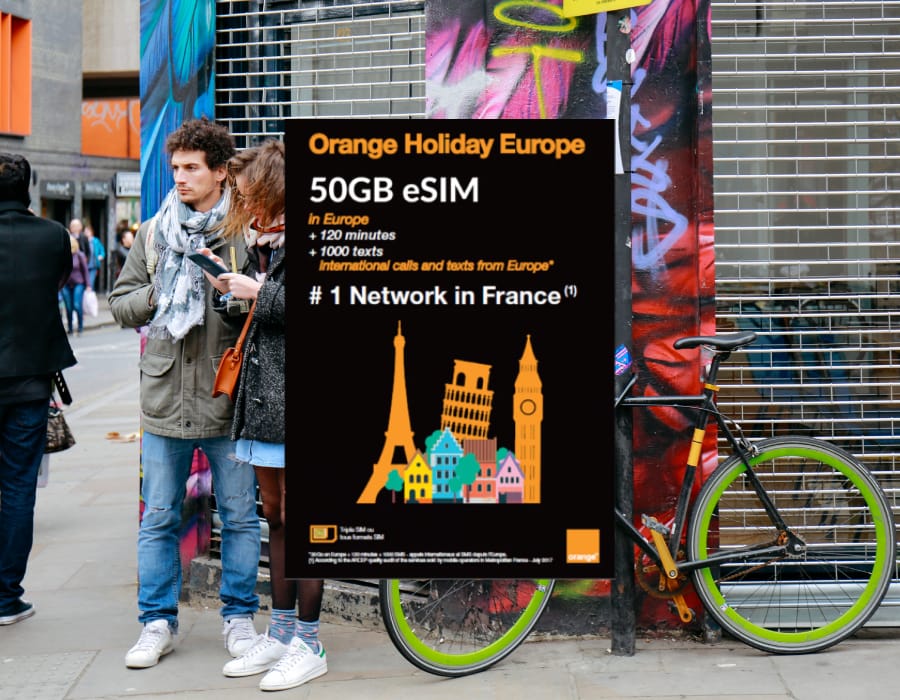
SimOptions functions as an official marketplace and retailer for major European network operators, including Orange, Bouygues Telecom, and O2. Rather than unlimited data, these plans typically offer tiered high-speed data allowances ranging from 10GB to 70GB over specific validity windows. Crucially, many SimOptions packages provided by French and European carriers include a dedicated European phone number, enabling traditional voice calling and text messaging capabilities across participating countries.
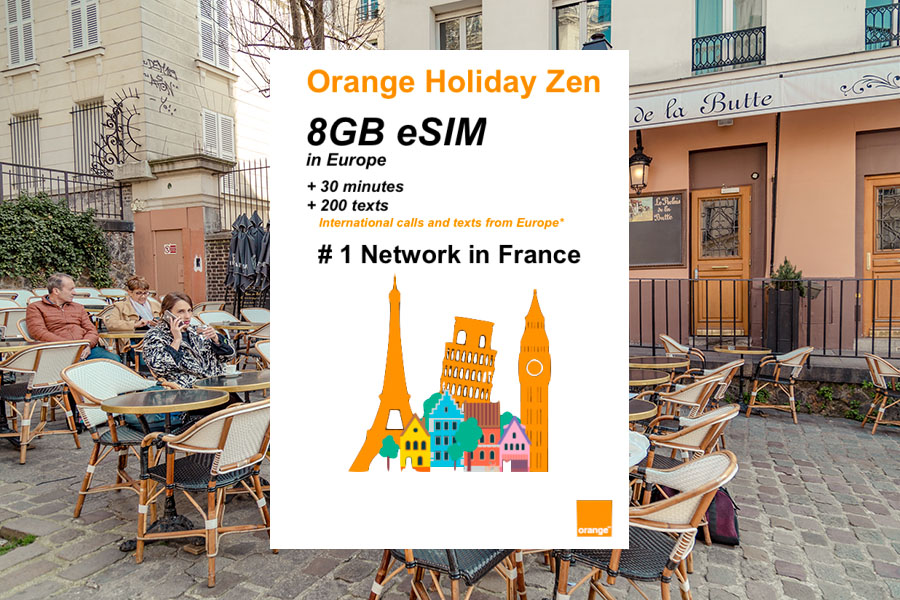
Orange Holiday Europe eSIM
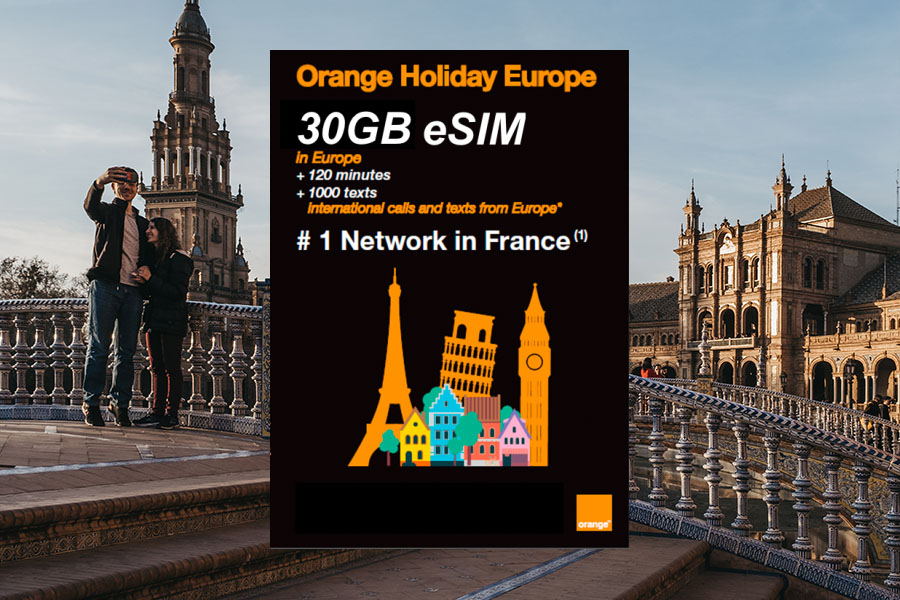
As one of Europe’s largest telecommunications conglomerates, Orange provides robust network coverage and rapid 5G/4G data speeds. The popular 30GB and newly introduced 50GB to 70GB Orange Holiday plans include international voice calling, SMS capabilities, and mobile hotspot allowances. While these plans carry validity periods restricted to 14 or 28 days, their native European phone numbers and comprehensive network reliability make them a gold standard for international visitors.
Bouygues My European eSIM
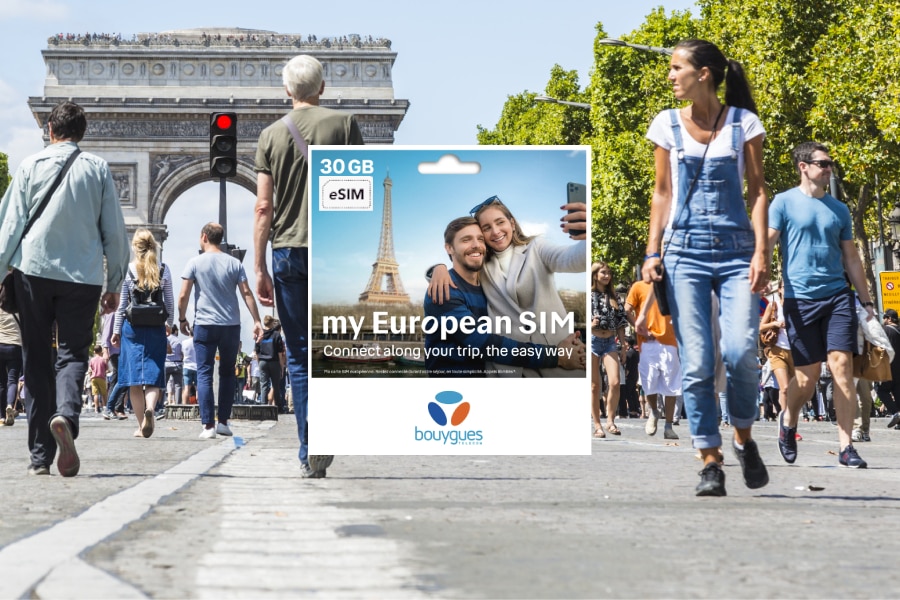
To compete directly with Orange, French carrier Bouygues offers a competitive European eSIM package featuring 30GB of data, a 30-day validity window, and unlimited voice calls within Europe. This extended timeframe provides an ideal balance for travelers embarking on month-long itineraries.

Smart Comfort X eSIM
For budget-conscious travelers requiring minimal data, data-only providers offer streamlined packages such as the 5GB Smart Comfort X plan. Functioning as an international aggregate eSIM, it connects dynamically to local partner networks—such as Wind in Italy, O2 in Germany, and Telefonica in Spain—without providing traditional voice calling minutes.
The Regulatory Advantage: The EU Roaming Mandate
A distinct operational advantage of traveling within the European Union stems from a landmark regulatory decision: the EU officially outlawed mobile data roaming fees within member states. Consequently, acquiring an eSIM issued by a carrier in any EU nation—such as France or Spain—grants seamless, fee-free cross-border data usage across all other EU territories. Travelers can cross seamlessly from Paris to Rome or Berlin without triggering additional roaming surcharges or altering their cellular settings.
However, travelers must note geographical exceptions. The United Kingdom and Switzerland do not belong to the European Union. While many pan-European eSIM plans explicitly include coverage for the UK and Switzerland, budget-focused international eSIMs may exclude these nations. Consumers must carefully verify individual coverage maps before purchasing.
Technical Mechanics: What is an eSIM and Device Compatibility?
An embedded SIM (eSIM) is a digital equivalent of a physical plastic SIM card. Fabricated directly onto a smartphone’s motherboard during manufacturing, it allows users to download and install cellular profiles digitally via software installation.

The integration of dual-SIM technology has liberated modern smartphones, enabling devices to maintain an active physical domestic SIM card alongside one or more active digital eSIM travel profiles. This dual-capability ensures that travelers can continue receiving critical two-factor authentication text messages, banking fraud alerts, and incoming calls from their home numbers while simultaneously routing all high-speed mobile data through the affordable European eSIM plan.
Device compatibility has advanced rapidly since 2019. Essentially all modern Apple iPhones (beginning with the iPhone XS and XR) and contemporary Android flagships—including Google Pixel and Samsung Galaxy devices—support eSIM technology. Notably, cellular manufacturers have begun phasing out physical hardware entirely; the United States versions of the iPhone 14, iPhone 15, and subsequent generations feature entirely eSIM-exclusive configurations, eliminating the physical SIM tray.
Step-by-Step Activation and Best Practices for Travelers
Successfully implementing an eSIM requires adherence to specific technical protocols to avoid premature activation or connectivity loss:
-
Device Unlocking: Before departure, consumers must confirm that their smartphone is network-unlocked. Many domestic carriers lock devices to proprietary software networks, preventing foreign SIM cards or digital profiles from functioning until the restriction is officially lifted by the provider.
-
Pre-Departure Purchase: Travelers should purchase and install their chosen eSIM profile while still at home utilizing a stable Wi-Fi network. Doing so ensures the digital profile is fully integrated into the device’s operating system prior to arrival.
-
Timing the Activation: Most prepaid eSIM validity periods (ranging from 14 to 30 days) begin the exact moment the profile connects to a foreign cellular network. Travelers must refrain from fully activating the data line until their aircraft touches down in Europe to preserve every day of their paid service.
-
Operating System Enhancements: Recent mobile operating system updates—such as Apple’s iOS 17.4 release—have introduced automated eSIM installation and management tools, significantly reducing the technical friction previously associated with manual QR code scanning.
-
Data Preservation Strategies: To maximize allotted data allowances, travelers are advised to leverage downloadable offline mapping features via Google Maps, utilize communication applications like WhatsApp that operate purely on data connections, and restrict background data refreshing for heavy social media applications until connected to secure hotel Wi-Fi.
Economic Implications and Market Outlook
The widespread commercial adoption of eSIM technology represents a structural shift in the global telecommunications market. By removing physical distribution bottlenecks, shipping fees, and monopolistic airport retail markups, digital SIM platforms have democratized international connectivity. Competition among third-party providers and legacy European network operators has driven down per-gigabyte costs, empowering modern travelers to remain connected, digitally compliant, and economically efficient while navigating the cultural and infrastructural landscapes of Europe.