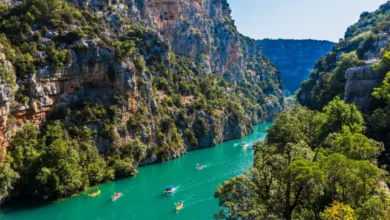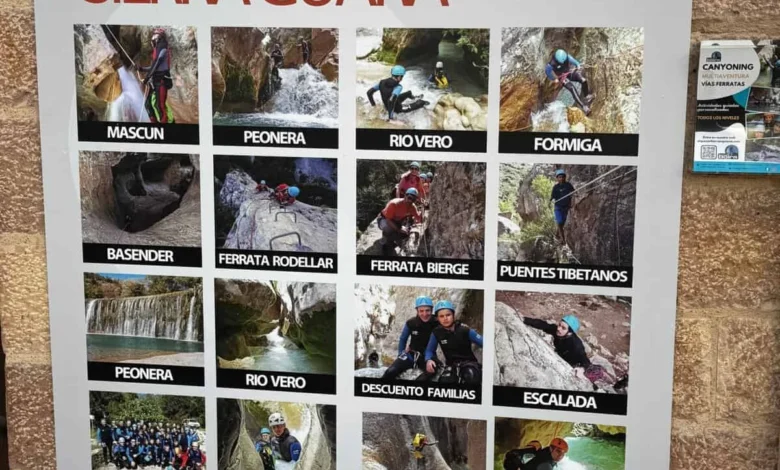
The medieval village of Alquézar, nestled in the limestone foothills of the Spanish Pyrenees within the Aragon region, has quietly transformed into one of Europe’s premier hubs for adventure tourism. Known primarily for its dramatic geography—wedged between sheer vertical rock faces and sweeping vistas—the municipality has capitalized on a unique geographic feature: the Vero River canyon. This natural formation serves as the birthplace and epicenter of modern canyoning, an outdoor sport that combines hiking, swimming, climbing, and rappelling directly through water-carved gorges. As travelers increasingly seek experiential and nature-based tourism, Alquézar illustrates how remote European communities can leverage specialized geography into sustainable economic drivers.
Main Facts and Geographic Significance
Canyoning, locally known barranquismo, is an outdoor pursuit that involves descending technical river canyons using a combination of walking, jumping, swimming, and rope-assisted climbing. In Alquézar, this activity takes place within the Sierra de Guara Natural Park, a protected area celebrated for its dramatic limestone topography, subterranean caves, and crystal-clear riverways.

The sport requires specialized gear to safely navigate the aquatic environment. Participants are outfitted with neoprene wetsuits, neoprene booties, specialized high-traction aquatic footwear designed for slick surfaces, and protective helmets. Waterproof backpacks containing sealed plastic barrels are utilized to keep personal belongings, hydration, and provisions dry throughout the descent.
While the waters of the Vero River appear pristine and potable, local environmental regulations and expert guides emphasize that the river water is untreated and unfit for direct consumption. Strict conservation ethics govern the area; littering is virtually nonexistent, and local outfitters enforce rigorous "leave no trace" protocols to protect the fragile riparian ecosystem of the canyon.
Chronology and Origins of the Sport
The evolution of canyoning in the Spanish Pyrenees traces back to the 1970s, when local explorers and outdoor enthusiasts began systematically charting and descending the deep, inaccessible gorges of the Sierra de Guara. In its earliest iterations, pioneers of the sport lacked modern technical gear such as neoprene wetsuits and specialized footwear, occasionally undertaking descents with minimal equipment.

Over the subsequent decades, the activity evolved from an unregulated exploratory pursuit into a structured, commercialized adventure sport. The establishment of regulated adventure companies professionalized the descents, introducing standardized safety protocols, certified guides, and specialized equipment that opened the canyons to a broader demographic of travelers. Today, routes are categorized by technical difficulty, ranging from family-friendly introductory excursions—often referred to locally as "baby canyons"—to highly technical vertical descents requiring advanced rappelling and mountaineering skills.
Operational Logistics and Guided Expeditions
A typical introductory canyoning excursion in Alquézar begins with a comprehensive safety briefing and equipment fitting at local outfitters, such as Sally Adventures. Participants embark on a steep, winding descent down from the mountain plateau into the riverbed. Upon reaching the water, participants typically submerge themselves to allow water to enter their wetsuits; body heat warms this trapped water, creating an insulating thermal layer.
The physical journey through the canyon combines various modes of traversal over a span of approximately 2.5 miles. Canyoneers navigate boulder fields, swim through deep pools where the riverbed is out of reach, and occasionally utilize climbing ropes deployed by expert guides to safely negotiate vertical drops or slippery rock faces. Despite the rugged nature of the limestone environment, the rock formations in this section of the Vero River are largely devoid of slippery moss, providing reliable traction for specialized footwear.

Complementary Infrastructure: The Alquézar Footbridges Route
For travelers who prefer dry land or seek a less physically demanding engagement with the canyon landscape, the municipality and regional authorities have developed complementary infrastructure. Chief among these is the Alquézar Footbridges Route (Pasarelas de Alquézar), a municipal engineering project designed to provide accessible tourism without compromising the natural environment.
The footbridges route is a circular 3-kilometer (approx. 1.8-mile) trail featuring approximately 200 meters (656 feet) of elevation gain. The path is engineered as a one-way circuit suspended directly against the vertical limestone walls along the final stretch of the Vero River canyon. Typically completed in roughly two hours at a leisurely pace, the route offers panoramic views of the gorge, medieval architecture, and the canyon floor, accommodating tourists who choose not to participate in wetsuit-based canyoning.
Economic and Tourism Implications

The concentration of adventure tourism in Alquézar highlights a broader trend in rural European economic development. Historically reliant on traditional agriculture and livestock, rural communities in the Pyrenees have increasingly turned to niche outdoor sports to combat depopulation and seasonal economic stagnation.
According to regional tourism data from the Aragon government, adventure tourism sectors—including canyoning, rock climbing, and mountain biking—generate millions of euros annually for local economies, supporting hospitality, retail, and guide services. However, this growth necessitates careful municipal management. Balancing the influx of summer visitors with environmental conservation remains a primary challenge for local authorities in the Sierra de Guara Natural Park, where protecting water quality and local wildlife habitats is critical to sustaining the region’s long-term appeal.
Through a combination of pioneering outdoor recreation, strict environmental stewardship, and accessible infrastructure like the cliffside footbridges, Alquézar remains a benchmark for sustainable adventure tourism in Southern Europe.