The Evolving Landscape of Travel Attribution: Bridging the Gap Between Viral Inspiration and Final Booking

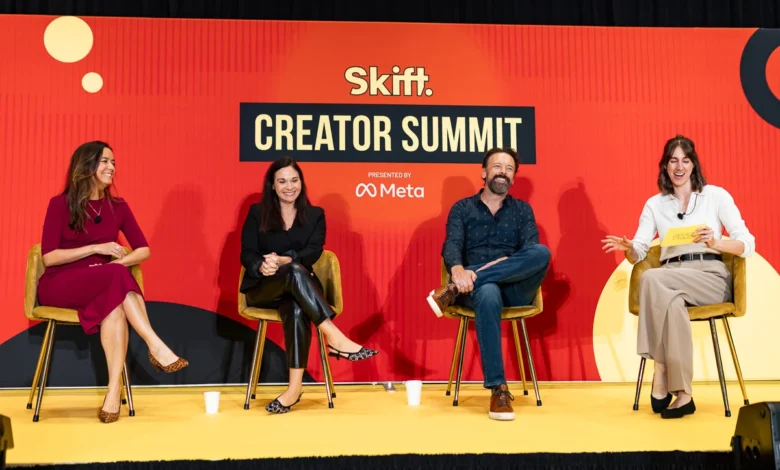
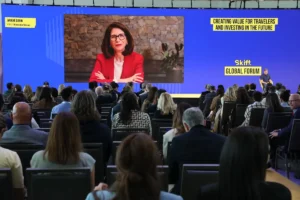
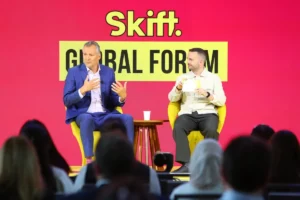
The travel industry is currently navigating a fundamental shift in how consumer behavior is measured, particularly as social media platforms transition from casual discovery engines into primary drivers of travel intent. At the Skift Creator Summit held in New York City on September 22, 2026, industry leaders from Meta, Hyatt, and Matador Network gathered to address a persistent challenge: the "attribution gap." As travelers increasingly turn to short-form video content on Instagram and TikTok for vacation inspiration, brands are finding that traditional, click-based attribution models are failing to capture the true ROI of influencer and creator marketing.
The core of the issue lies in the non-linear nature of the modern travel journey. A potential guest may be inspired by a Reels video of a tropical resort, but that initial spark may not manifest into a confirmed booking for several months. During this latency period, the traveler may engage with various other touchpoints, search engines, and review sites, making it difficult for marketers to accurately attribute the initial conversion to the correct social media spark.
The Limitation of Traditional Click-Based Metrics
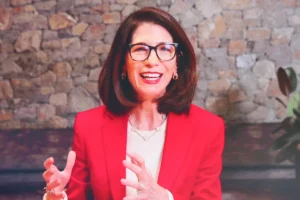
For years, digital marketing departments have relied heavily on last-click attribution—a model that assigns 100% of the credit for a sale to the final link a user clicked before purchasing. However, as Diana Lucas, director of marketing science for North America at Meta, pointed out during the summit, this model is dangerously incomplete in a visual-first digital ecosystem.
With 60% of all content consumption on Meta’s platforms now comprised of video, the passive nature of social media engagement means that users are rarely clicking through immediately. Instead, they are consuming high-quality, aspirational content that plants a seed of desire. If a brand only measures success through direct clicks, they are effectively ignoring the vast majority of the influence these platforms exert on consumer behavior.
This oversight is particularly damaging for luxury hospitality brands like Hyatt. Laurie Blair, senior vice president of global marketing and loyalty at Hyatt, noted that the luxury sector relies on long-term brand equity and emotional connection. When the marketing funnel is viewed through a narrow lens of immediate conversion, the long-tail value of high-quality creator content—which fosters trust and desire over weeks or months—is systematically undervalued.
The Chronology of an Influencer-Driven Booking
To understand why the gap exists, one must look at the typical lifecycle of a social media-inspired trip.
- The Discovery Phase (Month 0): A user scrolls through Instagram or TikTok and encounters a high-production video featuring a specific destination or hotel property. At this stage, the intent is passive. There is no intent to book, only an emotional response to the visuals.
- The Incubation Phase (Month 1-2): The user returns to the creator’s profile or saves the video. They may mention the destination to a travel companion. During this time, they are exposed to retargeting ads or similar organic content from other creators, reinforcing the initial idea.
- The Research Phase (Month 3): The user finally moves to active search, likely using a search engine to check rates or reviews. Because they are now searching for the brand name, the attribution for the eventual booking is often awarded to search engines or email newsletters rather than the social video that sparked the idea.
- The Conversion Phase (Month 4): The booking is made. By this point, the original social media interaction is effectively invisible to standard analytical software.
This timeline demonstrates why brands that abandon creator marketing due to "poor click-through rates" are missing the foundational stage of the customer journey.
Data-Driven Realities in Travel Marketing
The shift toward video is not merely a trend; it is a structural change in how information is processed. According to industry data, video content generates significantly higher levels of engagement and brand recall than static images. Yet, the technical infrastructure for tracking this engagement remains rooted in legacy systems designed for text-heavy, link-driven advertising.

The discrepancy between "view-through" impact and "click-through" metrics is significant. Meta’s internal research suggests that when brands include video in their marketing mix, the total incremental lift in conversions is often three to four times higher than what is reported by standard click-based tracking. Brands that fail to integrate "view-through" data—which tracks users who saw an ad but did not click it, yet still converted later—are effectively blind to the effectiveness of their top-of-funnel investments.
Official Perspectives from Industry Leaders
During the panel, Ross Borden, founder and CEO of Matador Network, emphasized that the industry must move toward a more holistic view of "influence." He argued that creators are not just affiliates; they are modern storytellers whose work functions as the new digital brochure. When brands treat creators as transactional entities focused solely on link-clicks, they stifle the creative potential of the partnership.
Laurie Blair of Hyatt added that the hospitality industry is currently in a "recalibration phase." For Hyatt, the goal is to align brand messaging across the entire consumer journey. This involves ensuring that the tone, aesthetic, and value proposition presented by a creator in a 30-second video are perfectly mirrored when the guest finally arrives at the property website to book their stay. The friction between these two experiences is often where bookings are lost.
Broader Implications for the Travel Sector
The struggle to bridge this gap has profound implications for how travel companies allocate their marketing budgets in the coming fiscal years.
1. Increased Investment in Marketing Science: Companies are likely to shift budgets away from pure performance marketing and toward sophisticated marketing science teams capable of performing "Marketing Mix Modeling" (MMM). MMM allows brands to look at correlation—such as the relationship between a surge in social video views and a corresponding lift in organic search traffic—rather than relying on individual click data.
2. A New Metric for Success: We are moving toward a future where "Brand Lift" and "Search Lift" metrics will become as important as "Conversion Rate." By tracking how many users search for a specific hotel brand after a major creator campaign, marketers can assign a proxy value to the social content.
3. Long-term Creator Partnerships: Because the path to purchase is so long, one-off influencer posts are becoming less effective. Brands are increasingly pivoting toward long-term partnerships with creators who can act as brand ambassadors, keeping the destination top-of-mind over several months rather than relying on a single, fleeting viral moment.
Conclusion
The Skift Creator Summit highlighted a pivotal moment for the travel industry. As digital consumption habits evolve, the tools used to measure them must evolve in tandem. The "attribution gap" is not a failure of social media as a marketing channel, but rather a failure of legacy metrics to keep pace with human behavior.
For brands to remain competitive, they must stop viewing social video as a bottom-of-funnel conversion tool and start treating it as the primary catalyst for inspiration. By integrating view-through data, embracing long-term creator relationships, and prioritizing brand-lift metrics, the travel industry can finally begin to connect the dots between a user’s initial, passive discovery and the final, confirmed booking. The future of travel marketing lies not in the click, but in the sustained narrative that drives the traveler toward their next journey.