Coffee in the Hellenic Republic serves as far more than a morning stimulant; it functions as a primary social lubricant and a foundational pillar of the nation’s cultural identity. While many global regions prioritize the technical aspects of the beverage or the efficiency of its consumption, Greek coffee culture is characterized by its deliberate rejection of haste. In Greece, the act of drinking coffee is a pretext for communal engagement, a medium for political and social discourse, and a vital expression of the "siga-siga" (slowly-slowly) philosophy that defines the Mediterranean lifestyle. This enduring tradition, rooted in centuries of history and adapted through modern innovation, remains one of the most significant ethnographic features of the region.
The Historical Genesis and the Ottoman Legacy
The roots of Greek coffee are inextricably linked to the history of the Ottoman Empire. For centuries, the preparation of coffee across the Balkans and the Levant followed a singular tradition: finely ground beans boiled in a small, long-handled pot. Originally known in Greece as "Turkish coffee," the nomenclature underwent a significant shift in the mid-20th century. Following the diplomatic tensions and the 1974 invasion of Cyprus, the Greek coffee industry and the public at large rebranded the drink as "Greek coffee" (ellinikos kafes) to assert national identity.
Despite the name change, the traditional preparation method remains a testament to ancient techniques. The coffee is prepared in a "briki," a tapered brass or copper pot that allows for the perfect accumulation of "kaimaki"—the rich, creamy foam that sits atop the brew. Unlike Western filtered coffee, Greek coffee is never stirred once poured, allowing the sediment to settle at the bottom of the "demitasse" cup. This method preserves the essential oils and antioxidants of the bean, contributing to the longevity often associated with residents of Greek "Blue Zones," such as the island of Ikaria.
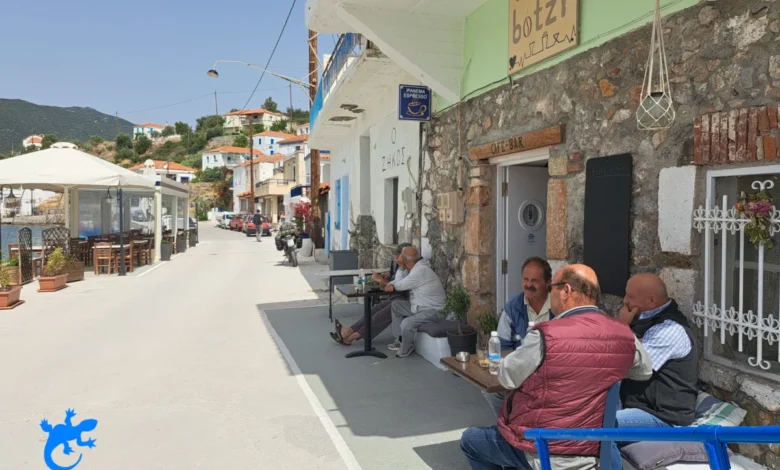
Historically, the "kafeneio" (traditional coffee shop) served as the focal point of village life. These establishments were the modern equivalent of the ancient "agora," acting as town halls where men gathered to discuss local news, play "tavli" (backgammon), and engage in heated political debates. While the demographic of these shops has diversified in the 21st century, the underlying principle of the kafeneio as a democratic space for public life remains unchanged.
A Timeline of Innovation: From the Briki to the Frappé
The evolution of Greek coffee culture is marked by a pivotal moment of accidental innovation during the 1957 Thessaloniki International Fair. Dimitris Vakondios, a representative for Nestlé, was attempting to find a way to drink his usual instant coffee during a break. Lacking hot water, he mixed the coffee granules with cold water and ice in a shaker. The resulting frothy, chilled beverage became the "Frappé," a drink that would dominate Greek summers for the next half-century.
The Frappé represented a modernization of Greek social life, aligning with the country’s post-war urban development and the rise of a vibrant youth culture in the 1960s and 70s. It was the first "long" coffee drink in the region, designed to be sipped over several hours.
By the early 1990s, however, the Greek palate began to shift toward espresso-based drinks. This led to the creation of the "Freddo Espresso" and "Freddo Cappuccino." These drinks involve whisking hot espresso with ice to create a cold, refreshing beverage that retains the sophisticated flavor profile of high-quality Arabica beans. Today, the Freddo has largely supplanted the Frappé in urban centers like Athens and Thessaloniki, signaling a move toward "third-wave" coffee appreciation while maintaining the traditional slow-consumption habit.

Statistical Overview of Consumption and Economic Impact
Data from the Hellenic Coffee Association highlights the staggering scale of coffee consumption within the country. Greece consistently ranks among the top fifteen coffee-consuming nations per capita globally. According to 2023 industry reports, Greeks consume approximately 5.5 kilograms of coffee per person annually. This translates to an estimated 40,000 tons of coffee imported into the country each year.
The economic footprint of coffee is equally substantial. The sector is estimated to contribute over €3 billion to the Greek economy annually, encompassing everything from large-scale importers and roasteries to the tens of thousands of independent cafes that line the streets of every municipality. In a country that has faced significant economic volatility over the last decade, the coffee industry has proven remarkably resilient. It is estimated that one in every ten new small businesses opened in Greece is related to coffee service, providing a vital source of employment for the younger generation.
Furthermore, the "coffee break" is an informal but rigid institution in the Greek labor market. Unlike the "grab-and-go" culture of New York or London, a Greek coffee break can last anywhere from 30 to 90 minutes. Economists note that while this may appear to lower immediate productivity, it serves as a critical period for networking and mental decompression, which many sociologists argue contributes to the social cohesion of the Greek workforce.
The Lexicon of Ordering: A Guide to Customization
In Greece, ordering coffee is a precise art form that dictates the beverage’s sweetness and strength. This customization is essential because traditional Greek coffee and Frappés are prepared with sugar already integrated into the brewing or shaking process, rather than added afterward.

The four primary levels of sweetness are:
- Sketos (Plain): A bitter, strong brew with no sugar. This is often preferred by coffee purists and older generations.
- Metrios (Medium): Usually prepared with one teaspoon of sugar, providing a balance between the bitterness of the bean and sweetness.
- Glykos (Sweet): Prepared with two teaspoons of sugar.
- Vary Glykos (Extra Sweet): A heavy, syrupy version of the drink, often featuring double portions of both coffee and sugar.
When ordering the modern Freddo variants, consumers also specify the type of milk. A Freddo Cappuccino is topped with "afrogala," a cold, frothed milk that has a velvety, meringue-like consistency. The precision with which these drinks are ordered reflects the individualistic nature of Greek consumers and the high standards they hold for their daily ritual.
Sociological Analysis: Coffee as a Tool for Longevity and Mental Health
The health implications of Greek coffee culture have drawn international interest, particularly from researchers studying "Blue Zones"—regions where people live significantly longer than the global average. On the island of Ikaria, where one in three residents lives into their 90s, daily consumption of boiled Greek coffee is a common denominator. Clinical studies suggest that the specific brewing process of Greek coffee extracts a higher concentration of polyphenols and antioxidants compared to filtered methods, which may aid in cardiovascular health and reduce the risk of Type 2 diabetes.
Beyond the biological benefits, the sociological impact on mental health is profound. Loneliness and social isolation are frequently cited as "silent killers" in modern Western societies. The Greek coffee house acts as a preventative measure against this. For the elderly, the morning visit to the kafeneio provides essential cognitive stimulation and social validation. For the youth, the "coffee date" is the primary method of maintaining friendships and romantic connections.

Sociologists observe that the Greek insistence on "spending time" rather than "saving time" during a coffee break acts as a natural buffer against the stresses of modern globalization. The beverage is rarely consumed in isolation or while walking; it requires a seat, a glass of water, and, ideally, a companion.
Broader Impact and Global Implications
The influence of Greek coffee culture is increasingly felt beyond its borders. As the global coffee industry moves toward the "fourth wave," which emphasizes the cultural and social stories behind the bean, the Greek model of "slow coffee" is being exported to major metropolises. Greek-style cafes are proliferating in London, New York, and Melbourne, catering to a demographic that is increasingly weary of the mechanized, impersonal nature of global coffee chains.
Furthermore, the Freddo Espresso is beginning to appear on specialty coffee menus worldwide, challenging the dominance of the Italian Iced Latte. This global expansion not only promotes Greek agricultural exports but also serves as a form of "soft power," projecting an image of Greece that is modern, sophisticated, and deeply rooted in quality.
In conclusion, the coffee culture of Greece is a complex tapestry woven from threads of history, economy, and social philosophy. It is a tradition that has survived empires, economic crises, and technological revolutions by remaining true to its core purpose: the facilitation of human connection. Whether it is a traditional brew prepared on hot sand or a modern Freddo served in a sleek Athenian bar, the Greek coffee remains an enduring symbol of a nation that understands that the finest things in life are those that are savored slowly.