Understanding the U.S. Department of Transportation 24-Hour Flight Cancellation Rule

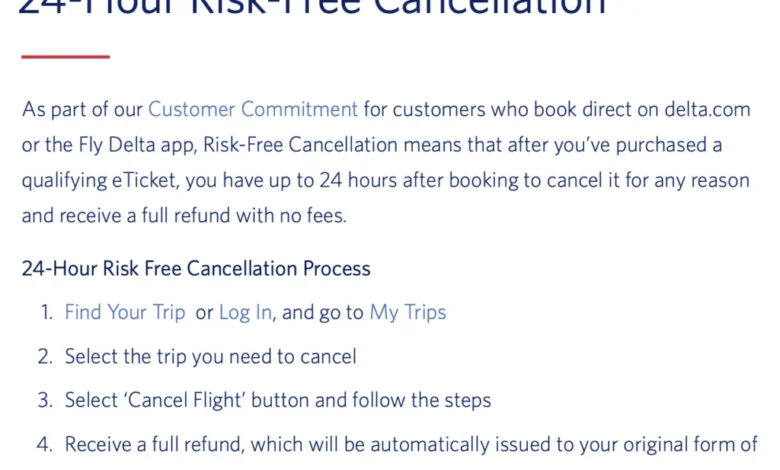
The hesitation that precedes booking a flight is a familiar psychological hurdle for many travelers. Prospective passengers frequently grapple with uncertainties such as potential price drops following a purchase or the difficulty of securing approved time off from an employer. However, federal regulations governing the aviation industry provide a robust safety net designed to mitigate these exact anxieties. Under a mandate enforced by the U.S. Department of Transportation (DOT), consumers possess the right to cancel virtually any flight reservation touching U.S. soil within 24 hours of booking, provided the transaction occurs at least seven days before the scheduled departure. This policy guarantees a full refund to the original form of payment rather than restricting reimbursement to airline vouchers or future travel credits.
The Regulatory Framework and Origins of the 24-Hour Mandate
The foundational policy protecting air travelers from immediate buyer’s remorse was formally established by the DOT to ensure fair consumer practices within the commercial aviation sector. Prior to the implementation of this regulation, airlines maintained disparate and often restrictive cancellation policies. Many carriers imposed heavy financial penalties or prohibited refunds entirely the moment a ticket was issued, leaving consumers vulnerable to sudden schedule changes or fleeting booking errors.
To rectify this imbalance, the DOT instituted consumer protection rules requiring airlines operating flights to, from, or within the United States to adopt specific risk-free booking provisions. Under the federal directive, carriers are given a regulatory choice: they must either permit passengers to cancel a reservation and receive a full refund without penalty for 24 hours after purchase, or allow consumers to hold a quoted fare price for 24 hours without payment. Because the vast majority of commercial carriers—including domestic heavyweights and international legacy airlines—choose the refund model, the 24-hour cancellation window has become the industry standard.

Mechanics of the Rule: Scope and Applicability
Navigating the nuances of the federal cancellation policy requires an understanding of how broadly the mandate applies across different ticket classes and carrier types. The DOT regulation is sweeping in its scope, encompassing all commercial airlines that market and operate flights touching the United States. This includes major U.S. carriers such as Delta Air Lines, United Airlines, and American Airlines, as well as low-cost carriers like Southwest Airlines and international operators flying into or out of American airports.
Significantly, the type of fare purchased does not diminish a consumer’s rights under the 24-hour rule. Whether a passenger secures a premium first-class ticket, a standard main cabin seat, or a restrictive basic economy fare—which typically carries strict non-refundable terms later in its lifecycle—the initial 24-hour window supersedes these restrictions. As long as the ticket was purchased directly through the airline at least a week prior to takeoff, the basic economy classification cannot be used by a carrier to deny a full monetary refund during the designated introductory period.
While the majority of airlines process these cancellations instantaneously through online reservation management portals, a select number of carriers utilize the alternative option permitted by the DOT: the price-hold feature. International carriers such as Qatar Airways or specialized booking systems may allow customers to freeze a specific ticket price for a set duration, sometimes extending up to 72 hours, without requiring immediate payment. Once the hold period expires, the customer must complete the transaction at the locked-in rate or allow the reservation to lapse automatically.
Critical Exceptions: Last-Minute Bookings and Timing Nuances
Despite the broad protection afforded by federal regulations, critical boundaries govern the applicability of the 24-hour rule. The most notable exception involves the timing of the reservation relative to the flight’s scheduled departure. Federal guidelines explicitly state that the mandatory 24-hour refund requirement applies only to itineraries booked at least seven days, or 168 hours, prior to departure.
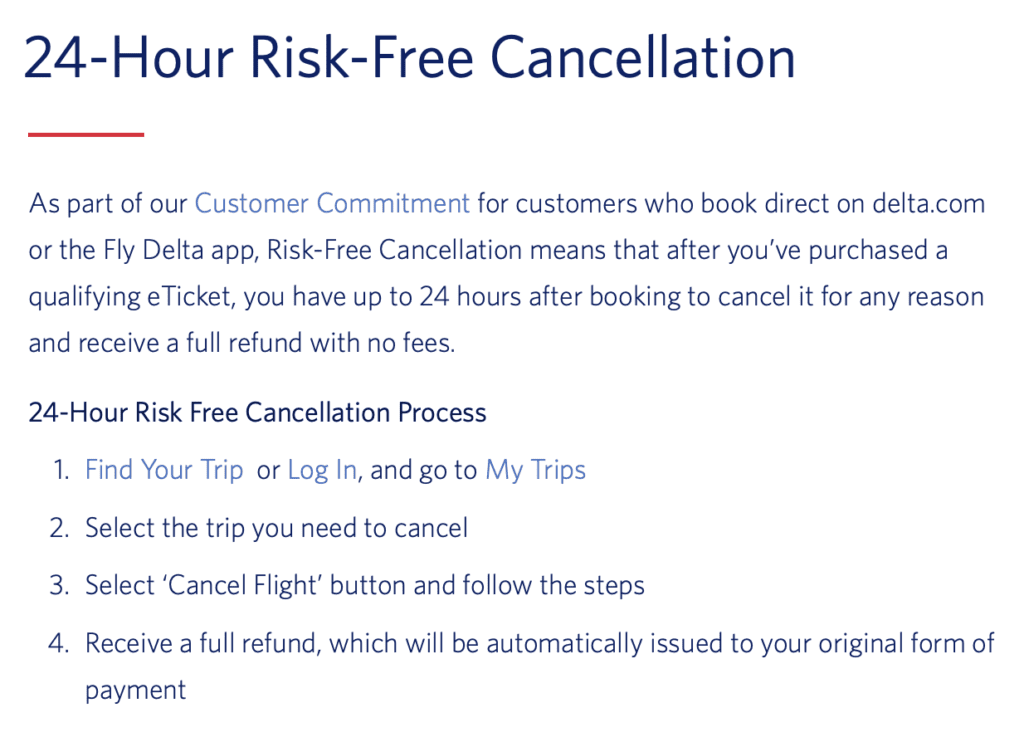
When a consumer purchases a ticket for immediate or near-term travel—such as a flight departing in three days—the strict federal mandate for a 24-hour refund window no longer applies. In these instances, airlines revert to their individual corporate policies regarding last-minute bookings. While some carriers maintain flexible internal policies that continue to offer brief grace periods for same-day or next-day reservations, others enforce strict non-refundable terms immediately upon ticketing. Consequently, travelers booking spontaneous trips must review the specific carrier’s contract of carriage to determine whether a last-minute cancellation will result in a cash refund, a travel credit, or the complete forfeiture of funds.
Industry Comparisons and Alternative Flexibility Measures
In response to shifting consumer expectations and increased competition, many major airlines have voluntarily expanded their flexibility offerings beyond the baseline federal requirements. Understanding how individual carriers handle post-booking modifications can provide strategic advantages for frequent flyers.
For instance, major U.S. network carriers and low-cost operators have largely phased out change fees for standard economy and premium cabins, replacing them with policy frameworks that issue travel credits rather than cash refunds when a ticket is canceled after the initial 24-hour window. However, disparities remain regarding basic economy tickets. While some airlines strictly forbid any changes or cancellations to basic economy fares outside the 24-hour federal window, others offer partial flexibility under specific conditions.
Travel industry analysts frequently advise consumers to evaluate the total cost and flexibility profile of a ticket before finalizing a purchase. Utilizing the 24-hour window as an exploratory tool allows passengers to secure volatile flash sales, error fares, or high-demand itineraries without financial risk while confirming logistical details such as hotel accommodations, vacation leave, or connecting transportation.

Strategic Implications for Modern Travelers
The practical application of the DOT’s 24-hour rule transforms how consumers interact with dynamic airline pricing algorithms. Because airfares fluctuate constantly based on supply, demand, and seat inventory, hesitation often results in missed financial opportunities. By adhering to the operational philosophy of booking immediately and verifying logistics subsequently, travelers can successfully capture highly discounted fares that would otherwise vanish during a prolonged decision-making process.
Furthermore, consumer advocacy groups note that the rule serves as an essential safeguard against inadvertent booking errors, such as selecting incorrect travel dates, misspelling passenger names, or choosing the wrong origin airport. Because corrections made within the 24-hour window carry no financial penalty, passengers can rectify mistakes seamlessly without contacting customer service centers or navigating complex bureaucratic appeal processes.
Ultimately, the federally mandated 24-hour cancellation policy remains one of the most powerful consumer advocacy tools within the modern travel landscape. By understanding the parameters, recognizing the seven-day restriction for advance purchases, and verifying individual airline compliance, passengers can navigate the complexities of flight procurement with confidence and financial security.
Related posts: