How to Skip the Santorini Cable Car: A Better Start to Your Cruise Day for Travelers Seeking Efficiency and Scenic Perspective


For thousands of cruise ship passengers arriving in Santorini each week, the "Old Port" experience is defined by a singular, frustrating bottleneck: the Santorini Cable Car. As ships anchor in the caldera and tender boats ferry passengers to the base of the cliffs at Skala, the only conventional route to the island’s capital, Fira, is the cable car line. During the peak summer season, when as many as five or six large cruise vessels may dock simultaneously, this transition point becomes a significant logistical hurdle. It is not uncommon for passengers to spend between 45 and 90 minutes standing in a queue under the Mediterranean sun, effectively consuming 20% to 30% of their limited time ashore before their actual excursion even commences.
However, a shift in travel logistics is emerging. By leveraging private maritime transfers that bypass the cliffside cable car entirely, savvy travelers are finding that the journey to the caldera rim can be transformed from a period of stagnation into an immersive tour of the island’s volcanic geology. Companies such as iGoHellas have begun offering specialized tender-to-boat transfers that transport passengers from the Old Port directly across the caldera to Ammoudi Bay, situated at the base of the northern village of Oia.
The Anatomy of the Santorini Port Bottleneck
The geography of Santorini dictates its logistical challenges. The island’s primary harbor, Skala (the Old Port), is positioned at the base of precipitous cliffs. There is no vehicular road access to this point; the cliff is too steep, and the terrain is protected by local zoning laws that prohibit major infrastructure development. Consequently, the cable car, built in 1982 through a donation by the Loula & Evangelos Nomikos Foundation, serves as the primary mechanical link between the sea and the upper towns.
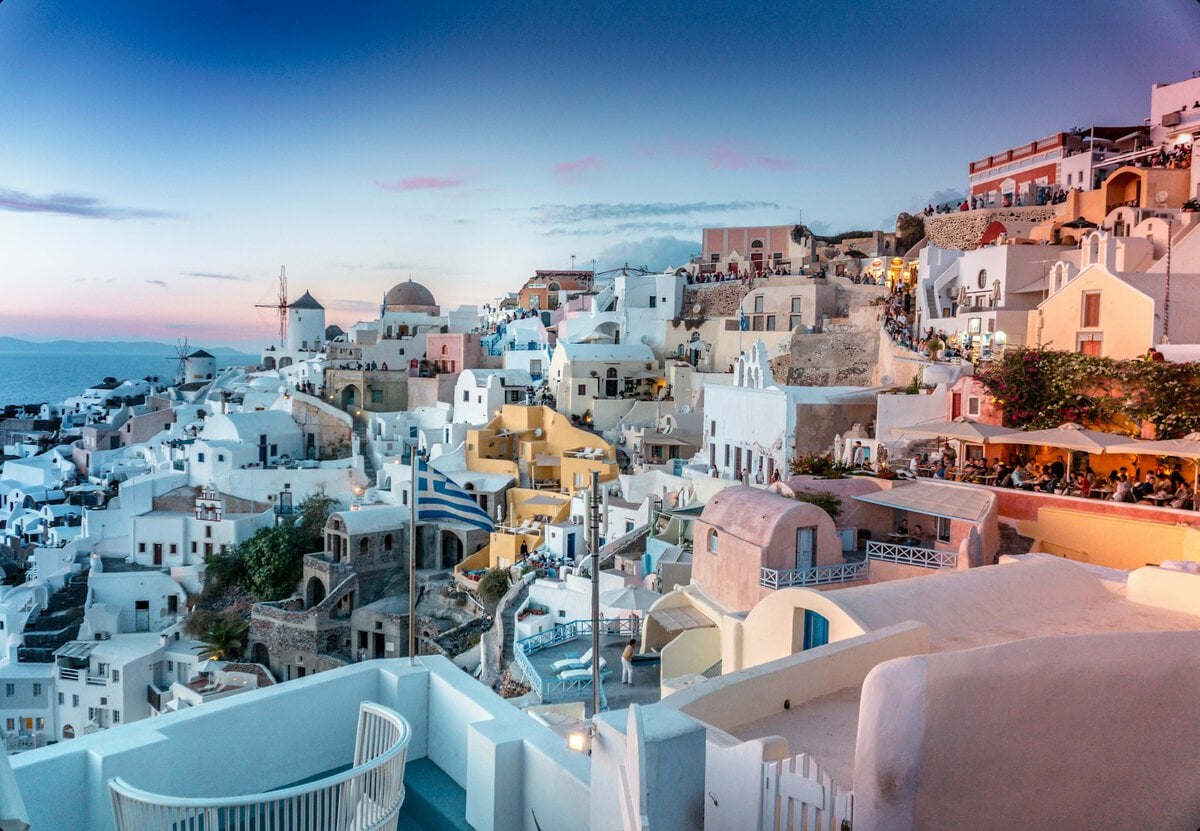
Data from the Santorini Port Authority indicates that the cable car has a capacity of approximately 1,200 people per hour. While sufficient for moderate traffic, this capacity is routinely overwhelmed when multiple cruise ships arrive concurrently, each offloading 2,000 to 4,000 passengers. The resulting queue is not merely a matter of inconvenience; it represents a significant loss of tourism revenue and time-efficiency for day-trippers. When a ship remains in port for only six to eight hours, the loss of an hour and a half to a queue represents a substantial portion of the visit, often forcing travelers to truncate their itineraries or skip planned stops entirely.
A Strategic Alternative: The Maritime Approach
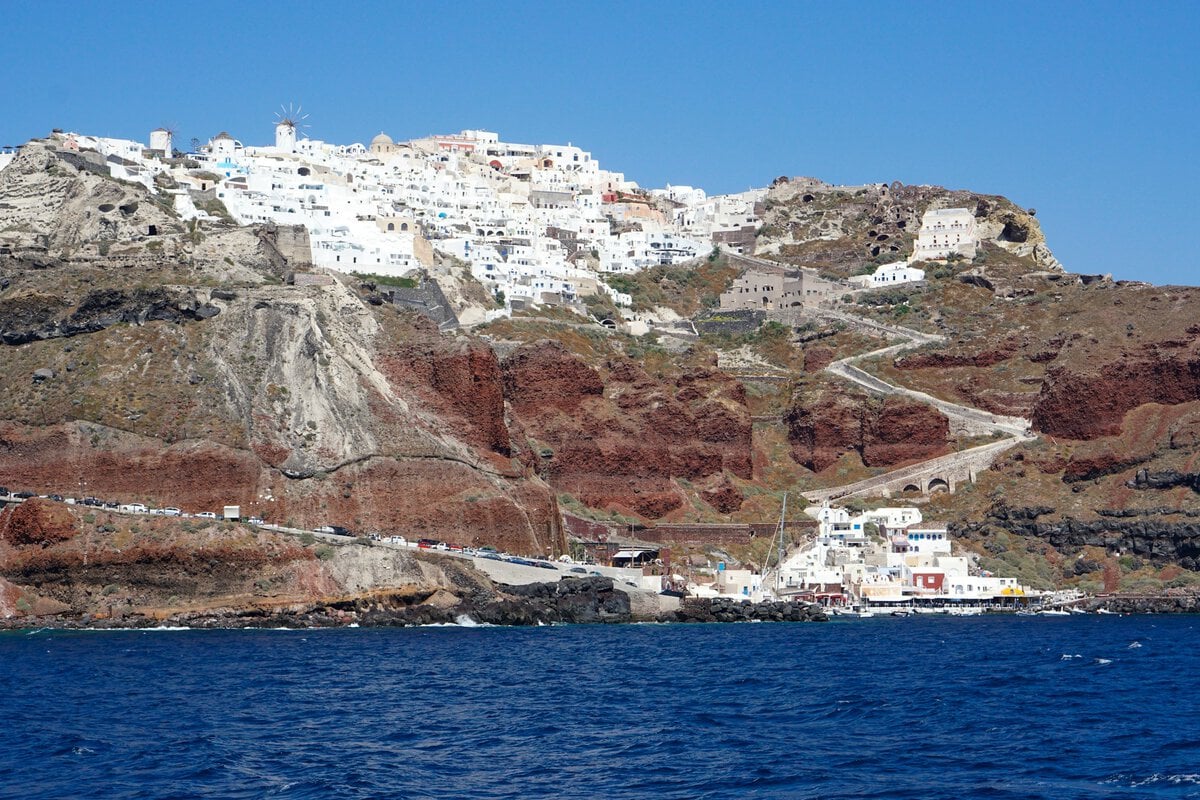
The alternative to the cable car involves a logistical pivot: instead of attempting to ascend the cliff in Fira, passengers meet local guides at the Old Port who facilitate an immediate transfer to a private boat. This vessel navigates the caldera, offering a perspective that is inaccessible to those using the cable car or the traditional donkey path.
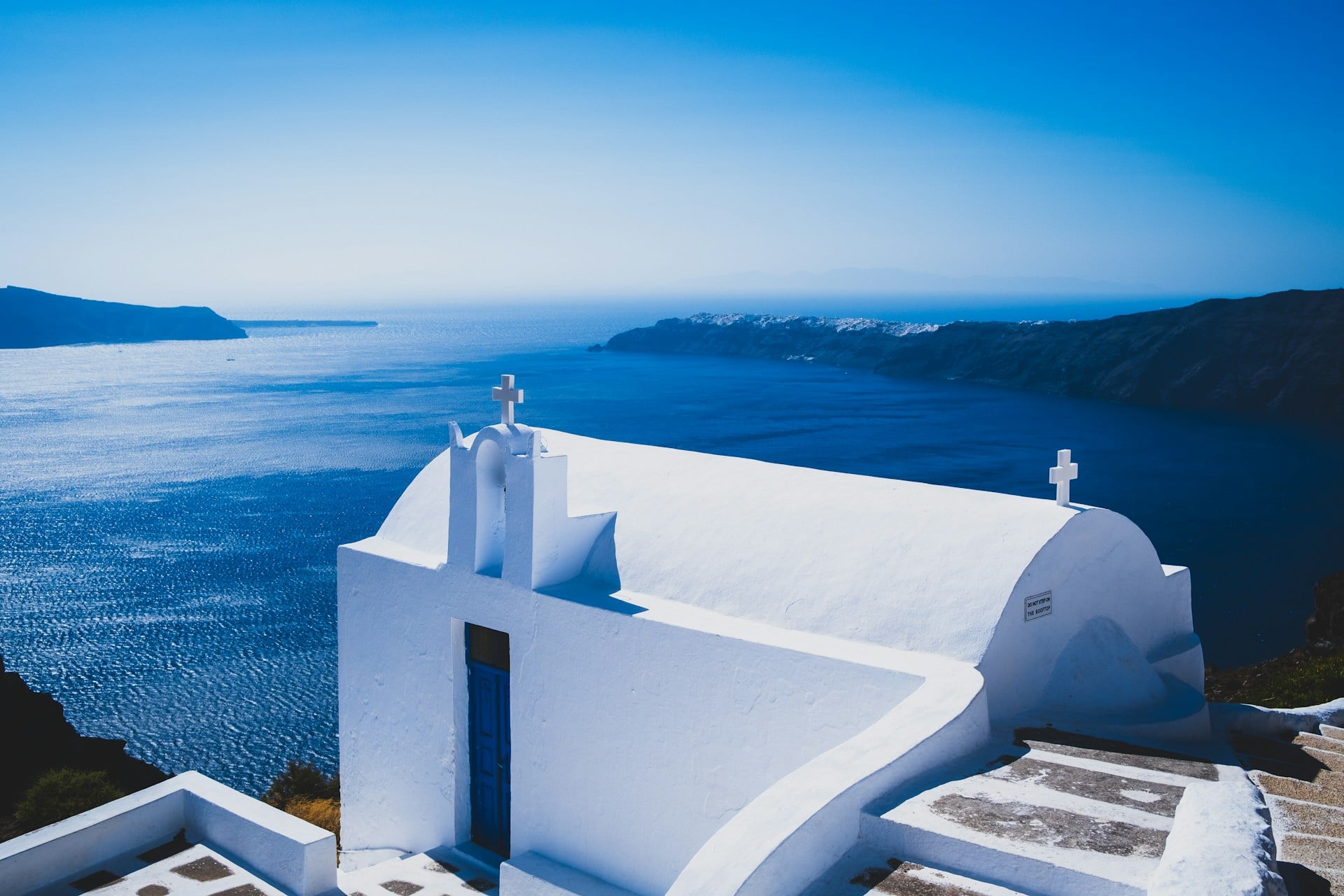
From the water, the scale of the island is magnified. Passengers can observe the layers of volcanic ash, pumice, and solidified lava flows that comprise the caldera walls. This route allows visitors to land at Ammoudi Bay, a harbor located directly below Oia. By arriving at the northern end of the island, travelers are perfectly positioned to begin their sightseeing in Oia, famous for its blue-domed churches and pedestrian-only cobblestone alleys, before traveling southward toward Fira, Imerovigli, and beyond. This "north-to-south" flow allows groups to effectively "outrun" the surge of travelers arriving in Fira, providing a quieter, more curated experience in the island’s most popular village.
The 6-Hour Private Tour Itinerary
For those seeking to maximize their time, private six-hour tours have been structured to capitalize on this arrival method. These tours typically follow a strategic, linear route designed to minimize backtracking. A common itinerary includes:
- Oia: Early morning arrival allows for a walk along the caldera path before the peak heat and the arrival of larger bus tours.
- Firostefani: A visit to the iconic Three Bells of Fira, the most photographed landmark on the island.
- Profitis Ilias: A drive to the island’s highest point, offering 360-degree views of the archipelago.
- Art Space Winery: A stop at one of the island’s historic, cave-style wineries for a tasting of local Assyrtiko grapes.
- Megalochori and Emporeio: Exploration of traditional villages that showcase pre-1956 earthquake architecture.
- Black Beach: A concluding visit to the volcanic beaches of the south coast before returning to the port.
Implications of Private Transit on Island Logistics
The shift toward private boat transfers carries broader implications for the tourism industry in the Cyclades. As local authorities and the Hellenic Ministry of Shipping look to manage the impact of "over-tourism," private, small-group excursions that utilize the sea for transit are being viewed as a potential model for sustainable growth. By dispersing passengers to various landing points—rather than funneling thousands into the narrow, winding streets of Fira—these services alleviate the strain on the island’s primary transport hubs.
Moreover, the financial analysis of such private tours suggests a high return on investment for the time-constrained traveler. While a private tour costs more than a standard cruise-ship-booked excursion, the ability to skip the queue and customize the itinerary provides a tangible increase in the quality of the experience. Experts note that as cruise ships continue to grow in size, the demand for "expedited" or "alternative" arrival services will likely grow, potentially leading to more regulated private tender operations in the future.
Managing Risks and Scheduling
Despite the advantages, experts advise that travelers must remain cognizant of the limitations inherent in cruise travel. The most critical factor remains the ship’s departure time. Unlike independent land-based travel, cruise ships operate on strict schedules. If a ship departs at 5:00 PM, the last tender is typically required by 4:00 PM or 4:30 PM.
"The efficiency gained by skipping the cable car is an advantage, but it does not remove the necessity for a safety margin," says one industry analyst. "Passengers who opt for private tours must ensure their operators are well-versed in cruise schedules and that they maintain a buffer of at least 60 to 90 minutes before the final boarding call."
While the boat crossing is generally faster, its reliability can be affected by weather conditions. High winds in the Aegean, locally known as the Meltemi, can sometimes restrict smaller boat traffic. In such scenarios, the cable car remains the only viable transit method. Therefore, the flexibility of a private guide—who can pivot the itinerary based on real-time weather reports—is a significant benefit over rigid, group-based tour structures.
The Future of Santorini Port Arrivals
The debate surrounding the "cable car bottleneck" has reached the highest levels of local governance. Proposals for a second cable car or an expansion of the current facility have been discussed for years, yet environmental and geological concerns often delay such infrastructure projects. In the absence of a large-scale solution, the trend toward private maritime transfers acts as a necessary "pressure release valve."
For the average cruise passenger, the choice is clear: either accept the inherent wait times of the port’s legacy infrastructure or invest in an alternative that prioritizes time and perspective. As the 2025 and 2026 cruise seasons approach, early booking for these private boat transfers is becoming as essential as booking the cruise itself. By treating the transition from ship to shore as an integral part of the excursion rather than a hurdle to be cleared, travelers are finding that even a short stay on the island can be both meaningful and free from the frustrations of the crowd.
Ultimately, the goal for any Santorini visitor is to move beyond the tourist-heavy bottlenecks and witness the island’s authentic character. Whether through a private boat ride, a wine tasting in a cave, or a stroll through the quiet backstreets of Emporeio, the experience is improved when the logistical stresses are removed. As technology and local business innovation continue to adapt, the way in which travelers experience the caldera is becoming just as spectacular as the destination itself.