Delta Air Lines Sets New Benchmark for Loyalty Program Value with Historic 25,400 SkyMiles Roundtrip Offer to Australia and New Zealand

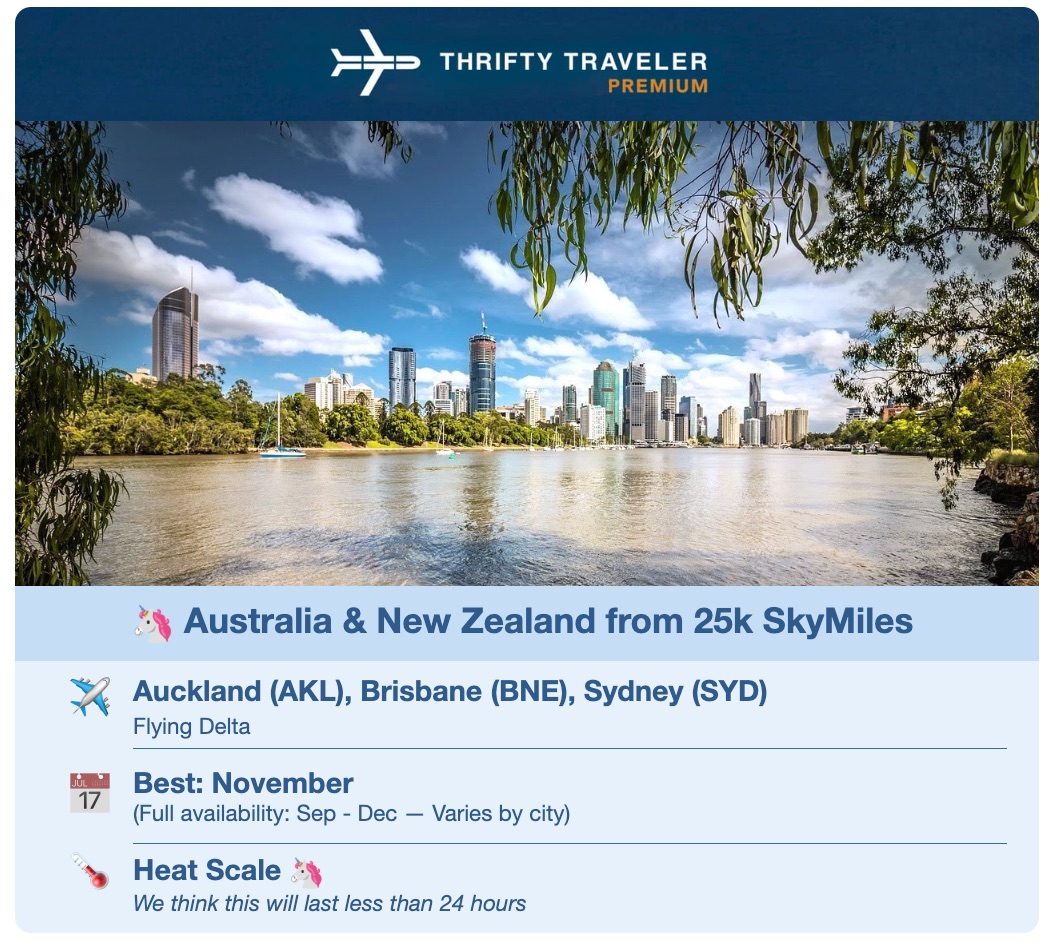
In an unprecedented development for the aviation industry’s loyalty landscape, Delta Air Lines recently facilitated a brief but historic award redemption opportunity, allowing SkyMiles members to book roundtrip travel to Australia and New Zealand for as low as 25,400 miles. This valuation represents a significant departure from standard industry practices for transpacific travel, which typically requires upwards of 80,000 to 120,000 miles for similar itineraries. The deal, which emerged without official advertisement from the carrier, targeted nearly 200 U.S. departure cities, signaling a potential shift in how Delta manages its inventory and engages with its most frequent flyers.
Technical Specifications of the Record-Breaking Redemption
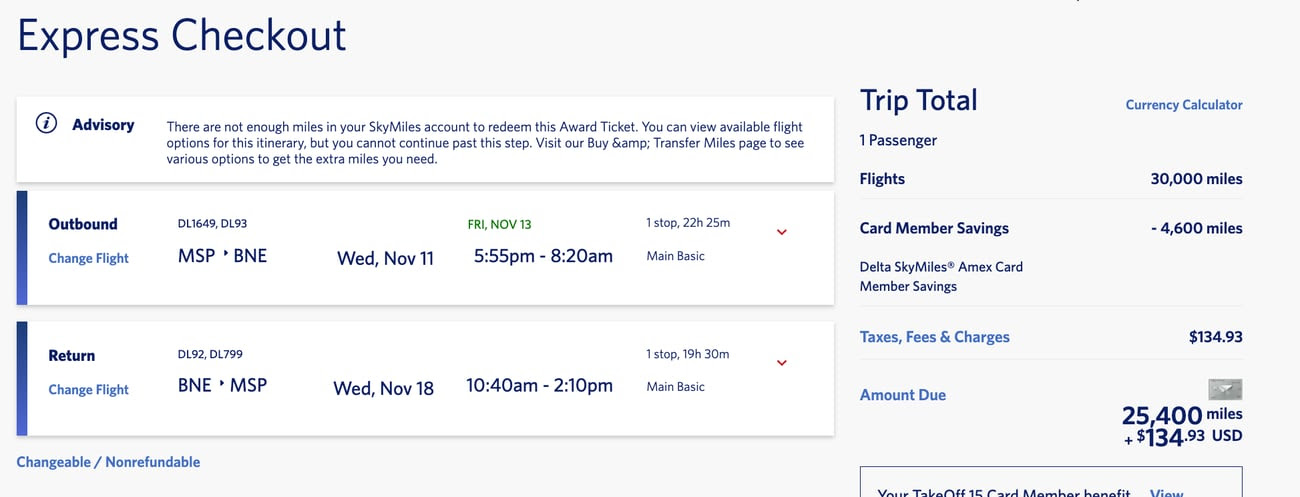
The core of this offering centered on flights departing from a wide array of American airports, ranging from major international hubs like Los Angeles International Airport (LAX) to smaller regional outposts. The primary destinations included Brisbane (BNE) and Auckland (AKL), two critical gateways for the South Pacific. At 25,400 SkyMiles for a roundtrip ticket, the redemption rate fell well below the typical cost of domestic flights within the United States, which often range between 30,000 and 50,000 miles for cross-country routes to cities like New York or Las Vegas.
Industry analysts noted that the lowest rates were primarily available to holders of Delta-branded American Express credit cards, who benefit from the "TakeOff 15" program. This feature provides an automatic 15% discount on all award redemptions for flights operated by Delta. Even without this specific discount, the baseline award rates remained at historic lows, often hovering around 30,000 miles.

The pricing structure utilized Delta’s Basic Economy tier as the entry point. However, the carrier offered tiered upgrades to the standard Main Cabin for an additional 12,000 to 18,000 SkyMiles. This upgrade allows passengers to select seats in advance and offers the flexibility of a full refund upon cancellation—a critical feature for international travel involving complex logistics. Given that cash prices for these same routes often exceed $1,500, the "cents per mile" (CPM) value of this deal was estimated at nearly 6 cents, vastly exceeding the average SkyMiles valuation of 1.2 to 1.5 cents.
Chronology of the "Unadvertised" Flash Sale
The timeline of the event suggests a highly calculated move by Delta’s revenue management team. The deal was first identified by independent flight monitoring services during the early morning hours on a weekday. Unlike traditional promotions, Delta did not utilize its dedicated "SkyMiles Award Deals" webpage or distribute mass marketing emails to its database of millions of members.
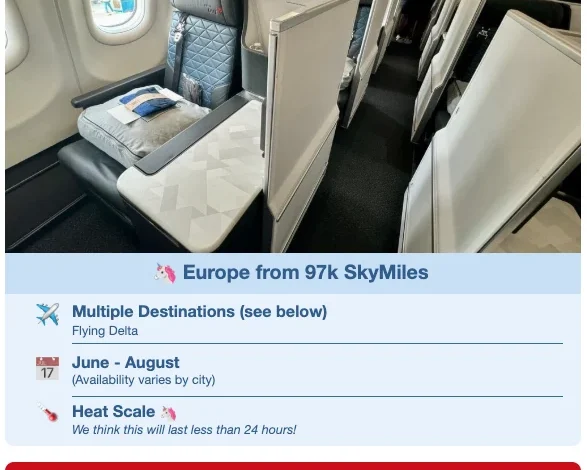
Within hours of the initial discovery, travel demand spiked as word of the "unicorn" deal—a term used by industry experts to describe exceptionally rare value—spread through premium alert networks. Approximately four hours after the rates were first observed, Delta began adjusting the pricing. While the nonstop flights from Los Angeles maintained the lower rates for a slightly longer duration, award prices from nearly all other U.S. origin cities were corrected back to standard levels by the afternoon.
This rapid adjustment period highlights the "flash sale" nature of modern dynamic pricing in the airline industry. It also underscores a growing trend where carriers use unannounced price drops to clear inventory during specific shoulder seasons or to stimulate demand on newly launched routes, such as Delta’s expanded service to Brisbane.
Strategic Context: The South Pacific Aviation Boom
The timing of this historic SkyMiles deal coincides with a period of intense competition in the South Pacific corridor. Following the global pandemic, Australia and New Zealand remained largely closed to international traffic for longer than many other regions. As they reopened, a surge in "revenge travel" drove cash fares to record highs.
In response, major U.S. carriers have aggressively expanded their footprints in the region. United Airlines recently launched a massive expansion of its South Pacific network, and American Airlines has strengthened its partnership with Qantas. Delta’s decision to offer such a low barrier to entry for SkyMiles members can be interpreted as a strategic move to secure market share and brand loyalty in a region where it has historically faced stiff competition.
By offering 25,400-mile roundtrips, Delta effectively lowered the "cost of entry" for a bucket-list destination, potentially capturing a demographic of travelers who would otherwise have chosen a competitor or deferred their trip. Furthermore, by including almost 200 U.S. cities in the deal, Delta leveraged its extensive domestic network to funnel passengers from regional markets—where it often holds a monopoly or near-monopoly—into its international long-haul segments.
The Evolution of Delta SkyMiles Strategy
For much of the last decade, Delta SkyMiles were frequently criticized by points-and-miles enthusiasts, earning the derogatory nickname "SkyPesos" due to the lack of a fixed award chart and the high cost of business-class redemptions. However, the first half of 2026 has seen a notable reversal of this reputation.
The Australia/New Zealand deal is the latest in a series of high-value "flash sales" observed over the past six weeks. Other notable redemptions have included:
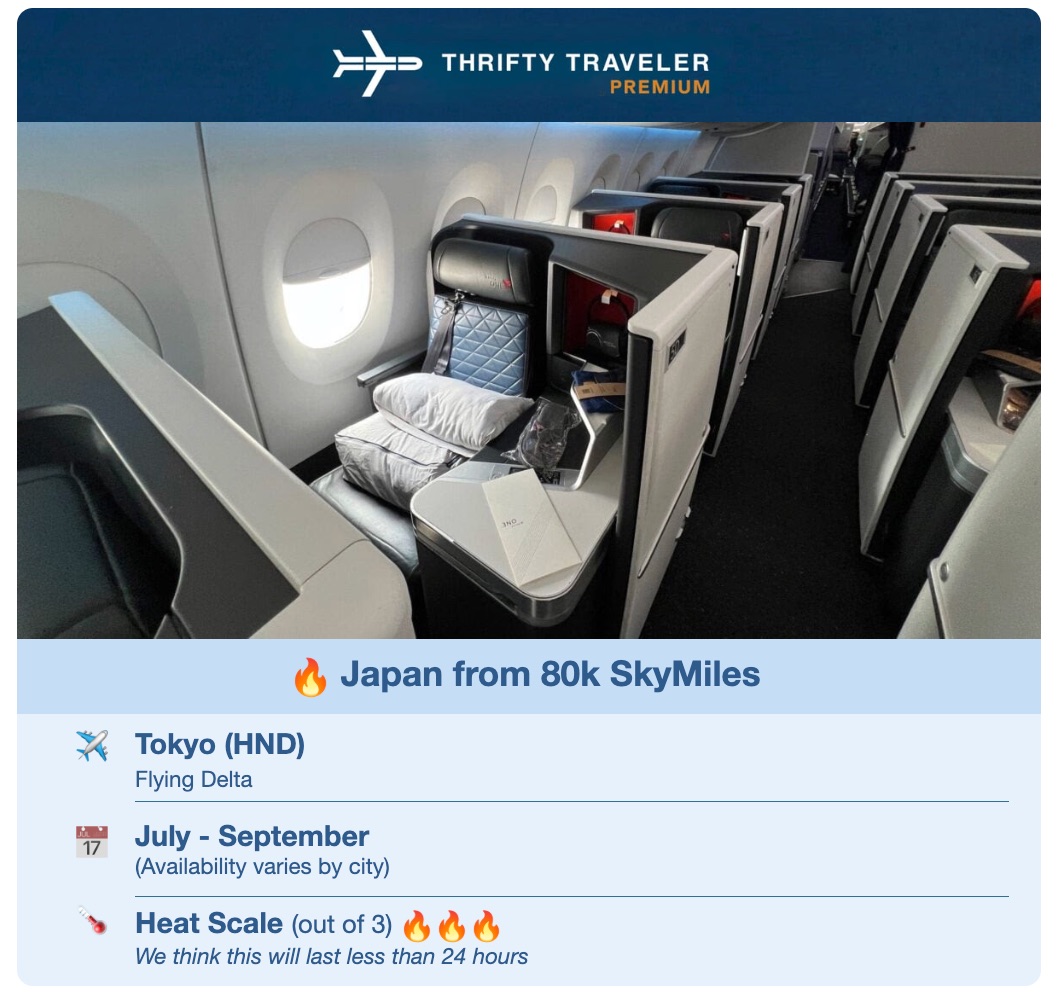
- Tokyo-Haneda (HND): 80,000 SkyMiles for Delta One (Business Class) roundtrip.
- European Gateways: 30,000 to 40,000 SkyMiles for Main Cabin roundtrip to cities like Paris and Amsterdam.
- Domestic Short-Hauls: Frequent "low-floor" redemptions starting at 5,000 miles.
This sequence of deals suggests that Delta is rethinking the utility of its loyalty currency. Rather than focusing on a static value for miles, the airline is utilizing its dynamic pricing engine to create "pockets" of extreme value. This strategy serves two purposes: it encourages members to keep their miles liquid rather than hoarding them, and it rewards members who are highly engaged with the program and capable of booking on short notice.
Analysis: The End of the "Hub Penalty"
One of the most significant takeaways from this recent event is the apparent erosion of the "hub penalty." Historically, Delta (and its competitors) would charge significantly more for passengers departing from their primary hubs—such as Atlanta (ATL), Minneapolis (MSP), or Detroit (DTW)—because they could rely on a captive audience that preferred nonstop flights. Conversely, lower rates were offered from "competitive" cities where other airlines had a larger presence.
During the Australia/New Zealand sale, passengers from Delta hubs were often able to secure the 25,400-mile rate, matching the price offered to those in secondary markets. This shift suggests that Delta is prioritizing load factors and total network optimization over localized price gouging in hub cities. For the consumer, this represents a democratization of award travel, where geographic location no longer dictates the viability of a "bucket-list" redemption.
Industry Implications and Official Responses
While Delta Air Lines has not issued a formal statement regarding the specific 25,400-mile price point, the carrier has previously emphasized its commitment to providing "more ways than ever" for members to use their miles. The move toward unadvertised sales is likely a response to the sophisticated nature of modern travel hacking; by not advertising these deals, the airline can manage the "burn rate" of miles more effectively and prevent the system from being overwhelmed by automated booking bots.
Industry observers suggest that this may be the "new normal" for loyalty programs. As airlines move away from transparent award charts, the value of a mile is no longer determined by a fixed table, but by the carrier’s willingness to periodically "clear the books" of outstanding miles through high-value, short-window opportunities.
Conclusion: A New Era for Award Travel
The 25,400-mile roundtrip to the South Pacific stands as a landmark event in the history of airline loyalty programs. It challenges the prevailing narrative that frequent flyer miles are a devaluing asset and suggests that for the diligent and flexible traveler, the opportunities for outsized value are increasing rather than diminishing.
As Delta continues to refine its SkyMiles strategy, the burden of discovery has shifted to the consumer. The disappearance of the "sales page" means that travelers must now rely on real-time data, alert services, and a willingness to act within minutes of a price drop. For those who managed to book the Australia deal, the reward is a transpacific journey for the price of a domestic hop—a clear indication that in the world of modern aviation, the "unicorn" deal is alive and well.
Related posts: