The Cinematic Legacy of the University of Oxford
The relationship between the Harry Potter films and Oxford spans a decade of production, beginning with Harry Potter and the Philosopher’s Stone in 2001 and continuing through to Harry Potter and the Order of the Phoenix in 2007. During this period, locations across the university were utilized to represent the most vital areas of Hogwarts, including the Great Hall, the Hospital Wing, and the Restricted Section of the library.

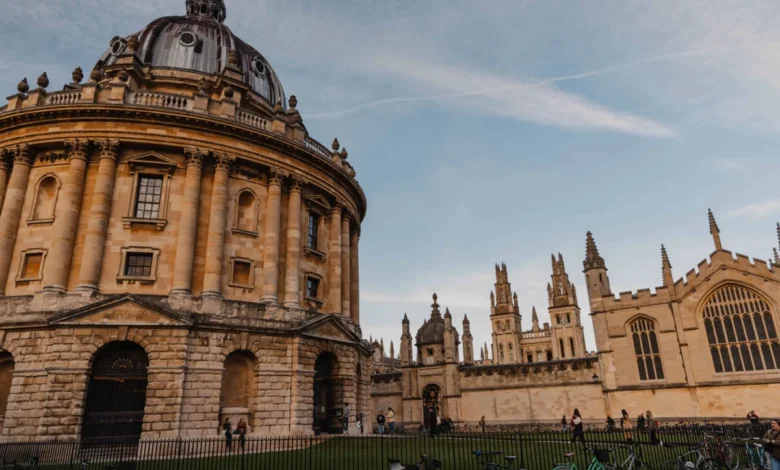
The decision to film in Oxford was driven by the authenticity of its Gothic and Baroque architecture. According to industry analysts, the "screen tourism" or "set-jetting" phenomenon has significantly boosted Oxford’s local economy. Data from VisitBritain suggests that film and television locations are a primary motivator for approximately one-third of all international tourists visiting the United Kingdom. In Oxford, this has translated into a sustained interest in university colleges that might otherwise have remained primarily academic enclaves.

Christ Church: The Blueprint for the Great Hall
Perhaps no location in the world is more synonymous with the visual identity of Harry Potter than Christ Church. Founded in 1546, this college provided three distinct locations that are central to the early films.

The Great Hall Inspiration
While the actual filming of the students’ meals took place on a soundstage at Warner Bros. Studios, that set was a meticulous recreation of the Christ Church Dining Hall. The hall’s high gabled ceiling, long wooden benches, and the portraits of distinguished alumni served as the direct architectural blueprint for the Hogwarts Great Hall. Visitors today can observe the "high table" where faculty members sit, mirroring the staff table where Albus Dumbledore and Minerva McGonagall presided over the student body.

The Bodley Staircase
The 16th-century stone staircase leading to the Dining Hall is a recognizable site from The Philosopher’s Stone and The Chamber of Secrets. It is here that Professor McGonagall first greets the first-year students, and where Harry and Ron encounter Draco Malfoy before the Sorting Ceremony. The intricate fan-vaulted ceiling above the staircase, added in 1640, exemplifies the late Gothic style that defines the films’ aesthetic.

The Cloisters
The Christ Church cloisters were utilized in The Philosopher’s Stone for the scene in which Hermione Granger shows Harry the Quidditch trophy won by his father, James Potter. These walkways, which date back to the medieval period, provided the necessary atmosphere of ancient mystery required for the school’s corridors.

The Bodleian Library: The Pursuit of Knowledge
The Bodleian Library, the main research library of the University of Oxford, is one of the oldest libraries in Europe. Two of its most historic rooms were transformed into key Hogwarts facilities.

The Divinity School as the Hospital Wing
The Divinity School, built between 1427 and 1483, is a masterpiece of English Gothic architecture. Its elaborate stone-carved ceiling served as the Hogwarts Infirmary. This location appeared in multiple films, most notably when Harry recovers from his encounter with Professor Quirrell and later when Ron is treated for poisoning in The Half-Blood Prince. Furthermore, the Divinity School was used as the setting for Professor McGonagall’s dance lessons in preparation for the Yule Ball in The Goblet of Fire.

Duke Humfrey’s Library as the Restricted Section
Duke Humfrey’s Library, the oldest reading room in the Bodleian, stood in for the Hogwarts Library. Its dark wood shelves and ancient, chained books provided the perfect setting for Harry’s nocturnal excursion into the Restricted Section under his Invisibility Cloak. Due to the priceless nature of the volumes housed here, the film crew had to adhere to strict regulations, including a total ban on open flames, necessitating the use of specialized battery-operated lanterns for the scene.

New College: The Triwizard Tournament and the Malfoy Tree
Despite its name, New College was founded in 1379 and features some of the best-preserved medieval architecture in the city. Its cloisters and courtyard were prominent in Harry Potter and the Goblet of Fire.

The college’s cloisters served as the hallways where students wore "Potter Stinks" badges during the Triwizard Tournament. More famously, the courtyard features a massive holm oak tree, often referred to by fans as the "Malfoy Tree." In a pivotal scene, Draco Malfoy sits in this tree to taunt Harry before being transformed into a white ferret by the impostor Mad-Eye Moody. The tree, which is several centuries old, remains a major draw for fans seeking to recreate the iconic moment.

Blenheim Palace: A Glimpse into the Past
Located approximately 20 minutes outside the Oxford city center in Woodstock, Blenheim Palace is a UNESCO World Heritage site and the birthplace of Sir Winston Churchill. While the palace itself is a monument to Baroque architecture, its grounds were used for a crucial flashback in Harry Potter and the Order of the Phoenix.

A solitary Cedar of Lebanon tree standing by the Great Lake was used to film "Snape’s Worst Memory." In the scene, a young Severus Snape is bullied by James Potter and Sirius Black. This location provides a rare outdoor filming site that connects the Oxford area to the deeper lore of the Marauders’ era.

Literary Inspiration: From Mason’s Marks to Ghostly Figures
The connection between Oxford and Harry Potter extends beyond filming locations to the very fabric of J.K. Rowling’s creative process. Rowling, who spent time in Oxford, reportedly drew inspiration from the city’s environment for various elements of the series.

The Lightning Bolt Scar
Outside the Sheldonian Theatre, the stone pillars are marked with various historical carvings. Local historians and tour guides often point to specific mason’s marks—ancient symbols used by stonemasons to identify their work—as the likely inspiration for Harry’s lightning bolt scar. One particular mark on the theater’s perimeter bears a striking resemblance to the iconic symbol.

Nearly Headless Nick
In the Quadrangle of the Old Bodleian Library stands a bronze statue of William Herbert, the 3rd Earl of Pembroke. Legend suggests that during the statue’s installation, an accident nearly severed the head of the figure. This local anecdote is widely cited as the inspiration for the Gryffindor house ghost, Sir Nicholas de Mimsy-Porpington, also known as Nearly Headless Nick.

The "Harry Potter Effect" on Oxford Tourism
The integration of Harry Potter into Oxford’s tourism identity has not been without challenges. The University of Oxford remains a functioning academic institution, and the influx of thousands of "Potterheads" daily requires a delicate balance.

To manage the volume, many colleges have introduced entrance fees—Christ Church currently charges approximately £16 to £20 for adult admission—and implemented timed entry systems. University officials have noted that while the revenue from tourism helps fund the conservation of these historic buildings, the priority remains the students’ ability to study in a quiet environment.

Statements from the Bodleian Library indicate that film-related tours are now a staple of their public engagement strategy. These tours often sell out weeks in advance, demonstrating the enduring power of the franchise nearly two decades after the first film’s release.

Chronology of Oxford Filming and Major Events
- 1167: Oxford University begins rapid growth; the foundation of the architecture that would later inspire the films.
- 1990: J.K. Rowling conceives the idea for Harry Potter on a delayed train.
- 2000-2001: Production of The Philosopher’s Stone begins at Christ Church and the Bodleian.
- 2004: The Goblet of Fire utilizes New College for tournament scenes.
- 2006: Blenheim Palace is used for The Order of the Phoenix.
- 2011: The film series concludes, but Oxford’s tourism begins to pivot toward "Harry Potter Pilgrimages."
- Present Day: Oxford remains one of the top three Harry Potter-related travel destinations in the UK, alongside London and Edinburgh.
Analysis of Implications
The legacy of Harry Potter in Oxford represents a successful fusion of heritage and pop culture. By using real-world locations rather than relying solely on CGI, the filmmakers created a sense of "historical weight" that contributed to the series’ prestige. For the University of Oxford, the films have provided a modern gateway for younger generations to engage with medieval history and architecture.

While the wizarding world is fictional, the stones of the Divinity School and the stairs of Christ Church are very much real. As long as the Harry Potter series continues to capture the imagination of new audiences, Oxford will remain a primary destination for those seeking to walk the line between the magical and the mundane. The city’s ability to preserve its academic integrity while embracing its role as "Ox-warts" serves as a model for other historic sites worldwide navigating the complexities of modern screen tourism.