Own Your Own Tropical Paradise as Two Undeveloped Fiji Islands Head to Auction at a Steep Discount

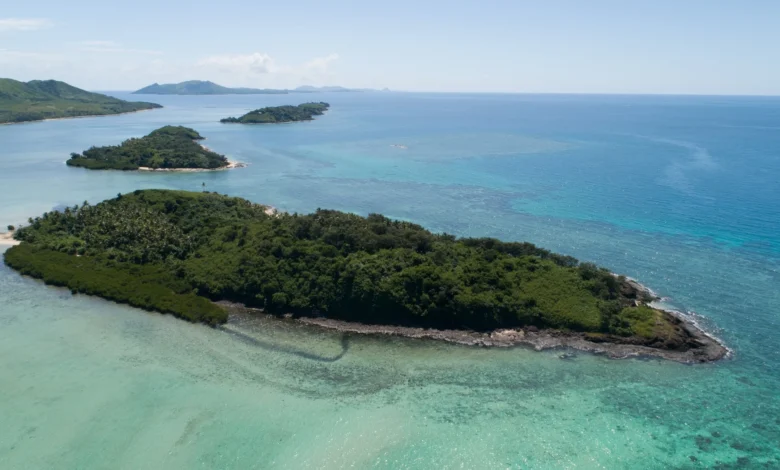
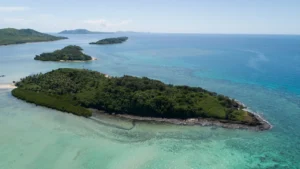
For those who have long harbored the dream of escaping to a private sanctuary in the South Pacific, the upcoming auction of Nanuyasesara and Nanuyabuli offers a rare, albeit ambitious, opportunity. Located in the heart of Fiji’s iconic Yasawa Group, this duo of neighboring islands is returning to the market with a significantly reduced reserve price of $1.7 million. This move represents a strategic pivot for the current owners, who previously listed the combined 24.5-acre parcel for $4.512 million, signaling a shift in the local luxury real estate landscape.
The Yasawa Islands, a volcanic archipelago renowned for their rugged peaks, dramatic lagoons, and pristine white-sand beaches, have long been considered the crown jewel of Fiji’s tourism sector. By offering two contiguous, undeveloped islands, the sale presents a blank canvas that is increasingly difficult to secure in a global market where private islands are often already heavily built-out or held by institutional developers.
The Geography of the Yasawa Offering
Situated just off the southern coast of Naviti Island, the two landmasses are positioned to offer both seclusion and accessibility. The logistical profile of the site is defined by its relative remoteness. Under optimal weather conditions, the islands are reachable by a two-and-a-half-hour boat journey from the Nadi area, the primary hub for international travelers entering Fiji. For those requiring a more expedited arrival, the islands are accessible via a 30-minute seaplane or helicopter flight.
The 24.5-acre total footprint is entirely free of existing villas, hotels, or structural developments. This lack of infrastructure is the defining characteristic of the sale, as noted by Misha Haghani, CEO of Paramount Realty USA, the firm managing the auction alongside Cara Milgate of Intero Real Estate Services. According to Haghani, the asset transcends traditional real estate metrics because it allows for total creative autonomy. The buyer is not purchasing a pre-defined aesthetic; they are acquiring the topography itself.
Chronology and Market Positioning
The trajectory of this sale reflects the broader volatility in the high-end private island market over the last three years. Initially, the islands were positioned as a premium investment opportunity with a valuation exceeding $4.5 million. The decision to lower the reserve price to $1.7 million—a reduction of more than 60 percent—indicates a shift in the sellers’ priorities. Listing agent Richard Snowsill confirmed that the landowners are currently seeking to liquidate these specific assets to provide capital for alternative investment projects, rather than continuing to hold the islands as a speculative real estate play.

The auction process itself is a testament to the specialized nature of these properties. Unlike residential homes or commercial storefronts, private island sales often languish on the market for years due to the complexities of title, environmental oversight, and the daunting logistics of construction. By moving to an auction format, the sellers are aiming to bypass the stagnation of the traditional brokerage cycle and secure a committed buyer willing to navigate the complexities of island development.
The Regulatory Framework of Fijian Land Tenure
Any discussion of land ownership in Fiji requires an understanding of the nation’s unique land tenure system. These islands are held under a 99-year Special Use-Tourism Development Lease. This structure is common for foreign investors looking to establish commercial or residential interests in the archipelago. Under the terms of such a lease, the holder obtains the right to develop the land for tourism-related purposes, provided they adhere to the specific environmental and zoning stipulations mandated by the Fijian government.
The nature of these restrictions is critical for prospective bidders. Potential owners must reconcile their vision for the islands—whether it be a single private residence or a boutique eco-resort—with the local planning requirements. Fiji has increasingly prioritized sustainable tourism, meaning any developer will likely be subject to rigorous environmental impact assessments (EIAs). These assessments ensure that water management, waste disposal, and energy consumption do not degrade the surrounding marine ecosystems, which are protected by national environmental laws.
Economic Realities of Island Development
The acquisition price is only the beginning of the financial commitment required to transform these islands into a habitable or commercial destination. When considering the "all-in" cost of such an endeavor, stakeholders must look beyond the reserve price to the realities of remote logistics.
Richard Snowsill has provided preliminary estimates for construction on the islands, placing the cost for a modest, high-quality residence at between $5,000 and $8,000 per square meter. This figure accounts for the significant "remote site premium." Every bag of cement, every solar panel, and every technician must be transported via sea or air, adding a substantial logistical surcharge to the base construction cost. Furthermore, these figures do not encompass the essential infrastructure requirements, such as desalinization plants, power generation units (typically a mix of solar and battery storage), and sophisticated sewage treatment systems.
For an investor, the economic implication is clear: this is a long-term capital project. A developer must calculate the return on investment based on these high overheads, or conversely, a private owner must view the construction as a lifestyle investment where the value is derived from exclusivity and privacy rather than immediate financial yield.

Broader Market Implications
The auction of the Nanuyasesara and Nanuyabuli islands serves as a microcosm for the current state of the global private island market. Following a brief period of intense demand during the global pandemic—when high-net-worth individuals sought isolation—the market has transitioned into a more sober phase. Investors are now more cautious, focusing on properties that offer viable development paths rather than just remote status.
The Yasawa Group remains one of the most stable and attractive regions for such investment due to its established infrastructure in nearby islands and its status as a premier tourist destination. However, the success of this auction will be a bellwether for the appetites of ultra-high-net-worth individuals (UHNWIs) in the current economic climate. If the auction attracts multiple bidders, it will signal that the demand for "blank canvas" luxury remains robust. If it fails to meet the reserve, it may suggest that the market is beginning to prioritize "turn-key" properties over raw land.
Analysis: Navigating the Challenges
The prospective owner faces three primary challenges: geography, regulation, and capital management.
- Geographic Isolation: The 2.5-hour launch time from Nadi is a significant hurdle for staff transport, guest accessibility, and the delivery of construction materials. Establishing a reliable, dedicated supply chain is the first hurdle any developer must clear.
- Regulatory Compliance: The 99-year lease provides security, but it also imposes the responsibility of stewardship. The Fijian authorities are increasingly protective of their natural resources. Future owners must demonstrate a commitment to sustainability, which, while potentially adding to the initial cost, enhances the long-term value and reputation of the asset.
- Infrastructure Deficit: Unlike buying a plot of land in a residential community, this purchase includes no access to a power grid or public water. The owner must become their own utility provider, requiring significant technical expertise in managing off-grid systems.
Conclusion
The upcoming auction of Nanuyasesara and Nanuyabuli is an invitation to undertake one of the most challenging, yet potentially rewarding, real estate endeavors in the Pacific. By lowering the entry price to $1.7 million, the sellers have lowered the barrier to entry, but the project remains a venture reserved for those with the capital and the vision to manage the complexities of island building.
Whether the new owner chooses to create a secluded private estate for personal retreats or develops a niche eco-resort that leverages the natural beauty of the Yasawa Group, the purchase represents a rare opportunity to shape a piece of the earth’s surface. As the date of the auction approaches, the international luxury real estate community will be watching to see who is willing to take on the challenge of transforming this pristine, untouched pair of islands into a lasting legacy.