Nationwide FAA Ground Stop Halts U.S. Air Travel: A Crisis of Modernization and Infrastructure

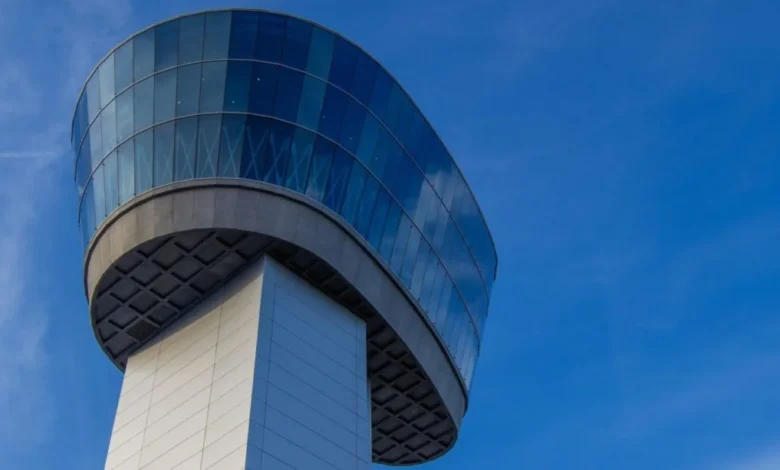
The Federal Aviation Administration lifted a nationwide ground stop late Friday evening, bringing an end to a turbulent 4.5-hour paralysis that effectively froze commercial aviation across the United States. The stoppage, which began mid-afternoon, caught millions of travelers off guard, disrupted operations at hundreds of airports, and triggered immediate logistical nightmares for major carriers. While federal authorities worked swiftly to restore system functionality, the incident has reignited intense debate regarding the fragility of the nation’s aging technological backbone, raising urgent questions among lawmakers, industry executives, and the traveling public about when critical infrastructure upgrades will finally be prioritized.
The sweeping ground stop was officially enacted at 3:54 p.m. Eastern Standard Time, forcing Air Route Traffic Control Centers to halt all departures nationwide. For more than four hours, domestic skies grew uncharacteristically quiet as aircraft already aloft were permitted to complete their journeys and land safely, while departing flights remained indefinitely parked at their gates. Inbound international flights faced individualized assessments, handled on a case-by-case basis depending on their proximity and fuel status. The Federal Aviation Administration, the federal agency tasked with ensuring the safety and efficiency of the National Airspace System, cited extraordinary circumstances and imperative safety measures as the primary drivers behind the unprecedented decree.
By the time the emergency restriction was rescinded at approximately 8:20 p.m. EST, the ripple effects had already transformed into a tidal wave of disruption. U.S. airlines had canceled thousands of scheduled flights, delayed countless others, and diverted hundreds of airborne planes to alternative airports simply to find available ramp space for parking. Compounding the misery, several major airlines proactively began canceling Saturday flights late Friday evening to preemptively manage cascading crew and aircraft displacement. Industry analysts noted that carriers face a monumental task in recovering from the chaos, requiring days to reposition misplaced flight crews, realign stranded aircraft, and accommodate frustrated passengers.
Chronology of the Crisis
The unfolding timeline of Friday’s aviation emergency highlights the suddenness with which the system failed and the rapid, coordinated response required by federal and aviation authorities.
At 3:54 p.m. EST, the Federal Aviation Administration issued the nationwide ground stop directive, immediately notifying all domestic air carriers, regional operators, and international partners. The catalyst for the order was a catastrophic communication failure affecting Air Route Traffic Control Centers across the United States. This vital network manages the en-route phase of flight, guiding commercial and private aircraft through high-altitude corridors. Without functional communication channels between controllers and pilots, maintaining safe separation standards became impossible, necessitating the blanket shutdown.
Throughout the late afternoon, airports transformed into staging grounds for frustration. Passengers crowded ticketing counters and gate areas, seeking rebooking options while staring at boards dominated by red cancellation notices. Planes sat idle on tarmacs, and incoming aircraft were forced to land at regional facilities where tarmac space remained available.
At 8:20 p.m. EST, after engineers and technical specialists restored the compromised systems, the Federal Aviation Administration officially lifted the ground stop. Gradual resumption of departures commenced shortly thereafter, though airports warned that congestion would persist well into the weekend.
At approximately 8:30 p.m. EST, Department of Transportation Secretary Sean Duffy addressed the public from the White House, acknowledging the severity of the afternoon’s events and outlining the arduous recovery path ahead.
Historical Context and Rarity of Nationwide Stoppages
Nationwide ground stops of this magnitude are exceptionally rare in the history of American aviation. Prior to Friday’s incident, the federal government had issued only one other nationwide ground stop since the tragic terrorist attacks of September 11, 2001. That previous modern occurrence took place in early 2023, when a critical Notice to Air Missions system outage forced a nationwide pause in departures, leaving thousands of passengers stranded and prompting subsequent congressional hearings.
The rarity of these events underscores the robustness traditionally expected of the United States air transportation network, which handles tens of thousands of flights and millions of passengers on any given day. However, each rare failure exposes systemic vulnerabilities that experts have warned about for decades. Unlike localized weather delays or regional air traffic controller shortages, system-wide technological collapses strike at the core of national mobility, commerce, and security.
Official Responses and the Push for Modernization

As the immediate operational crisis stabilized, the narrative quickly shifted from crisis management to political accountability and infrastructural critique. Federal officials speaking at the White House on Friday evening pointed squarely at outdated air traffic control equipment as the root cause of the breakdown.
Department of Transportation Secretary Sean Duffy did not mince words when addressing reporters. Emphasizing the painstaking recovery process, Duffy stated that it would take considerable time to unwind the disruptions of the afternoon. More pointedly, Duffy seized the moment to direct frustration toward Capitol Hill, highlighting the obsolescence of the technology currently utilized by air traffic controllers.
"How many more times does this have to happen before Congress decides to fix it?" Duffy asked, directly tying the system failure to legislative inertia regarding federal funding. Administration officials rapidly pivoted to championing a proposed $50 billion funding package dedicated entirely to modernizing air traffic control technology, hardware, and software systems.
In parallel, questions regarding national security arose swiftly as news of the nationwide stoppage spread. Department of Homeland Security Secretary Markwayne Mullin initially moved to quell public anxiety, firmly dismissing early speculation that the communications outage might be the result of a coordinated cyberattack or malicious artificial intelligence deployment. However, in subsequent statements, Mullin exercised caution, clarifying that while no immediate evidence of foul play had been uncovered, a definitive determination regarding cyber involvement could not be entirely ruled out until comprehensive forensic investigations by cybersecurity experts and federal agencies were fully completed.
Economic and Operational Implications
The financial and operational fallout from Friday’s ground stop will likely reverberate across the aviation sector for days, if not weeks. Commercial airlines operate on razor-thin margins and tightly optimized schedules designed to keep aircraft and crews moving continuously. When a disruption of this scale halts the system for more than four hours, the resulting domino effect disrupts crew duty-time limits, forces aircraft out of alignment with their flight rosters, and creates severe bottlenecks at primary hub airports.
Travelers will bear the brunt of these inefficiencies. Beyond the immediate cancellations and delays, consumers face surging ticket prices for alternative flights, difficulties in securing timely customer service assistance, and potential disputes over compensation, rebooking rights, and hotel accommodations for stranded passengers. Consumer advocacy groups have already begun calling on airlines to provide robust assistance, while reiterating demands for stronger passenger rights regulations similar to those mandated in other international jurisdictions.
Furthermore, the incident places intense pressure on Congress to evaluate pending transportation appropriations bills. For years, aviation labor unions, safety experts, and industry associations have sounded the alarm over legacy computer systems, some of which rely on decades-old architecture that makes finding replacement parts difficult and debugging software exceptionally complex. Friday’s outage serves as a stark, high-stakes demonstration of the risks associated with deferred infrastructure maintenance and underfunded modernization initiatives.
Broader Industry and Public Reaction
Reactions from across the travel and aviation industry were swift and varied. Pilots’ associations and air traffic controller unions reiterated long-standing concerns regarding staffing shortages compounded by technical instability. Representatives emphasized that men and women managing the skies are frequently forced to work around technological limitations that modern engineering should have eliminated years ago.
Meanwhile, frequent flyer communities, business travel coalitions, and tourism organizations expressed growing frustration over the recurrent fragility of public transit systems. Business leaders noted that sudden ground stops inflict immediate losses on corporate productivity, conference schedules, and supply chain logistics dependent on expedited air freight carried within the bellies of commercial airliners.
Looking Ahead
As the weekend progresses, the immediate focus remains on recovery. Airlines are deploying extra planes and scheduling recovery flights to clear the backlog of passengers. Federal investigators are continuing their technical post-mortem to determine the precise sequence of events that led to the communication failure across Air Route Traffic Control Centers.
Ultimately, Friday’s nationwide ground stop may well serve as a watershed moment for U.S. aviation policy. Whether the harrowing 4.5-hour pause acts as the catalyst for meaningful, long-term legislative investment in modernized air traffic control infrastructure remains to be seen. For now, millions of travelers and thousands of aviation professionals are left to pick up the pieces of a system that reminded the nation just how fragile its technological foundations truly are.