Returning to a destination after a long hiatus presents a unique psychological challenge: the effort to reconcile static memories with the fluid reality of a modern, evolving city. For many travelers, Seville—a historic jewel in the heart of Andalusia—serves as a primary case study for this phenomenon. Beyond the shifting landscape of local businesses and urban gentrification, the experience of revisiting a foreign city often reveals the internal growth of the traveler, particularly regarding linguistic competence and the transition from rote memorization to authentic communication.

The Dynamics of Urban Change in Seville
Recent data on urban development in Andalusia indicates that Seville has undergone significant structural shifts over the past decade. The city’s historic center, particularly areas surrounding the Plaza Nueva, has seen a marked increase in commercial investment. This transition has resulted in a surge of boutique hospitality and high-end gastronomy, replacing smaller, traditional guesthouses.
From an economic perspective, these changes are reflective of broader trends in the European tourism sector, where heritage sites are increasingly balanced against the demands of a modernized service economy. Observers note that while the physical geography of the city—the scent of orange trees, the architectural grandeur of the Museo de Bellas Artes, and the social ritual of the sobremesa—remains, the character of the city has been recalibrated by the intersection of tradition and contemporary commercial development.

The Psychological Barrier of Linguistic Inadequacy
For non-native speakers, the challenge of engaging with a foreign culture is often compounded by the fear of linguistic failure. Historical accounts from international travelers suggest that the reliance on phrasebooks often leads to a cycle of apprehension. When a traveler attempts to use a memorized phrase and is met with a native speaker’s shift to English, it creates a psychological "escape hatch." This phenomenon, often termed "language anxiety," frequently results in the abandonment of the target language in favor of the path of least resistance.
In the case of long-term language learners, the barrier is rarely intellectual but rather emotional. Studies in second-language acquisition suggest that the transition from a controlled learning environment, such as one-on-one tutoring, to the "wild" of real-world interaction is the most critical phase of fluency. The tutor provides a safe, scaffolded environment where the learner can stumble without consequence. Removing this safety net is the primary milestone in becoming a functional speaker.

Chronology of Linguistic Integration
The process of overcoming this barrier follows a predictable, though non-linear, path:
- The Phase of Over-Preparation: The initial stage involves heavy reliance on memorized scripts, which inevitably fail when subjected to the unpredictable nature of spontaneous dialogue.
- The Period of Withdrawal: Following a negative or awkward interaction, the learner retreats into English, viewing the native language as a source of embarrassment rather than a tool for connection.
- Structured Intervention: Engaging in professional, one-on-one tutoring shifts the focus from static phrases to dynamic conversational flow. This stage forces the learner to process input in real-time, effectively building the cognitive pathways required for fluency.
- The "Wild" Application: The final stage occurs when the learner successfully utilizes the target language in a high-pressure, authentic environment—such as a crowded tapas bar—without the immediate mental urge to revert to their native tongue.
The Role of Immersion in Language Acquisition
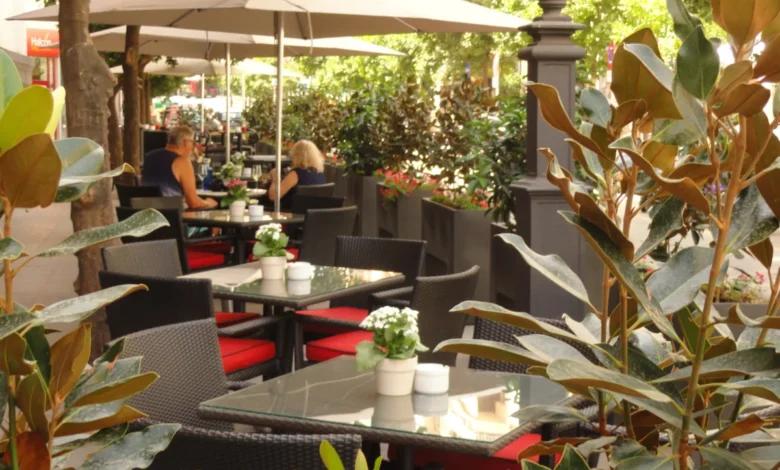
The importance of immersion cannot be overstated. When a traveler enters a space like Las Teresas in the Santa Cruz district, the sensory environment—the clatter of plates, the scent of vermut casero, the rapid-fire pace of local discourse—forces the brain to adapt.

Linguistic experts point out that when a learner stops consciously "translating" and begins "processing," they have crossed a major threshold. This shift is not about achieving perfect grammar or native-level vocabulary; it is about the cessation of internal anxiety. When the speaker stops worrying about the potential for error and focuses entirely on the exchange of information, the barrier effectively vanishes. This was observed during recent site visits to the Plaza del Museo art market, where travelers reported that engagement with local artists moved beyond simple transactions into substantive dialogue.
Broader Implications for Global Travel
The transition from a hesitant speaker to a competent communicator has implications that extend far beyond the individual’s pride. It facilitates a deeper, more responsible form of tourism. By making the effort to learn the local language, travelers move from being mere observers of a culture to participants within it. This fosters a more sustainable relationship between the visitor and the host community.

Official tourism boards in the Andalusia region have noted that visitors who engage in the local language tend to have higher satisfaction rates and longer, more meaningful stays. The ability to navigate local social norms, from the cadence of a conversation at an art market to the specific etiquette of ordering at a bar, serves to humanize the interaction between the visitor and the local population.
Analyzing the "Confidence Gap"
The "confidence gap" in language learning is a documented hurdle. Many adult learners are held back by the perceived loss of status that comes with sounding less articulate in a second language than they are in their native tongue. The experience of successful travelers in Seville suggests that the remedy is exposure to the reality of communication: natives are rarely as critical as the learner fears.

In most instances, the local population prioritizes the intent of the message over the accuracy of the syntax. When the learner realizes this, the pressure to be "perfect" dissipates. The recent shift in pedagogical tools—such as online platforms like Preply that emphasize live, human interaction over gamified apps—has been instrumental in bridging this gap. By focusing on the necessity of real-time conversation, these platforms prepare learners for the inevitable, and ultimately productive, stumbles that occur in the real world.
Conclusion: The Path Forward
The return to Seville serves as a metaphor for the broader journey of language acquisition. The city, much like the speaker, is in a constant state of flux. The lessons learned in the bustling bars of the city center and the tranquil squares surrounding the Museo de Bellas Artes confirm that fluency is not a destination, but a state of being.

For the modern traveler, the goal should not be to achieve the flawless, accent-free speech of a native, but to reach a level of comfort where the language becomes an invisible conduit for experience. As the data suggests, the most effective way to reach this point is to embrace the messiness of real-life conversation, accept the occasional misunderstanding, and prioritize the human connection over the technical perfection of one’s vocabulary. Ultimately, the ability to order a drink or discuss a painting in Spanish is not just a linguistic victory; it is a sign that the traveler has finally stopped rehearsing and started living the experience of the culture they are visiting.