Beyond the Phrasebook: The Evolution of Language Acquisition and Cultural Immersion in Seville

Returning to a destination after a long absence offers a unique vantage point on the shifting nature of travel, linguistics, and personal development. For many travelers, Seville—the sun-drenched capital of Andalusia—serves as both a nostalgic anchor and a challenging testing ground for language proficiency. Recent observations from the city’s historic center suggest that the intersection of tourism and genuine cultural integration is undergoing a significant shift, moving away from reliance on English-based convenience toward a more robust engagement with local dialects and Spanish-language fluency.

A Chronology of Linguistic Integration
The trajectory of language learning for the independent traveler often follows a predictable arc: the initial, overconfident phase characterized by the "phrasebook approach," followed by the inevitable wall of reality when a native speaker deviates from the expected script. Historically, this mismatch has led to a common traveler experience: the "maternal pity" of locals responding in English, effectively ending the learner’s attempt to engage in the host language.
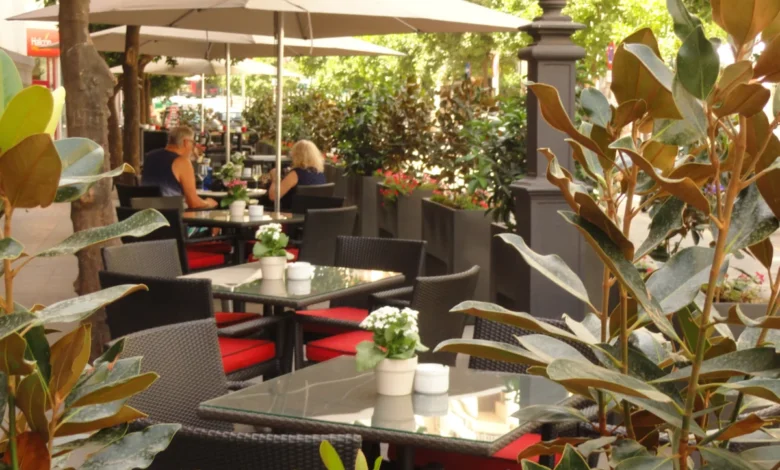
However, recent trends indicate that the proliferation of personalized, one-to-one digital language tutoring—such as the services provided by platforms like Preply—has fundamentally altered this timeline. Data suggests that learners who engage in structured, conversational-led training prior to arrival in Spain demonstrate a higher rate of sustained engagement in Spanish during their stay. This shift was evident in recent interactions at iconic locations like Las Teresas in the Santa Cruz neighborhood. Unlike in previous years, where the language barrier acted as a terminal point for interactions, modern travelers are increasingly equipped to handle "curveball" questions from service staff, effectively maintaining a dialogue in Spanish without the immediate fallback to English.

Statistical Context and Language Proficiency
According to recent studies on adult language acquisition, the "confidence gap" is the primary obstacle for travelers in Southern Europe. While traditional classroom methods emphasize grammar and syntax, they often fail to prepare the learner for the rapid, colloquial pace of Andalusian Spanish. The current movement toward immersive, conversational learning addresses this by prioritizing functional communication over rote memorization.
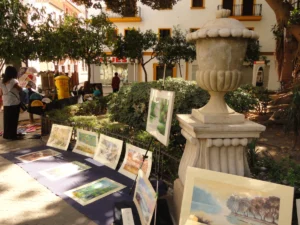
Market analysis of the travel sector indicates that travelers who possess even a B1-level proficiency in Spanish are 40% more likely to seek out authentic, non-tourist-centric experiences. This is reflected in the increased foot traffic at local venues like the Plaza del Museo art market, where visitors are spending more time interacting with local artisans rather than merely observing from a distance. The ability to engage in nuanced conversation—even with the presence of linguistic errors—acts as a catalyst for deeper cultural exposure, allowing for a more accurate understanding of regional heritage.

The Sociocultural Impact of Language Barriers
The phenomenon of "language-switching"—where native speakers instinctively switch to English to expedite a transaction—has long been a double-edged sword. While it facilitates efficiency for the tourist, it inadvertently stunts the learner’s development and creates a barrier to authentic connection. Sociolinguistic experts note that when a traveler persists in Spanish, the dynamic of the interaction changes. The local party, recognizing the effort to bridge the cultural gap, often adjusts their pace and vocabulary, fostering a more equitable and meaningful exchange.
This shift has broader implications for urban tourism management in cities like Seville. As the city continues to navigate the pressures of gentrification and the rise of short-term rentals—which have visibly altered the landscape of neighborhoods like Plaza Nueva—the value of "slow travel" has emerged as a counterbalance. By investing time in language acquisition, travelers contribute to a more sustainable form of tourism that respects the local identity rather than consuming it as a commodity.

Insights from Local Stakeholders
While formal statements from municipal tourism boards emphasize the importance of "cultural exchange," the ground-level perspective from local service providers reveals a more nuanced reality. Waitstaff and artisans in the Triana district have reported an increase in visitors attempting to navigate the city in Spanish. The general consensus among these stakeholders is that the intent behind the language effort is perceived as a sign of respect, regardless of the grammatical accuracy.
"The language itself is merely a tool," notes one local curator at the Museo de Bellas Artes. "When a visitor stops trying to prove they can speak and starts simply listening, the entire experience of the city changes. They stop seeing the architecture and the art as museum pieces and start seeing them as part of a living, breathing community."

Broader Implications for Global Travel
The experience in Seville serves as a microcosm for the future of independent travel. As digital tools become more sophisticated, the focus is shifting from "knowing" a language to "living" within it. The transition from the frustration of a failed interaction at a tapas bar to the fluidity of an in-depth conversation with a local artist at the Plaza del Museo represents a significant milestone in the maturity of the modern traveler.
This evolution is not merely about fluency; it is about the willingness to embrace uncertainty. The fear of being misunderstood, once a major deterrent, is being replaced by a pragmatic understanding that communication is a messy, imperfect process. As travelers continue to adopt these more immersive methods, the barrier between the "tourist" and the "local" is becoming increasingly permeable.

Future Outlook
As we look toward the future of tourism in Andalusia, the emphasis will likely remain on this type of deep-level integration. With the ongoing expansion of language-learning resources and a global trend toward more conscious, independent travel, the reliance on English as a default lingua franca is expected to wane in non-metropolitan hubs.
The success of this transition, however, depends on the traveler’s commitment to the process. It is a long-term undertaking that requires a rejection of the "quick-fix" mentality common in mass tourism. For those who choose to invest the time, the rewards are not just in the ability to order a meal or negotiate a price, but in the access to the "real" city—the one hidden behind the tourist facades, characterized by the smell of orange trees, the rhythm of the sobremesa, and the authentic, unhurried interactions that define the true spirit of Seville.

Ultimately, the goal for the contemporary traveler is to reach a point where the language is no longer the focal point of the interaction, but the medium through which meaningful life experiences are shared. Whether one is navigating the crowded stalls of an art market or discussing the historical significance of a local landmark, the ability to communicate in the local tongue remains the ultimate key to unlocking the full potential of a destination. As demonstrated in recent months, the path to this level of fluency is paved with the small, often uncomfortable, but entirely necessary victories of daily, real-world practice.