The Evolution of the Hotel Minibar: From Midnight Indulgence to High-Tech Wellness Sanctuary

The traditional hotel minibar, once a repository for sugar-laden snacks and miniature spirits designed to cater to the indulgent impulses of the weary traveler, is undergoing a profound metamorphosis. As the hospitality industry pivots toward a health-conscious consumer base, the standard room amenity list is being rewritten. Today, luxury accommodations are replacing high-calorie temptations with electrolyte-rich juices, advanced supplements, and sophisticated sleep-aid technologies. This shift marks a broader transition in global travel: the vacation is no longer a reprieve from one’s health regimen, but an opportunity to accelerate it.
The Financial Engine of Longevity
This wellness-centric shift is not merely a passing trend but a response to a booming economic sector. According to Abdul Wasay, COO of The Business Research Company and author of the Global Longevity Retreats Market Trends 2026 report, the industry is seeing significant capital infusion. The global longevity retreat market is projected to expand from $9.82 billion in 2025 to $11.08 billion in 2026.
This growth is driven by a convergence of factors: an increased reliance on wearable health technology, a heightened focus on preventative healthcare, and a growing consumer demand for anti-aging solutions. As travelers become increasingly data-driven regarding their own biometrics, they are showing a marked reluctance to abandon their health goals the moment they step into an airport. For high-net-worth individuals, time is the ultimate luxury; consequently, the expectation is that their hotel environment should facilitate, rather than hinder, their biological optimization.
A Chronology of In-Suite Wellness
The integration of wellness into the guest suite has evolved through several distinct phases over the last decade. In the early 2010s, hotel wellness was almost exclusively defined by the presence of a resort spa or a basic fitness center. By 2018, the industry saw the rise of the "wellness room" concept, which typically included little more than a yoga mat and a choice of pillow menu.

The pivotal shift occurred around 2023, as wearable devices such as Oura rings and Whoop straps entered the mainstream, making guests hyper-aware of their sleep quality and recovery metrics. This led to a 2024-2025 surge in "bio-hacking" amenities. Hotels began partnering with sleep scientists and tech firms to turn bedrooms into controlled environments. In late 2026, the current frontier has become the "seamless integration" model, where recovery technology—such as red-light therapy and adaptive sleep systems—is embedded directly into the architecture of the suite, moving away from "add-on" equipment to permanent fixtures.
Redefining the Sanctuary: Industry Leaders
The transformation is perhaps most visible at industry leaders like Six Senses and Equinox Hotels, which have moved beyond superficial amenities to create data-backed recovery ecosystems.
At Six Senses London, the hotel has pioneered the use of audio-responsive relaxation beds. These ergonomic, chair-like systems use bone conduction and gentle vibrations synced with mindfulness soundscapes to guide guests through "Relax," "Sleep," and "Energize" protocols. The benefit, according to early testers, is the removal of the "spa barrier"—the friction of booking appointments, changing clothes, and navigating hotel corridors. By placing these tools in the suite, wellness becomes a natural rhythm of the stay rather than a scheduled chore.
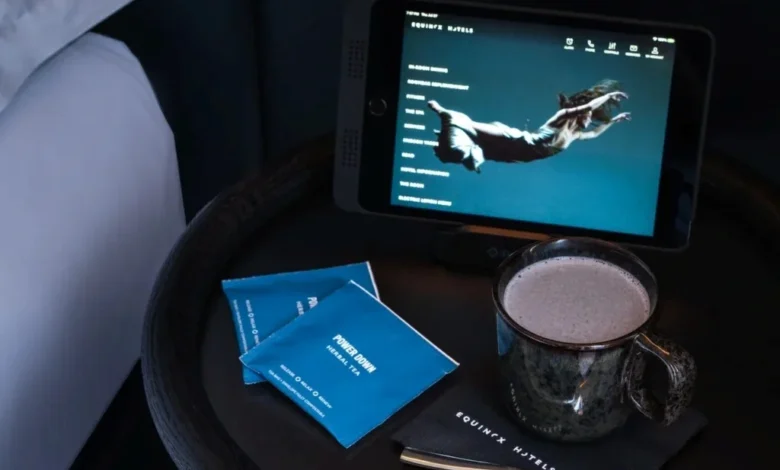
Equinox New York has taken a different, more clinical approach. By collaborating with renowned sleep scientist Dr. Matthew Walker, the hotel developed a Sleep Lab that utilizes Eight Sleep’s adaptive mattress technology. The system monitors the guest’s core body temperature and adjusts the mattress surface in real-time to facilitate deep, restorative REM sleep. This is complemented by automated lighting arrays that mimic circadian rhythms, ensuring that guests wake up feeling refreshed rather than jet-lagged.
Meanwhile, at the Nobu Hotel Palo Alto, the "Ryokan Reset" package demonstrates how hospitality is adopting medical-grade technology. By equipping rooms with red-light therapy face masks, red-light showerheads, and Pulsed Electromagnetic Field (PEMF) mats, the hotel aims to "ground" the guest, essentially offering a professional recovery suite within the confines of a luxury bedroom.

Official Perspectives on the Future of Hospitality
Mark Sands, vice president of wellness at Six Senses, argues that this evolution is a fundamental shift in the definition of luxury. "Wellness doesn’t begin and end at the spa door," Sands notes. "For us, bringing wellness into the room is about making it part of the everyday guest experience. The spa remains incredibly important, but the room allows wellbeing to become part of the natural rhythm of a stay."
However, Sands cautions against the "medicalization" of the hotel room. He emphasizes that the goal is not to turn a bedroom into a clinic, which could prove overwhelming for the guest. Instead, the focus is on intuitive, simple interventions: optimized natural lighting, advanced air filtration, and accessible breathwork tools. The philosophy is that technology should be an invisible support system, not an intrusive gimmick.
Implications for the Hospitality Sector
The implications for the broader travel industry are significant. As wellness moves from an amenity to an expectation, hotels that fail to provide recovery-focused environments may find themselves at a competitive disadvantage. This trend suggests several long-term shifts in hotel design and operations:
- Architectural Integration: Future hotel builds will likely incorporate circadian lighting systems and sound-proofing as standard, rather than retrofitting them into older structures.
- The "Data-Enabled" Guest: Hotels will likely need to find ways to integrate their in-room technology with guest-owned wearables, creating a continuous loop of health data that follows the traveler from home to hotel and back.
- Food and Beverage Reimagining: The minibar will continue to shrink in its traditional capacity, replaced by "micro-fridges" stocked with nutraceuticals, adaptogenic teas, and fresh, locally sourced juices designed for specific recovery goals, such as rehydration or cortisol reduction.
Analyzing the "Health-Kick" Movement
From a sociological perspective, this trend reflects a wider societal anxiety surrounding health and aging. The "longevity" buzzword, which currently dominates the wellness discourse, implies that the guest is actively attempting to extend their healthspan through every available resource. When a hotel provides a red-light therapy mask or a PEMF mat, they are effectively validating the guest’s proactive health choices.
However, there is a counter-argument to consider: the potential for "wellness fatigue." If a hotel room becomes a place of constant optimization—where sleep is tracked, light is measured, and recovery is mandated—it may inadvertently increase stress for some guests. The most successful hotels in the coming years will be those that strike a balance, offering high-tech tools while ensuring the suite remains a sanctuary for relaxation rather than a space that demands constant performance.

Conclusion: A New Standard of Service
Ultimately, the transition of the hotel suite into a wellness hub is a logical conclusion to the demands of the modern traveler. As work and leisure boundaries continue to blur, the hotel room is no longer just a place to sleep; it is a restorative vessel. Whether through the inclusion of adaptive sleep tech or the simple provision of air-purification and meditation tools, the hospitality sector is acknowledging a new truth: the most valuable service a hotel can provide today is the restoration of the guest’s own vitality.
As the market continues to grow, we can expect to see these innovations trickle down from the ultra-luxury segment to mid-tier boutique properties. In the very near future, a "wellness-ready" room will be as standard as high-speed Wi-Fi or a comfortable mattress. For the traveler, this means that the days of returning from a trip feeling depleted are coming to an end. Instead, the next generation of travel promises to leave the guest not just well-rested, but fundamentally enhanced.