Conquering Wat Phu Tok: Thailand’s Most Daring Cliffside Temple Architecture in Bueng Kan Province

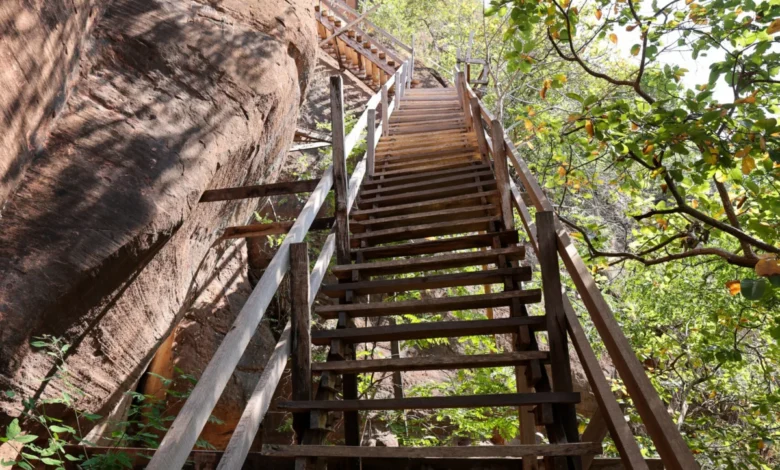
Rising sharply from the flat, agrarian landscape of northeastern Thailand, Wat Phu Tok stands as one of the kingdom’s most architectural and engineering marvels. Officially designated as Wat Jetiyakhiri, this remote sanctuary is situated in the recently established Bueng Kan province, nestled within the culturally rich Isan region. The site draws intrepid travelers, religious pilgrims, and architectural enthusiasts from around the globe, driven by the unique opportunity to scale a 359-meter-high solitary sandstone monolith via a dizzying labyrinth of hand-built wooden staircases and cliff-hugging walkways.
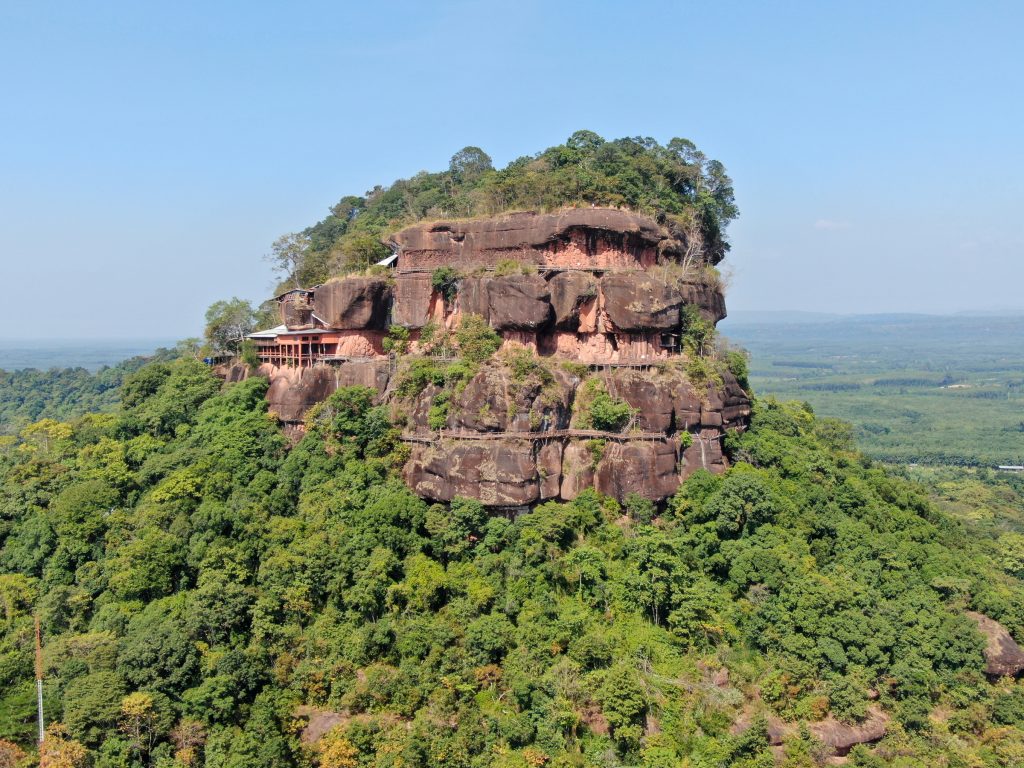
Geographically positioned far off the conventional tourism grid, Bueng Kan offers vast expanses of peaceful nature, uninterrupted horizons, and proximity to the Mekong River basin. Yet, it is the mountain of Phu Tok—meaning "lonely mountain" in the local Isan dialect—that serves as the crown jewel of the province. Reminiscent of a scaled-down version of Sri Lanka’s famed Sigiriya rock fortress, Wat Phu Tok challenges visitors not merely through its physical height, but through the psychological test of navigating structures suspended directly over sheer drops.
Historical Foundations and Spiritual Significance

The genesis of Wat Phu Tok is deeply intertwined with Thai Buddhist ascetic traditions. Historically, the rugged, heavily forested terrain of the isolated sandstone mountain served as an untamed habitat dominated by dense wildlife, most notably populations of venomous snakes. For forest monks seeking seclusion, the inherent dangers and profound isolation of the environment made it an ideal location for intensive meditation practice.
The transformation of the wilderness into a sacred sanctuary was spearheaded by the revered monk Luang Pu Juan. Recognizing the potential for spiritual elevation amidst the harsh landscape, Luang Pu Juan initiated a monumental construction project. Monks, novices, and local volunteers labored to construct a system of wooden staircases, ladders, and scaffolding that would eventually span seven distinct levels.

In Buddhist cosmology and practice, these seven tiers were purposefully engineered to correspond to the seven stages of spiritual enlightenment and higher mindfulness, allowing practitioners to physically and metaphorically ascend from worldly distractions toward spiritual purity. Although the visionary founder, Luang Pu Juan, tragically perished in a historic royal Thai Air Force aircraft accident in 1980 alongside several other senior monks, his legacy endures. The temple infrastructure continues to be meticulously maintained by succeeding generations of monastics and local authorities, ensuring that the site remains structurally sound and accessible to the public.
Navigating the Seven Levels of Asccent

Visitors arriving at the base of Wat Phu Tok are greeted by a sprawling complex featuring a tranquil lake, expansive parklands, and administrative structures. The ascent begins gently near the primary monastic gate, where the paved pathways quickly transition into rustic wooden plank staircases. As climbers progress beyond the initial tiers, the angle of ascension steepens significantly, eventually transforming into near-vertical wooden ladders anchored directly into the rock face.
While the rustic appearance of weathered wood and the slight flexing of planks underfoot can induce momentary apprehension, structural engineers and frequent visitors note that the framework is securely bolted to the stable sandstone foundation.

The structural layout of the temple complex varies distinctly by elevation:
Levels One through Four: These initial tiers primarily feature dense foliage, secluded grottoes, and minor shrines. The pathways are designed to build stamina and encourage quiet reflection as climbers leave the mundane world behind.

Level Five: Serving as the main hub of the monastery complex, the fifth level transitions largely from cliffside paths to grounded earth. Here, visitors encounter the primary ordination hall, alongside numerous auxiliary shrines, living quarters for resident monks, and assembly halls. A notable detour from this level leads adventurous walkers along an elevated rock corridor connected by a narrow wooden bridge to an isolated rock shrine perched on the precipice of a secondary ridge.
Level Six: Widely regarded as the architectural climax of Wat Phu Tok, the sixth level is split evenly between ground-level paths and precarious wooden walkways cantilevered directly over the vertical cliffs. Encircling approximately half the circumference of the mountain, this section offers sweeping, panoramic vistas of the surrounding Bueng Kan canopy and the distant Mekong River basin. While the sheer drops demand absolute concentration, the steady mountain breeze and expansive field of view provide an unmatched sensory experience.

Level Seven: The summit tier represents the final physical boundary of the mountain. Historically recognized as a natural sanctuary for local snake populations, access to the seventh level is undertaken strictly at the visitor’s own risk. Unlike the preceding tiers, the summit features no elaborate shrines or engineered walkways, consisting instead of the untamed forest floor at the peak of the monolith.
Socio-Economic Impact and Tourism Implications

The presence of Wat Phu Tok has profoundly influenced the local economy of Bueng Kan, a province that officially gained autonomy in 2011 when it was partitioned from Nong Khai province to boost administrative efficiency and regional development. As one of Thailand’s youngest provinces, Bueng Kan has historically relied on rubber cultivation and agriculture. The steady influx of domestic and international tourists visiting Wat Phu Tok has catalyzed the growth of the local hospitality sector, encouraging the development of boutique accommodations, eco-tourism initiatives, and regional gastronomy.
Economists and tourism analysts observe that attractions like Wat Phu Tok play a crucial role in the Thai government’s broader strategy to promote secondary destinations. By dispersing tourist traffic away from saturated urban centers like Bangkok or coastal hotspots like Phuket, remote cultural sites distribute economic benefits to rural communities while fostering a deeper appreciation for Thailand’s diverse ecological and religious heritage.

Safety Protocols and Guidelines for Visitors
Given the extreme topography and physical demands of the site, regional tourism authorities and temple administrators enforce strict safety recommendations for anyone planning an ascent:

Footwear and Attire: Appropriate, grip-soled athletic footwear is mandatory. Sandals, flip-flops, or smooth-soled shoes are strongly discouraged due to the risk of slipping on wooden planks, particularly during the monsoon season. Modest attire—shoulders and knees covered—is required out of respect for the active Buddhist monastery.
Weather Conditions: Climbers are advised to monitor weather forecasts closely. Heavy tropical downpours can render wooden surfaces slick and hazardous, prompting temporary closures of upper-level cliff walkways for public safety.

Physical Preparedness: Individuals suffering from severe vertigo, heart conditions, or mobility impairments should carefully evaluate their limitations before attempting to scale beyond the fifth level.
Environmental Stewardship: Because Wat Phu Tok is an active place of worship and a fragile ecological zone, visitors are strictly required to pack out all waste, maintain silence along meditation trails, and refrain from feeding local wildlife.

As Thailand continues to balance the demands of modern tourism with the preservation of its sacred heritage, Wat Phu Tok remains a testament to human ingenuity, spiritual devotion, and harmonious coexistence with nature. Through careful maintenance and responsible visitor management, this isolated cliffside sanctuary in Bueng Kan will continue to inspire awe for generations to come.
Related posts: