Cornwall, located at the southwestern tip of the United Kingdom, serves as one of the country’s most significant tourism hubs, drawing millions of visitors annually due to its unique geological features, extensive coastline, and preserved maritime heritage. Spanning over 3,500 square kilometers, the county is defined by its rugged Atlantic north coast and the gentler, sheltered waters of the south. As domestic tourism in the UK continues to evolve, Cornwall has solidified its position as a premier destination for both short-term leisure and extensive road-based travel, contributing billions of pounds to the regional economy.

Geographic and Economic Significance
The region’s tourism sector is supported by a diverse array of natural and historical assets. Cornwall possesses over 400 miles of coastline, including hundreds of beaches that are regularly monitored for water quality. Economically, the tourism industry is a primary driver for the county, supporting thousands of small-to-medium enterprises ranging from hospitality to artisanal food production. The "Cornish Pasty," a protected geographical indication (PGI) product, stands as a symbol of this cultural and economic identity, with the industry generating an estimated £300 million annually for the local economy.

1. St Michael’s Mount: A Tidal Landmark
Situated off the coast of Marazion, St Michael’s Mount is a tidal island accessible by a granite causeway at low tide or by ferry at high tide. The site is managed by the National Trust in collaboration with the St Aubyn family. Historically, the island served as a priory and later as a fortress. Its resemblance to Mont Saint-Michel in Normandy, France, is a result of centuries of cultural exchange and architectural influence. The site serves as a vital historical asset, with archaeological evidence suggesting human activity on the island dating back to the Neolithic period.

2. The Minack Theatre: Architectural Innovation
Located near Porthcurno, the Minack Theatre represents a pinnacle of 20th-century open-air theatrical engineering. Conceived by Rowena Cade in the 1930s, the theater is carved directly into the granite cliffside, overlooking the Atlantic Ocean. Its existence reflects a broader trend of coastal adaptation in Cornwall. The venue maintains a strict summer performance schedule from May to September, hosting a variety of professional and amateur productions that draw significant international attention to the region’s cultural offerings.

3. Rame Head and the Heritage Coast
The Rame Head Peninsula provides a strategic viewpoint over Plymouth Sound and the English Channel. As a designated Area of Outstanding Natural Beauty (AONB), the region offers a look at preserved ecclesiastical history, specifically the ruins of St Michael’s Chapel, which dates back to the 14th century. The area acts as a crucial buffer zone for the Plymouth maritime district, offering a contrast between urban naval activity and rural coastal conservation.

4. Newquay: The Surf Capital of the UK
Newquay has evolved from a small fishing port into the center of the British surfing industry. The town’s economic shift began in the mid-20th century, catalyzed by the popularity of Fistral Beach. Data indicates that Newquay’s hospitality sector experiences its highest occupancy rates during the July and August peak periods. The town’s infrastructure has expanded to accommodate the influx of seasonal tourists, including the development of luxury accommodations like the Watergate Bay area, which promotes a blend of high-end leisure and outdoor adventure.

5. St Ives: Artistic and Maritime Heritage
St Ives has long been recognized as a significant center for modern art in the UK, a reputation solidified by the presence of the Tate St Ives gallery, which opened in 1993. The town’s economy is deeply intertwined with its artistic history and its status as a high-demand residential and holiday destination. The bay itself is a focal point for environmental conservation efforts, with local authorities maintaining stringent standards for the Porthmeor and Porthminster beaches.

6. Port Isaac: Preserving Fishing Traditions
Port Isaac remains one of the few locations in Cornwall where the traditional fishing industry is still visibly active, albeit heavily supplemented by tourism. The village has gained international notoriety as a filming location, which has necessitated careful management of visitor foot traffic to preserve the integrity of its narrow, 19th-century infrastructure. The village serves as a model for how small coastal communities can balance commercial success with heritage preservation.

7. The Lizard Peninsula: Geological Diversity
Lizard Point marks the most southerly point of the British mainland. The peninsula is geologically distinct from the rest of Cornwall, characterized by serpentine rock formations that provide a unique habitat for rare flora. The area is heavily managed by the National Trust and serves as a critical node in the South West Coast Path, which is the longest National Trail in the UK.

8. Fowey: Estuary Navigation and Trade
Fowey, located on the west bank of the River Fowey estuary, maintains a deep-water harbor that has been significant since the medieval period. The town serves as a hub for both commercial shipping—primarily china clay exports—and leisure yachting. The proximity of St Catherine’s Castle, an artillery fort built by Henry VIII, highlights the area’s historical strategic importance in coastal defense.

9. Falmouth: A Maritime Gateway
Falmouth is home to the third-largest natural harbor in the world and serves as a significant administrative and educational center in Cornwall. The National Maritime Museum Cornwall, located on the harbor front, houses an extensive collection reflecting the county’s relationship with the sea. The presence of Falmouth University further distinguishes the town from other tourist hubs, creating a demographic mix that supports a year-round economy.

10. St Agnes Head: Industrial Archaeology
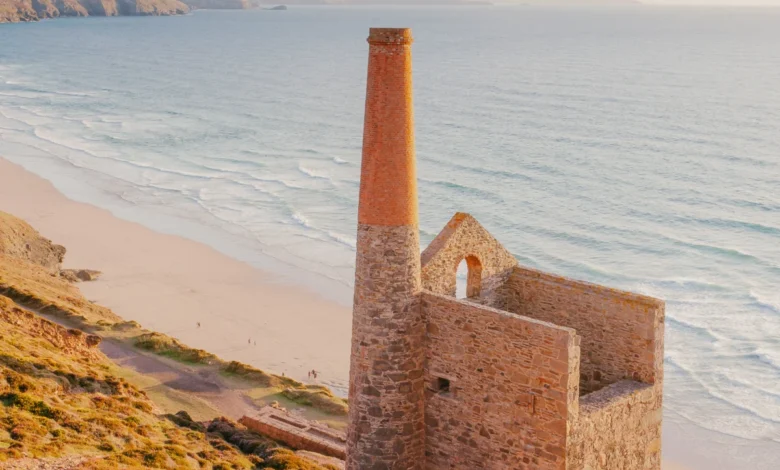
The coastline around St Agnes Head features some of the most iconic remnants of Cornwall’s mining past. The ruins of Wheal Coates, specifically the Towanroath engine house, stand as a testament to the 19th-century copper and tin mining boom. This area, now part of a UNESCO World Heritage site, provides a stark contrast between the natural beauty of the cliffs and the industrial legacy that shaped the region’s economic foundation.

11. Tintagel: Myth and Medieval History
Tintagel is globally recognized for its association with the legend of King Arthur. However, the site is of genuine archaeological significance, with recent excavations revealing that the headland was a high-status settlement during the Early Medieval period (5th–7th centuries). The English Heritage-managed castle ruins serve as a primary tourist draw, with recent infrastructure upgrades, such as the footbridge, designed to improve access while maintaining the site’s rugged aesthetic.

12. Penzance: The Western Rail Terminus
Penzance serves as the end-of-the-line for the Great Western Railway from London Paddington, making it a critical transit point for visitors. The town’s Jubilee Pool, an Art Deco saltwater lido, is a prime example of inter-war architecture that has been successfully restored to meet modern sustainability standards. The town acts as a gateway to the Penwith Peninsula, allowing for exploration of the region’s ancient stone circles and cliffside fortifications.

13. Land’s End: Geographical Milestone
Land’s End is frequently cited as a primary milestone for cross-country travelers. While the site is highly commercialized, it offers access to one of the most rugged sections of the coastline. The environmental management of this area is a point of ongoing discussion, as local stakeholders work to mitigate the impact of high-volume tourism on the sensitive clifftop ecosystems.

14. Looe: The Dual-Town Dynamic
Looe is physically divided into East and West Looe by the River Looe, connected by a 19th-century bridge. The town’s economy is anchored by its fishing fleet and a robust holiday cottage rental market. Its sheltered harbor provides a different, calmer experience compared to the exposed northern Atlantic coast, making it a favored location for family-oriented tourism.

15. The Eden Project: Environmental Education
The Eden Project represents a modern shift in Cornish tourism, moving away from purely landscape-based visits toward educational, scientific, and cultural experiences. Opened in 2001 in a former china clay pit, the project features two massive biomes containing the world’s largest indoor rainforest and a Mediterranean biome. The site serves as a global leader in environmental education, attracting hundreds of thousands of visitors annually and demonstrating the viability of large-scale sustainable tourism projects on reclaimed industrial land.

Broader Impact and Future Implications
The tourism sector in Cornwall faces the dual challenge of sustainability and infrastructure capacity. The high concentration of visitors during peak summer months puts significant pressure on local water supplies, transportation networks, and waste management systems. Local government bodies and environmental agencies are currently exploring strategies to incentivize off-peak travel, thereby distributing the economic and physical burden more evenly throughout the year. As global climate patterns shift, the conservation of Cornwall’s coastal assets remains a top priority, ensuring that the region remains a viable destination for future generations while balancing the immediate needs of its permanent residents.