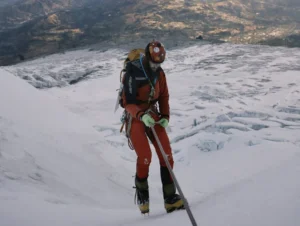
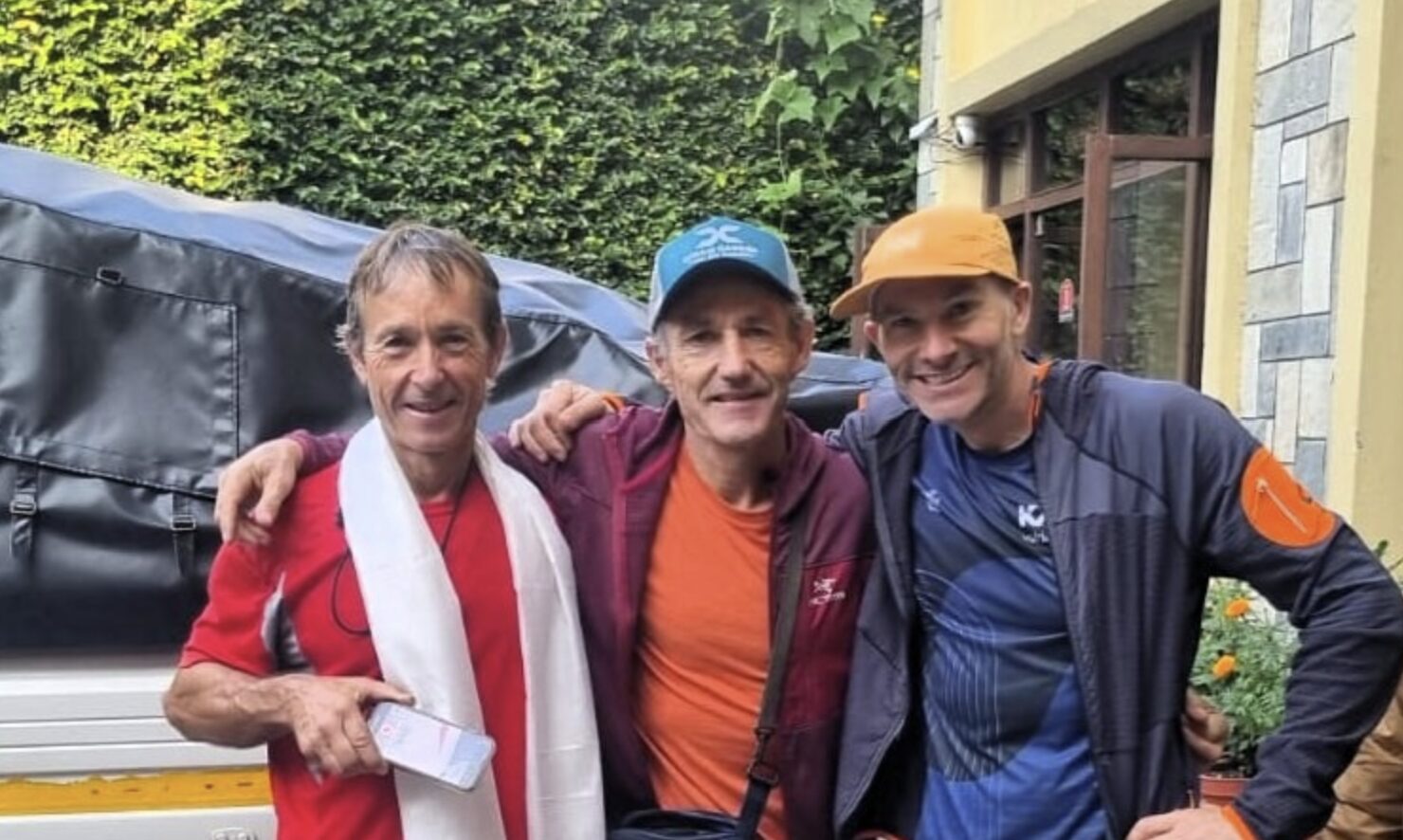
In a significant milestone for high-altitude mountaineering in the Himalayas, a Spanish expedition team comprising Mikel Zabalza, Ruben Perez, and Mikel Saez de Urabain has successfully completed the first recorded ascent of Jugal II, a 6,518-meter peak situated in the remote Jugal Himal region of Nepal. The achievement, confirmed by the team’s representatives to the Spanish newspaper Diario de Navarra, marks the culmination of a persistent effort to unlock a summit that had remained elusive to global climbing circles since the area was opened to international expeditions in 2023.
The summit was reached on October 26, following a strategic climb via the peak’s east-southeast face. According to reports from the team’s support network, the trio successfully navigated the technical challenges of the mountain and returned safely to their base camp by October 27. This triumph serves as the conclusion to a long-standing ambition for Zabalza and Urabain, who had previously scouted the region in the spring of 2024, only to be forced to abandon their plans due to deteriorating weather conditions that rendered the ascent impossible.
A Chronology of the Jugal II Expedition
The road to the summit of Jugal II was defined by patience and tactical adjustment. The Jugal Himal, located northeast of Kathmandu near the border with the Tibet Autonomous Region, has historically been one of the lesser-traversed areas of Nepal. Despite its geographic proximity to the capital—a factor that usually ensures higher traffic—the region’s peaks remained restricted to foreign climbers for decades.
In 2023, the Nepalese government officially opened the Jugal Himal range for mountaineering, inviting a wave of interest from international alpinists. The 2024 climbing season saw the first major concerted efforts to scale the range’s prominent peaks. A high-profile Korean-Nepalese expedition, led by the legendary South Korean climber Um Hong-gil and featuring elite mountaineers such as Dawa Yangzum and Lakpa Dendi, arrived in the spring of 2024 with the objective of conquering both Jugal I and Jugal II.
While the Korean-led team achieved a historic first ascent of Jugal I, the 6,518-meter Jugal II remained unclimbed. The Spanish team’s successful ascent this October effectively closes the final chapter on this particular objective for the current year. The timeline of the Spanish success is as follows:
- Spring 2024: Zabalza and Urabain conduct initial reconnaissance in the Jugal Himal but are repelled by severe weather.
- Early October 2026: Preparations for the final push begin, coinciding with the arrival of other international teams in the area.
- October 26, 2026: The Spanish team reaches the summit of Jugal II via the east-southeast face.
- October 27, 2026: The climbers return to base camp, officially completing the expedition.
The Intersection of Multiple Expeditions
The pursuit of Jugal II was not limited to the Spanish team. The peak had also been selected as the primary goal for veteran Italian mountaineers Nives Meroi and Romano Benet. The Italian couple, renowned for their high-altitude achievements, had originally intended to climb Tilicho Peak in the Annapurna region. However, their plans were disrupted by the catastrophic environmental impact of the 2026 monsoon season, which saw heavy rainfall trigger floods and landslides across central Nepal.
The damage to infrastructure—specifically the destruction of critical bridges and the closure of trekking trails—forced the Italian team to pivot toward the Jugal Himal. Their attempt at Jugal II was compounded by further challenges, including the departure of their team member, Slovenian climber Tine Cuder, who was forced to withdraw two weeks prior to the summit window due to illness.
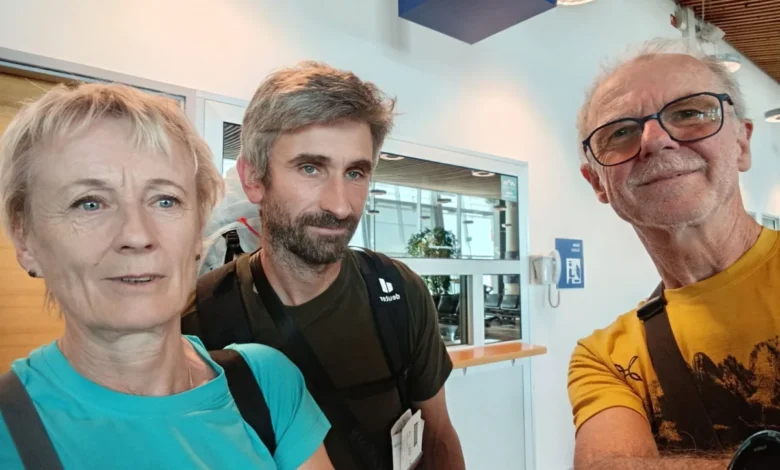
In a brief interaction with ExplorersWeb, Nives Meroi confirmed that the Italian team was in the process of returning to Kathmandu when they crossed paths with the successful Spanish party. Meroi noted that while both groups were attempting the mountain simultaneously, the Spanish team successfully navigated the final ascent, while the Italian pair, constrained by their own logistics and the worsening weather patterns, opted to retreat shortly before the Spanish reached the summit.
Technical Context and Geographic Significance
The Jugal Himal is characterized by its dramatic, glacier-carved topography. Standing at 6,518 meters, Jugal II is a formidable objective that demands high levels of technical competency in alpine-style climbing. Unlike the 8,000-meter peaks that are often served by massive commercial logistics and fixed ropes, the Jugal peaks require teams to be largely self-sufficient.
According to data maintained by The Himalayan Database, the region is highly sensitive to meteorological shifts. The proximity to the Tibetan plateau results in rapid weather transitions that can isolate climbers for days. The success of the Spanish team highlights the importance of "window management"—the ability to identify and exploit short periods of relative stability within the wider monsoon-transition window.
The east-southeast face chosen by Zabalza, Perez, and Saez de Urabain offered a line that balanced efficiency with technical demand. Their successful navigation of this face, after having been turned back in 2024, underscores the necessity of institutional memory in mountain exploration. By returning to the site with a deeper understanding of the local micro-climate, the team was able to succeed where others had faced logistical or environmental barriers.
Broader Impact on Nepalese Mountaineering
The successful ascent of Jugal II represents a broader shift in the landscape of Himalayan mountaineering. As the popularity of the "classic" 8,000-meter peaks leads to overcrowding and environmental degradation, the opening of regions like the Jugal Himal provides a vital outlet for elite alpinists seeking untouched frontiers.
The opening of the Jugal range in 2023 was part of a deliberate effort by the Nepalese government to decentralize its tourism industry. By promoting "new" peaks, the Nepal Tourism Board aims to spread the economic benefits of climbing beyond the traditional hubs of Khumbu and Annapurna. However, this shift brings its own set of challenges. The lack of established infrastructure in these regions requires expeditions to be more adept at navigation and risk assessment.
The fact that an unclimbed peak was still accessible within such a short distance of the capital, Kathmandu, provides a unique case study for future exploration. It demonstrates that even in an age of satellite mapping and high-resolution weather forecasting, there are still significant opportunities for first ascents in the Himalayas. For the local communities, the increased attention on the Jugal Himal could translate into improved trail maintenance and community-led tourism, provided that the development is managed in a sustainable manner.
Looking Ahead
As the Spanish team returns to their home country, the mountaineering community awaits a full, detailed report of their climb. Such accounts are crucial for the historical record, particularly when documenting the first ascent of a peak in a newly opened area. Their technical notes, equipment choices, and route descriptions will likely serve as the definitive guide for future climbers who attempt to repeat the feat or establish new variations on the mountain.
The successful ascent of Jugal II by Mikel Zabalza, Ruben Perez, and Mikel Saez de Urabain will be recorded as a testament to the enduring appeal of technical mountaineering. It is a reminder that in the face of unpredictable climate events and logistical obstacles, the spirit of alpine exploration remains robust. With the 2026 autumn season drawing to a close, this accomplishment stands as one of the most significant achievements in the high-altitude world for the year, reinforcing the status of the Jugal Himal as a premier destination for the next generation of Himalayan explorers. The details of their experience, to be shared upon their return, will undoubtedly offer further insight into the complexities of this newly accessible, yet formidable, mountain.
Related posts: