An Unexpected Mountain Challenge: Navigating Isolation and Language Barriers in Pakistan’s Ishkoman Valley

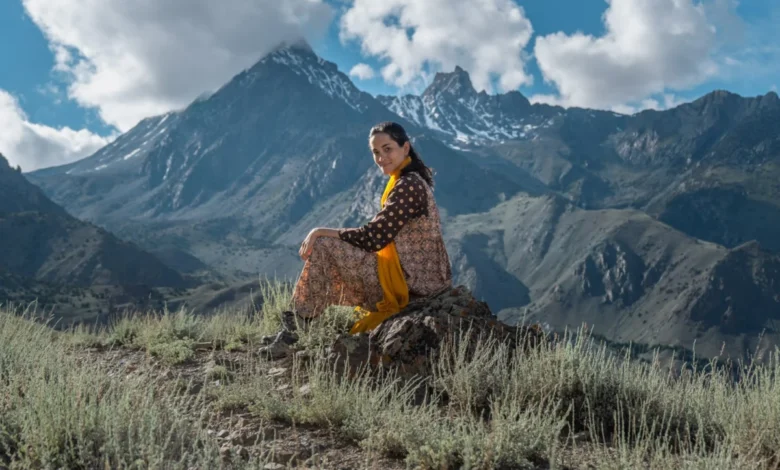
The rugged, towering peaks of Pakistan’s Ishkoman Valley, a region renowned for its dramatic landscapes and remote beauty, presented an adventurer with a multitude of challenges. Building a hospitality business in such an environment, especially for a foreign national, was anticipated to be arduous. The realities, however, proved to be far more complex than mere logistical hurdles. Beyond the expected construction complexities, natural disasters, financial strains, and the constant effort to foster community trust, an unforeseen and profound struggle emerged: the pervasive sense of isolation, exacerbated by a significant language barrier. This is the story of one entrepreneur’s journey to overcome these obstacles, not just for the success of her business, but for her own integration and well-being in a land of stark contrasts.
The project, the establishment of the Coyote Den Hostel (now evolving into a hotel), was initiated in a valley largely unknown to mainstream tourism, nestled within some of the world’s most formidable mountain ranges. While the physical isolation of such a location might appeal to an introvert seeking solitude, the author, Alex, found that the social and cultural isolation proved to be the more profound challenge. Having previously resided in the bustling capital city of Islamabad, where casual discourse in English over tea and interactions with international travelers were daily occurrences, the shift to the Ishkoman Valley marked a stark departure. In Islamabad, a diverse and liberal social circle provided a network for discussion and support. In the mountains, Alex found herself an anomaly – an American/British woman, perceived as too old to be unmarried, not "foreign enough" to fit a stereotype, engaging in activities like motorcycle riding and managing livestock in ways that deviated from local norms. Her limited grasp of Urdu, the national language, further compounded her feelings of otherness, hindering her ability to engage in local gossip, participate in community discussions, or effectively advocate for herself in business dealings.
The Landscape of Isolation: More Than Just Mountains
The Ishkoman Valley, part of the Ghizer District in the Gilgit-Baltistan region, is characterized by its dramatic topography, with elevations frequently exceeding 7,000 meters. This remote setting, while breathtaking, inherently limits access and connectivity. The valley, with an estimated population of around 30,000, is a mosaic of linguistic diversity, with over ten distinct languages spoken. This linguistic complexity is a significant factor contributing to the isolation experienced by outsiders. The author notes that her staff speak Khowar, shopkeepers converse in Shina, and her business partner communicates in Pashto. Urdu, while the national language, is not universally spoken with fluency, and English is a rarity, typically reserved for interactions with foreign visitors.
This situation is not unique to Alex. Many expatriates and foreign residents in remote areas face similar challenges in bridging cultural and linguistic divides. However, the pressure of operating a high-profile business, coupled with the constant scrutiny of a community that observes every cultural nuance, amplifies the stakes. The author describes a daily tightrope walk of cultural etiquette: ensuring appropriate dress, navigating interactions with male officials, maintaining modesty, ensuring the accuracy of Urdu documentation, and understanding the nuances of social greetings. Each of these requires a level of linguistic proficiency that her current skills do not yet afford her. This creates a feedback loop where the stress of maintaining business and personal equilibrium makes the already difficult task of language acquisition even more daunting.
Bridging the Divide: The Quest for Language Proficiency
Recognizing that the language barrier was a primary driver of her isolation, Alex identified it as a challenge she could actively address. The journey of language learning, however, is fraught with difficulty, particularly in a region as linguistically rich and diverse as the Ishkoman Valley. While immersion is often touted as the most effective method, Alex found that her existing immersion was hampered by the fact that many locals she interacted with also had limited fluency in Urdu. This resulted in what she humorously terms "Mountain Urdu," a dialect tinged with both American and local accents, which often elicits amusement from city dwellers.
The author emphasizes that her pursuit of language learning is not an expectation that local populations should adopt English due to historical colonial influences. Instead, she views it as her personal responsibility as an outsider to adapt and integrate. The reality of formal language learning, however, requires structured study beyond daily conversational exposure. Professional fluency, she contends, necessitates formal instruction at some point.
For the past year, the demands of establishing and running the Coyote Den Hostel were so overwhelming that dedicating time to formal language lessons seemed impossible. The sheer volume of responsibilities, from construction issues and financial management to navigating local customs and ensuring guest satisfaction, left little room for the mental bandwidth required for intensive study. This period was characterized by a near-zero probability of successfully undertaking language lessons alongside her other critical tasks.
A Timely Intervention: Preply Enters the Equation
The turning point arrived with a shift in circumstances. With the hostel operations stabilizing and her staff gaining more autonomy, Alex found herself with a modicum of breathing room. This newfound capacity coincided with an outreach from Preply, an online language learning platform. Preply connects students with tutors across a vast spectrum of languages, offering a flexible and accessible approach to language acquisition. The platform boasts over 90 languages and an extensive network of teachers in 180 countries, allowing users to filter by teacher’s native language, country of origin, and other criteria.
Having previously facilitated French lessons for her mother through Preply, Alex decided to leverage the platform for her own Urdu studies. The sheer number of Urdu tutors available – over 600 – was initially daunting, but the platform’s filtering tools allowed her to narrow down the options. She prioritized teachers with experience teaching non-native speakers, those who were professional, and crucially, those who could adapt to her demanding schedule and remote location.
Her search led her to Afreen, a tutor based in Lahore. Preply’s model includes discounted introductory lessons, a feature Alex found invaluable for assessing compatibility. The initial lesson with Afreen proved to be a positive experience, revealing a patient and experienced educator. Afreen’s gentle yet vigilant approach to correcting Alex’s Urdu, combined with a natural and comfortable conversational flow, indicated a strong potential for a productive learning relationship.
Navigating Connectivity Challenges: Learning from the "Middle of Nowhere"
The prospect of continuing lessons from the Ishkoman Valley, with its notoriously unreliable internet connectivity, presented a new set of anxieties. While her initial lessons with Afreen had taken place in Islamabad, where she had access to stable internet, Alex was soon to return to the mountains. She questioned whether her limited internet connection, typically capping at a mere 2 Mbps, would be sufficient for online video lessons.
However, after more than a month back in the Ishkoman Valley, Alex’s experience has exceeded her expectations. Preply’s streaming service has proven surprisingly resilient, functioning effectively even on her tenuous connection. While occasional lag has been noted, the lessons have remained consistent, allowing for video interaction, use of the platform’s whiteboard feature, and review of shared documents.
Afreen’s adaptability has also been instrumental. Alex candidly explained her internet challenges, which are often dictated by weather conditions and "the will of God." Afreen, sharing her own experiences with unreliable connectivity in running her teaching business, has been remarkably accommodating. Despite occasional missed lessons due to internet outages, she has not penalized Alex, demonstrating a collaborative spirit essential for such a cross-continental learning dynamic.
The Long Ascent: Progress and Future Prospects
While fluency in Urdu has not been achieved overnight, the impact of these lessons is tangible. Alex reports feeling a significant improvement in her confidence to engage in more complex conversations, moving beyond basic greetings and inquiries. The lessons are equipping her with the advanced grammar and vocabulary needed to navigate professional interactions more effectively and to build deeper connections within the community.
The author draws a parallel between the daunting task of language learning and climbing a towering peak like the Karakoram. Neither can be accomplished in a single stride. Both require unwavering patience, persistent effort, and a strategic approach. For Alex, the structured learning provided by Preply, combined with Afreen’s patient guidance, has re-aligned her language learning journey, moving her from a state of feeling "stuck" to one of tangible progress.
The implications of this endeavor extend beyond personal enrichment. In a region where trust and understanding are paramount for business success and community integration, improved linguistic skills can foster stronger relationships, mitigate misunderstandings, and enhance the overall reputation of the Coyote Den. As Alex continues her ascent up the "language mountain," her goal is not necessarily to reach the summit of perfect fluency immediately, but to acquire sufficient Urdu to forge meaningful friendships and build a more integrated life in the Ishkoman Valley. This journey, supported by modern technology and human perseverance, exemplifies how even in the most remote corners of the world, barriers can be overcome, and connections can be forged, one lesson at a time.