The Logistics of a Winter Traverse
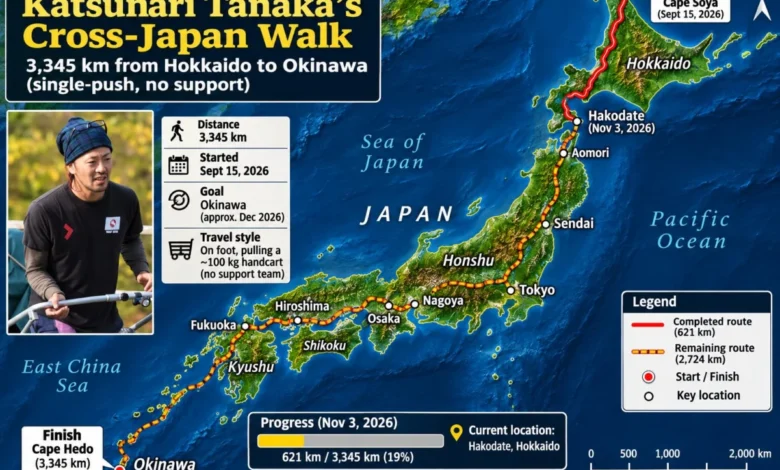
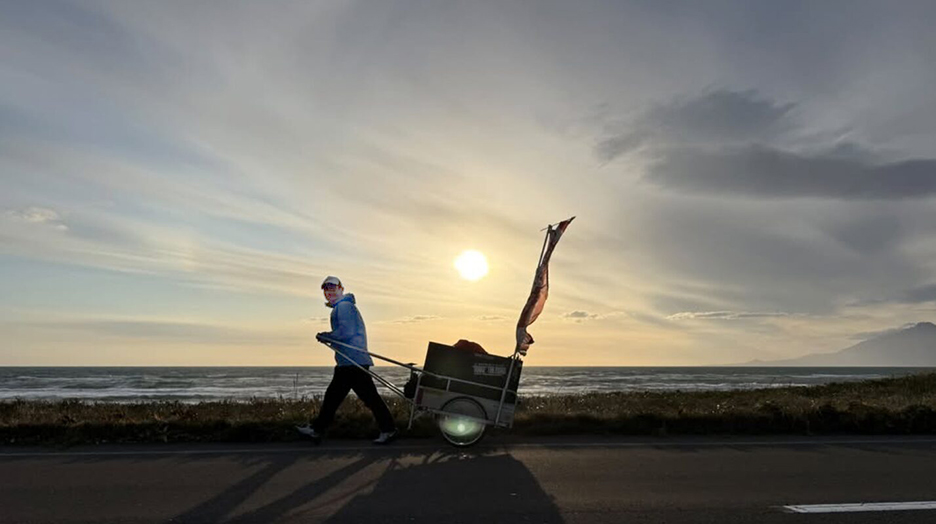
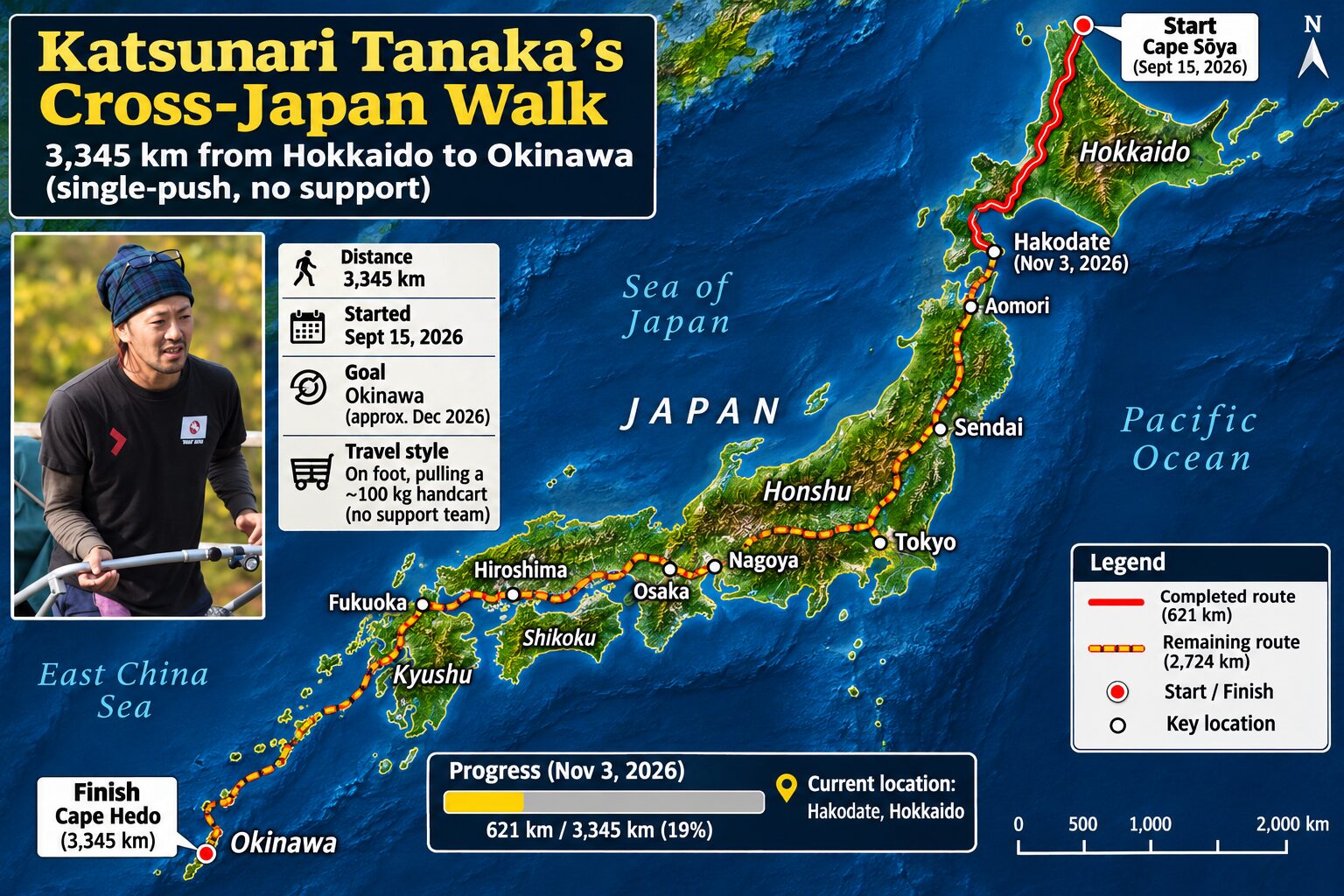
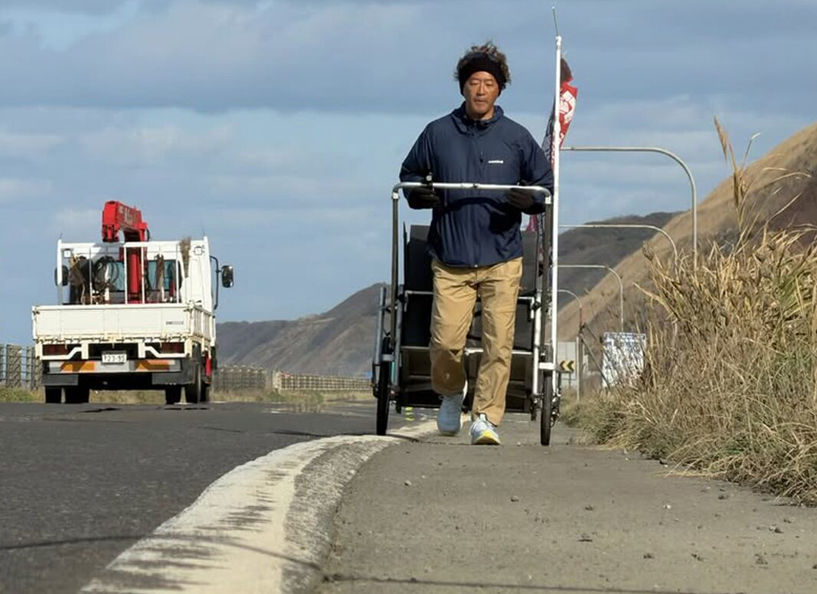
The scale of the undertaking is significant, covering 3,345 kilometers of diverse terrain. Tanaka’s daily objective is to maintain a pace of approximately 35 kilometers per day, a challenging target when factoring in the variable topography of the Japanese islands, which are largely mountainous. Unlike traditional long-distance hikers who utilize ultralight backpacks, Tanaka’s reliance on a 100kg handcart necessitates the use of established roadways, yet it also provides a mobile base of operations that allows him to carry more equipment than would be feasible on his back.
To manage the inherent risks of such a trek, Tanaka is accompanied by a support team. This team provides a critical safety buffer, utilizing a vehicle to monitor his progress and assist during segments where the weather or road conditions pose an immediate threat to his safety. The structure of the walk is not linear in a vacuum; it is punctuated by rest days and strategic stops, including 11 planned lecture engagements where Tanaka discusses his philosophy on commerce, human connection, and personal endurance.
Chronology of the Expedition
The first phase of the journey—the traversal of Hokkaido—proved to be the most demanding in terms of immediate environmental exposure. Departing from the northernmost point of Japan, Tanaka encountered the typical onset of a harsh northern winter.
- October 7: Commencement of the walk at Cape Soya, Hokkaido.
- Late October: The trek faced its first major hurdle between Yoichi and Iwanai. High winds and early-season snowfall forced a temporary suspension of the route as the support team prioritized safety, waiting for the weather to stabilize before proceeding.
- November 3: Tanaka successfully reached Hakodate Harbor, completing the first 621km of his journey.
- November 4 onwards: The transition from Hokkaido to the mainland involved a ferry crossing to Aomori. The current phase of the journey involves tracking southward along the Sanriku coast toward Sendai.
The route ahead is meticulously mapped. Following the trek through the Tohoku region, Tanaka will navigate through the Kanto plain, passing through Tokyo, before connecting to the historic Tokaido route. This path leads him toward Osaka and eventually into the Kyushu region, where a second major ferry crossing will deposit him near the final leg of the journey in Okinawa.
Historical Context and Philosophical Underpinnings
Katsunari Tanaka is not new to the rigors of long-distance, cart-assisted travel. Between 2013 and 2016, he spent three years systematically visiting all 47 of Japan’s prefectures. During that period, his primary objective was professional rather than athletic; he operated as an itinerant bookseller, carrying his inventory in a cart and engaging directly with residents in every corner of the country. By the end of that three-year project, he had successfully sold 13,477 books.
At the time, the project was met with skepticism. Critics questioned the viability of a "mobile merchant" model in an era of digital commerce and large-scale logistics. However, Tanaka argues that the act of walking across the country served as a form of deep market research, revealing that personal interactions and physical presence remain powerful drivers of engagement. This current expedition, while ostensibly a journey of physical endurance, is also a tribute to his mentor, Arthur Hollands. Hollands, a renowned Japanese evangelist, is well-known for his own long-distance walks while carrying a large wooden cross. By echoing the methodology of his mentor, Tanaka is blending a personal pilgrimage with a professional tour.
Environmental and Physical Challenges
The challenge of "chasing winter" is a meteorological reality in Japan. The prevailing winds during this season blow from the northwest, often bringing heavy snow to the Sea of Japan side of the country. By moving southward, Tanaka is effectively trying to stay ahead of the most severe weather patterns, though he is rarely able to escape the volatility of the season entirely.
Physically, the 100kg load places significant strain on the musculoskeletal system. The mechanics of pulling a cart differ substantially from carrying a pack; it requires constant engagement of the core and upper body, and the cart’s weight can be amplified by even slight inclines or uneven road surfaces. The support team’s role in this context is essential for load management during the most dangerous segments, particularly on high mountain passes where traffic and weather converge.
Broader Implications and Public Response
Tanaka’s journey has garnered attention not just as a feat of endurance, but as a sociological experiment. In a modern society where the pace of life is increasingly dictated by rapid transit and digital connectivity, the choice to move at 35km per day offers a different perspective on the geography of Japan.
From an analytical standpoint, the walk highlights the infrastructure of Japan’s secondary roads. While the country is famous for its Shinkansen (bullet train) network, the experience of traveling by handcart reveals the nuances of the rural landscape—the fading industries of coastal towns, the infrastructure maintenance of mountain passes, and the resilience of remote communities.
Public reaction has been largely supportive, with various team members and enthusiasts joining him for short stretches. These temporary companions provide both moral support and a rotating cast of perspectives on the journey. The 11 lecture stops serve as the intellectual anchor for the project, allowing Tanaka to synthesize his experiences into a broader narrative about the importance of face-to-face interaction in a post-pandemic, technology-driven world.
Safety and Risk Management
The decision to utilize a support vehicle is a standard safety protocol for extreme endurance athletes. In the context of a 3,300km walk, the primary risks are not limited to the physical toll on the traveler. Road safety in Japan, particularly on narrow coastal routes where truck traffic is heavy, is a significant concern. The support vehicle serves as a warning beacon, ensuring that motorists are aware of the pedestrian’s presence.
Furthermore, the environmental risks associated with Japan’s winter are non-trivial. Hypothermia, frostbite, and dehydration are constant threats in the northern segments. Tanaka’s preparation, which involves professional logistics planning, suggests that the team has established protocols for rapid evacuation or shelter in the event of extreme weather warnings. The decision to halt progress during the Yoichi-Iwanai mountain pass crossing serves as evidence that the expedition prioritizes long-term completion over short-term pride.
Future Outlook
As Tanaka moves out of the Tohoku region and into the more densely populated urban corridors, the nature of his challenges will shift from environmental to logistical. Navigating the sprawling urban centers of Tokyo and Osaka with a handcart will require different navigation strategies compared to the open roads of Hokkaido.
The completion of the journey in Okinawa will represent a culmination of nearly five months of sustained, repetitive motion. For Tanaka, the significance of the event remains rooted in the belief that the "merchant" experience is not about the destination, but the dialogue created along the way. Whether this walk will influence the next phase of his career as a publisher remains to be seen, but the data collected—both in terms of the physical route and the human encounters—will undoubtedly provide the foundation for his future projects.
In summary, Katsunari Tanaka’s walk is an intersection of athletic ambition, traditional business ethics, and a deep-seated appreciation for the physical landscape of Japan. As he continues his descent toward the southern islands, he remains a symbol of the enduring power of the "slow movement" in an increasingly fast-paced world, proving that even a 3,300km journey can be broken down into the simple, rhythmic act of putting one foot in front of the other.