Airbus North America CEO Robin Hayes addresses the balancing act between innovation and operational durability at the Skift Aviation Forum

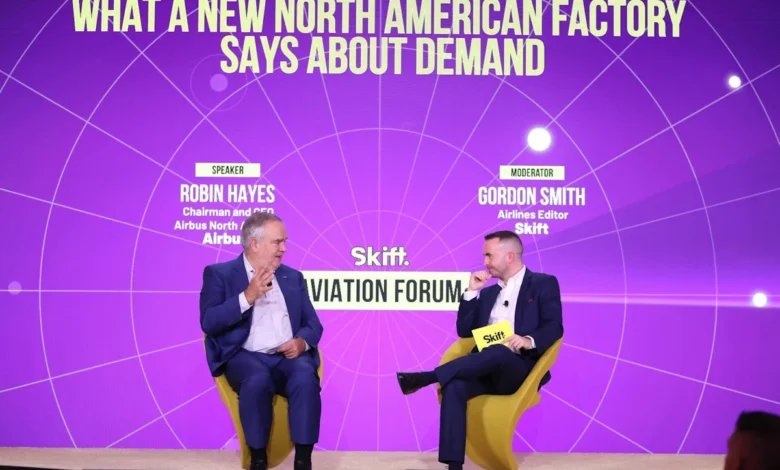
The aviation industry stands at a critical crossroads where the aggressive pursuit of decarbonization and fuel efficiency is increasingly colliding with the harsh realities of global fleet maintenance. Speaking at the recent Skift Aviation Forum, Robin Hayes, Chairman and CEO of Airbus North America, articulated the profound pressure aircraft manufacturers face as they attempt to balance the integration of next-generation propulsion and materials with the absolute necessity of operational reliability for global airlines. As the industry grapples with the long-term impact of supply chain disruptions, labor shortages, and the accelerated aging of fleets, the definition of what constitutes a "successful" aircraft design is shifting toward a primary focus on long-term durability.
The Evolution of Aircraft Design Priorities
For decades, the primary metric for aircraft success was fuel efficiency, followed closely by range and passenger capacity. The industry trajectory was largely defined by carbon-composite airframes, high-bypass turbofan engines, and aerodynamic optimizations. However, as Hayes noted during his discussion with Skift’s Airlines Editor Gordon Smith, the industry is entering a new era. The current environment has mandated that manufacturers prioritize the "on-wing" reliability of assets.
This shift in focus is not merely an engineering choice but a commercial imperative. Airlines operating in the post-pandemic era have seen their margins squeezed by rising labor costs, volatile fuel prices, and the requirement to maintain high daily aircraft utilization rates to remain profitable. When a modern, high-tech aircraft is grounded for unexpected maintenance or technical issues—a scenario that has become more frequent with the introduction of complex new engine architectures—the ripple effect across an airline’s network is catastrophic.
Contextualizing the Modern Aviation Environment
The Skift Aviation Forum serves as a bellwether for the industry’s strategic thinking. As participants gathered to discuss the future of air travel, the backdrop was defined by a massive backlog in aircraft deliveries. Both Airbus and its primary competitor, Boeing, have struggled to meet delivery targets as they navigate tier-one and tier-two supply chain bottlenecks.
The chronology of this pressure point can be traced back to the 2020 global industry pause. During this period, production rates plummeted, leading to the atrophy of specialized manufacturing talent and the destabilization of the aerospace supplier base. By 2023 and 2024, as travel demand rebounded with unexpected vigor, the manufacturing sector found itself unable to ramp up at the required velocity. This period of constraint has forced airlines to keep older aircraft in service significantly longer than initially planned, further underscoring the importance of structural durability and ease of maintenance.
The Trade-off Between Innovation and Durability
The central challenge outlined by Hayes is the inherent tension between pushing the boundaries of technology and ensuring that the final product can withstand the rigors of daily flight cycles. Newer aircraft designs often utilize cutting-edge materials and sophisticated engine geometries that promise 15% to 20% improvements in fuel efficiency compared to their predecessors. Yet, these technologies often carry higher heat tolerances, tighter clearances, and more complex maintenance intervals.
"Durability has become a more prominent factor in aircraft development," Hayes noted. This acknowledgment highlights a subtle pivot in the Airbus strategy. While the company continues to invest heavily in hydrogen-propulsion research and sustainable aviation fuel (SAF) integration, the near-term focus remains on ensuring that current-generation platforms, such as the A320neo and A350 families, deliver the operational uptime that carriers expect. The integration of "digital twins"—virtual replicas of physical aircraft that allow for predictive maintenance—is one of the key methodologies manufacturers are using to bridge this gap, allowing airlines to anticipate mechanical issues before they result in unscheduled downtime.

Supporting Data and Market Realities
The current aviation landscape is defined by a significant disparity between demand and supply. According to industry data, global airline capacity has largely recovered to 2019 levels, yet the total available fleet is hampered by thousands of aircraft being grounded due to engine-related inspection requirements.
In recent months, Pratt & Whitney’s GTF (Geared Turbofan) engine issues have served as a case study for the industry’s durability crisis. The need for accelerated inspections and component replacements has sidelined hundreds of narrowbody aircraft globally. This event has forced airlines to extend leases on older, less efficient aircraft, effectively stalling the industry’s fleet renewal programs.
Furthermore, global aerospace supply chain reports indicate that lead times for critical components—such as landing gear, avionics chips, and turbine blades—remain at double the historical averages. This scarcity of parts forces manufacturers to reconsider their reliance on "just-in-time" manufacturing models, moving instead toward a more resilient, buffer-heavy inventory system to ensure that when an aircraft enters service, it remains there.
Implications for the Future of Aviation
The implications of the shift toward durability are multifaceted:
- Manufacturing Strategy: Manufacturers will likely slow the pace of radical new technology introductions. Instead, the industry is moving toward "evolutionary" rather than "revolutionary" upgrades. This allows for the iterative improvement of established, reliable platforms, minimizing the risk of systemic technical failures.
- Airlines’ Capital Expenditure: Carriers will continue to demand stricter performance guarantees from manufacturers. In the future, contract negotiations will likely place greater weight on guaranteed dispatch reliability percentages, with financial penalties for manufacturers if these targets are not met.
- Sustainability Targets: The push for Net Zero 2050 remains a primary goal, but the methodology is changing. Rather than relying solely on the introduction of entirely new airframes, the industry is shifting focus toward the widespread adoption of SAF and the optimization of existing air traffic management (ATM) systems to reduce fuel burn across current fleets.
- Aftermarket Dominance: As the focus shifts to durability, the aftermarket services sector—maintenance, repair, and overhaul (MRO)—will become even more lucrative. Airbus and other manufacturers are expanding their digital service ecosystems to capture this value, providing airlines with the diagnostic tools necessary to keep their fleets flying longer.
Industry Reactions and Synthesis
While Robin Hayes’ comments reflect the internal strategy of Airbus, they resonate across the entire aerospace sector. Boeing, which has faced its own set of production and quality-control challenges, has similarly emphasized a "back to basics" approach to quality assurance and manufacturing stability.
Industry analysts suggest that this period of "operational pragmatism" is exactly what the aviation sector needs. By prioritizing durability and reliability, manufacturers are not just protecting their own brands; they are providing the stability that airlines need to plan their network capacity and ensure the long-term viability of air travel for consumers.
The dialogue at the Skift Aviation Forum highlighted that the "next generation" of aviation will not be defined solely by the speed or the futuristic aesthetics of the aircraft, but by the boring, essential, and increasingly difficult work of ensuring that every component functions perfectly for thousands of flight cycles. As the industry looks toward the 2030s, the manufacturers that successfully merge high-efficiency performance with high-uptime durability will likely be the ones that dominate the market.
In conclusion, the decision-making process for future aircraft development has reached a new level of complexity. It is no longer enough to build an airplane that can fly further or cleaner; the airplane must be able to endure the modern operational environment without faltering. The insights provided by Hayes underscore a maturing industry, one that is increasingly aware that its most valuable asset is not the novelty of its technology, but the consistency of its performance. As the global fleet continues to age and the pressure to decarbonize intensifies, the industry’s ability to reconcile these competing demands will define the next chapter of aviation history.
Related posts: