MCR Hotels CEO Tyler Morse declares war on AI booking agents to protect the art of the upsell

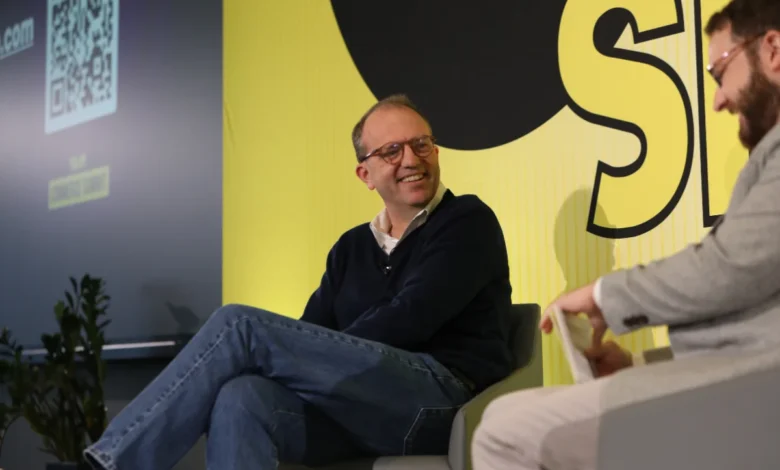
The travel industry is currently facing an existential crossroads as the rapid proliferation of autonomous artificial intelligence agents threatens to disrupt decades of established digital retail strategies. During the Skift Commerce Summit held in New York City on November 11, 2026, Tyler Morse, the chairman and CEO of MCR Hotels, articulated a firm stance that is likely to send ripples through the hospitality sector: he intends to block personal AI agents from booking rooms at his properties. While many industry leaders are debating the security, privacy, and regulatory implications of integrating AI into the customer journey, Morse’s reasoning is rooted in the fundamental economics of the "upsell"—the practice of convincing a traveler to opt for a higher-margin room or experience that they might not have originally intended to purchase.
According to Morse, the current model of travel merchandising is predicated on human psychology, which relies on visual stimuli, emotional storytelling, and strategic friction. AI agents, designed to act as purely utilitarian conduits for transactional efficiency, are fundamentally ill-equipped to engage in this nuanced sales dance. By prioritizing the lowest price and the most efficient route, AI bots threaten to bypass the carefully curated marketing funnels that hotel operators use to increase their average daily rate (ADR).
A Divergence in Industry Strategy
The announcement from Morse comes at a time when major travel conglomerates are scrambling to define their relationship with autonomous software. On the very same day as the Skift Commerce Summit, United Airlines made headlines by officially banning AI bots from accessing its booking platforms. However, the motivation behind the airline’s decision was starkly different from that of MCR Hotels. United cited data privacy concerns, the protection of proprietary customer information, and the legal risks associated with non-human entities making binding commercial contracts.
For MCR Hotels, the motivation is less about legal liability and more about bottom-line preservation. Morse’s assertion is that if personal AI assistants become the primary gateway through which consumers interact with travel brands, the "impulse buy" will effectively vanish. Modern hotel websites and mobile applications are designed with complex UI/UX elements—high-resolution photography, interactive maps, and localized recommendations for amenities—all aimed at triggering a "splurge" moment. An AI, by contrast, operates on cold data. If a user asks an AI to "book a hotel in New York for under $300," the AI will execute that request with clinical precision, likely ignoring the premium suite that might have been purchased had the customer spent five minutes browsing a branded, high-touch interface.
The Evolution of Travel Merchandising
To understand why this friction is occurring, one must look at the evolution of digital travel commerce over the last decade. Since the mid-2010s, the "direct booking" movement has been the primary strategy for hotel chains looking to bypass the high commission fees charged by Online Travel Agencies (OTAs) like Expedia or Booking.com. By investing heavily in their own platforms, hotel owners gained the ability to control the entire customer experience from discovery to checkout.
This transition allowed companies like MCR Hotels—which manages a diverse portfolio including iconic properties like the TWA Hotel at JFK Airport—to implement sophisticated merchandising strategies. These strategies include:
- Dynamic Bundling: Offering breakfast, late checkout, or parking as a seamless add-on during the initial booking flow.
- Visual Storytelling: Utilizing video and immersive imagery to create an emotional connection before the payment is processed.
- Algorithmic Pricing: Adjusting room rates in real-time based on demand, which is often complemented by human-centric marketing cues to make a higher price point feel like a "value" proposition.
AI agents, as they exist today, function largely as "price scrapers." They act as intermediaries that extract pricing information and present it to the user in a list format, stripping away the branding, the imagery, and the opportunity for the hotelier to explain why their property offers a superior experience.
Chronology of the AI Integration Debate
The tension between travel providers and AI developers has been building for several years.
- 2023–2024: The emergence of Large Language Models (LLMs) like ChatGPT and Claude led to the development of "travel planning" plugins. Initially, these were welcomed as tools to improve discovery.
- Early 2025: Travel startups began deploying "autonomous agents" capable of not just planning, but executing bookings. This moved the technology from an informational tool to a transactional competitor.
- Late 2025: Major airlines and hotel groups began reporting increased server load and data scraping activities from unidentified AI bots, leading to the implementation of more aggressive "bot-detection" software on booking portals.
- November 2026: The Skift Commerce Summit serves as the public inflection point, where leadership figures like Tyler Morse begin openly advocating for a "ban" on agents that do not adhere to specific commercial protocols.
Data-Driven Implications for Hospitality
The shift toward AI-mediated bookings poses a significant risk to revenue management strategies. According to industry data from 2025, non-room revenue—which includes food and beverage, spa services, and room upgrades—accounts for roughly 20% to 35% of total hotel revenue. A substantial portion of this is generated during the initial booking window.
If an AI agent blocks the display of these supplemental offerings, the hotel loses the "capture rate" on ancillary services. Analysts suggest that if AI agents become the dominant booking channel, hotels could see a compression in profit margins by as much as 5% to 10%. This is because the "human element" of travel—the desire to be pampered, the willingness to pay for a better view, or the curiosity about a hotel restaurant—is filtered out by an AI that prioritizes the most efficient fulfillment of a basic prompt.
The Response from Tech Developers
Proponents of AI travel agents argue that hotels are fighting a losing battle. Tech developers maintain that AI is simply providing what the modern consumer wants: speed, transparency, and a lack of marketing clutter. They argue that if a customer wants to spend extra on a room, they will do so regardless of the interface.
"The industry is currently in a defensive crouch," says Dr. Elena Rodriguez, a digital transformation consultant specializing in travel tech. "What Morse and other CEOs are doing is attempting to maintain control over the sales funnel. However, the reality is that consumers are increasingly delegating their decision-making to personal AI agents because they are tired of being ‘merchandised’ to. The question isn’t whether hotels can block these agents, but whether they can adapt their own digital presence to be useful to AI, rather than just humans."
Broader Impact: The "Bot-Only" Web
The potential for a "walled garden" approach in the hotel industry carries significant implications for the future of the internet. If major hotel chains succeed in blocking autonomous agents, it could lead to a bifurcated digital ecosystem: one side for human users who browse traditional websites, and a "dark" side where AI agents are locked out or forced to use expensive, pay-to-play APIs.
From a regulatory standpoint, this also raises questions about "net neutrality" in the context of commercial services. While a private company generally has the right to manage its own servers and prevent unauthorized scraping, the travel industry is a critical component of global infrastructure. If major carriers and hoteliers coordinate to block AI, it could invite scrutiny from antitrust regulators who may view such actions as a collective effort to stifle innovation and limit consumer choice.
Looking Toward the Future
Tyler Morse’s declaration at the Skift Commerce Summit underscores a profound discomfort among traditional travel executives. They have spent billions building brands, loyalty programs, and high-fidelity digital experiences, only to see them potentially rendered invisible by a layer of silicon that doesn’t care about their brand identity.
As the industry moves into 2027, the battle line is clearly drawn. On one side are the technology innovators who believe that the future of commerce is automated, frictionless, and data-driven. On the other are the hospitality leaders who believe that travel is an emotional, high-value product that requires a human touch—or at the very least, a sales pitch that an AI agent is not programmed to hear.
Whether Morse’s strategy of banning agents will hold remains to be seen. If more hotel chains follow suit, it could force a standoff that leads to the development of a new protocol for how AI agents and hotel booking engines communicate—one that allows for the display of upsells and branded content within an AI-mediated environment. Until then, the industry remains in a period of intense, high-stakes negotiation, with the future of the digital travel economy hanging in the balance.