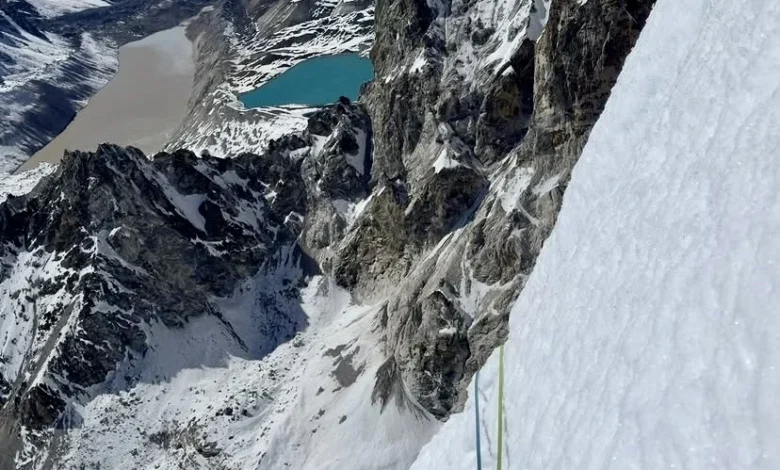
Between October 23 and 27, Russian alpinists Alexander Parfenov and Alexander Semenov successfully established a demanding new technical line on the 6,895-meter peak of Lunag Ri, situated within the Rolwaling Himal along the rugged border of Nepal and Tibet. While the expedition demonstrated exceptional technical skill and endurance, the pair was ultimately forced to retreat before reaching the main summit, concluding their ascent just short of the peak’s highest point. This attempt, characterized by complex mixed climbing and unpredictable alpine conditions, underscores the persistent allure and formidable nature of the Lunag massif, a region that has served as a crucible for some of the world’s most elite mountaineers.
The Anatomy of the Ascent
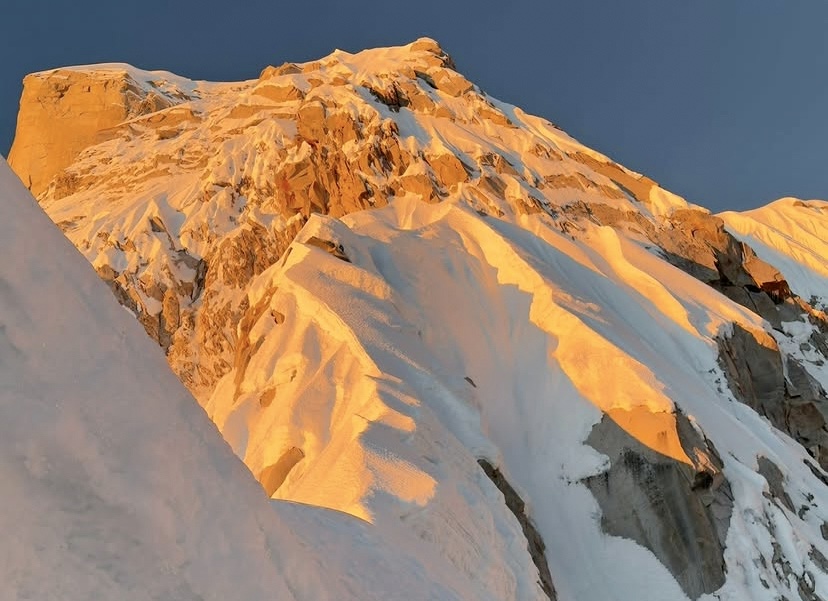
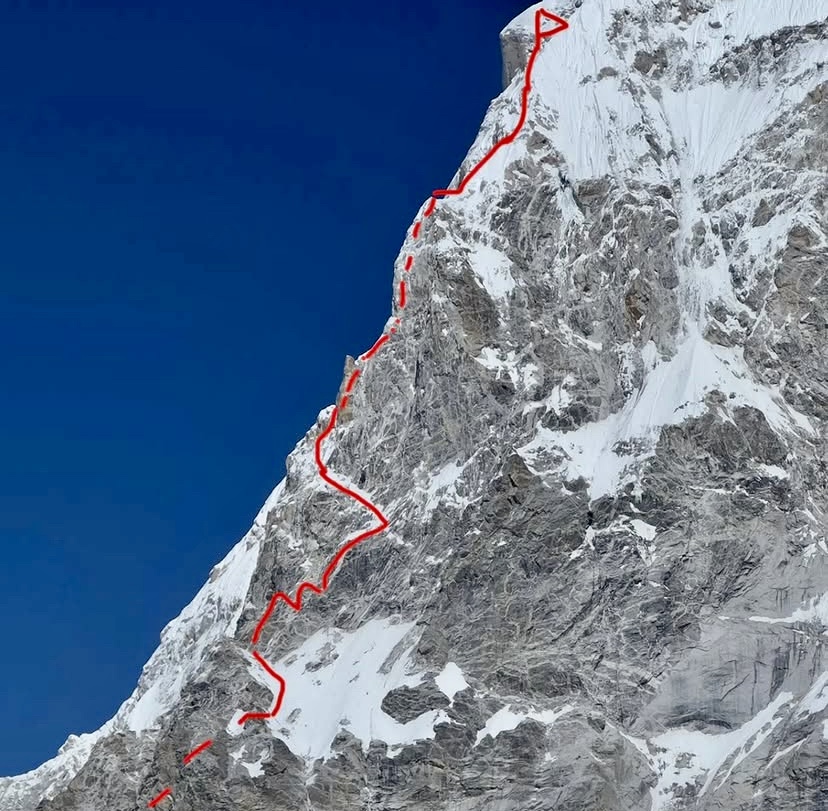
The Russian team focused their efforts on a previously unexplored, southeast-facing buttress of the Lunag Ri massif. The line was ambitious, designed to terminate on the southeast summit of the mountain. Over the course of four days, Parfenov and Semenov navigated a terrain profile that demanded a diverse repertoire of climbing disciplines. Reports indicate that the route featured significant mixed and rock climbing sections graded at M6, alongside technical aid climbing stretches rated A2–A3.
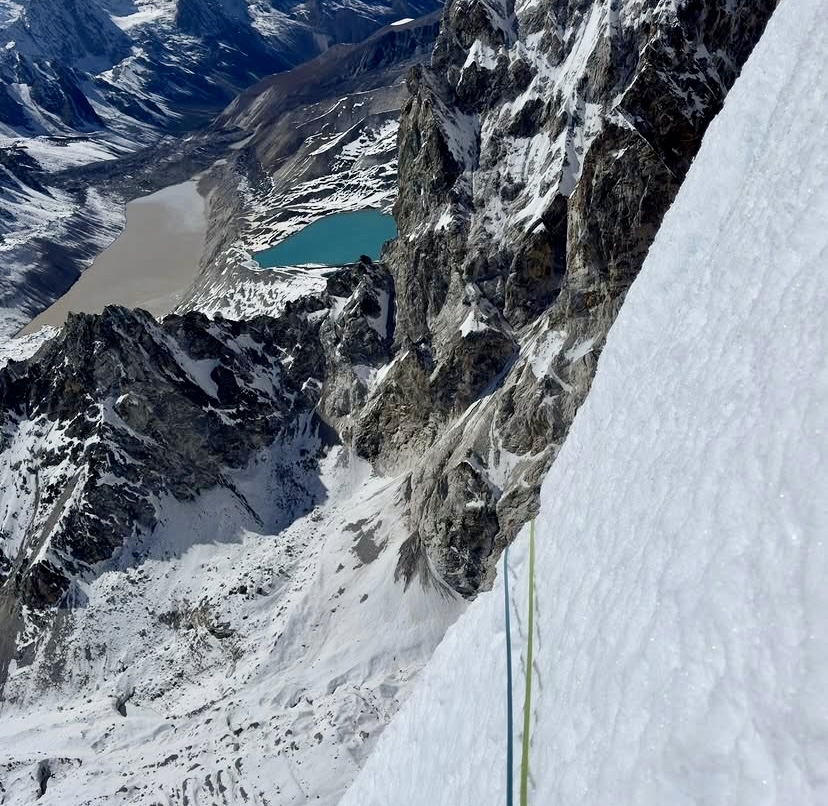
The vertical challenges were compounded by the presence of ice up to WI5–WI6, requiring precise equipment management and high-level proficiency in ice protection. Perhaps the most daunting aspect of the climb, however, was the reliance on extended stretches of steep snow, which offered notoriously limited protection. By the time they reached the final portion of the pillar, the climbers placed a single piton to anchor their progress. Facing the dual threat of an approaching storm system and emerging health concerns, the pair made the calculated decision to initiate a rappelling descent, successfully reaching the base of the wall on October 28.
Chronology of the Lunag Ri Exploration
The history of Lunag Ri is a narrative of incremental progress, characterized by shifts in style and ambition. The mountain’s prominence in the international climbing community began in earnest around 2009. That year, the first ascent of the neighboring 6,778-meter Jobo Rinjang, accomplished by Joe Puryear and David Gottlieb, brought renewed attention to the broader massif.
In the autumn of 2010, a French expedition consisting of Max Belleville, Mathieu Detrie, Mathieu Maynadier, and Sebastien Ratel reached a significant milestone. They successfully climbed the southeast face of Lunag Ri, establishing the route Close the Door. Over three days of alpine-style climbing, the team reached a distinct southeast top at approximately 6,812 to 6,830 meters. However, due to severe exhaustion, the team opted against the final traverse to the main summit. This 2010 expedition provided a benchmark for the technical difficulty of the peak, a standard that remained largely untouched for several years as focus shifted toward the more daunting west ridge.
The Anker-Lama Era
The most famous chapters in the history of Lunag Ri involve the late David Lama and his partner Conrad Anker. Their attempts in 2015 and 2016 transformed the peak into a symbol of high-stakes, alpine-style exploration. In November 2015, the duo reached a high point roughly 300 meters below the summit, only to be turned back by the unforeseen complexity of the rock and ice ridges.
The 2016 expedition remains a sobering reminder of the volatility of the Himalaya. While attempting a similar line, Conrad Anker suffered a heart attack at 5,800 meters. The subsequent emergency helicopter evacuation and the following solo push by Lama—who gained an additional 50 meters of elevation—pushed the limits of what was considered possible on the peak. It was not until 2018, in a legendary solo effort, that David Lama finally reached the true summit, earning a Piolet d’Or for his achievement.
Technical Data and Environmental Constraints
The difficulty of climbing Lunag Ri is rooted in its unique geological structure. The mountain is not a singular peak but a complex series of closely linked pinnacles and knife-edge ridges. This configuration makes determining the "true" summit a subject of geographic nuance, with some sources listing the peak at 6,895 meters and others at 6,907 meters.
For climbers like Parfenov and Semenov, the shifting weather patterns of the late October window present the primary risk. The Himalayan post-monsoon season often brings stable conditions, but it also carries the risk of early-season storms that can turn a technical climb into a survival scenario. The reliance on minimal protection in the snow-heavy upper sections of the buttress highlights why many expeditions to this massif end without a summit. When protection is scarce, the risk-to-reward ratio shifts rapidly; a climber’s decision to turn back is often not a failure of will, but a triumph of situational awareness.
Implications of the Recent Attempt
The Russian team’s foray into the southeast buttress serves as a vital contribution to the regional map of the Rolwaling Himal. By pushing into uncharted territory, they have provided future expeditions with data regarding the rock quality and ice conditions of a previously ignored face.
Industry analysts and members of the mountaineering community often view such "near-misses" as essential steps in the evolution of modern alpinism. While the absence of a summit prevents the route from being officially "completed" in the traditional sense, the exploration of such a significant feature on a remote, 6,000-meter peak is regarded as a major feat of endurance.
Broader Impact on High-Altitude Alpinism
The trend on Lunag Ri reflects a broader shift in high-altitude climbing toward "light and fast" alpine styles. Gone are the days of large, fixed-rope expeditions for peaks of this stature; today’s elite climbers prioritize speed and minimal impact. The challenges faced by Parfenov and Semenov are representative of the modern mountaineer’s struggle: finding new, difficult, and safe lines in an increasingly crowded and well-documented mountain range.
As the climbing community reviews the logs and photographs provided by the Russian team, the consensus remains that their work on the southeast buttress is a testament to the technical progression of the sport. Their retreat, while disappointing, ensures that the ultimate summit of that particular line remains an open challenge. For now, Lunag Ri remains a peak that dictates its own terms, guarding its summit against all but the most precise combinations of timing, skill, and environmental cooperation. The mountain’s history continues to be written, not just in the records of successful summits, but in the rigorous, documented attempts that define the limits of human capability in the high peaks.