Floating Alone Down the Brahmaputra on a Bamboo Raft: Shekhar Bordoloi’s 891km Solo Expedition

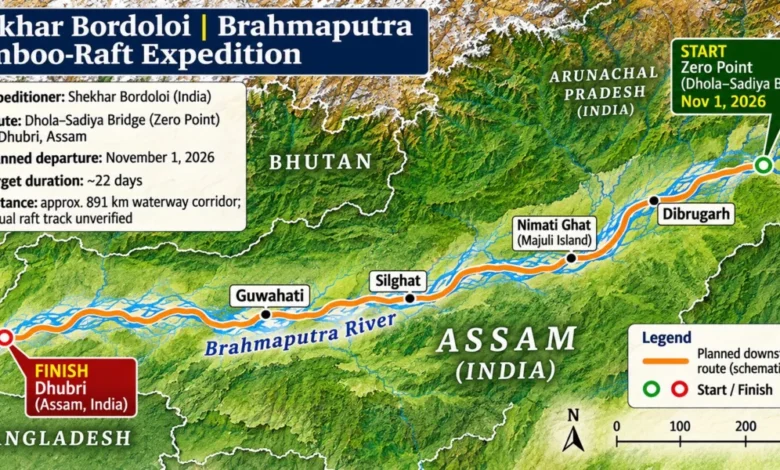
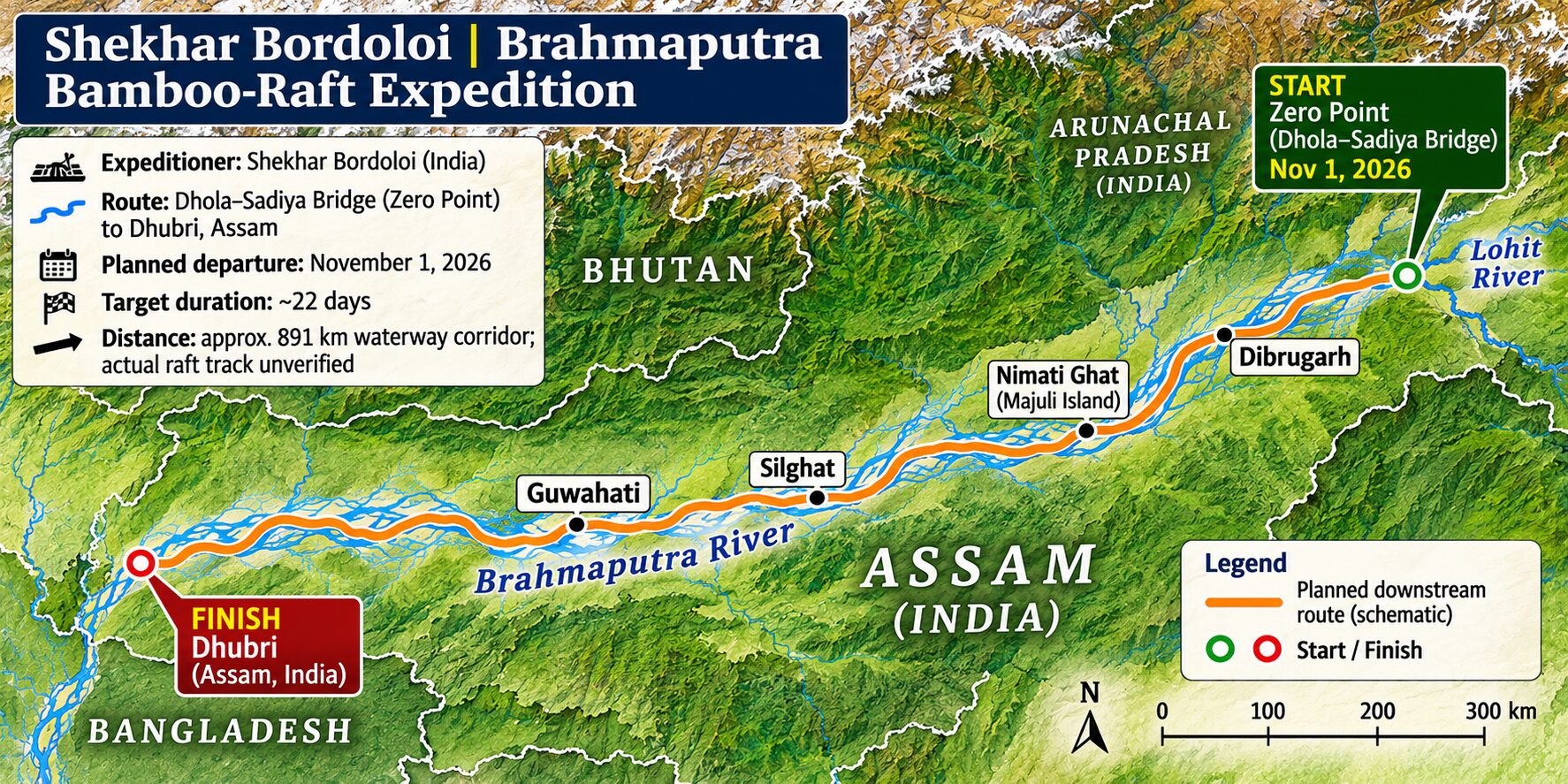
Indian mountaineer and adventurer Shekhar Bordoloi has embarked on an ambitious solo expedition, navigating the length of the Brahmaputra River in India aboard a traditional, hand-constructed bamboo raft. Departing from the Dhola-Sadiya Bridge on November 1, Bordoloi aims to traverse 891 kilometers of one of the world’s most powerful and unpredictable river systems. His destination is the town of Dhubri, a journey projected to span between 22 and 25 days. This expedition represents a significant escalation in scale for the seasoned adventurer, testing both his survival skills and his endurance against the backdrop of the massive riverine landscape.
The Brahmaputra, a transboundary river that originates in the Angsi Glacier of the Himalayas in Tibet, traverses through China, India, and Bangladesh before emptying into the Bay of Bengal. Stretching approximately 2,900 kilometers in total, the river serves as the lifeblood for millions, yet its volatile nature—characterized by seasonal flooding and shifting sediment channels—makes it a formidable challenge for even the most experienced navigators.
A History of River Exploration
Shekhar Bordoloi is no stranger to the currents of the Brahmaputra. His current solo endeavor is the culmination of years of riverine exploration and local advocacy. In 2020, Bordoloi led a team of three on a 400-kilometer expedition down a significant stretch of the river, utilizing similar bamboo raft technology. Prior to that, in 2015, he participated in an 11-day, 11-person expedition under the guidance of the Assam Mountaineering Association, an experience that underscored the complexities of navigating the river’s diverse hydraulic features.
However, the current expedition marks a departure from his previous team-oriented ventures. By traveling solo, Bordoloi is removing the safety net of a collective support system, necessitating a higher level of self-reliance. He is tasked with managing the vessel’s structural integrity, navigating through varying current speeds, and securing sustenance—often relying on his extensive knowledge of the local landscape and foraging techniques developed through years of mountaineering and backcountry travel.
Construction and Navigational Dynamics
The raft, the centerpiece of this expedition, is a testament to traditional Assamese craftsmanship. Built from locally sourced bamboo poles, the structure was lashed together over several days, utilizing techniques that have been passed down through generations of river-dwelling communities. These bamboo rafts are traditionally used for fishing and short-haul transportation in rural areas of Assam.
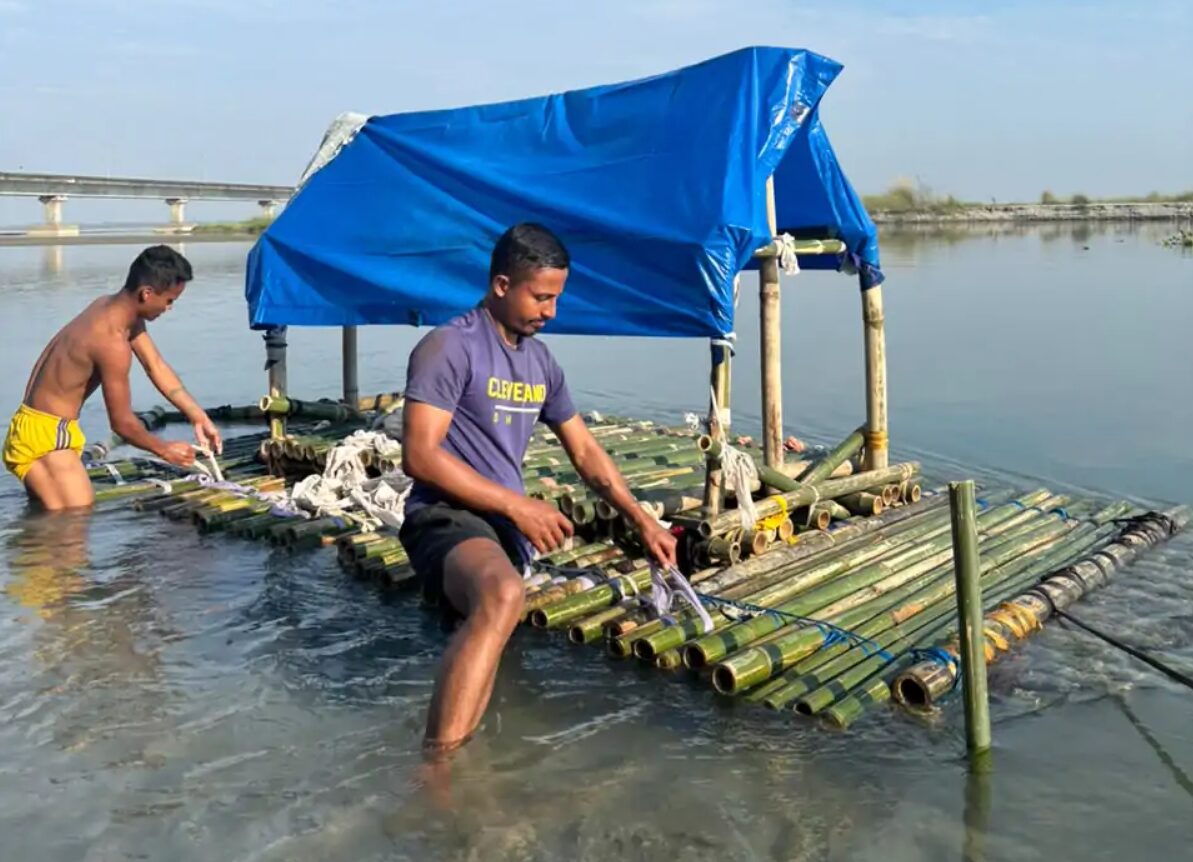
Unlike modern, inflatable rafts or fiberglass boats, the bamboo raft has a low center of gravity but is highly susceptible to the river’s turbulent currents. The initial stages of the journey took Bordoloi through the Lohit River, one of the primary tributaries that feeds into the Brahmaputra. While the opening days provided relatively stable conditions, the broader sections of the river present a drastically different environment. The Brahmaputra is the ninth-largest river in the world by water discharge, and as it enters the plains of Assam, it braids into multiple channels, creating a labyrinthine path that requires constant vigilance and navigation.
The Objective: Mapping and Sustainable Tourism
Beyond the personal challenge of the 891km trek, Bordoloi has articulated a broader vision for his expedition. He believes that the underexplored corridors of the Brahmaputra hold significant untapped potential for sustainable, community-led tourism. By documenting his route and analyzing the river’s navigability, Bordoloi hopes to create a blueprint for "river tourism" that prioritizes ecological sensitivity.
"The goal is to bring attention to the riverine ecosystem while demonstrating how local communities can benefit from responsible navigation," sources close to the expedition noted. In a region where economic development often clashes with environmental preservation, the project seeks to highlight a middle path. By mapping the river’s navigable channels, the expedition could provide valuable data for local stakeholders interested in developing eco-tourism infrastructure that does not rely on heavy industrialization.
Environmental and Logistical Challenges
The Brahmaputra basin is one of the most dynamic geological regions on the planet. Its annual sediment load is among the highest in the world, causing the riverbed to shift constantly. For a solo explorer, this means that even a mapped route can change overnight.
Logistically, the expedition is a race against time and the elements. Bordoloi’s strategy of relying on minimal supplies and foraging reflects his background in mountaineering, where weight reduction is paramount. However, the duration of this trip—more than twice as long as his previous, most strenuous efforts—introduces the risk of physical exhaustion and resource depletion.
The regional government and environmental agencies in Assam have long grappled with the challenges of the Brahmaputra’s annual flood cycle. Experts suggest that expeditions like Bordoloi’s, which emphasize intimate, long-term interaction with the river, provide qualitative insights that satellite imagery and hydrographic surveys often miss. His daily documentation, shared via Facebook and Instagram, provides a real-time account of the river’s changing conditions, effectively creating a modern, crowdsourced logbook of the river’s status in late autumn.
The Socio-Economic Implications
The Brahmaputra is not merely a geographic feature; it is the economic backbone of Assam. The river supports agricultural cycles, inland water transport, and fisheries. By focusing his expedition on the potential for tourism, Bordoloi is highlighting the economic viability of the river as a corridor for sustainable growth.
Observers have noted that the success of such an expedition could serve as a pilot model for future river-based projects. If the project can prove that a traditional, non-motorized craft can safely traverse the river while documenting key biodiversity hotspots, it may influence future policy decisions regarding river usage in the region. There is, however, a cautionary note from safety experts: the Brahmaputra’s sheer size and power mean that any individual attempt to navigate its length carries inherent, high-level risks. The lack of emergency support on a solo expedition of this magnitude remains a primary concern for local mountaineering clubs and search-and-rescue organizations.
A Chronology of the Expedition
- November 1: Departure from the Dhola-Sadiya Bridge.
- November 1–3: Initial transit through the Lohit tributaries, acclimatization to the raft’s handling.
- November 4–10: Transition into the main Brahmaputra channel; monitoring of the river’s widening banks and sediment distribution.
- Mid-November: Anticipated arrival in the central regions of Assam, focusing on the mapping of navigable channels near major islands like Majuli.
- Late November: Final push toward the western border of the state and arrival in Dhubri.
Future Perspectives
As Bordoloi continues his descent, the global community of adventurers and hydrologists watches with interest. His project represents a convergence of traditional knowledge and modern digital documentation. By utilizing the bamboo raft—a vessel that is inherently part of the river’s local heritage—he maintains an authentic connection to the environment he is studying.
The implications of this expedition extend beyond the reach of a single man on a raft. They touch upon the necessity of understanding the Brahmaputra not as an obstacle to be conquered, but as a living system to be navigated with care. Whether this expedition ultimately serves as a catalyst for new tourism initiatives or as a significant case study in river navigation, its impact on the local perception of the Brahmaputra is already being felt.
For the people living along the banks, seeing a lone adventurer navigate the river in a traditional vessel serves as a reminder of the river’s historical importance as a highway for trade and communication. As the expedition enters its second week, the primary focus remains on the structural integrity of the raft and the unpredictable nature of the shifting sandbars that define the Brahmaputra’s unique, braided landscape. The conclusion of the journey in Dhubri will provide the final data set needed to assess the viability of this route for future travelers and the long-term potential of the river as a sustainable tourism destination.
Related posts: