The Syrian Arab Republic, once a premier destination on the Mediterranean tourist circuit, has emerged as an unlikely frontier for contemporary travelers. Following more than a decade of civil conflict, the nation is navigating a precarious transition toward economic stabilization, leading to a renewed, albeit highly regulated, interest from international visitors. While the country’s ancient heritage remains a significant draw, the logistical and ethical realities of visiting a state still grappling with the aftermath of war, international sanctions, and a fractured geopolitical landscape present a complex set of challenges for the global tourism industry.
A Chronology of Conflict and Cultural Heritage
To understand the current state of tourism in Syria, one must consider the timeline of the last fifteen years. Prior to 2011, Syria’s tourism sector was a pillar of the national economy, contributing approximately 12 percent to the country’s GDP and attracting over 8 million visitors annually. The onset of the civil war in 2011 saw these figures plummet as the country became the epicenter of a multifaceted regional conflict.
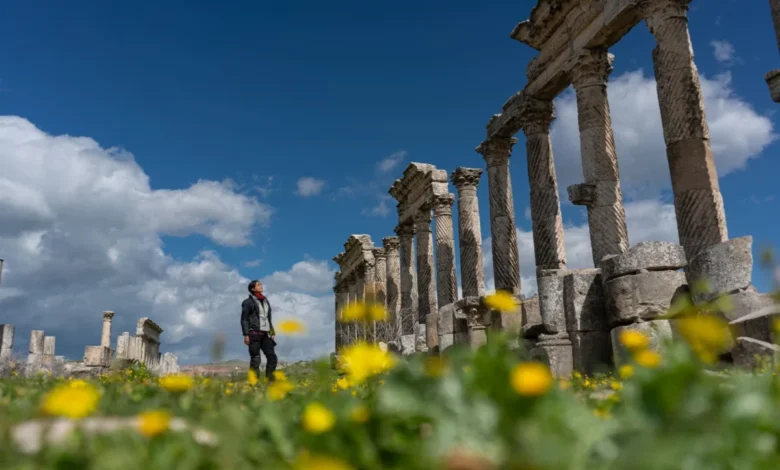
The period between 2011 and 2018 was defined by widespread destruction of urban infrastructure and archaeological sites, including the partial ruin of the UNESCO World Heritage site in Aleppo and the destruction of the Temple of Bel in Palmyra. Since 2019, however, as large-scale combat operations have largely subsided in major urban centers, the Syrian government has actively sought to revive the tourism industry. The current phase, characterized by localized security and an ongoing economic crisis, sees the industry shifting from a mass-market model to a highly structured, guided experience for niche travelers.
The Logistics of Entry and Regulation
Current Syrian law mandates that all foreign tourists traveling on non-Syrian passports must be accompanied by a government-approved tour guide or operator. This regulation is not merely a bureaucratic formality but a cornerstone of the state’s security apparatus regarding foreign nationals. Consequently, independent travel—a common mode for backpackers in neighboring regions—is effectively prohibited.
This requirement has fostered the rise of boutique, localized tour agencies. These operators, often based in Damascus, act as intermediaries between the visitor and the state, managing the complex visa application process and securing the necessary permits for travel between governorates. According to industry reports, these firms are essential for navigating the various checkpoints that remain in place across major arterial roads, ensuring that travel remains within authorized zones.
Socio-Economic Realities and Infrastructure
The economic landscape of Syria remains volatile. The national currency has faced significant devaluation, and the country is currently subject to extensive economic sanctions, notably the U.S.-led Caesar Syria Civilian Protection Act. These sanctions have significantly constrained the banking sector, meaning that for the average tourist, the economy remains almost entirely cash-based.
For the visitor, this results in a stark duality. In the historic districts of Damascus and Aleppo, one can observe a resilient service industry: boutique hotels operating within restored Ottoman-era mansions, functioning cafes, and a thriving artisanal market. Yet, these islands of commercial activity exist alongside neighborhoods still marked by the physical scars of the conflict. Electricity remains a primary challenge, with rolling blackouts common across the country. The reliance on private generators, fueled by imported or locally processed hydrocarbons, underscores the ongoing energy instability linked to the status of the country’s oil fields, many of which remain outside of direct state control.
Security Assessment and Regional Context
The question of safety is the most frequent inquiry from prospective travelers. While the intensity of the conflict has decreased significantly, the security situation is not uniform. The U.S. Department of State and several European foreign ministries maintain "Level 4: Do Not Travel" advisories for Syria, citing the risks of kidnapping, arbitrary detention, and military operations.
From a statistical standpoint, however, the risk to the average tourist is largely tied to their location and itinerary. Recent regional tensions, particularly the escalation of conflict in Gaza, have resulted in periodic airstrikes in Syria. Most of these incidents have been targeted, aiming at specific military infrastructure, runways, or suspected logistical hubs linked to Iranian-aligned militias. For the casual traveler, the statistical probability of being involved in such an event remains low, provided that travel is confined to government-controlled areas and managed through reputable, state-vetted channels.
The Ethics of Dark Tourism
The emergence of "rebound tourism" in Syria has sparked a broader debate regarding the ethics of visiting nations in the process of rebuilding. Critics argue that tourism in such regions can inadvertently normalize the political status quo or prioritize the aestheticization of ruins—a phenomenon sometimes termed "dark tourism"—over the lived reality of the local population.
Proponents of the current tourism revival argue that such visits provide essential foreign currency to local businesses and families, potentially serving as a form of "people-to-people" diplomacy. The consensus among those currently engaged in the sector is that the responsibility lies with the traveler. The industry is currently moving away from the "survivalist" narrative—where visitors seek to document the danger of a war zone—toward a model of cultural exchange. The expectation is that visitors should approach the country with a high level of cultural sensitivity, acknowledging the ongoing trauma of the population while engaging with the historical and architectural preservation efforts that are currently underway.
Implications for the Future
The long-term viability of Syrian tourism hinges on two factors: regional geopolitical stabilization and the gradual lifting or recalibration of international economic restrictions. As long as the current sanctions framework remains, the tourism sector will likely remain restricted to small groups, limiting the potential for a full-scale return to pre-2011 volumes.
Furthermore, the integration of Syria back into the regional tourism circuit, such as its recent readmission to the Arab League, suggests a long-term strategy of normalization. For the international community, this presents a policy dilemma: how to engage with a nation whose historical and cultural significance is universal, while navigating the severe political and humanitarian concerns that persist.
For the traveler, the decision to visit Syria is not a trivial one. It requires a willingness to look past the headlines and engage with a reality that is far more nuanced than a "war-torn wasteland" narrative. It involves balancing the desire to witness one of the world’s oldest civilizations with the ethical weight of entering a country where the rebuilding process is still in its infancy. As the tourism industry continues to formalize, the onus will remain on the individual to ensure that their presence contributes to the preservation of culture rather than the exploitation of conflict.
Related posts: