Xteink X3 E-Reader Trail Test: Is This Pocket-Sized Device a Backpacking Game Changer or a Gimmick

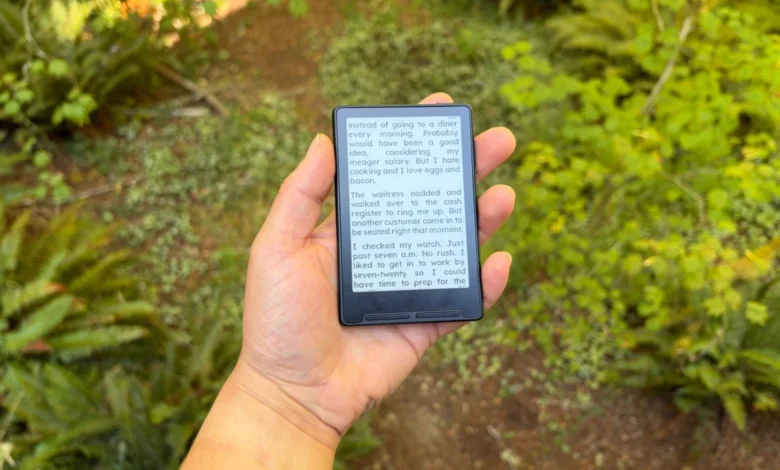
The debate over literature in the backcountry has persisted for as long as backpackers have measured their base weights in ounces. For the ultralight community, where every gram is scrutinized and multi-use items are the gold standard, books and electronic readers traditionally fall into the nonessential category. While recreational reading provides much-needed psychological relief during tent-bound storms or quiet evenings at camp, the penalty of carrying a traditional paperback or a standard e-reader often outweighs the benefits. However, the introduction of ultra-compact technology is challenging this long-standing compromise. Recent field testing of the Xteink X3—a pocket-sized, minimalist e-reader developed by Chinese manufacturer Xteink—suggests that the calculus of backcountry entertainment may be shifting. Weighing a mere 58 grams and boasting a playing-card-sized footprint, the device presents a compelling proposition for backpackers seeking to maintain stringent weight limits without sacrificing offline reading time.
The Evolution of Backcountry Entertainment and Weight Management
To understand the significance of a sub-60-gram e-reader, one must examine the rigorous standards of modern ultralight backpacking. Pioneered by thru-hikers and minimalists seeking to reduce physical strain and increase daily mileage, ultralight backpacking often mandates a base weight—the weight of a pack minus consumable items like food, water, and fuel—of under ten pounds. Within this strict framework, luxury items are systematically eliminated.
For decades, backpackers faced a binary choice regarding reading material. They could carry a traditional physical book, which carried a heavy weight penalty and was susceptible to moisture damage, or they could bring a standard e-reader, such as an Amazon Kindle or Kobo device. While standard e-readers solved the weight and moisture issues associated with paper, they still added upwards of 150 to 200 grams to a pack. For purists striving to shed every superfluous ounce, this was frequently deemed an unacceptable luxury. Consequently, many hikers elected to abandon dedicated reading devices entirely, relying instead on their smartphones for both navigation and digital literature.
Yet, utilizing a smartphone for leisure reading in the wilderness introduces its own distinct drawbacks. Backcountry travelers heavily depend on mobile devices for offline topographic mapping, GPS tracking, photography, and, crucially, emergency communication via satellite integrations or cellular data where available. Draining a smartphone battery on a novel significantly compromises a hiker’s safety margin. Furthermore, an increasing demographic of outdoor enthusiasts actively seeks digital detoxes during wilderness excursions, making the notifications, glow, and connectivity of a smartphone antithetical to the goal of total immersion in nature.
Hardware Specifications and Field Performance of the X3
The Xteink X3 was not explicitly engineered with the ultralight backpacking demographic in mind. Originally conceptualized as an everyday-carry (EDC) gadget designed to slip easily into a pocket or attach magnetically to the rear of a smartphone, its core purpose is to provide micro-doses of reading time during daily commutes, mitigating mindless smartphone scrolling. Nevertheless, its physical dimensions and weight profile serendipitously align with the exacting demands of the backcountry community.
Measuring a mere 5.1 millimeters in thickness, the X3 features a 3.7-inch e-ink display roughly equivalent in surface area to a standard playing card. At 58 grams, the device is comparable in weight to a standard candy bar and registers at less than half the weight of the lightest mainstream e-readers currently available on the commercial market.
Battery performance represents a critical metric for remote wilderness gear, where power sources are limited to portable power banks or solar chargers. Xteink specifies a battery longevity of 10 to 14 days based on an assumed reading regimen of one to two hours daily. Field evaluations conducted over sustained multi-week periods corroborate these claims, with testers reporting exceptional battery endurance that easily spans standard weekend backpacking trips and extended thru-hikes alike without requiring a recharge. Priced at approximately $69, the device occupies an accessible market tier that lowers the financial barrier for hikers hesitant to risk expensive electronics in harsh environments.
Technical Limitations and Usability Challenges in the Wilderness
Despite its impressive physical metrics, the X3 presents several functional compromises that users must navigate, particularly within a remote outdoor setting. Unlike conventional e-readers equipped with capacitive touchscreens, the X3 relies entirely on a physical four-button navigation layout located directly on the chassis. Operating these tactile controls requires a distinct learning curve, and flipping pages or navigating menus lacks the seamless fluidity found on modern smartphones or full-sized e-readers.
Furthermore, the hardware design omits an integrated front light. While the e-ink display performs adequately in natural daylight, mirroring the glare-free legibility of printed paper, night reading inside a tent necessitates an external light source. Backpackers must rely on their headlamps to illuminate the page—a minor inconvenience for campers who already carry headlamps for camp chores, but a notable departure from backlit devices.
Ecosystem compatibility also presents hurdles. The X3 handles locally transferred EPUB files with relative efficiency, allowing users to sideload previously downloaded content via simple file transfers. However, it lacks seamless integration with mainstream digital library ecosystems such as the Libby app, which allows users to borrow books directly through platforms like Kindle or Kobo. Finding an intuitive, straightforward method to sync library loans to the X3 remains a challenge, limiting its utility for readers who rely heavily on public library catalogs.
Durability and weather resistance constitute another critical consideration for backcountry gear. The X3 possesses no official water-resistance or waterproof rating. While field reports indicate that the device is robust enough for normal handling, it lacks the ruggedized, sealed construction found in some premium outdoor electronics. Mitigation of this risk, however, is straightforward; due to its diminutive size, the e-reader can be safely enclosed inside a standard Ziploc bag or waterproof pouch within a backpack, effectively shielding it from rain, condensation, and accidental submersion.
Industry Implications and the Broader Outdoor Gear Market
The reception of the Xteink X3 within the outdoor recreation community highlights a broader trend in gear development: the cross-pollination of urban everyday-carry technology with specialized backcountry pursuits. Manufacturers of ultralight gear continually monitor consumer electronics markets for compact, low-power innovations that can be repurposed for wilderness applications.
From an analytical perspective, the popularity of micro-devices like the X3 underscores a shifting philosophy among modern backpackers. The traditional paradigm of total asceticism—where comfort is aggressively sacrificed for weight reduction—is increasingly being challenged by a philosophy of smart optimization. Hikers are no longer willing to completely forgo creature comforts if lightweight, highly efficient technological solutions emerge to bridge the gap.
Whether the X3 ultimately establishes itself as a permanent fixture in the ultralight canon or remains a niche tool for digital minimalists depends heavily on individual priorities. For purists who demand maximum feature sets, full touchscreen navigation, and native library integration, a conventional e-reader or a physical book remains the superior choice, albeit with weight and volume penalties. For digital minimalists who prioritize battery conservation, zero smartphone distraction, and absolute weight minimization, however, the X3 represents a viable evolution in trail luxury. As manufacturers continue to miniaturize display technologies and battery components, the intersection of ultralight backpacking and digital reading will likely yield even more sophisticated solutions, permanently altering how hikers pass the time when the sun dips below the horizon.
Related posts: