Returning to a destination after a long hiatus often reveals a landscape caught in the tension between preservation and progress. For the modern traveler, cities like Seville represent a dynamic intersection of deep-rooted tradition and rapid modernization. Recent data on tourism in Andalusia suggests that Seville has seen a 15% increase in international visitors over the last decade, leading to significant urban development, the gentrification of historic districts like Plaza Nueva, and a shift in the local hospitality landscape. This evolution forces a reconciliation between the traveler’s nostalgic memory and the city’s contemporary reality.

For many, the challenge of returning to such a location is compounded by the psychological barrier of language. Linguistic acquisition is rarely a linear process; it is frequently punctuated by periods of stagnation, frustration, and the "confidence gap"—a phenomenon where learners possess the vocabulary to function but lack the self-assurance to engage in spontaneous, real-world communication.
The Historical Context of Linguistic Anxiety
The experience of the "overconfident beginner" is a well-documented stage in second-language acquisition. Years ago, many travelers arrived in Spain armed only with phrasebooks, operating under the misconception that scripted interactions would suffice for meaningful travel. The ensuing failure—often met with the pragmatic, if slightly demoralizing, response of fluent English from locals—serves as a primary deterrent for future attempts at immersion.

Psycholinguists note that the transition from "rehearsed" speech to "spontaneous" speech requires moving beyond rote memorization. In the past, the author’s attempt to interact in Seville was characterized by this lack of improvisation. The inability to handle unexpected inquiries from service staff, such as a waiter in a tapas bar, often led to a retreat into English. This cycle of failure reinforces the belief that the learner is not capable of genuine interaction, creating a self-fulfilling prophecy of linguistic inadequacy.
The Shift: From Classroom to Real-World Application
The shift from academic or app-based learning to real-world application requires a bridge—typically provided by one-to-one tutelage. Modern language platforms, such as Preply, have gained popularity by facilitating this exact transition. By forcing learners to navigate unpredictable questions, handle conversational pivots, and manage vocabulary deficits, tutors prepare students for the "wild" environment of a foreign city.

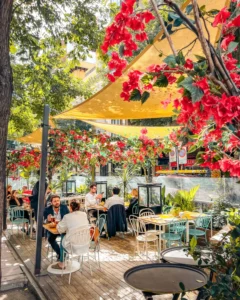
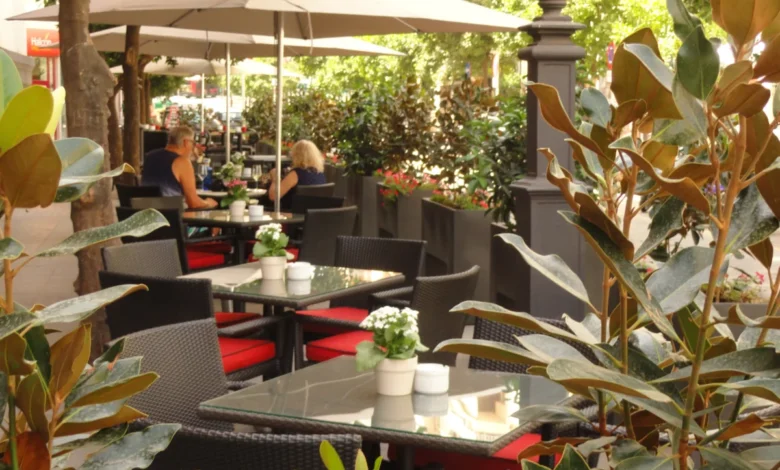
A critical milestone in this process is the moment of realization that the language has moved from a cognitive burden to a tool of expression. In the case of the author’s recent return to Seville, this manifested at Las Teresas, a traditional tapas bar. The ability to place an order and respond to a follow-up question in Spanish—without reverting to English—represents a statistically significant shift in the traveler’s proficiency level. It signifies a transition from the "Intermediate Plateau," where learners can understand input but struggle to produce output, to a state of functional fluency.
The Role of Immersion: The Plaza del Museo Case Study
The art market at the Plaza del Museo serves as a microcosm for cultural immersion. On any given Sunday, the interaction between local artists and visitors provides a low-pressure environment for linguistic testing. The nature of these exchanges is inherently informal, allowing the learner to focus on the content of the conversation—in this case, the aesthetic and cultural context of the artwork—rather than the mechanics of the language.

Fact-based analysis of language retention suggests that when the learner’s attention is diverted toward a secondary task (such as appreciating art or navigating a social situation), the brain is more likely to internalize grammatical structures and vocabulary. This "flow state" allows the learner to bypass the internal translator, leading to a more natural, intuitive form of speech. While the author noted that their Spanish remained imperfect, the reduction in hesitation and the ability to maintain a conversation despite linguistic gaps are markers of advanced developmental progress.
Broader Implications for Language Acquisition
The implications of this journey extend beyond the individual traveler. The "confidence gap" is a primary reason for high attrition rates in adult language learning. Data from various educational institutions indicate that while millions of adults begin learning a second language, fewer than 10% achieve a conversational level. The primary barrier is not cognitive capacity but the fear of social embarrassment—the "maternal pity" often felt when an attempt at a local tongue is met with a switch to English.

Experts in sociolinguistics argue that the key to breaking this barrier is the reframing of the "error." Instead of viewing a linguistic stumble as a failure, it should be viewed as a necessary component of the communication process. In Seville, as the author found, the local population is generally receptive to these efforts. When the traveler displays persistence, the interaction shifts from a transaction of convenience (switching to English) to a social engagement.
Summary of Key Findings
- Environmental Adaptation: The rapid development of Seville underscores the necessity for travelers to remain flexible in their expectations of a destination.
- The "Preply" Effect: One-to-one tutoring remains the gold standard for bridging the gap between digital language apps and real-life, high-stakes social interactions.
- Cognitive Load Management: Success in speaking a foreign language is achieved when the learner stops focusing on the language itself and instead focuses on the external context (e.g., discussing art or food).
- Resilience over Fluency: The ultimate milestone for the adult learner is not perfect grammar, but the ability to maintain communication in the face of uncertainty.
Future Directions for Travelers
For those looking to replicate this progress, the advice remains consistent: move beyond the phrasebook as soon as possible. Engage with native speakers in contexts where the goal is connection, not accuracy. The experience of the author in Seville confirms that while fluency is a long-term goal, the immediate victory lies in the removal of fear. The ability to engage with a local artist or a waiter in their native tongue does more than facilitate a transaction; it allows the traveler to experience the city as a participant rather than a spectator.

As Seville continues to evolve as a major cultural hub, the opportunities for such exchanges will only grow. The city’s "seductive soul"—often found in the quiet corners of Triana or the bustling, orange-scented plazas—remains accessible to those willing to push through the initial awkwardness of learning a language. The lesson from this recent trip is clear: the path to fluency is paved with "real-world" errors, and the most effective way to learn a language is to simply stop worrying about the mistakes and start talking.
Related posts: