Sony Unveils FX5: A Full-Frame Cinema Camera Redefining Creative Freedom with Internal RAW and Open Gate Capabilities

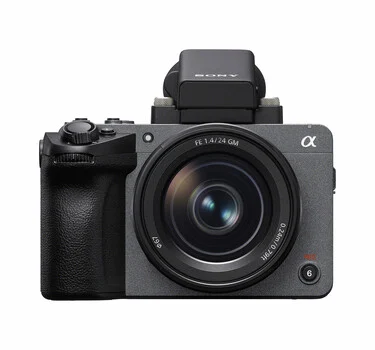
Sony has officially announced the ILME-FX5, a groundbreaking full-frame Cinema Line camera poised to significantly impact the professional filmmaking landscape. This latest addition to Sony’s esteemed lineup introduces several "firsts" for the FX series, most notably the inclusion of Open Gate shooting and internal RAW recording capabilities, features previously reserved for its higher-end VENICE cinema cameras. These advancements aim to empower creators with unprecedented flexibility in post-production and streamline complex workflows, particularly for independent filmmakers, documentarians, and commercial production houses. The camera is slated to ship in mid-August, with pricing set at $5,499.99 USD for the kit including the XLR Handle Unit and $4,899.99 USD for the body-only configuration.
At the heart of the FX5 lies a newly developed, fully stacked Exmor RS CMOS image sensor, engineered to deliver exceptional image quality and dynamic range. Paired with the robust BIONZ XR2 image processing engine and a dedicated AI processing unit, this sensor is rated to capture over 15 stops of dynamic range in S-Log3, providing cinematographers with extensive latitude for color grading and exposure adjustments. The camera boasts three native base ISO settings: 800, 4,000, and 12,800. Manual selection of these base ISOs is available in Cine EI and Flexible ISO modes, while the Cine EI Quick mode intelligently selects the optimal base ISO based on the Exposure Index setting, simplifying exposure management in dynamic shooting scenarios.
A notable new feature for the FX series is the Dual Gain Shooting function. This technology intelligently extracts additional information from the sensor, resulting in smoother gradations, wider latitude, reduced noise, and enhanced preservation of shadow detail. While this mode offers significant benefits, gain is capped at an equivalent of 18 dB, and its availability may be contingent on specific shooting settings, a common characteristic of advanced imaging technologies designed to optimize performance within defined parameters.
Pioneering Open Gate and Internal X-OCN for Enhanced Post-Production Workflows
The FX5 marks a significant evolutionary leap for Sony’s FX line by introducing Open Gate shooting. This capability allows for a full 3:2 pixel readout across the entire sensor, offering a wider canvas for post-production reframing and stabilization. Complementing this is the camera’s ability to record internally in X-OCN (eXtended Camera Original Network), Sony’s proprietary 16-bit scene-linear RAW format, without the need for an external recorder. This integration of internal RAW recording eliminates a common point of complexity and potential failure in modular camera rigs, directly addressing a key demand from independent and documentary filmmakers.
Beyond the existing X-OCN LT codec, Sony has introduced two new variants: X-OCN C1 and X-OCN C2. These codecs are designed to significantly reduce file sizes, thereby accelerating data transfer times and simplifying the post-production pipeline. This move acknowledges the growing challenge of managing increasingly large RAW files, offering a practical solution for workflows that demand efficiency and rapid turnaround.
At launch, the FX5 supports impressive frame rates, including 5K at up to 60 frames per second, 4K at up to 120 frames per second, and Full HD at up to 240 frames per second. These capabilities provide ample flexibility for capturing high-resolution slow-motion footage and cinematic action sequences.
Advanced Autofocus, White Balance, and Image Control Systems
Sony has integrated an advanced AI-powered autofocus system into the FX5, leveraging human pose estimation to accurately recognize a subject’s eyes, head, and body. This sophisticated tracking technology is designed to maintain reliable autofocus performance even in challenging low-light conditions. The Real-time Tracking feature further enhances subject acquisition by continuously following moving subjects, ensuring sharp focus throughout the shot.
The camera also features Auto Tracing White Balance, a system that intelligently combines data from visible light and infrared sensors with deep-learning-based light-source estimation. Sony claims this results in more stable and natural white balance adjustments, particularly in mixed or challenging lighting environments such as shade or interiors. It is important to note that this enhanced stability is primarily applicable when recording in X-OCN formats, underscoring the benefits of the camera’s internal RAW recording capabilities.
Users will also appreciate the configurable noise suppression feature, which can be toggled on or off to align with specific shooting intentions and post-production workflows. Furthermore, the FX5 includes a de-squeeze function to support anamorphic lenses with various magnification ratios, including 1.3x, 1.5x, 1.6x, 1.8x, and 2.0x, catering to cinematographers who favor the aesthetic qualities of anamorphic cinematography.
Robust Body, Advanced Stabilization, and Enhanced Monitoring Capabilities
The FX5 is equipped with a 5-axis optical in-body image stabilization system, a crucial feature for handheld shooting and maintaining steady footage. Sony states that the latest stabilization unit offers approximately double the roll correction range compared to its predecessor, the FX3, based on internal testing. The camera offers both Active Mode and a new Dynamic Active Mode for enhanced stabilization during handheld operation. Dynamic Active Mode provides more aggressive stabilization by applying a greater crop to the image, while Active Mode offers a balance between stabilization and field of view, supporting frame rates up to 120 fps. The availability of Dynamic Active Mode is dependent on codec and frame rate settings, highlighting the intricate interplay of features within the camera’s processing architecture.
The camera features a larger 3.5-inch, approximately 2.76 million dot, 16:9 aspect ratio touch-panel LCD monitor. This display is mounted on a versatile 4-axis multi-angle arm, allowing for approximately 98 degrees of upward tilt, 40 degrees of downward tilt, and a 180-degree side opening, offering extensive flexibility for various shooting angles and positions. The high-brightness panel ensures visibility even in bright outdoor conditions. Shooting information is strategically positioned around the edges of the screen to avoid obstructing the image itself. The implementation of the BIG6 home screen, a familiar interface from Sony’s CineAlta cameras, consolidates critical settings such as frame rate, exposure, and LUTs for quick access. A revamped menu system brings the operability of the FX5 in line with CineAlta and the FX6, facilitating seamless transitions for crews working across multiple Sony cinema camera platforms.
Power, Connectivity, and Enduring Reliability
Designed for demanding production environments, the FX5 incorporates a high-efficiency cooling fan and optimized heat dissipation measures to ensure stable operation during extended recording sessions. Its lightweight yet rigid body is designed with multiple screw holes for direct accessory mounting, enabling the construction of robust camera rigs without the necessity of a full cage.
Powering the camera is the recently released Sony NP-SA100 high-capacity battery, offering 2,670 mAh of power, approximately 1.3 times the capacity of the Z-series NP-FZ100. This extended battery life is crucial for uninterrupted shooting on location. The camera is equipped with two USB Type-C ports that support timecode input via an optional adapter cable and external power through USB Power Delivery. Users will need to provide their own PD-compatible external power supply and USB cable. A wired LAN terminal facilitates remote operation and network connectivity, further enhancing its utility in professional broadcast and studio settings. Integration with the Monitor & Control application allows for video monitoring and remote camera control via smartphones, tablets, and Mac computers.
Sony has also prioritized accessibility, incorporating features such as a screen reader that vocalizes menu options and an enlarged menu display. While language support varies by region, and not all menu items are covered by the screen reader, these additions demonstrate a commitment to making the camera usable for a broader range of professionals.
In a significant move towards sustainability, Sony has stated that recycled plastic accounts for approximately 30% or more of the camera body’s components. The manufacturing facilities in Thailand and China operate on 100% renewable energy, though production sites may be subject to change based on production cycles. Even the product bags are made from plant-derived nonwoven fabric, reflecting a growing industry trend towards environmentally conscious production.
Future-Proofing with Firmware Version 2.0
Sony has outlined a roadmap for future enhancements, with Firmware Update Version 2.0 scheduled for release in 2027. This update will introduce significant new capabilities, including high frame rate shooting up to 240 fps in X-OCN, 3:2 Open Gate recording in XAVC S-I, an optimized interface for vertical shooting, and a frame grab function. While the delay of these features until 2027 might be a consideration for some prospective buyers, it indicates Sony’s ongoing commitment to evolving the camera’s capabilities post-launch.
Optional Accessories for Expanded Functionality
To further enhance the FX5’s versatility, Sony is offering a range of optional accessories. The Sony DVF-EL1 is a detachable 0.58-type OLED viewfinder with approximately 7.07 million dots, supporting HDR display with a DCI-P3 equivalent color gamut and 10-bit gradation. Its 0.9x magnification and tilt mechanism provide comfortable viewing and framing. However, it’s important to note that the viewfinder cannot be used concurrently with accessories attached via the Multi Interface Shoe.
The Sony XLR-H2 handle unit is designed to provide professional audio connectivity, featuring two XLR/TRS combo terminals and support for up to 4-channel audio input. It utilizes dual AD converters for digitizing microphone signals with a wide dynamic range and recording at up to 96 kHz, 32-bit float, directly to the camera via the Multi Interface Shoe for digital transmission.
For multicamera and broadcast synchronization needs, the Sony VMC-BNCU1 offers an optional USB-C to BNC timecode adapter cable, enabling precise timecode input from external devices into the camera. This is a critical accessory for professional workflows requiring accurate synchronization between multiple cameras and audio sources.
Supporting Software Ecosystem
Sony is also updating its creative software suite to complement the FX5. Monitor & Control version 3.0, expected in July 2026 or later, will enable wired and wireless video monitoring and camera control. Catalyst Prepare version 3.0, scheduled for August 2026 or later, will merge the functionalities of Catalyst Prepare and Catalyst Browse, offering integrated video stabilization and color editing tools.
Market Positioning and Implications for Creators
The introduction of the FX5 arrives at a pivotal moment for content creators. The combination of Open Gate shooting and internal RAW recording directly addresses two of the most significant limitations faced by independent filmmakers and those working across multiple delivery platforms. Open Gate capture allows for a single take to be effectively reframed for diverse aspect ratios—from traditional 16:9 broadcast to vertical social media formats—without compromising image quality or necessitating reshoots. This dramatically enhances efficiency for commercial and branded content production, where multi-platform deliverables are increasingly standard. The additional sensor area also provides valuable "headroom" for stabilization and reframing in post-production.
Internal RAW recording, as highlighted by Sony and industry professionals, represents a practical leap forward. By eliminating the need for external recorders, the FX5 reduces rig complexity, power consumption, and potential points of failure, which is particularly beneficial for handheld, gimbal, or drone operations where weight and simplicity are paramount. The introduction of compressed RAW codecs (C1 and C2) further mitigates the traditional drawback of RAW file sizes, making workflows more manageable in terms of storage and transfer times.
The camera’s three native base ISOs and Dual Gain Shooting capability enhance its performance in varied lighting conditions, reducing the reliance on external lighting and simplifying shooting in uncontrolled environments. Moreover, the menu system’s alignment with CineAlta and FX6 cameras streamlines operations on multi-camera shoots, minimizing the learning curve for camera operators switching between different Sony models. The 32-bit float audio recording through the XLR-H2 accessory is another significant advantage, offering greater protection against audio clipping and under-recording, especially in situations where a dedicated sound engineer may not be present.
For photographers transitioning into videography, the FX5 occupies a compelling price point, bridging the gap between high-end hybrid mirrorless cameras and more specialized, larger-format cinema cameras. It democratizes access to professional cinema features previously exclusive to top-tier models like the VENICE 2.
Conclusion
The Sony FX5 represents a significant stride in democratizing professional cinema technology. By integrating features like Open Gate capture and internal X-OCN RAW recording into a relatively compact and accessible body, Sony is effectively narrowing the perceived gap between its consumer-oriented FX series and its flagship VENICE cinema cameras. This move empowers a wider range of creators to achieve cinema-grade results with greater flexibility and efficiency. While the full potential of its high frame rate capabilities will be realized with a future firmware update, the FX5 as it stands offers a compelling package for those seeking robust image quality, advanced workflow features, and the creative freedom that comes with internal RAW and versatile aspect ratio capture, all within a single, operator-friendly system. The market’s response to its competitive pricing will ultimately determine its broad adoption, but as a tool for creators demanding professional imaging without the need for a large crew, the FX5 is a noteworthy advancement.
Related posts: