Bureaucratics Revisited chronicles the global human face of state administration through the lens of Jan Banning

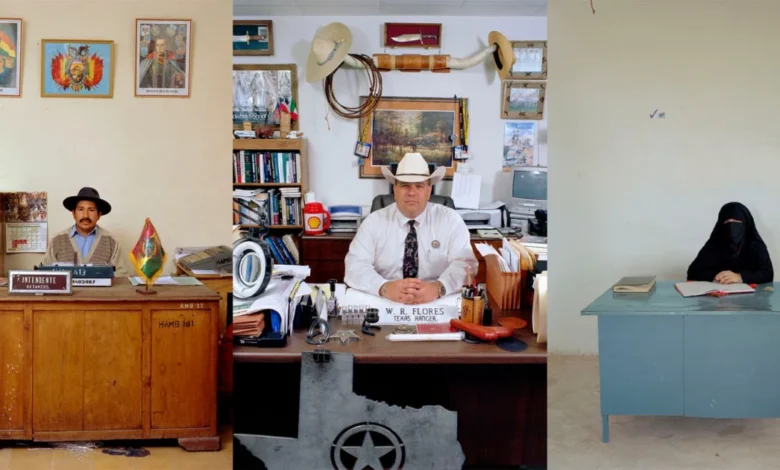
For over two decades, Dutch photographer Jan Banning has engaged in an exhaustive, globe-spanning project to capture the physical and psychological landscapes of those who wield state power. His seminal work, Bureaucratics, first published in 2008, has now been expanded and re-released as Bureaucratics Revisited. The project serves as an unprecedented sociological and artistic survey of the administrative machineries that govern societies worldwide, moving beyond the abstract concept of the "state" to focus on the individual civil servants who operate within it.
A Chronology of a Global Endeavor
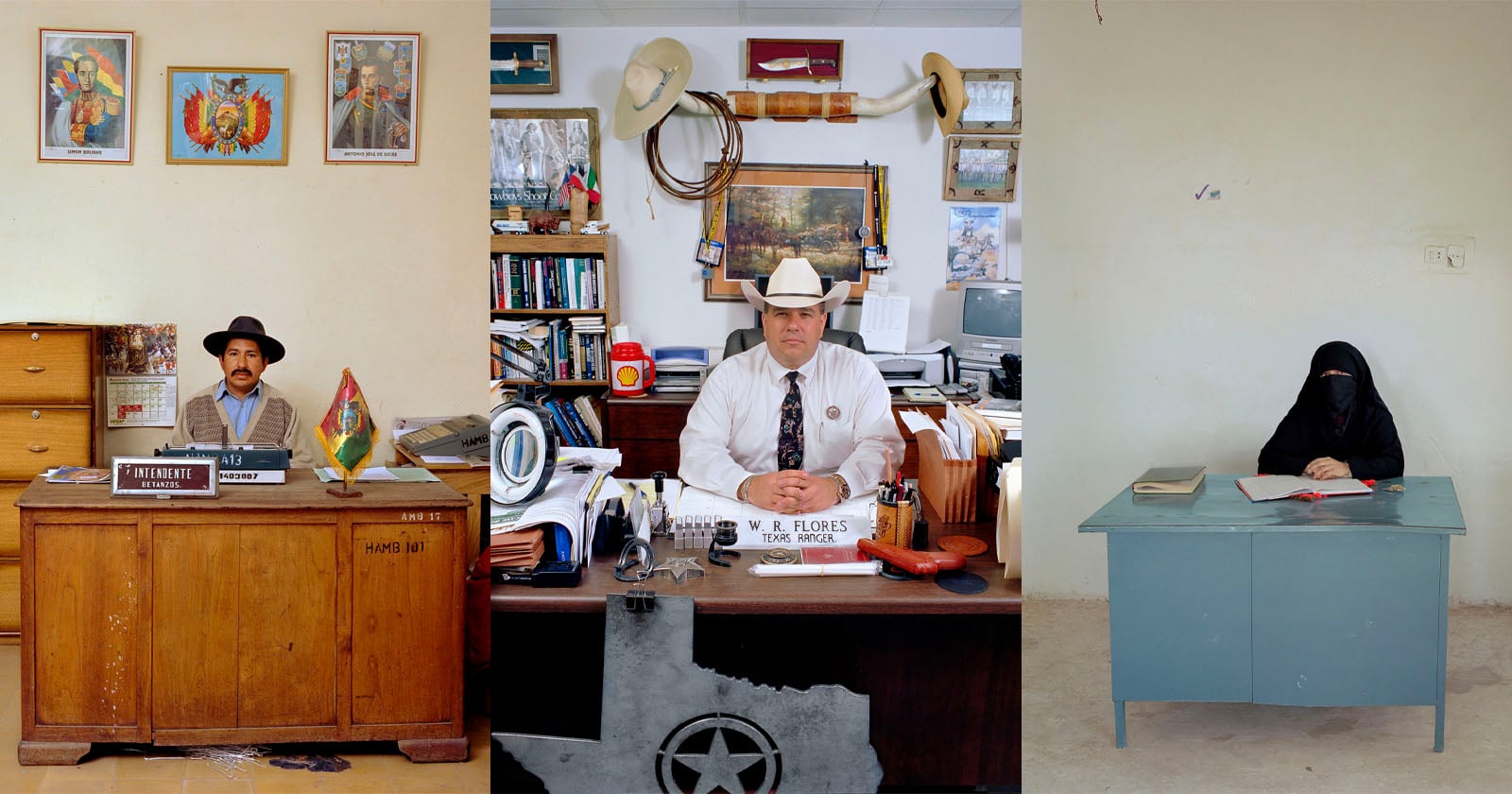
The genesis of Banning’s project dates back to 2002, when he began the arduous process of navigating the complex, often opaque permission structures required to photograph government offices. Over a five-year period, Banning traveled to eight countries, including India, Yemen, Bolivia, Russia, China, France, Italy, and Uganda, to document a diverse array of public servants.
The project was not merely a photographic exercise but a logistical challenge that required significant diplomatic negotiation. In his foreword to the book, renowned photographer Martin Parr noted the difficulty of the task, observing that simply obtaining permission to photograph in such varied and often restrictive jurisdictions was a feat in itself. The initial output of this work culminated in the 2008 book, which received critical acclaim for its deadpan, objective approach.
With the release of Bureaucratics Revisited, Banning has revisited his extensive archive, integrating previously unpublished photographs and reflecting on the evolution of his subject matter. This updated edition provides a longitudinal perspective on the nature of global bureaucracy, capturing moments ranging from the early 2000s to more recent administrative environments.
The Methodology of the Lens
Banning’s aesthetic approach is defined by a rigorous, standardized technique that allows for comparative analysis. Each portrait is captured using a medium-format camera, maintaining a consistent square format that frames the subject within their immediate professional environment.
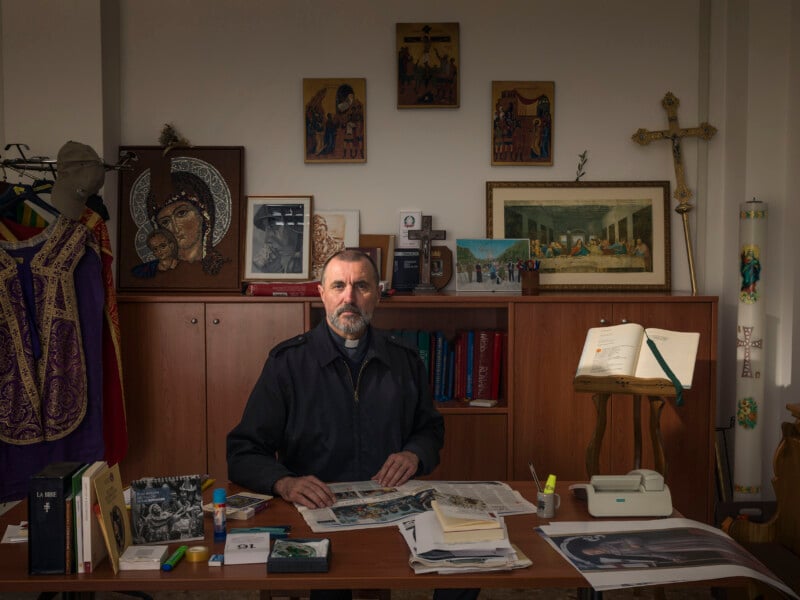
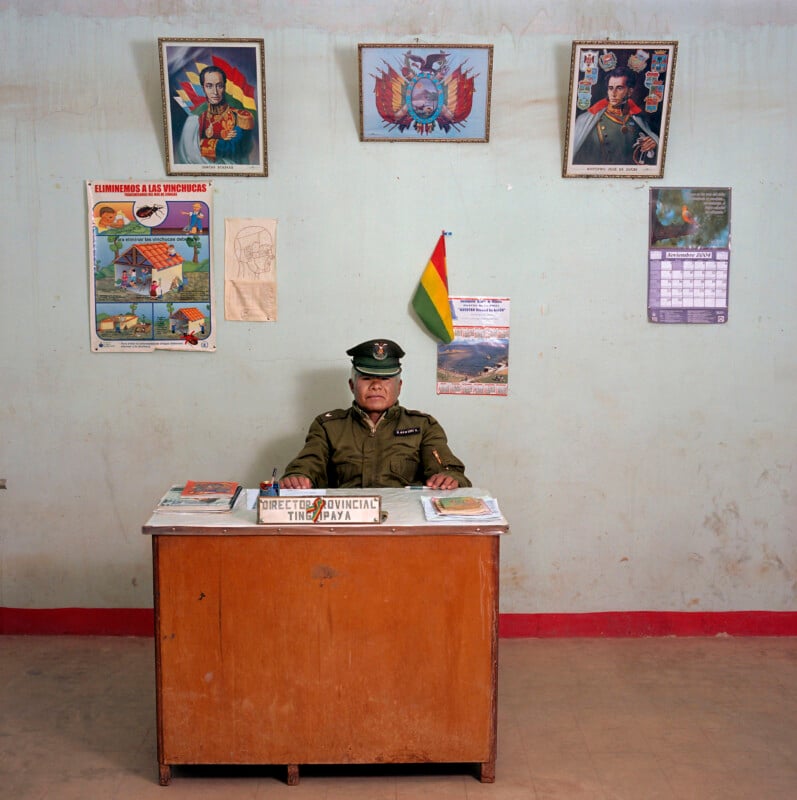
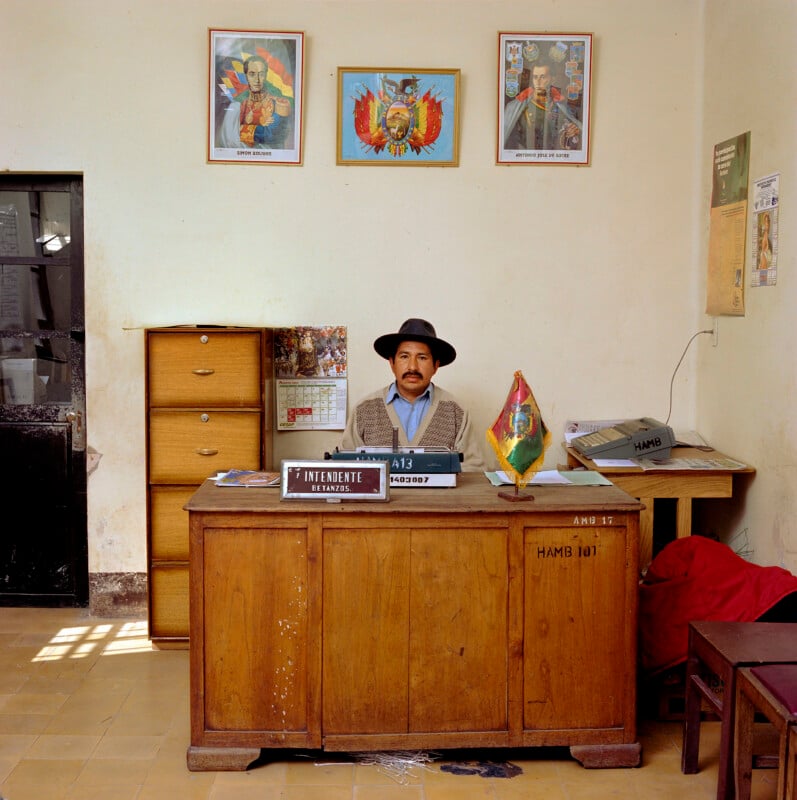
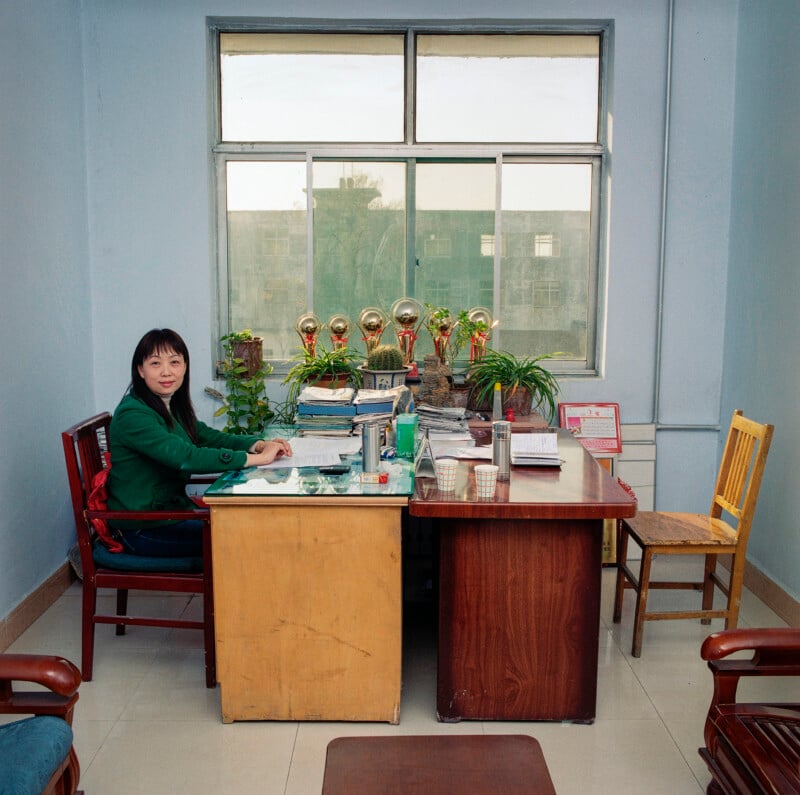
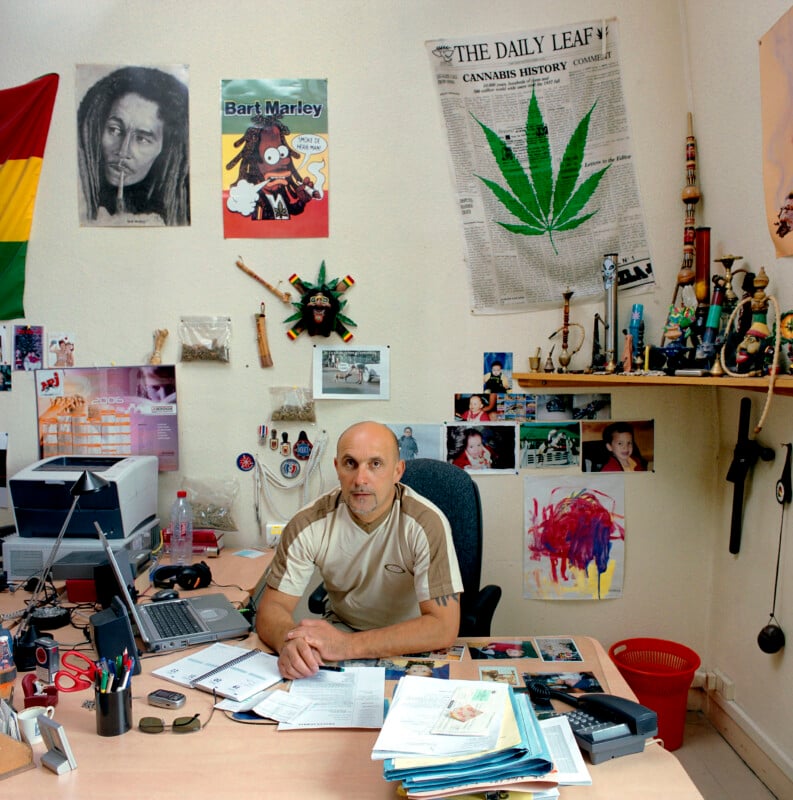
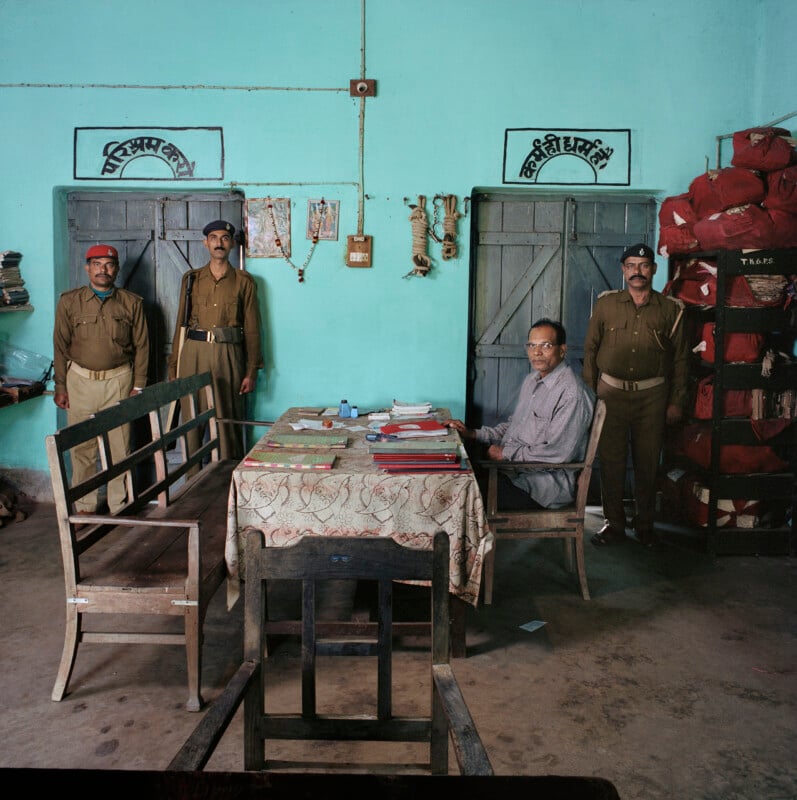
The perspective is consistently set at the eye level of a citizen entering the office, creating a direct, unmediated encounter between the viewer and the bureaucrat. By utilizing a frontal, deadpan style, Banning strips away the performative elements of power often associated with official photography. The resulting images act as a bridge between the formal, symbolic representation of state authority—often conveyed through flags, portraits of leaders, and religious iconography—and the intimate, often cluttered reality of the civil servant’s personal workspace.
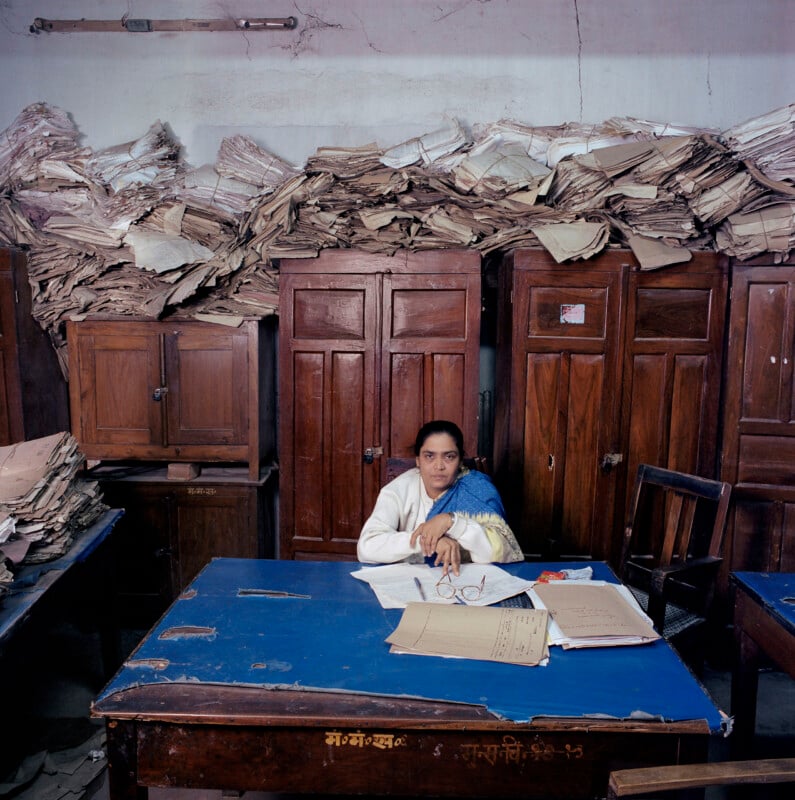
Banning’s equipment choices have evolved alongside the project. He began his journey with the Bronica SQ-Ai, transitioned to the Fuji GX-680III, and eventually incorporated the Hasselblad H5 into his workflow. This progression highlights the technical commitment required to produce images of such high fidelity and clarity, ensuring that the details of the offices—from the piles of paper files in a Bihar secretariat to the sparse, utilitarian desks in rural Siberia—are rendered with anthropological precision.
The Human Face of Administrative Machinery
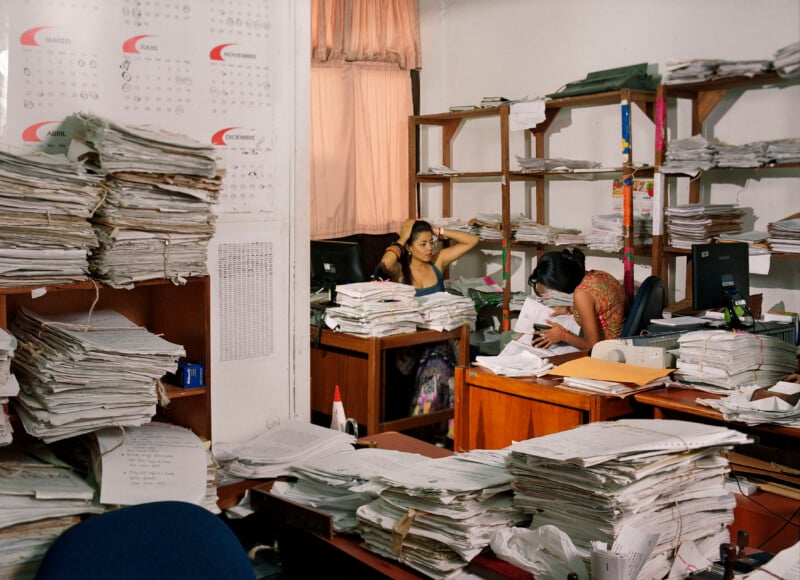
The subjects featured in the collection represent a broad spectrum of state involvement. In the state of Bihar, India, Banning photographed Sushma Prasad, an assistant clerk hired on "compassionate grounds" following the death of her husband, who had served in the same department until 1997. Her office, dominated by towering wooden cabinets and vast, precarious stacks of paper files, offers a stark visualization of the weight of legacy and the physical permanence of paper-based record-keeping in a state of 83 million people.
Contrastingly, the work in Bolivia highlights the austerity of local administration. In Tinguipaya, Constantino Aya Viri Castro, a police officer third class, is shown in a station lacking basic infrastructure—no telephone, no police vehicle, and no typewriter. Such images challenge the global narrative of "bureaucracy" as an efficient, automated entity, revealing instead the profound disparity in resources available to those tasked with maintaining law and order.
In other instances, the office environment serves as a testament to personal expression within a rigid structure. In France, the office of a narcotics agent is adorned with pop-culture imagery, including posters of Bob Marley and Bart Simpson, juxtaposed against the serious nature of the agent’s work. This creates a dialogue between the individual’s personal life and their institutional role, reinforcing Banning’s thesis that bureaucracy is as much a human endeavor as it is a systemic one.
Data and Infrastructure: The Reality of Administration
The administrative structures captured by Banning are not merely backdrops; they are indicators of how power and service are distributed globally. In many of the regions documented, the sheer volume of physical documentation—such as the archives of the Chief Magistrate’s Court in Kampala, Uganda—demonstrates a reliance on analog processes that are increasingly rare in digitized, developed economies.
For example, the Kirinya Main Prison in Jinja, Uganda, provides a sobering look at the pressures of systemic overload. Built for 336 inmates, the facility was managing 922 individuals at the time of Banning’s documentation in 2013. The role of the Chief Jailor, Ivan Niwamanya, extends beyond standard administrative tasks to include the mediation of conflicts among inmates, illustrating the multifaceted and often precarious nature of civil service in high-pressure environments.
These images serve as a form of visual data. They catalog the prevalence of specific tools—typewriters, logbooks, and landline telephones—that remain essential to the functioning of local governments in disparate parts of the world. By documenting these tools, Banning provides a record of the state of global infrastructure, marking a specific era of transition from the traditional paper-based state to the emerging digital reality.
Broader Impact and Implications
The implications of Bureaucratics Revisited are profound, particularly regarding how citizens perceive the state. For the average person, the "state" is often an invisible, abstract force that manifests only through the interactions with a clerk, an officer, or a local official. Banning’s work humanizes this encounter.
The project suggests that bureaucracy is not a monolith; it is a collection of idiosyncratic spaces managed by individuals whose motivations, backgrounds, and daily challenges are as varied as the countries they inhabit. From the military chaplain in Italy performing sacraments to the market supervisor in Bolivia who previously worked as an electrician, Banning’s subjects are representatives of the communities they serve.
The irony inherent in the work is not lost on the viewer. The "performative representation of government authority"—the uniforms, the badges, and the official seals—is frequently contrasted with the reality of the office, which can be dilapidated, overcrowded, or unexpectedly personal. This dichotomy invites a critical analysis of the relationship between authority and efficiency, suggesting that the "machinery of state" is often held together by the individual perseverance of those who occupy these spaces.
Artistic Legacy and Future Relevance
As an archive, the work holds significant historical value. By documenting these offices in the early 2000s and continuing through the 2010s, Banning has created a visual timeline of a period of rapid global change. The transition toward digitalization and the shifts in government policy—such as the abolition of the Code of Criminal Procedure in Colombia—are woven into the visual narrative.
The release of Bureaucratics Revisited serves as a reminder of the power of sustained, long-term photographic investigation. In an era of ephemeral digital media, Banning’s commitment to a single, deep-dive subject for over two decades represents a rare approach to visual storytelling. The book is currently available through Banning’s official website, providing audiences with the opportunity to engage with the full scope of the project.
Ultimately, Bureaucratics Revisited is both a work of visual poetry and an essential piece of sociological inquiry. It challenges the viewer to look past the "red tape" and see the humans behind the desks—the individuals who, through their presence and their labor, sustain the systems that govern our lives. Whether in a high-security prison in Uganda or a publicity office in China, these portraits ensure that the "largely unnoticed human face of bureaucracy" remains part of the public record.