Young Alpinists Forge Historic New Routes and Ascents in Peru’s Challenging Andes Amidst Unstable Conditions

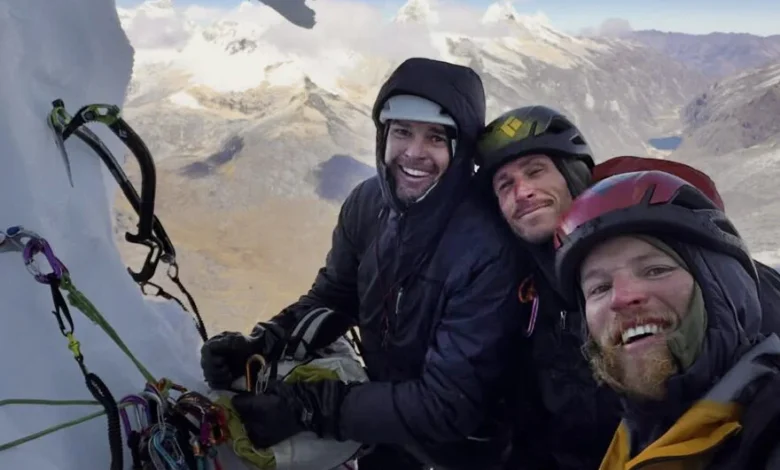
Despite a season marked by notably difficult and unpredictable weather, the majestic peaks of the Peruvian Andes have recently become the stage for a series of remarkable achievements by a new generation of alpinists. These young climbers, driven by a thirst for technical challenge and the allure of untrodden paths, have successfully established new routes and completed significant free ascents on some of the region’s most formidable mountains, including Taulliraju, Siula Grande, and Ranrapalca. Their accomplishments underscore both the evolving standards of high-altitude mountaineering and the increasing impact of climate change on these fragile, towering environments.
The Enduring Allure of the Peruvian Andes
The Peruvian Andes, particularly the Cordillera Blanca and the Cordillera Huayhuash ranges, stand as a world-class destination for alpinists, often compared to the Himalayas for their dramatic vertical relief and the intricate technical challenges they present. Unlike the ultra-high 8,000-meter peaks of Asia, the Peruvian "nevados" – a local term for high, snow-capped mountains – offer a unique blend of steep rock, ice, and mixed terrain at altitudes typically ranging from 5,500m to over 6,700m. This combination demands exceptional skill in diverse climbing disciplines, from delicate ice climbing on exposed faces to intricate rock navigation at extreme elevations. The region’s reputation was cemented by legendary figures like Lionel Terray, whose pioneering ascents in the mid-20th century established a benchmark for difficulty and commitment in the global mountaineering community. His exploits, including first ascents of iconic peaks such as Makalu, Fitz Roy, Chacraraju, and Jannu, laid the groundwork for the modern pursuit of technical challenges in the world’s great mountain ranges.
Taulliraju: A Legacy of Extreme Difficulty
Among the Cordillera Blanca’s most revered and feared peaks is Taulliraju, standing at 5,830 meters. Despite its relatively modest altitude compared to the world’s highest mountains, Taulliraju has long been considered one of the most demanding summits in the Andes, a reputation earned through its sheer technicality, severe weather, and objective hazards. Lionel Terray himself, following his historic first ascent in 1956 via the north face, famously declared the climb "one of the most arduous in the history of mountaineering." This statement from a man of Terray’s unparalleled experience speaks volumes about the mountain’s formidable character. His route, rarely repeated, and the subsequent 1980 Italian line up the south-southeast ridge, are both graded as extremely difficult, with all other established lines on the mountain considered even harder. These routes typically involve sustained sections of steep ice, mixed rock and ice climbing, and navigating highly exposed ridges often adorned with gigantic, unstable snow cornices.
In a testament to the evolving capabilities of modern alpinists, Taulliraju has seen two significant ascents in the past two weeks, pushing the boundaries of what is considered possible on this iconic peak.
First Free Ascent of the Fowler/Watts Route on Taulliraju
The first of these remarkable achievements was the fourth ascent, and crucially, the first free-climb, of the 800-meter-long Fowler/Watts route on the east buttress of Taulliraju’s southwest face. This formidable line, originally opened in 1982 by British alpinists Mick Fowler and Chris Watts, had resisted free ascent for over four decades. The challenge was taken on by a highly accomplished American team comprising recent Piolet d’Or recipients Dane Steadman and Cody Winckler, alongside their climbing partner Josh Wharton. The Piolet d’Or, often considered the Oscars of alpinism, recognizes the year’s most significant and innovative ascents, underscoring the caliber of Steadman and Winckler.
Their five-day ascent, reportedly commencing around July 1st, was a masterclass in high-altitude free climbing. The team encountered sustained technical difficulties rated up to AI5+ (a high grade for ice climbing, indicating steep and sustained ice), M8 (extremely difficult mixed climbing involving rock and ice tools), and a brief stretch of 5.10 (challenging rock climbing). Steadman and Winckler achieved the rare feat of onsighting every pitch, meaning they climbed each section clean on their first attempt without prior knowledge or practice. Josh Wharton, while an integral part of the team, utilized aid climbing techniques on two short pitches, a common practice to overcome sections deemed impossible to free climb under specific conditions, yet still reached the summit alongside his partners.
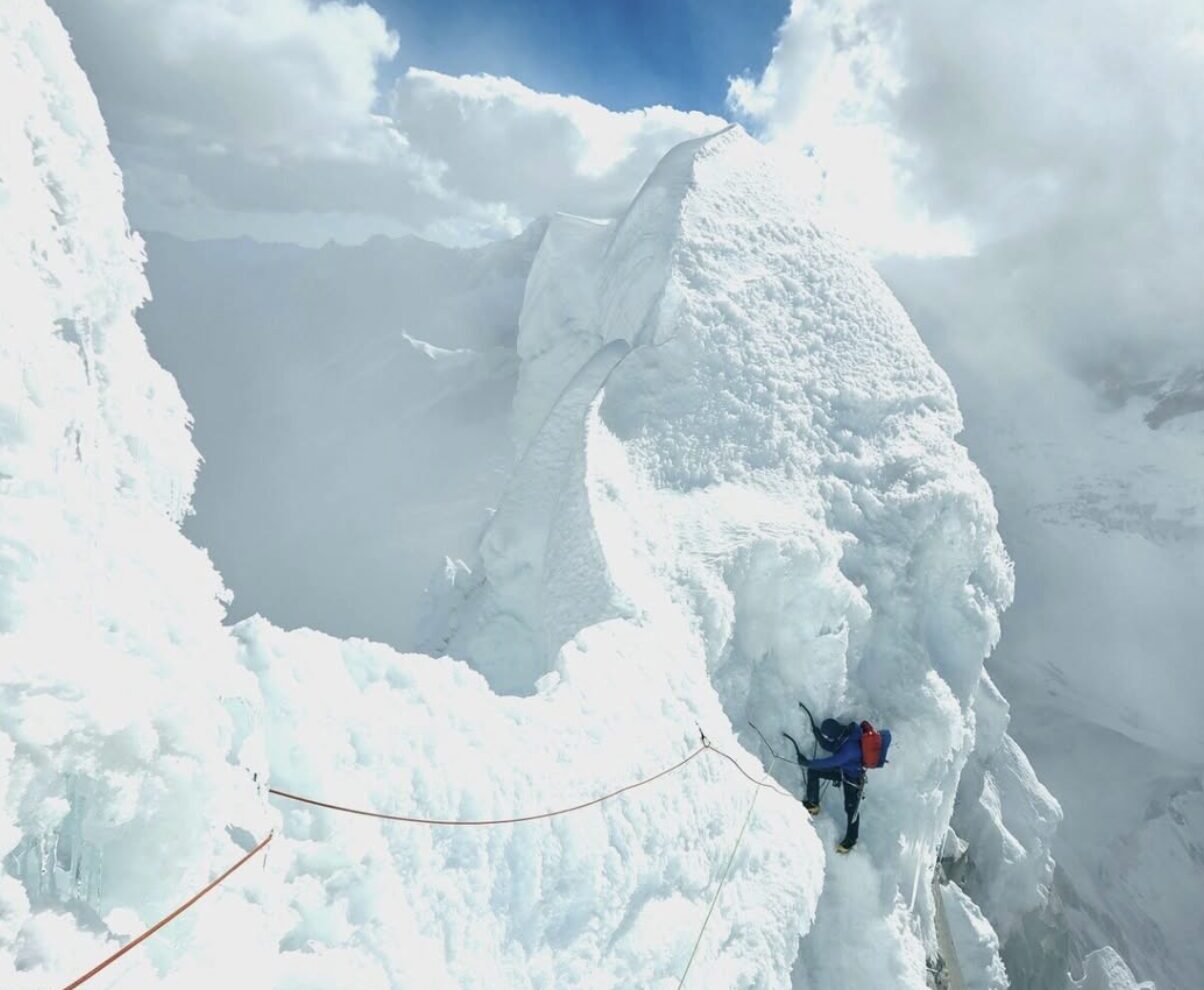
The ascent was far from straightforward, even with an initially optimistic weather forecast. The team battled delicate sections of climbing and several unexpected snow squalls, a common and often dangerous characteristic of Andean weather. Steadman recounted the third day as particularly grueling, highlighting the primary cruxes: three pitches previously rated A1-2 (aid climbing grades) by a 2021 team. He described the initial pitch as manageable, but the subsequent ones presented a "hairline diagonal seam" on a smooth granite sweep, demanding extreme precision. The ultimate crux involved "creaky flakes and high rakes through the steepest part of the route," demanding unwavering focus and strength.
Above these technical challenges, suitable bivouac spots — temporary camps — were non-existent. The team ingeniously adapted, perching on a precariously positioned snow mushroom for three nights, including the night after their summit. A snow mushroom is a unique, often fragile formation of snow and ice, sculpted by wind, offering minimal flat ground. This daring choice underscored their commitment and resilience. On the fourth day, employing a capsule style, they fixed ropes through a final cliff band, culminating in a difficult roof section that Cody Winckler successfully free-climbed, marking the last remaining section to be free-climbed on the route. The fifth day saw them navigating the dream-like, often surreal Andean snow formations, which, fortunately, proved stable. They traversed past a false summit and along a serpentine ridge adorned with meringue-like cornices of snow and ice. These cornices, fragile overhangs of snow, often presented gaping holes and tunnels. The team opted to crawl through these tunnels, roped together, finding it safer than risking a collapse by climbing over the exposed, unstable edges.
Following their successful summit, the team retreated to their snow mushroom bivouac for a final night before rappelling down the mountain the next day. Steadman’s reflection encapsulated the experience: “It’s a beautiful route on a magnificent mountain, featuring some of the best stone and coolest positions I’ve encountered, and is very worthy of more traffic.”
Fifth Repetition of the Italian Route on Taulliraju
Just days after the American team’s success, Taulliraju witnessed another significant ascent. Polish alpinist Wadim Jablonski and Slovakian climber Adam Kaniak completed the fifth overall repetition of the highly challenging Italian route, established in 1980. Their four-day climb, from July 5th to 9th, involved sustained difficulties graded up to ED2 (Extremely Difficult 2, a very high overall severity rating), M6 (challenging mixed climbing), A1 (moderate aid climbing), AI5 (steep ice climbing), and sections up to 100° (vertical to overhanging ice).
Jablonski, a seasoned alpinist who, along with Kaniak, made the first ascent of Pakistan’s Chumik Kangri last year, articulated the profound demands of the climb. "Numbers can hardly capture the complexity and difficulty of this mountain," he noted, adding that "Wadim and I agreed that neither of us had ever climbed anything more serious or demanding in the mountains." The physical and mental strain of navigating highly exposed passages was immense, with both climbers admitting the experience "fried their brains" and brought them to tears upon nearing the summit, a raw and honest testament to the extreme psychological pressure involved in such an undertaking.
Siula Grande: A New Line on a Legendary Peak
Further south in the Cordillera Huayhuash, another group of young Italian alpinists etched their names into climbing history on Siula Grande (6,344m). This peak holds a legendary, almost mythical, status in mountaineering lore, primarily due to Joe Simpson’s harrowing survival story recounted in his book Touching the Void, a tale that brought the stark realities of high-altitude mountaineering to a global audience. For Mattia Sandionigi (25), Pietro Saggiante (22), and Sandro Maranetto (26), this marked their first experience in South America, a debut that culminated in a beautiful new rock route on the mountain’s East Buttress.
Between July 9th and 12th, the Italian trio climbed their new line, which covers 700 meters of the East Buttress. They encountered difficulties up to 6c+ (a high grade for rock climbing, indicating very technical and sustained movements) and AI5 (steep ice climbing). Crucially, the climb concluded on top of the rocky face, with the team making the pragmatic decision not to push for the main summit due to dangerous and unstable snow conditions on the upper section. This decision highlights a common and prudent practice in the Andes, where unstable snow cornices and seracs often make summit pushes exceedingly risky, prioritizing safety over an absolute summit. As they reported to CAI (Club Alpino Italiano), such conditions are prevalent on the nevados, demanding careful judgment from climbers.
Ranrapalca: A Bold New Variation and a Timely Name
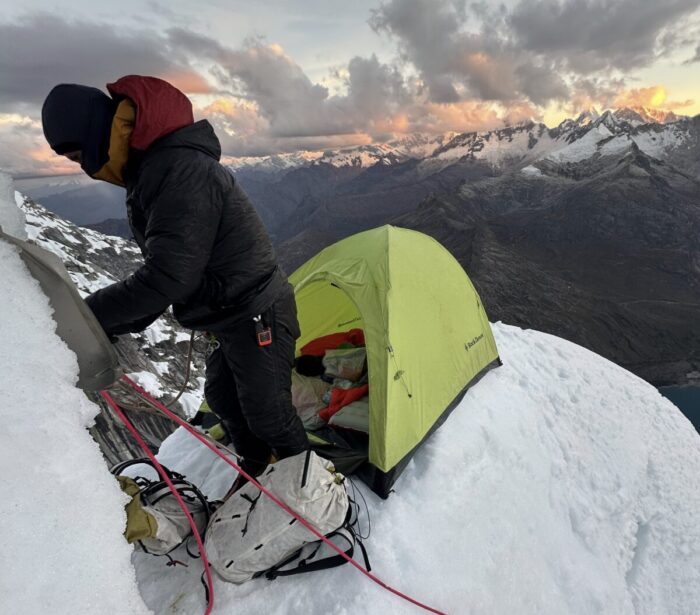
The wave of youthful innovation continued on Ranrapalca (6,162m) in the Cordillera Blanca. Between July 15th and 17th, Polish alpinists Dawid Bartoszek and Wiktor Smaglowski forged a new variation route on the mountain’s north face. Their route overlaps with parts of the Pou Brothers’ acclaimed Ya Pe’ Cholo route on its upper section.
The climbers named their variation Climate Change, a poignant and timely choice that resonates deeply with the increasingly evident environmental shifts impacting the Andean ranges. They graded their new line ED+ (Extremely Difficult plus, indicating very high overall severity), 6C+ (very challenging rock climbing), A1 (moderate aid climbing), and R (runout, meaning significant distances between protection points, adding a psychological dimension of risk). The name "Climate Change" serves as a stark reminder of the rapidly altering conditions in these high-alpine environments, where receding glaciers, unstable ice, and unpredictable weather patterns are becoming the new normal, presenting both new challenges and increased hazards for mountaineers.
Broader Implications: Climate Change and Increasing Risks
These remarkable ascents, while celebrating human endeavor, also unfold against a backdrop of increasingly unstable conditions across the Peruvian Andes. The mention of "dangerous snow conditions" and the route name Climate Change are not isolated observations but reflect a broader, alarming trend. Glacial retreat, accelerated by global warming, is a visible reality in the Andes, leading to more exposed rock, new rockfall hazards, and, critically, destabilized snow and ice formations. The once predictable seasonal patterns are becoming erratic, with sudden snow squalls, warmer temperatures, and increased precipitation impacting the stability of routes.
This volatile environment has unfortunately translated into a significant number of accidents and necessitated frequent rescue operations. The gravity of the situation was underscored dramatically last week when three climbers went missing on Huascaran, Peru’s highest peak (6,768m). In response to this tragic incident and the prevailing dangers, local authorities, including the Peruvian National Service of Natural Protected Areas (SERNANP) and the Peruvian Mountain Guides Association (AGMP), took the unprecedented step of closing Huascaran to all climbers while search efforts continue. This closure highlights the escalating risks and the serious measures required to ensure safety in a region grappling with the consequences of environmental change. Search and rescue operations in such remote, high-altitude terrain are inherently complex, resource-intensive, and dangerous for rescuers themselves, requiring specialized teams and significant logistical support.
The Future of Alpinism in Peru
The recent flurry of groundbreaking ascents by young alpinists in the Peruvian Andes signifies an exciting new chapter for the sport. This generation is not merely repeating established routes but actively seeking out new, technically demanding lines, often prioritizing challenging free ascents and a light-and-fast style over pure altitude. Their achievements demonstrate a high level of skill, commitment, and adaptability, pushing the boundaries of what is possible in the vertical world.
However, the evolving landscape of the Andes, profoundly impacted by climate change, presents a complex future for mountaineering. While the allure of these magnificent peaks remains undiminished, climbers, local authorities, and guide services must increasingly adapt to new hazards and shifting conditions. The focus will undoubtedly shift further towards responsible climbing practices, thorough risk assessment, and an acute awareness of the environmental transformations underway. Peru’s Andes will continue to be a crucible for elite alpinism, a place where human aspiration meets the raw power of nature, but also a stark reminder of our planet’s changing climate and its profound effects on even the most remote and formidable landscapes.