Exploring the Coastal Heritage and Natural Splendor of Queensland Through the Town of 1770 LARC Tours

The Town of 1770, a coastal village situated in the Gladstone Region of Queensland, serves as a significant historical and ecological gateway to the Southern Great Barrier Reef. Known as the "Birthplace of Queensland," this settlement is the site of the second landing in Australia by Lieutenant James Cook in May 1770, and his first on what is now Queensland soil. Today, the preservation of this region’s history and its rugged, inaccessible terrain is largely facilitated by a specialized tourism operation utilizing amphibious vehicles known as LARCs (Lighter, Amphibious Resupply, Cargo). These vessels, originally engineered for military logistics, have become synonymous with the region’s identity, providing the primary means for the public to explore the secluded reaches of the Eurimbula National Park and the historic Bustard Head Lightstation.
Historical Significance and the Birth of a Region
The Town of 1770 holds a unique position in the Australian chronological narrative. While the area has been the ancestral home of the Gooreng Gooreng people for millennia, its recorded colonial history began on May 24, 1770, when the HMS Endeavour dropped anchor in the bay. This landing marked a pivotal moment in the mapping of the Australian coastline. Modern-day 1770 remains remarkably preserved, mirroring the landscape encountered by the early explorers. The town is located approximately 500 kilometers north of Brisbane and six kilometers north of its sister town, Agnes Water. Together, they represent the northernmost surfing beaches on the Australian east coast and the southernmost gateway to the Great Barrier Reef Marine Park.
The decision to maintain the town’s name as a numerical date serves as a permanent tribute to this encounter. However, the region’s heritage is dual-layered, involving both the maritime history of European explorers and the enduring culture of the Indigenous traditional owners. Journalistic accounts and historical records indicate that the Gooreng Gooreng people have maintained a continuous connection to this land, with the LARC tours now incorporating interpretive elements that acknowledge their role as the original caretakers of the estuaries and headlands.
The LARC-V: From Military Logistics to Eco-Tourism
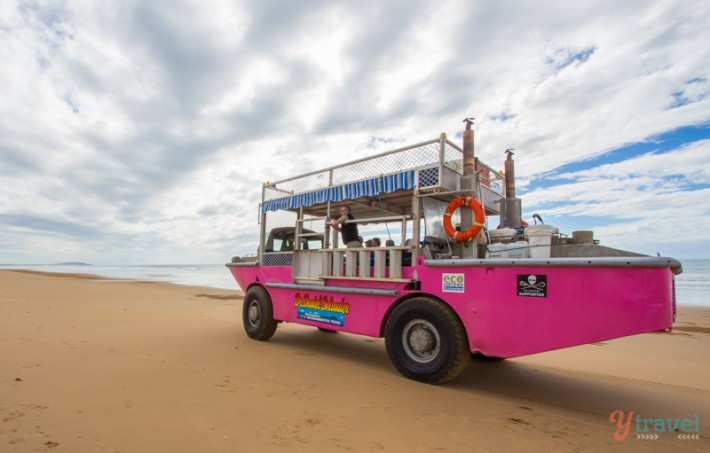
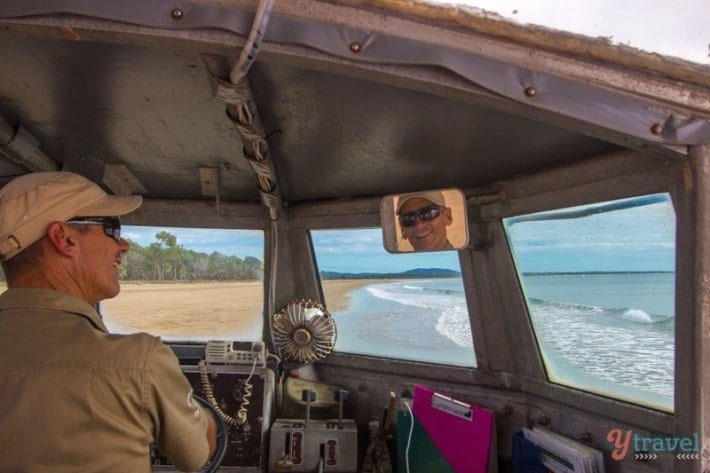
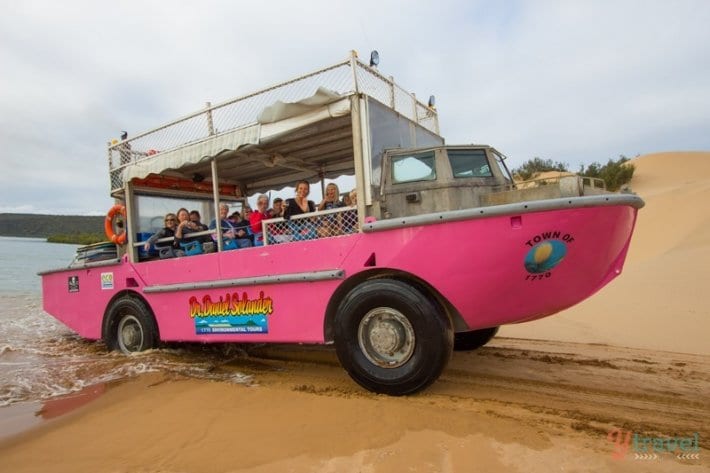
The centerpiece of the region’s tourism infrastructure is the LARC-V amphibious vehicle. Developed by the United States during the Cold War era and utilized extensively during the Vietnam War for transporting supplies from ships to shore, these vehicles were designed for versatility. The LARC-V (Lighter, Amphibious Resupply, Cargo, 5-ton) is a 4×4 aluminum-hulled craft capable of transitioning seamlessly from maritime navigation to terrestrial travel.
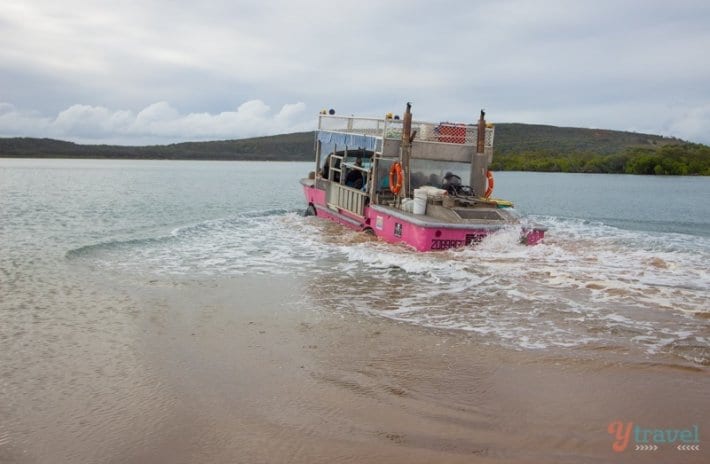
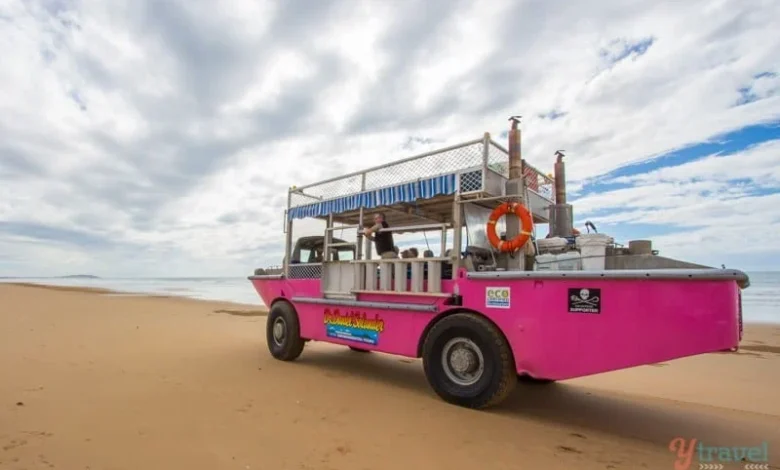
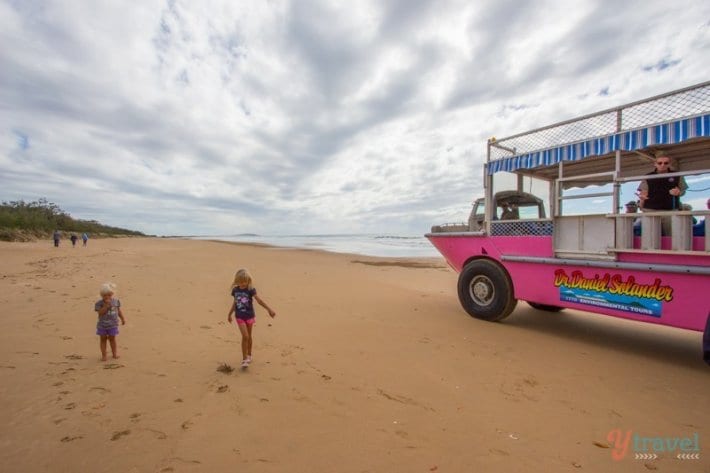
In the Town of 1770, these bright pink vessels have transitioned from tools of war to icons of environmental education. Operated by 1770 LARC! Tours, which has served the region for over two decades, the vehicles are essential because much of the surrounding coastline—including Bustard Bay and the northern reaches of Eurimbula National Park—is inaccessible by standard four-wheel-drive vehicles or conventional boats due to shifting sandbars and protected mangrove systems. The use of the LARC minimizes environmental impact on the delicate ecosystem while allowing groups to traverse tidal creeks and steep headlands that would otherwise remain isolated.
The Paradise Tour: A Chronology of Exploration
The flagship experience in the region is the full-day "Paradise Tour," a comprehensive circuit that covers the environmental and historical highlights of the Bustard Bay area. The journey begins at the 1770 marina, where the vessel enters the water and navigates Round Hill Creek. The itinerary is dictated by the tides, a necessary logistical consideration when navigating the four tidal creeks that intersect the route.
Eurimbula National Park and Bustard Bay
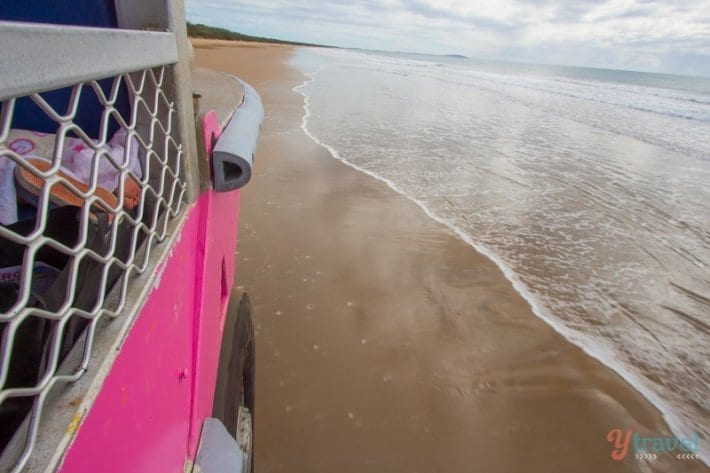
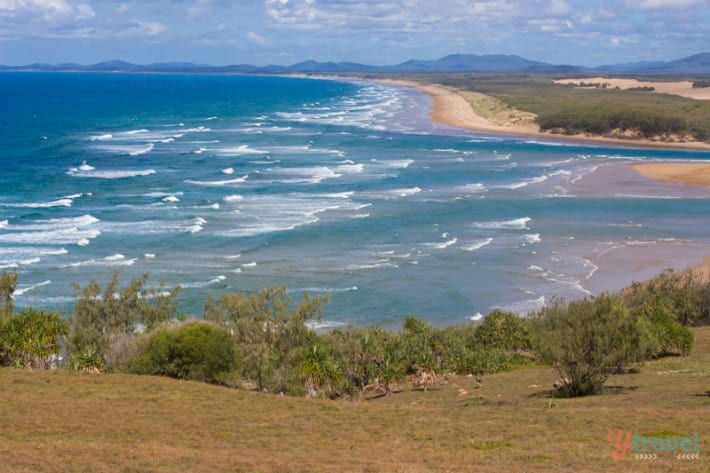
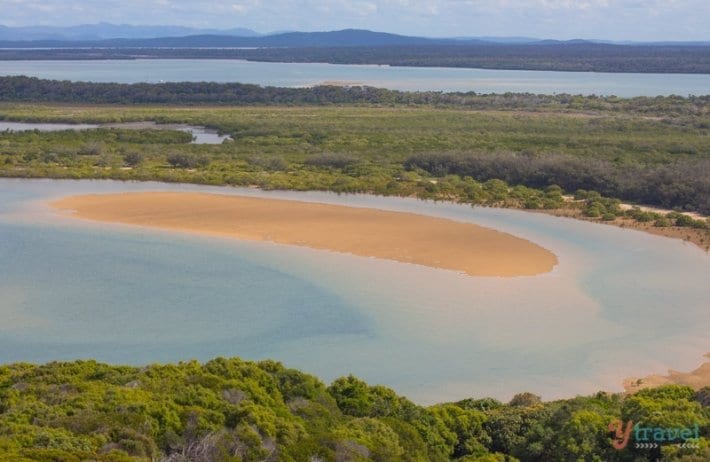
As the LARC traverses the coastline of Eurimbula National Park, passengers are introduced to a biodiversity hotspot. The park covers over 12,000 hectares and features a mosaic of landscape types, including coastal dunes, eucalyptus forests, and wallum heaths. The amphibious nature of the tour allows for close-range observation of local fauna. This includes the prolific soldier crab populations that march across the sandbanks at low tide, as well as avian species such as brahminy kites, white-bellied sea eagles, and various migratory shorebirds. The region serves as a critical habitat for these species, and the tours operate under strict environmental guidelines to ensure minimal disruption to nesting and feeding grounds.
Bustard Head Lightstation: Queensland’s First Coastal Light
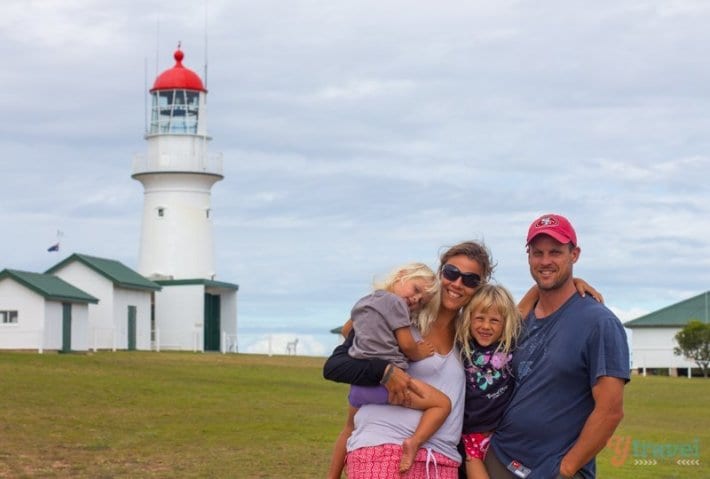
A primary objective of the excursion is the Bustard Head Lightstation. Established in 1868, it was the first coastal lighthouse built in Queensland after the colony separated from New South Wales. Standing 16 meters tall on a rocky headland, the lighthouse was vital for the safety of vessels navigating the treacherous waters of the Southern Great Barrier Reef.

The station’s history is one of both utility and tragedy. For over a century, lightkeepers and their families lived in extreme isolation. The station was automated in 1986, leading to a period of neglect and vandalism. The restoration of the site is largely attributed to the efforts of Stuart Buchanan, a former lighthouse keeper and author, who spearheaded a campaign to return the lightstation and its associated museum to their original condition. Today, the site is managed by the Bustard Head Lighthouse Association in partnership with the LARC tour operators, who provide the only consistent public access to the station.
The Lighthouse of Tragedy: Narrative and Folklore
The social history of Bustard Head is often characterized by the "Lighthouse of Tragedy" moniker, a theme frequently explored during the interpretive portion of the tour. The isolation of the station led to several well-documented misfortunes, which have since become part of the local lore.
- The Case of Kate Gibson: In the late 19th century, the wife of a lightkeeper was found with her throat fatally cut. While the official inquest at the time suggested suicide, local historians and modern researchers point to inconsistencies in the evidence, often suggesting a more sinister involvement by her husband, Nils Gibson.
- The Abduction of Edith Anderson: Another prominent narrative involves the daughter of a lightkeeper who was allegedly abducted by a spurned suitor. The story, which ended with the pair disappearing into the bush, was long thought to be a tragedy until descendants emerged decades later to suggest the couple had lived a hidden but successful life with the assistance of local Indigenous tribes.
These stories, while dramatic, provide a window into the harsh realities of maritime life in the 1800s. They are presented not as sensationalist tales, but as factual accounts of the difficulties faced by those who maintained the vital navigational aids of the Queensland coast.
Environmental Activities and Regional Impact
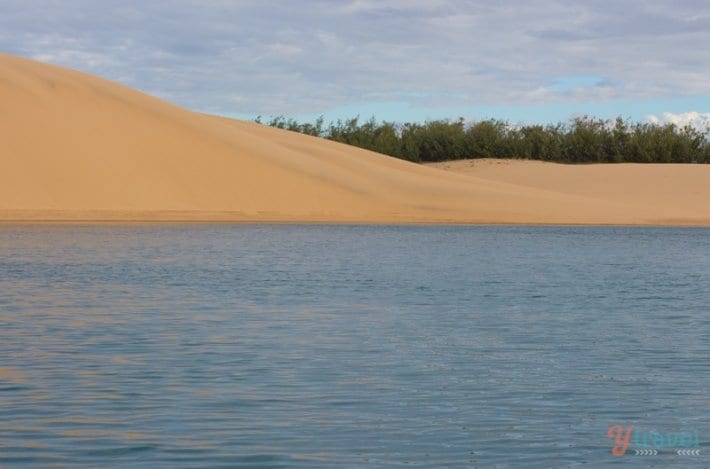
Beyond the historical education, the LARC tours incorporate recreational elements designed to highlight the region’s natural geography. Middle Island, located across Jenny Lind Creek, features massive 35-meter sand dunes. Here, visitors engage in sandboarding, a popular activity that utilizes the island’s unique topography. This segment of the tour emphasizes the geological formation of the coastal islands, which are composed of sand systems that have shifted over thousands of years.
The economic impact of these tours on the Gladstone Region is substantial. According to data from Tourism and Events Queensland, the Southern Great Barrier Reef region saw a significant recovery in domestic tourism following the global pandemic, with travelers increasingly seeking "nature-based" and "low-density" destinations. The Town of 1770 and Agnes Water benefit directly from the LARC operations, which act as a "hero experience"—a primary drawcard that encourages longer stays and secondary spending in local accommodation and dining sectors.
Broader Implications for Sustainable Tourism
The operation of the 1770 LARC tours reflects a broader trend in Australian tourism toward high-value, low-impact eco-tourism. By utilizing a single, high-capacity vehicle to transport visitors to sensitive areas, the region avoids the degradation associated with high-volume private 4WD traffic. Furthermore, the partnership between the tour operators and the Bustard Head Lighthouse Association serves as a model for how private enterprise can support the maintenance of public heritage sites.
As the Southern Great Barrier Reef continues to gain prominence as a sustainable alternative to the more crowded northern reef sections, the Town of 1770 stands as a benchmark for integrated tourism. The combination of military technology, colonial history, Indigenous heritage, and environmental conservation provides a multi-faceted perspective on the Australian landscape. The LARC tours do more than offer a ride; they provide a logistical solution to the challenge of preserving and sharing one of the most remote and historically significant stretches of the Queensland coastline. In the intersection of land and sea, the Town of 1770 remains a testament to the enduring spirit of exploration and the necessity of historical preservation.