The sixth level is the most spectacular and most scary. These words, whispered by fellow travelers, foreshadowed an ascent that would define an exploration of Thailand’s less-traveled northeastern Isan region. Wat Phu Tok, officially known as Wat Jetiyakhiri, is a temple complex unlike any other, carved into and built upon a solitary red rock mountain in Bueng Kan province. This remote destination, often overlooked by mainstream tourism, offers a profound experience for those seeking tranquility, expansive natural beauty, and attractions that lie decidedly off the beaten path. Wat Phu Tok stands as a testament to spiritual dedication and human ingenuity, presenting visitors with a unique, thrilling, and at times, unnerving encounter with faith and nature intertwined.
A Sanctuary Born of Solitude and Serenity
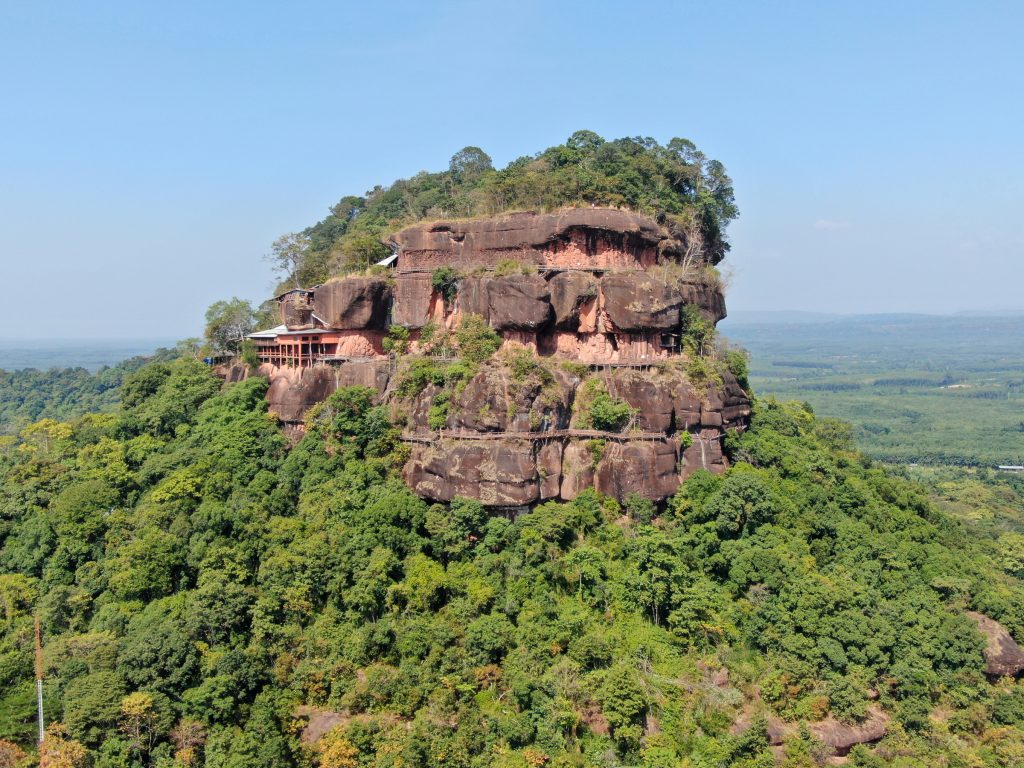
Nestled in the heart of Bueng Kan province, a region characterized by its vast, undulating landscapes and a palpable sense of peace, Wat Phu Tok emerges as a dramatic geological and spiritual anomaly. The mountain, known locally by the Isan name "Phu Tok," translates to "lonely mountain," a moniker that immediately resonates upon arrival. Its isolated prominence, rising 359 meters from the surrounding plains, evokes comparisons to the famed Sigiriya rock fortress in Sri Lanka, albeit on a more intimate scale. This stark isolation, coupled with the raw beauty of the red rock formation, sets the stage for a pilgrimage that is as much physical as it is spiritual.

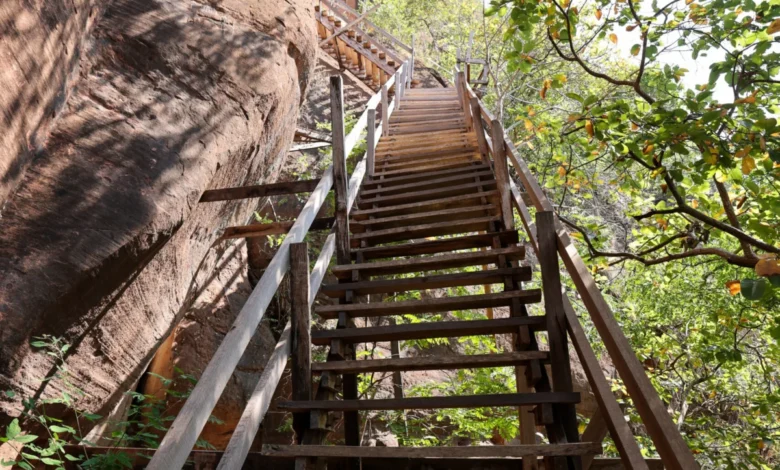
The genesis of Wat Phu Tok is deeply rooted in the vision of Monk Luang Pu Juan. Recognizing the mountain’s rugged terrain and its inherent remoteness as ideal for deep meditation, he embarked on a monumental task: to construct a spiritual sanctuary that would mirror the seven stages of Buddhist meditation. This ambitious undertaking involved the meticulous construction of wooden staircases, precarious ladders, and elevated walkways that would weave through the mountain’s natural contours, connecting various shrines and meditation sites across seven distinct levels. The mountain’s wildness, historically a habitat for wildlife, including venomous snakes, lent an element of danger that Luang Pu Juan seemingly embraced as a crucible for spiritual discipline, demanding a confronting of fear and a cultivation of inner strength. Tragically, Luang Pu Juan’s life was cut short in an airplane accident, but his legacy endures through the continued maintenance and reverence of Wat Phu Tok, which remains a majestic and awe-inspiring site.
The Ascent: A Journey Through Levels of Devotion and Danger

The journey to Wat Phu Tok from Bueng Kan city is a relatively short and scenic drive of approximately 30 minutes, offering a gradual immersion into the province’s serene rural charm. Upon arrival, visitors are greeted by a substantial temple complex at the base, complemented by a large lake and expansive parkland, providing ample parking and a welcoming prelude to the mountain’s ascent. The entrance to the trail is unmistakable, marked by a gate that soon gives way to the first of many wooden staircases, signaling the commencement of the climb.
The initial stages of the ascent are relatively gentle, allowing visitors to acclimate to the increasing incline. However, the pathways soon transition to steeper sections, with wooden planks that, at times, feel more akin to ladders, demanding careful footing and a steady resolve. Despite the apparent precariousness, the construction, a testament to the dedication of its builders, feels remarkably secure and stable. While the early levels offer glimpses of minor shrines, the prevailing wisdom among visitors and the spirit of the place encourage pressing onward, the true wonders unfolding at higher elevations.

The Fifth Level: A Hub of Spiritual Activity
The fifth level of Wat Phu Tok marks a significant shift in the visitor experience. Here, the landscape opens up to reveal a more developed spiritual center, featuring numerous temples, shrines, and halls. Much of this level is accessible via solid ground, offering a respite from the steeper climbs, and it is believed to house the largest ordination hall within the complex. This level serves as a vital spiritual hub, a place for contemplation and religious observance, blending seamlessly with the natural rock formations.

A particular highlight, often cited by visitors alongside the iconic sixth level, is a small rock temple situated off the main circuit. This detour requires navigating an elevated rock walkway and crossing a delicate wooden bridge, leading to a uniquely situated temple perched at the mountain’s edge. This adventurous pathway, though a slight deviation from the primary circumference trail, offers breathtaking perspectives and a sense of discovery, underscoring the temple’s ingenious integration with its environment.
The Sixth Level: The Pinnacle of Thrill and Spectacle

Ascending further, the sixth level unveils the true spectacle and the source of much of the temple’s notoriety. Approximately half of this level’s circumference is comprised of the famed wooden plank walkways, meticulously anchored into the sheer rock face. The remaining portion is on more stable ground. It is in the wooden walkway sections that the "spectacular and scary" reputation of Wat Phu Tok truly comes to life. These pathways, suspended over dizzying drops, offer an exhilarating and somewhat terrifying experience.
Despite the palpable sense of height and exposure, the construction of these walkways is robust and well-maintained, providing a surprising sense of security. Even for individuals who typically experience acrophobia, the experience can be manageable, though a constant awareness of the trail and surroundings is paramount. The consequence of a misstep here is starkly apparent, emphasizing the need for caution and respect for the environment.

From these cliff-hanging vantage points, the views are nothing short of breathtaking. The expansive Mekong River basin unfolds below, a verdant tapestry of green stretching towards the horizon. The panoramic vistas from every direction, coupled with the refreshing breeze, create an unforgettable sensory experience. The sixth level, with its daring walkways and unparalleled views, represents the zenith of the Wat Phu Tok pilgrimage, a place where spiritual contemplation meets the raw thrill of confronting one’s limits.
The Seventh Level: The Apex of Solitude and Legend

The final accessible level, the seventh, is shrouded in an aura of mystery and cautionary tales. Legend speaks of this highest point as being prone to venomous snakes, with visitors often advised to ascend at their own risk. Driven by curiosity, a swift ascent reveals that this level is less about constructed shrines and more about the raw, untamed summit of the mountain itself. While the views from here are undoubtedly expansive, offering yet another perspective of the surrounding landscape, the primary draw of Wat Phu Tok remains the unique architectural and spiritual integration found on the sixth level. The seventh level, in its stark simplicity, serves as a reminder of the mountain’s wild origins and the natural forces that coexist with human devotion.
Visiting Wat Phu Tok: Practical Information and Considerations

For those planning a visit to this extraordinary site, several practical tips can enhance the experience. The best time to visit is generally during the cooler, dry season, from November to February, to avoid the intense heat and humidity of the tropical climate. Comfortable walking shoes are essential, given the extensive climbing and uneven terrain. Light, breathable clothing is recommended, and carrying water is advisable, especially during the hotter months. Respect for the religious nature of the site is paramount; visitors should dress modestly, covering shoulders and knees.
The temple is accessible to the public, and while there is no official entrance fee, donations are welcomed to support the ongoing maintenance and preservation of the complex. Visitors should be prepared for a physically demanding climb, and individuals with significant mobility issues may find certain sections challenging. The journey to Wat Phu Tok is an integral part of the experience, offering a glimpse into the tranquility and natural beauty of Bueng Kan province, a region that rewards those who venture beyond the conventional tourist trails.

The video documentation of the Wat Phu Tok experience further illuminates the sheer ingenuity and daring involved in its construction. The visual representation of the cliff-hanging wooden walkways provides a visceral understanding of the unique challenge and beauty of this spiritual landmark. Wat Phu Tok stands as a powerful testament to the enduring human spirit, the pursuit of spiritual enlightenment, and the profound connection between faith and the natural world. It is an adventure that resonates long after the descent, a reminder of the extraordinary places that await discovery in the less-trodden corners of the globe.