Polish Alpinist Bartek Ziemski Achieves Unprecedented Solo Lhotse Summit and Full Ski Descent

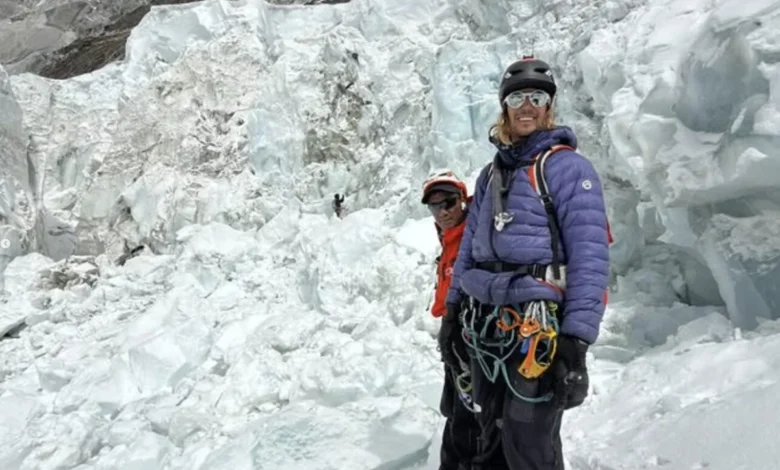
Bartek Ziemski of Poland has reportedly achieved a monumental feat in high-altitude mountaineering, summitting Lhotse, the world’s fourth-highest mountain, in an exceptional alpine style before any other climber this season. His ascent was accomplished without the aid of previously fixed ropes, established tracks, or Sherpa support on the summit push, demonstrating a rare degree of self-sufficiency. Adding an extraordinary layer to this achievement, Ziemski then executed what is reported as a full ski descent from the summit all the way back to Base Camp, a maneuver that, if fully confirmed, would include navigating the notoriously complex and dangerous Khumbu Icefall on skis.
A Testament to Alpine Style: The Ascent of Lhotse
The initial report, shared by Chhang Dawa Sherpa, director of Seven Summit Treks, has sent ripples of excitement and anticipation throughout the global mountaineering community. While specific details regarding the exact timing of his summit and the precise nature of his descent through every section are still emerging, the broad strokes paint a picture of an old-fashioned, pure mountaineering endeavor. This style stands in stark contrast to the increasingly commercialized expeditions prevalent on Everest and Lhotse, where extensive infrastructure, including miles of fixed ropes and large Sherpa teams, typically facilitates ascents.
Lhotse, standing at 8,516 meters (27,940 feet), is a formidable peak, often overshadowed by its taller neighbor, Mount Everest, with which it shares a significant portion of its ascent route up to Camp 4 (South Col). However, Lhotse presents its own distinct challenges, particularly the steep and icy Lhotse Face, which climbers must ascend to reach the South Col. From there, the route diverges, leading climbers up the Lhotse Couloir to the summit. Ziemski’s decision to undertake this climb without fixed ropes or a broken trail from Camp 4, a point often buffeted by high winds and extreme cold, implies an immense physical and mental effort. Breaking trail through deep snow at such altitudes is one of the most physically demanding aspects of high-altitude climbing, requiring exceptional stamina and determination.
Ziemski’s Pre-Summit Preparations and Route Finding
Ziemski’s proactive approach to the mountain was evident even before his summit push. Early in the season, when the vital work of the Icefall Doctors – the highly skilled Sherpas responsible for fixing the route through the Khumbu Icefall – was temporarily halted due to concerns over an unstable serac (a large block of glacial ice) threatening the established path, Ziemski did not wait idly. Instead, he joined a collaborative effort alongside Sherpas from various agencies to scout and establish a new, safer route through the intricate labyrinth of ice, seracs, and crevasses that constitute the Khumbu Icefall. This willingness to contribute directly to route-finding, rather than simply following a pre-set path, underscores his commitment to self-reliance and his deep understanding of glacial travel. This collaborative spirit not only showcased his leadership qualities but also proved instrumental in resolving a critical early-season obstacle for all climbers attempting Everest and Lhotse.
The Khumbu Icefall itself is a dynamic, constantly shifting glacier located at the head of the Khumbu Valley, stretching from Base Camp at approximately 5,364 meters (17,598 feet) up to Camp 1 at around 6,065 meters (19,898 feet). It is notorious for its treacherous terrain, characterized by massive ice blocks that can collapse without warning, deep crevasses requiring ladder crossings, and towering seracs that pose an ever-present threat. Navigating this section, even with fixed ropes and ladders, is a significant challenge; to consider skiing through it, as Ziemski reportedly did on his descent, elevates the feat to an entirely new level of technical prowess and audacity.
The Full Ski Descent: An Unprecedented Challenge
The claim of a "full ski descent from the summit all the way back to Base Camp" is what truly distinguishes Ziemski’s achievement. While ski descents from 8,000-meter peaks are themselves rare and highly technical, a full descent from Lhotse’s summit to its Base Camp, encompassing the entire Khumbu Icefall, would be historically significant. The Lhotse Face, with its average angle of 40-50 degrees and sections reaching 60 degrees, presents a steep and icy challenge even for expert skiers. However, the Khumbu Icefall poses unique difficulties that transcend conventional ski mountaineering. It is not a continuous slope but a broken, chaotic landscape of ice where many sections are navigated by ropes and aluminum ladders spanning crevasses.
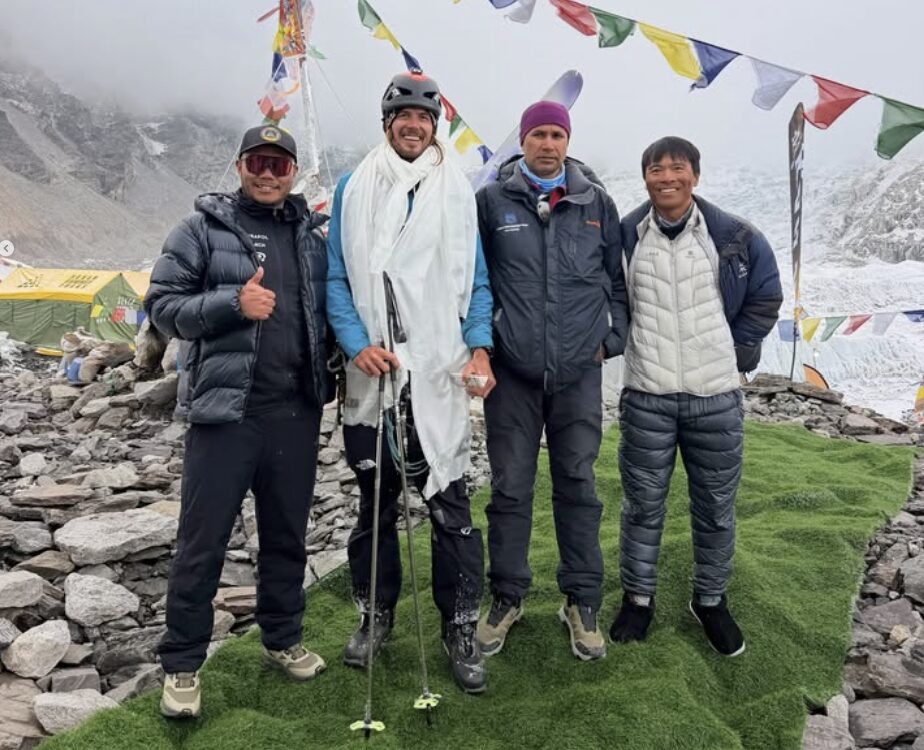
For Ziemski to have skied this entire section, it would imply navigating around or finding alternative routes through the most technical parts, or an incredibly precise and daring series of maneuvers, potentially involving short sections of un-skiing with skis on his back, only to immediately resume skiing where possible. The term "full ski descent" in high-altitude mountaineering often allows for short, unavoidable sections where skis must be removed due to impassable terrain (e.g., vertical ice walls, ladder crossings). However, the spirit of such a descent is to ski as much as humanly possible. The details of how Ziemski tackled the numerous ladder crossings and vertical ice steps within the Icefall are eagerly awaited, as they will define the exact nature of this unprecedented descent.
Bartek Ziemski: A Legacy of Oxygen-Free Ski Mountaineering
This groundbreaking ascent and descent on Lhotse are not isolated incidents in Ziemski’s career; they are the latest chapter in a remarkable legacy of high-altitude ski mountaineering, consistently performed without supplemental oxygen. Ziemski has previously summited and achieved full ski descents of several other formidable 8,000-meter peaks:
- Annapurna I (8,091m): Known as one of the most dangerous 8,000ers due to its extreme avalanche risk and technical difficulties.
- Dhaulagiri I (8,167m): Another notoriously challenging peak with complex terrain and unpredictable weather.
- Kangchenjunga (8,586m): The world’s third-highest mountain, presenting immense logistical and technical challenges.
- Makalu (8,485m): A steep and exposed peak, considered one of the most difficult of the 8,000ers.
His consistent choice to climb and ski these giants without bottled oxygen highlights his extraordinary physiological adaptation to extreme altitudes and his commitment to a purist, self-reliant style of mountaineering. Supplemental oxygen significantly reduces the physiological stress at altitude, making the ascent faster and safer. To forgo it, especially while carrying heavy ski equipment and performing technical skiing maneuvers, demands an unparalleled level of fitness, acclimatization, and mental fortitude. Given his established track record, it is highly probable that Ziemski maintained his no-oxygen policy for this Lhotse climb as well, further elevating the significance of his achievement.
Historical Context of 8,000m Ski Descents
The history of ski descents from the world’s highest mountains is a testament to human daring and skill. While pioneers like Yuichiro Miura famously skied a portion of Everest in 1970, and Davo Karničar achieved the first complete ski descent of Everest in 2000, Lhotse has seen fewer such attempts. The challenges of skiing at extreme altitude are immense: thin air saps strength, snow conditions can be highly variable (from deep powder to treacherous ice), and the margin for error is virtually nonexistent. Equipment becomes heavy, and visibility can be severely limited by weather. Ziemski’s ability to not only climb these peaks in alpine style but then perform a full ski descent adds his name to an elite cadre of high-altitude ski mountaineers who are pushing the boundaries of what is considered possible.
Awaiting Further Details and Community Reactions
The mountaineering community now eagerly awaits further corroborating details from Bartek Ziemski himself. These typically include GPS tracks, high-resolution photographs, and potentially video footage from his helmet camera, which would provide definitive proof of the full ski descent, particularly through the intricate sections of the Khumbu Icefall. The video posted by Chhang Dawa Sherpa, showing Ziemski skiing down in the distance from Base Camp, offers an exciting glimpse but naturally lacks the granular detail required to fully verify the entirety of the descent.
The implications of Ziemski’s achievement are profound. It serves as a powerful reminder of the enduring spirit of exploration and self-reliance in mountaineering. In an era where technological advancements and commercial support often dominate narratives of high-altitude climbing, Ziemski’s feat underscores the value of minimalist, self-supported ascents. It challenges conventional norms and inspires a return to the foundational principles of alpine climbing, where the individual’s skill, judgment, and endurance are paramount.
This ascent will undoubtedly be analyzed by experts and enthusiasts alike, solidifying Ziemski’s reputation as one of the most accomplished high-altitude ski mountaineers of his generation. His method sets a new benchmark for Lhotse and contributes significantly to the evolving narrative of human capability in the world’s most extreme environments. As the climbing season progresses and more details emerge, Bartek Ziemski’s Lhotse summit and ski descent are poised to become one of the defining moments of the year in Himalayan mountaineering.