Casa Mani Redefines Downtown Napa Luxury With an $80 Million Transformation of a Former Hospitality Landmark

The landscape of Napa Valley hospitality has shifted with the official opening of Casa Mani, a project that marks a significant evolution in the region’s urban resort offerings. Located in the heart of downtown Napa, the property serves as the latest venture from the Mani Brothers, who spearheaded a comprehensive $80 million renovation of the site previously occupied by an Embassy Suites. This transformation is not merely cosmetic; it represents a fundamental pivot in the Napa lodging market, which has historically favored secluded, vineyard-adjacent estates over integrated, walkable urban experiences.
The arrival of Casa Mani comes at a time when travelers are increasingly seeking the convenience of city-center amenities paired with the high-end comforts typically reserved for remote luxury resorts. By converting a legacy suburban-style hotel into a sophisticated, 203-room urban retreat, the developers are signaling a broader trend: the revitalization of downtown Napa as a luxury destination in its own right, rather than just a transit point for regional wine tourism.

The Architectural and Operational Evolution
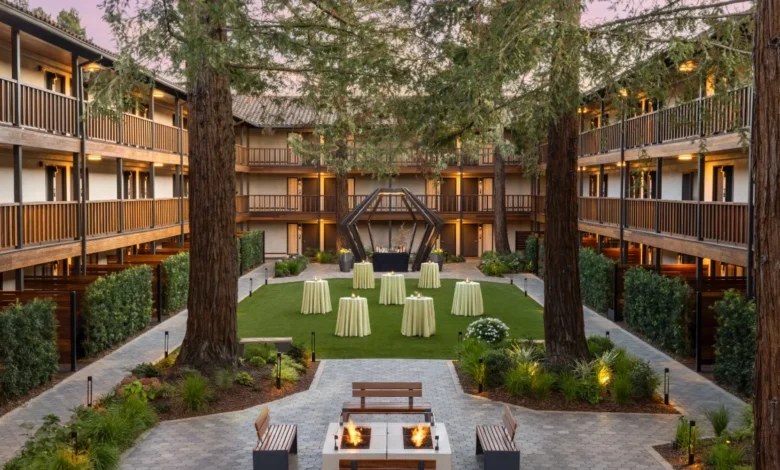
The transition from the previous iteration to the current Casa Mani involved a top-to-bottom reimagining of the three-story structure. The layout now centers on a sprawling, meticulously landscaped courtyard featuring a primary swimming pool, which serves as the architectural anchor for the 188 standard rooms and 15 expansive suites. Among these, three signature presidential suites provide 880 square feet of living space, designed to cater to a demographic that prioritizes privacy, hosting capabilities, and proximity to the city’s burgeoning culinary scene.
Technical upgrades are central to the guest experience. The integration of modern amenities—ranging from SMEG appliances and Dyson hair styling equipment to sustainable, full-sized Red Flower bath products—reflects an emphasis on quality and environmental consciousness. Furthermore, the inclusion of wellness suites equipped with in-room Peloton bicycles acknowledges the growing demand for private fitness solutions in high-end hospitality.
Strategic Location and Accessibility
A primary selling point of the property is its logistical efficiency. For travelers arriving by air, the hotel is situated approximately 15 minutes from the Napa County Airport. This proximity is particularly relevant given the rise of semi-private air travel services, such as JSX, which have become a preferred mode of transport for affluent visitors traveling from Southern California. By bypassing traditional commercial security queues, guests can theoretically transition from an urban center in Los Angeles to the wine country within a matter of hours, a convenience that has historically been difficult to achieve in the region.

Furthermore, the hotel’s location allows for a seamless, pedestrian-friendly exploration of downtown Napa. The proximity to high-quality local institutions, such as the nearby Moulin bakery, underscores the developers’ intention to integrate the resort into the existing local ecosystem rather than isolating guests behind a gated perimeter.
Culinary Integration: The Arrival of BOA Steakhouse
Perhaps the most significant indicator of Casa Mani’s positioning in the luxury market is its partnership with BOA Steakhouse. The debut of the brand in Napa Valley brings a high-profile, established culinary name to the hotel’s premises. Known for its sophisticated atmosphere and refined approach to the classic American steakhouse, the restaurant’s presence at Casa Mani provides a level of dining prestige that matches the resort’s upscale branding.
The culinary offering is complemented by a strategic partnership with Lawrence Wine Estates. By hosting a dedicated tasting room on-site, the hotel provides guests with curated access to premium labels, including Heitz, Burgess, and Ink Grade. This model effectively removes the "friction" of travel, allowing guests to engage with the Napa wine experience without the necessity of scheduling off-site transportation for every tasting.

Analytical Assessment of the Market Impact
The $80 million investment by the Mani Brothers represents a calculated risk based on changing consumer behaviors. Market analysts have noted that the "wine country escape" is undergoing a shift toward accessibility. While the iconic, isolated vineyard lodges of the early 2000s remain popular, a distinct segment of the luxury market is gravitating toward "urban resorts." These properties offer the best of both worlds: access to the agricultural beauty of the valley and the social, cultural, and culinary vibrancy of an established city center.
From an economic perspective, the revitalization of the former Embassy Suites building serves as a case study in property repositioning. Rather than demolishing the existing footprint, the developers utilized the existing structure to minimize environmental impact while modernizing the infrastructure. This approach not only preserved a significant volume of guest capacity—203 rooms—but also allowed for the creation of high-margin assets, such as the presidential suites and wellness-focused inventory.
Performance Benchmarking: The 10-Point Evaluation
In assessing the property through the lens of modern luxury standards, Casa Mani secures a score of 7.5 out of 10. This rating reflects the balance between high-end amenities and the limitations inherent in a repurposed building.

- Service and Arrival: While the absence of a personalized welcome drink at the point of check-in was noted, the immediate proximity to the on-site wine-tasting experience mitigates this gap.
- Technological Integration: The choice to prioritize heated Japanese-style toilet seats over heated bathroom floors is a pragmatic, modern decision that aligns with the temperate climate of Northern California.
- Linens and Comfort: With 250-thread-count Bellino Fine Linens, the hotel maintains a high standard of comfort, though some ultra-luxury properties in the region might push for higher counts.
- Infrastructure: The inclusion of private fire pits on lower-level terraces serves as a standout feature, providing a semi-private outdoor living space that bridges the gap between a standard hotel room and a private home.
- Operational Sustainability: The provision of Tesla vehicles for guest use, coupled with the on-site wine partnerships, suggests a well-considered effort to provide a comprehensive, turn-key experience for visitors who prefer not to drive their own vehicles.
Future Implications and Conclusion
The success of Casa Mani will likely be measured by its ability to sustain occupancy throughout the varying seasons of the Napa calendar. By offering a diverse range of room types—from standard accommodations to presidential suites—the hotel is well-positioned to attract both the short-stay luxury traveler and the longer-term visitor.
The broader implication of this project is the continued maturation of downtown Napa. As more high-end hospitality brands establish a presence in the city core, the traditional divide between "vineyard tourism" and "urban hospitality" is expected to narrow. For the Mani Brothers, the $80 million bet is an assertion that the future of Napa lies in a sophisticated, highly curated, and integrated guest experience.
For the prospective visitor, Casa Mani offers a compelling argument: one does not need to compromise on the luxury of a resort setting to enjoy the cultural and culinary accessibility of a city center. As the property continues to establish its reputation, it serves as a benchmark for how heritage properties can be successfully transitioned into the competitive, high-stakes landscape of contemporary American luxury travel. Whether for a weekend of wine discovery or a prolonged retreat, the property stands as a vital addition to the Napa Valley hospitality portfolio, offering a modern, efficient, and thoroughly enjoyable base of operations in the heart of the world’s most famous wine region.