Moroccan history is frequently framed through the lens of patriarchal dynasties, characterized by the narratives of sultans, viziers, and the traditional imagery of the Sahara. However, a rigorous examination of the nation’s historical and contemporary landscape reveals a long, unbroken lineage of women who have functioned as architects of the state, intellectual vanguards, naval strategists, and trailblazers in global governance. From the 9th-century founding of the world’s oldest university to the historic appointment of the first female Head of Government in 2026, the trajectory of Moroccan progress has been profoundly shaped by women who challenged established norms to redefine the limits of power.
The Foundations of Intellectual and Political Power
The intellectual heritage of Morocco is anchored by Fatima al-Fihri, a figure whose contribution to global education remains unparalleled. Arriving in Fez from Tunisia in the early 9th century, al-Fihri utilized her inherited wealth to establish the al-Qurawiyyin Mosque and University in 859 CE. Recognized by UNESCO and the Guinness World Records as the oldest existing, continually operating educational institution in the world, al-Qurawiyyin became a beacon for medieval scholarship. Its curriculum, which encompassed Islamic studies, grammar, mathematics, and medicine, attracted luminaries such as the historian Ibn Khaldun and the traveler Leo Africanus. The associated library, which houses a 9th-century Quran and foundational collections of hadiths, serves as a testament to al-Fihri’s vision of education as a cornerstone of societal development.
While al-Fihri laid the intellectual foundation, Zaynab an-Nafzawiyya provided the political bedrock for the Almoravid Empire in the 11th century. Operating from Aghmat, an-Nafzawiyya was a wealthy, politically astute strategist. Historical chroniclers often describe her as the "genius" behind Yusuf ibn Tashfin, the Almoravid leader. Her influence was perhaps most pivotal in 1072, when she successfully navigated a power struggle with Abu Bakr ibn Umar, ensuring that Yusuf ibn Tashfin maintained control of the northern territories. By securing the political stability of the region, she facilitated the expansion of the empire into the Iberian Peninsula, essentially acting as a co-ruler whose administrative acumen was vital to the consolidation of Moroccan territory.
Maritime Dominance and the "Free Noble Woman"
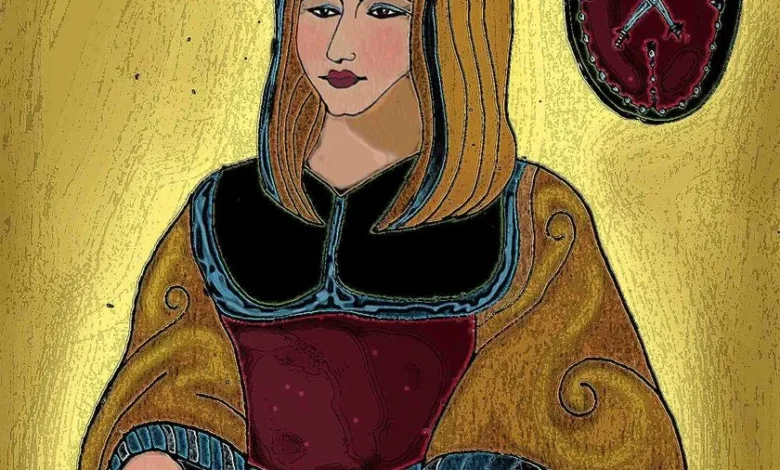
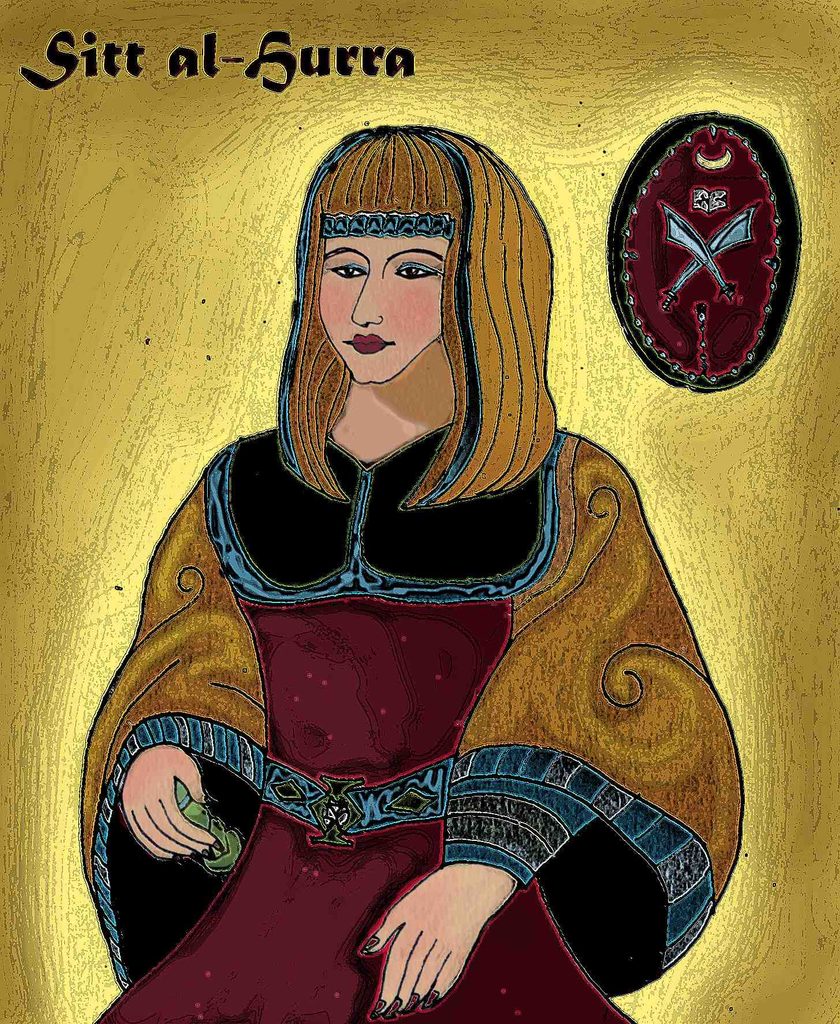
In the 16th century, the geopolitical landscape of the Mediterranean was defined by the strategic naval power of Sayyida al-Hurra. Born into an Andalusian noble family that fled to Chefchaouen following the fall of Granada, she eventually became the Governor of Tetouan. Her governance was marked by a sophisticated naval alliance with the Ottoman corsair Barbarossa, which effectively partitioned the Mediterranean into spheres of influence.
Al-Hurra’s authority was such that she was the primary negotiator for the Moroccan state with European powers, including Spain and Portugal. The ransoms she collected from captured vessels were systematically reinvested into the urban infrastructure of Tetouan, contributing to the development of its historic medina. Her marriage to Sultan Ahmad al-Wattasi in 1541 remains a historical anomaly; it is widely documented as the only instance in which a Moroccan sultan traveled outside his capital to wed, a clear reflection of her status as a sovereign power.
The Modern Era: Feminism, Athletics, and Public Policy
The 20th and 21st centuries marked a transition toward institutionalized advocacy and global recognition. Fatema Mernissi, a sociologist and writer, emerged as a critical voice in the discourse surrounding gender and Islam. Her seminal works, including Beyond The Veil (1975) and The Veil and the Male Elite (1987), provided a feminist reinterpretation of Islamic tradition. Despite facing bans in several conservative nations, her scholarship provided a rigorous intellectual framework for addressing patriarchal structures in Morocco. Mernissi’s work served to bridge the gap between historical theology and the lived realities of contemporary Moroccan women.
Parallel to this intellectual shift, the social welfare landscape was transformed by Aïcha Chenna. A pioneer in the NGO sector, Chenna founded the Female Solidarity Association (Association Solidarité Féminine) in the 1980s. Her work centered on providing support, vocational training, and health education to single mothers and survivors of abuse—demographics that faced severe social stigmatization. By elevating these issues to the national consciousness, Chenna’s advocacy pushed the boundaries of public discourse on human rights, earning her international acclaim, including the Opus Prize.

In the realm of global sports, Nawal El Moutawakel broke a significant psychological barrier in 1984 by becoming the first woman from an Arab or Muslim nation to win an Olympic gold medal. Her victory in the 400-meter hurdles at the Los Angeles Games served as a catalyst for a national movement in female athletics. Following her retirement, El Moutawakel transitioned into sports administration, becoming a member of the International Olympic Committee and championing the "Fun Run" in Casablanca, an initiative that has evolved into the largest women-only race in the Muslim world, drawing over 30,000 participants annually.
A New Chapter in Governance: 2026
The current decade has witnessed the most significant political shift in Moroccan history regarding gender representation. Fatima Ezzahra El Mansouri, whose career began in law, transitioned into municipal politics, becoming the first woman elected mayor of Marrakech in 2009. Her leadership was characterized by urban reform and a focus on sustainable development. Following her reelection as mayor in 2021 and her rise to lead the Authenticity and Modernity Party (PAM), she ascended to the national stage.

In September 2026, following a successful legislative campaign, King Mohammed VI appointed El Mansouri as the Head of Government. This appointment is a historic benchmark for the Kingdom, making her the first woman to hold the premiership in Morocco and only the second in the Arab world. Her cabinet, inaugurated in October 2026, features a four-party coalition with seven female ministers—a significant increase in representation at the executive level.
Societal Implications and Future Outlook
The ascension of women like El Mansouri into the highest echelons of power signifies a shift in the structural hierarchy of the Moroccan state. Analysts suggest that this transition is not merely symbolic but part of a long-term strategy to modernize the nation’s governance and align its domestic policies with international standards of gender parity.

The data reflects a gradual, yet persistent, upward trend in female participation in the Moroccan workforce and political sphere. According to recent demographic reports, the integration of women into ministerial and municipal roles has correlated with increased focus on legislative reforms regarding family law, education, and social protection.
The legacy of these women—from the strategic brilliance of Zaynab an-Nafzawiyya to the modern political leadership of El Mansouri—underscores a continuous tradition of influence. As the country moves into this new administrative era, the focus remains on whether these systemic changes will cascade down to affect broader socioeconomic outcomes for women in rural and underserved areas. The words of the late Fatema Mernissi continue to resonate as a guiding principle for this evolution: "Dignity is to have a dream, a strong one, which gives you a vision, a world where you have a place, where whatever it is you have to contribute makes a difference." This vision, once held by a few, is increasingly becoming the framework for the modern Moroccan state.