The dramatic rescue of two German teenagers on Austria’s Grossglockner on November 15, 2026, has reignited a fierce national debate regarding the risks associated with amateur mountaineering on high-altitude alpine terrain. The two climbers, aged 15 and 18, were successfully extracted by a search and rescue helicopter after spending nearly 20 hours stranded in sub-zero temperatures at an elevation of approximately 2,800 meters. The incident, which prompted a coordinated response from Austrian emergency services, underscores the growing challenges faced by mountain rescue teams as social media and online resources potentially encourage inexperienced individuals to underestimate the lethal realities of the Alps.
A Chronology of the Ordeal
The series of events leading to the rescue began late on Saturday, November 14, 2026. Despite the pair’s lack of professional alpine experience, they arrived at the base of the 3,798-meter Grossglockner—Austria’s highest peak—armed with technical gear including crampons, ice axes, helmets, and ropes. According to reports, their preparation consisted of self-directed research, including the study of instructional videos and physical training.
However, the reality of the mountain quickly diverged from their digital preparation. The pair commenced their ascent, but their progress was alarmingly slow. While a standard ascent of the route they attempted typically takes between four and five hours for experienced climbers, the teenagers required nearly 12 hours to cover a similar distance. Witnesses on the mountain reportedly advised the pair to abandon their attempt due to their pace and evident lack of technical proficiency, yet the climbers pressed on.
The situation deteriorated as the teenagers attempted to descend. Although they initially made progress, they encountered a section of the route they deemed too hazardous to navigate. Attempting to bypass the obstacle, they followed a set of tracks in the snow, a common but dangerous practice for those lacking advanced navigation skills. These tracks eventually vanished, leaving the duo stranded in deep, unstable snow.
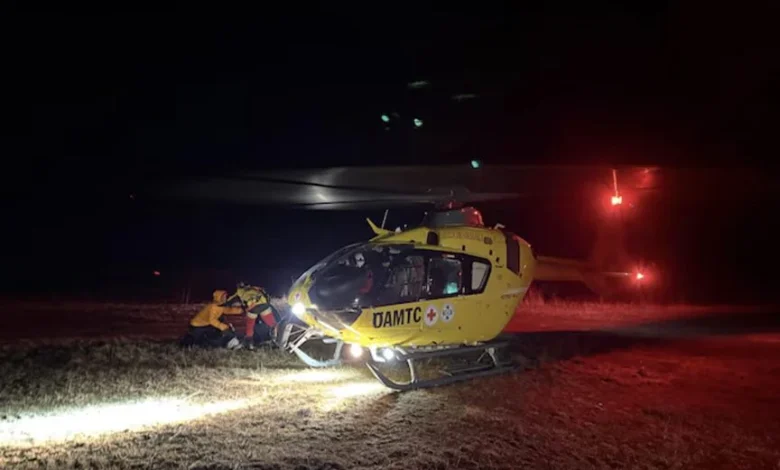
By 6:30 p.m. on Sunday, November 15, the older climber realized their situation was untenable and placed a distress call. The initial phase of the rescue involved remote guidance, with emergency operators attempting to talk the teens down via telephone. When these efforts failed to produce results after two hours, a rescue helicopter was dispatched into the dark, mountainous terrain. The search team eventually located the two youths, who were suffering from severe exhaustion, disorientation, and early-stage hypothermia.
Conflicting Accounts of the Ascent
A notable point of contention has emerged regarding the specific route taken by the teenagers. Initial reports from local police indicated that the pair had successfully reached the summit before becoming lost during their descent. However, the younger climber has contested this version of events, asserting that they never reached the peak. According to his account, they reached an alpine hut at approximately 3,454 meters before deciding to turn back due to one climber suffering from illness. Regardless of whether they stood on the summit, the fact remains that their inability to navigate the descent safely necessitated a high-risk aerial extraction.
Technical Challenges and Expert Criticism
Peter Tembler, the rescue leader who oversaw the operation, provided a scathing assessment of the incident in the aftermath. Speaking to the German Press Agency, Tembler highlighted the fundamental mismatch between the climbers’ skill levels and the environment. He explicitly criticized their decision to embark on the climb at such a late hour, noting that winter conditions in the high Alps impose a strict temporal limit on safe movement.
"The pair lacked the fundamental alpine experience required for such terrain," Tembler stated. "Attempting to climb the Grossglockner without the requisite knowledge of snow conditions and navigation is not merely a lapse in judgment; it is a profound safety risk to both the climbers and the rescue teams."
The rescue operation was not only logistically difficult but dangerous for the crews involved. Flying a helicopter to a 2,800-meter elevation at night during winter requires exceptional skill, particularly when the subjects are disoriented and located in precarious, snow-covered terrain.

The Broader Context of Grossglockner
The Grossglockner is widely considered a rite of passage for many climbers, but its reputation as a "walk-up" is dangerously misleading. While it attracts between 8,000 and 9,000 climbers annually, it remains a serious high-altitude objective. Data from Der Standard and local authorities indicate that the mountain sees an average of two dozen rescue operations per year, a statistic that underscores the inherent volatility of the region.
The mountain has been the site of several high-profile tragedies and controversies in recent years. In January 2025, a case of criminal negligence made international headlines when a man abandoned his less-experienced partner in extreme conditions; she subsequently succumbed to hypothermia. The man was later convicted of manslaughter, a landmark ruling that set a legal precedent for the duty of care between climbing partners in Austria. Furthermore, in the summer of 2026, an altercation between a professional mountain guide and an amateur climber on the peak highlighted growing tensions regarding the overcrowding and the conduct of individuals on the mountain’s narrow, high-exposure ridges.
Between 2005 and 2025, 29 fatalities were recorded on the Grossglockner. These statistics serve as a grim reminder that the mountain is unforgiving to those who do not respect its environmental demands.
The "Social Media Effect" in Alpine Sports
Experts in the alpine community have increasingly pointed toward the influence of digital media in driving amateur interest in extreme mountaineering. Platforms like Instagram and TikTok often showcase the aesthetic summit experience while omitting the arduous technical requirements, the risks of rapid weather shifts, and the necessity of specialized training.
This "democratization" of extreme sports—whereby individuals feel entitled to attempt summits that were previously the domain of trained professionals—has created a paradox. While the accessibility of information has never been higher, the depth of practical, hands-on experience has arguably decreased among the hobbyist population.
Implications for Future Rescue Operations
The incident involving the two teenagers has sparked a public debate in Austria regarding the costs and responsibilities of mountain rescues. Currently, many mountain rescue services in the Alps operate on a volunteer basis or are supported by public funding. When rescues are necessitated by negligence or extreme lack of preparation, there is a growing sentiment among the public and the rescue organizations that climbers should bear a greater share of the financial burden, or that more stringent regulations should be enforced.
However, the primary concern of rescue organizations like the Mountain Rescue KALS remains the safety of the rescuers themselves. Every time a team is sent into a storm or darkness to retrieve inexperienced hikers, the rescuers are placed in situations that test the limits of their equipment and training.
As the winter season progresses, alpine authorities are reiterating their call for absolute caution. They emphasize that the Grossglockner is not a tourist trail. It is an high-altitude alpine environment where success is defined not by reaching the summit, but by the ability to return to the valley floor safely. The 20-hour ordeal of the two German teens serves as a cautionary tale: in the mountains, preparation is not measured in hours spent reading online forums, but in years spent mastering the skills required to survive when the environment turns hostile.
For now, the teens are recovering, and their survival is a testament to the efficiency of the Austrian rescue infrastructure. Whether this incident will lead to a shift in how mountain access is managed remains to be seen, but the climbing community is unanimous in its message: the mountains are not a classroom for trial and error.