
Mastering Two-Player Mode: How Couples Can Maximize Travel Rewards Credit Cards for Free Flights and Hotels

The landscape of travel rewards has evolved significantly over the past decade, shifting from a niche hobby for hyper-frequent flyers into a mainstream financial strategy utilized by millions of households. While traveling solo offers its own distinct appeal, the financial realities of booking flights and hotels for two or more people can quickly deplete an individual’s stockpile of credit card points and airline miles. To sustain long-term, virtually free travel, seasoned points enthusiasts increasingly rely on what the industry calls "two-player mode."
This collaborative approach involves couples or trusted partners synchronizing their credit card applications, welcome bonus acquisitions, and spending strategies. By intentionally doubling up on sign-up offers, annual hotel free-night certificates, and elite status perks, pairs can exponentially increase their travel purchasing power. However, while the concept appears straightforward on the surface, navigating the complex rules set by major credit card issuers requires rigorous organization, strict financial discipline, and a thorough understanding of points-transfer ecosystems.
Defining Two-Player Mode and Operational Dynamics
In the context of personal finance and travel hacking, "two-player mode" refers to a cooperative system where two individuals—typically spouses, domestic partners, or family members—coordinate their credit card acquisition timelines to maximize rewards. In most households adopting this method, one partner acts as the primary strategist who researches optimal card offerings, tracks expiration dates, and monitors minimum spending requirements, while the other functions as an active participant following the roadmap.

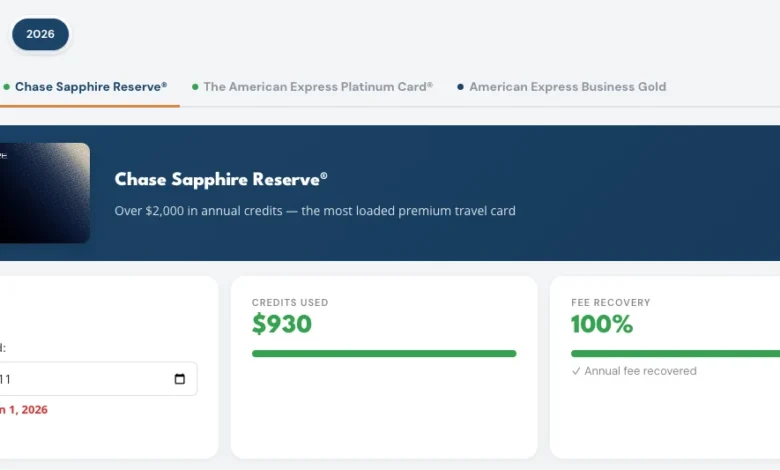
Because managing multiple open accounts, annual fees, and disparate statement credits can quickly become overwhelming, organizational tools have become essential. Industry analysts note that without a centralized tracking system, cardholders risk missing crucial spending deadlines or paying unnecessary annual fees for perks they fail to utilize. Consequently, specialized household expense trackers and credit card benefit dashboards have gained massive popularity, allowing partners to monitor their collective portfolio—including individual card lists, fee structures, and credit utilization—through a single, unified interface.
Financial advisors emphasize that two-player mode is not merely about accumulating plastic; it requires a shared commitment to financial hygiene. When executed correctly, the strategy transforms everyday household expenses into luxury vacations. When mismanaged, however, it can lead to disorganized spending, unnecessary debt, and wasted annual fees.
Bank-Specific Policies on Pooling and Transferring Points
Once a couple begins generating substantial rewards across separate accounts, the immediate objective is typically to pool those points into a single balance to book high-end award flights or luxury hotel stays. Unfortunately, major financial institutions enforce vastly different rules regarding the transferability of rewards between individuals.
American Express
American Express operates under a strict prohibition against pooling or transferring Membership Rewards points between different cardholders. A primary cardmember cannot directly combine their points with a partner’s account, nor can they transfer points to a third-party loyalty program account in another person’s name.

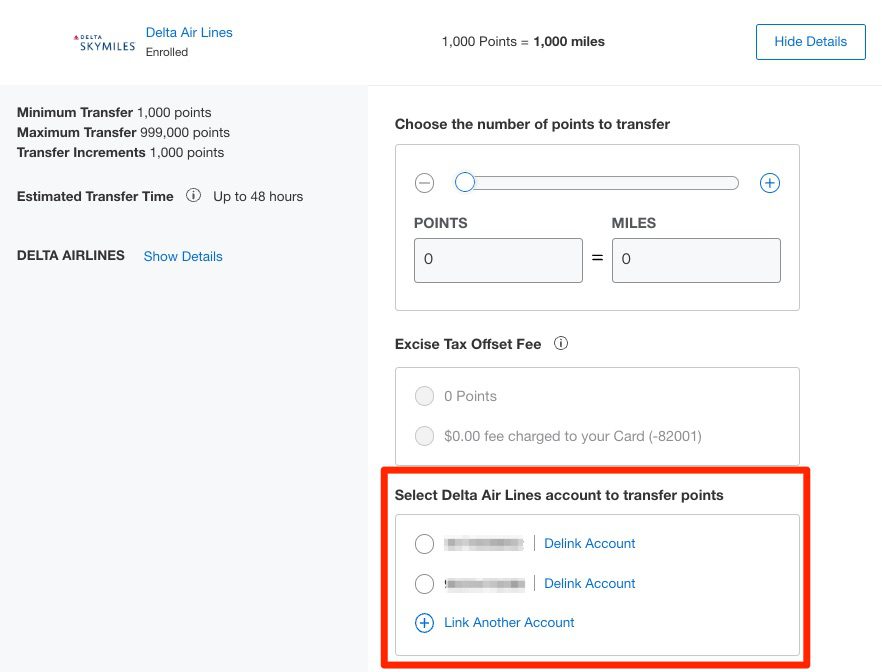
However, savvy travelers utilize a sanctioned workaround: adding a partner as an authorized user on an account such as the American Express Gold Card. Once the authorized user status is established, the primary cardholder can transfer their Membership Rewards points directly to airline or hotel loyalty accounts held in the authorized user’s name. Industry experts caution that this transaction is strictly a one-way street; once points leave the Amex ecosystem and enter a partner’s frequent flyer account, they cannot be reversed.
Chase Bank
Chase offers one of the most couple-friendly ecosystems in the travel rewards industry. The bank permits cardmembers to combine Ultimate Rewards points with another member of the same household. While Chase historically defined a household strictly by billing address, the interpretation has occasionally accommodated partners living at separate residences or family members sharing close financial ties.
To execute a transfer, cardholders with premium travel cards—such as the Chase Sapphire Preferred or Chase Sapphire Reserve—can link accounts online or via telephone, enabling seamless, ongoing transfers of points to cover joint travel expenditures without incurring fees.
Capital One and Citi
Capital One stands out for its operational flexibility. Cardholders can transfer Capital One miles between their own accounts online or to another cardholder by contacting customer service directly via telephone. Unlike Chase, Capital One does not require transferring parties to share a household address or familial relationship, making it exceptionally versatile for couples.

Conversely, the landscape shifted dramatically for Citi ThankYou points. Citi previously allowed cardholders to transfer points to any other ThankYou account holder, regardless of relationship. However, Citi eliminated this feature, completely closing off peer-to-peer point sharing and reducing the viability of Citi cards for collaborative household strategies.
Hotel and Airline Loyalty Programs
Direct transfers between individual airline and hotel loyalty accounts are generally discouraged across the travel industry. While most major U.S. airlines technically permit frequent flyer miles to be transferred to another member, the fees imposed by the carriers typically render the transactions cost-prohibitive. Similarly, major hotel chains like Marriott Bonvoy, Hilton Honors, and World of Hyatt enforce strict caps and administrative fees on point transfers, making
credit card ecosystem transfers the far superior method for pooling resources.
The Power of Referral Bonuses
One of the most lucrative financial advantages of operating in two-player mode is the ability to leverage internal referral networks. When an individual applies for a travel rewards credit card through a public link, they receive the standard welcome offer. However, if one partner generates a referral link from their existing card and sends it to the other, both parties benefit: the new applicant receives a sign-up bonus, and the referring partner receives a referral bonus.
American Express is widely recognized as the industry leader in referral flexibility. Amex cardholders can frequently generate referral links not just for the exact card they hold, but for entirely different cards within the same product family. For example, a cardholder with an Amex Gold Card can generate a referral link for a partner to apply for the Amex Platinum Card, maximizing points acquisition across diverse spending categories.
Chase and Capital One also offer robust referral programs, though their structures are generally restricted to matching card types—meaning a cardholder can typically only refer a partner to the exact same card product. While this limits portfolio diversification, it remains a powerful tool for households aiming to double up on high-value welcome bonuses. Financial analysts advise comparing public promotional offers against internal referral bonuses prior to applying, as public offers occasionally surpass referral incentives.
Strategic Timing and Risk Management
Executing a successful two-player rewards strategy requires meticulous chronological coordination. The most critical operational challenge is meeting the minimum spending requirements mandated by credit card issuers to unlock lucrative welcome bonuses. Couples must evaluate their joint monthly expenditures—such as groceries, utilities, insurance, and travel—to ensure they can organically meet spending thresholds within the designated three-to-six-month windows.
Financial regulators and consumer advocates consistently issue strict warnings regarding credit card reward strategies: no welcome bonus or travel perk justifies carrying a revolving balance subject to high interest rates. Credit cards must be paid in full each month to maintain financial health.

Furthermore, timing is essential when aligning annual card benefits, such as hotel free-night certificates or airline companion passes. For instance, holding two separate Marriott Bonvoy credit cards that each yield an annual 85,000-point free-night certificate allows a couple to combine their certificates for a consecutive weekend stay at a luxury resort. Because these certificates typically expire 12 months from issuance, couples must coordinate their application anniversaries to ensure the benefits overlap when needed.
Finally, managing overlapping perks—such as dual Priority Pass lounge memberships or duplicate annual statement credits—requires careful cost-benefit analysis. While holding identical cards can occasionally make sense for sign-up bonuses, maintaining duplicate annual fees for redundant benefits often drains a household’s net return. By approaching travel rewards with disciplined organization, strategic timing, and open financial communication, couples can transform everyday spending into sustainable, world-class travel experiences.
Related posts: