The Comprehensive Guide to Motorcycle Travel Across Iraq: Navigating a Re-emerging Frontier

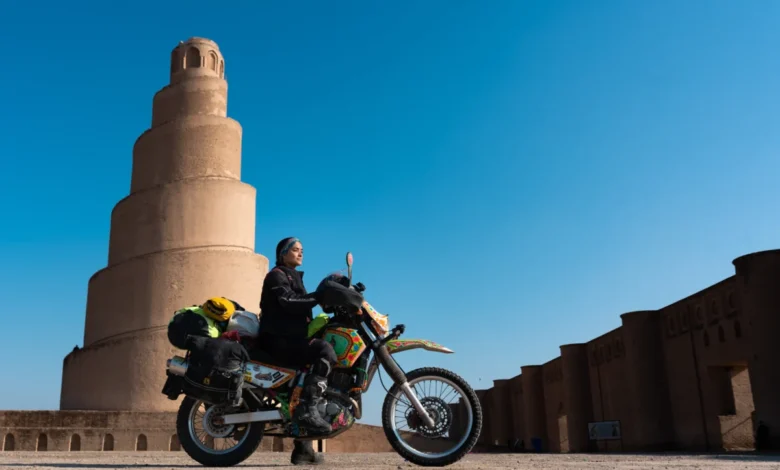
Motorcycle travel in Iraq is a challenging yet increasingly viable endeavor for adventure seekers looking to traverse one of the world’s most historically significant regions. Once largely inaccessible due to prolonged conflict and instability, the country has slowly begun to re-open its doors to overlanders, offering a unique opportunity to witness the cradle of civilization from the saddle of a bike. This guide synthesizes the practical logistics, security considerations, and regional nuances necessary for those planning a motorcycle expedition across both Federal Iraq and the autonomous region of Iraqi Kurdistan.
The Geopolitical Landscape and Regional Distinctions
Understanding the administrative division of the country is the first requirement for any traveler. Iraq consists of two distinct regions: the federal south and the Kurdistan Region of Iraq (KRI) in the north. Federal Iraq, encompassing historical centers like Baghdad, Babylon, and the Mesopotamian marshlands, serves as the heart of the nation’s ancient history. Infrastructure in this region is still in a state of recovery, reflecting the toll of decades of warfare.
In contrast, Iraqi Kurdistan operates as a de facto autonomous entity with its own military force, the Peshmerga. Due to its relative stability during the height of the conflict against Daesh, the north possesses more modern infrastructure and a tourism framework that is significantly more developed than the south. It is critical to note that immigration policies differ: a visa issued for Federal Iraq is generally valid for the entire country, whereas a visa-on-arrival issued in Kurdistan is often restricted to that region, creating significant bureaucratic hurdles for those attempting to cross into the south.
Safety, Security, and Traffic Realities
While security has improved, Iraq remains a high-stakes destination. The primary danger to motorcycle travelers is not necessarily political instability, but rather the erratic nature of local traffic. Road safety standards are minimal; speed cameras are rare, and lane markings are often nonexistent. Furthermore, in the northern mountainous regions, particularly near the Turkish border, the legacy of past conflicts manifests in the presence of unexploded ordnance. Travelers are strongly advised to adhere strictly to established roads and designated paths, as the risk of landmines in remote, off-road, or natural areas remains a documented hazard.
Security checkpoints are a constant, daily reality. Travelers should anticipate frequent stops where military or police officials will inspect passports and vehicle documentation. While these interactions are typically professional, they significantly reduce daily mileage. The logistical reality of overlanding in Iraq necessitates patience and the ability to navigate bureaucratic requirements in real-time.
Logistical Framework: Carnets, Visas, and Border Control
For international overlanders, the Carnet de Passages en Douane (CdP) is officially required for vehicle entry, though enforcement varies at individual border crossings. Travelers should be prepared to pay a temporary vehicle import fee, typically around $100 USD, upon entry.
Border entry points are specific and restricted. The Trebil crossing from Jordan is a primary entry route but remains sensitive to shifting security protocols; at times, military escorts are mandated for parts of the transit. The Abdali/Safwan crossing from Kuwait provides a direct route into the southern Basra region. From the north, the Ibrahim Khalil crossing at Zakho is the established gateway from Turkey, offering standard processing for foreign nationals. Notably, the border with Syria remains closed to tourists, and the Saudi Arabian border is restricted primarily to trade and religious pilgrimage.
Climatic Considerations and Optimal Scheduling
The climate of Iraq is characterized by extreme temperature fluctuations. The summer months, spanning May through September, see temperatures frequently exceeding 50°C, making long-distance riding physically dangerous. Conversely, the winter months of January and February bring freezing temperatures, particularly in the northern mountains, where snow and ice can render mountain passes impassable.
The optimal windows for motorcycle transit are the shoulder seasons: March to April and October to November. During these months, temperatures are temperate, and the landscape is more conducive to the rigors of overlanding. Spring is particularly significant, coinciding with the celebration of Nowruz, which offers a window into the cultural vibrancy of the Kurdish region.
Navigating the Infrastructure: Fuel and Maintenance
Iraq is a major global oil producer, and fuel is remarkably affordable, often costing roughly $0.25 USD per liter. However, the infrastructure for refueling motorcycles is exclusionary. Due to localized fire safety policies, motorcycles are often prohibited from fueling at the pump at standard stations. Travelers must carry a secondary container or "jerrycan" to manually transport fuel from the pump to their motorcycle.
Regarding mechanical support, the prevalence of small-displacement motorcycles in the country ensures that basic repairs can be performed in almost any major town. However, specialized parts for high-end adventure bikes are scarce. Baghdad serves as the central hub for supply chains; if a motorcycle requires significant technical intervention, the capital is the most reliable location for sourcing parts and expertise. Erbil functions as a secondary support hub, though it remains dependent on the supply lines originating from the south.
The Economic and Cultural Implications of Tourism
The rise of independent motorcycle tourism in Iraq represents a shift in the country’s international image. Local populations generally react to foreign motorcyclists with high levels of hospitality and curiosity. The act of traversing the landscape on two wheels provides a level of accessibility that traditional tourism does not, allowing for spontaneous interactions in rural areas.
However, the lack of digital navigation tools remains a significant challenge. Google Maps may display routes, but its turn-by-turn navigation is often non-functional within the country. Travelers must rely on a combination of offline GPS tools and local navigation apps, as well as a willingness to seek verbal directions from locals, which often leads to unexpected, if sometimes lengthy, hospitality.
Summary of Strategic Advice
For those planning an expedition, the following summary points are essential:
- Prioritize Documentation: Ensure the CdP is current and verify specific border requirements for the nationality of the rider, as visa-on-arrival eligibility is not universal.
- Fuel Logistics: Always travel with a high-quality jerrycan to bypass the "no-motorcycles-at-the-pump" restriction.
- Route Planning: Account for the "checkpoint tax" on time. A 200-kilometer day can easily take eight hours due to security stops.
- Emergency Preparedness: Do not rely on digital connectivity for navigation. Carry paper maps and GPS devices with pre-loaded, independent mapping software.
- Security Awareness: Avoid wild camping in the south. In the north, stay strictly on marked trails to mitigate the risk of encountering remnant landmines.
Ultimately, motorcycle travel in Iraq is not a casual holiday but a serious expedition. It requires a high degree of self-sufficiency, a tolerance for bureaucratic complexity, and a respect for the security realities of a country transitioning from a history of volatility to a future of cautious openness. As global interest in Iraq as a destination grows, the role of the adventurous motorcyclist remains that of a bridge between the country’s ancient, complex history and the modern world.