FAA Orders Nationwide Ground Stop Following Widespread Air Traffic Control Communication Failure

The Federal Aviation Administration (FAA) issued a sweeping nationwide ground stop for all departing flights across the United States on Friday, responding to a catastrophic communication failure that crippled the nation’s Air Route Traffic Control Centers (ARTCCs). The directive, which effectively froze domestic commercial aviation, was confirmed by Transportation Secretary Sean Duffy via social media as the agency scrambled to address a systemic technical disruption affecting the high-altitude facilities responsible for managing aircraft movement between metropolitan hubs.
The Scope of the Disruption
The ground stop, an emergency measure rarely utilized on such a massive scale, halted thousands of scheduled departures within minutes of the FAA’s announcement. Unlike localized ground stops—which are typically triggered by severe weather or specific runway obstructions—this outage affected the backbone of the National Airspace System (NAS). Air Route Traffic Control Centers serve as the primary conduits for managing aircraft in the en-route phase of flight. When these centers lose the ability to transmit or receive critical flight data, the safety margins required for separation in high-altitude corridors cannot be maintained, leaving the FAA with no alternative but to ground the fleet.
While the order primarily targeted departing flights, the impact rippled rapidly into the international sector. Inbound international flights were subject to specific management protocols, with many aircraft already in the air being forced to enter holding patterns or divert to alternative airports outside the affected airspace. The logistical complexity of managing thousands of airborne planes during a communication blackout presented an immediate challenge for controllers, who were forced to revert to contingency procedures while technicians worked to isolate the source of the failure.
Chronology of the Event
The first indicators of the disruption appeared shortly after the start of the standard morning peak period for commercial aviation. As reports of data discrepancies began to surface across multiple regional control centers, air traffic managers detected a loss of synchronization within the National Airspace System.
By 8:30 a.m. EST, the volume of reported communication anomalies had exceeded the threshold for standard operational troubleshooting. FAA officials began briefing the Department of Transportation, and by 9:00 a.m., the agency initiated a localized ground stop that quickly expanded into a nationwide mandate.
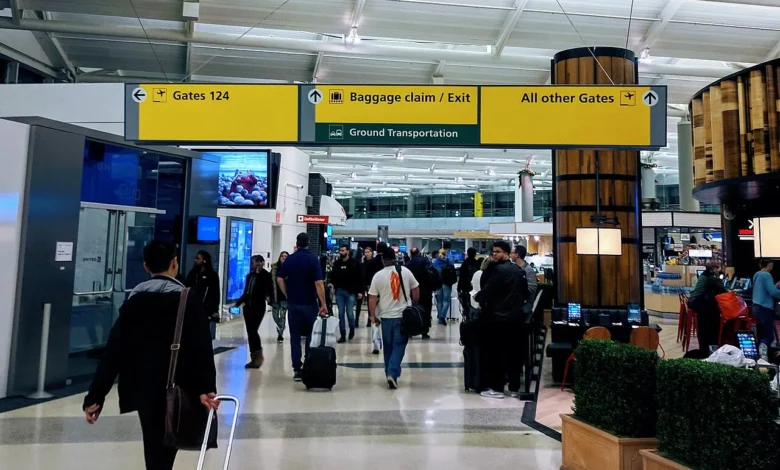
By 9:45 a.m., the ripple effects were visible across every major U.S. airport. Digital departure boards shifted from "On Time" to "Delayed" or "Canceled" status. Travelers at major hubs such as Newark, Hartsfield-Jackson Atlanta, and O’Hare were met with an abrupt cessation of operations. Airport terminals, already operating at high capacity, became staging areas for thousands of stranded passengers as airlines struggled to provide accurate information amidst the sudden regulatory silence.
Technical Context and System Vulnerabilities
The U.S. air traffic control infrastructure is a sprawling, multi-layered system that relies on a combination of legacy hardware and modernized software. The ARTCCs are the most critical nodes in this network. These facilities manage the flow of traffic at high altitudes, facilitating the transition of flights between airport-specific approach controls.
A failure at this level implies a breakdown in the data exchange protocols that allow these centers to "hand off" aircraft to one another. Industry analysts have long warned that the aging infrastructure of the FAA, which still relies on segments of code and communication protocols dating back to the late 20th century, remains a single point of failure for the entire economy. While the FAA has been engaged in a multi-year modernization program, the integration of new digital systems with existing, mission-critical architecture creates a high-risk environment for technical anomalies.
Official Responses and Stakeholder Reactions
Transportation Secretary Sean Duffy provided the primary line of communication to the public during the initial hours of the crisis. In a statement posted to X, Duffy emphasized that the FAA was actively investigating the root cause of the outage. "FAA technicians are investigating the issue. We will provide immediate updates as we have them," Duffy wrote, while urging patience as the agency worked to restore system integrity.
Airlines, represented by industry groups such as Airlines for America (A4A), expressed immediate concern regarding the operational and financial fallout of the grounding. In a coordinated response, major carriers began issuing travel waivers for affected passengers, acknowledging that the restart of the system would be a slow, incremental process rather than an instantaneous recovery.
"The safety of our passengers and crew is our absolute priority," a spokesperson for a major domestic carrier stated. "We are working closely with the FAA to monitor the situation and understand the nature of the communication failure. We expect significant delays and cancellations to persist long after the ground stop is lifted, given the complexity of rescheduling aircraft and flight crews."
Economic and Logistical Implications
The implications of a nationwide ground stop are profound. The U.S. aviation system is a high-velocity engine of the national economy, with over 45,000 flights and 2.9 million passengers traversing the airspace daily under normal conditions. A shutdown of this magnitude incurs costs running into the hundreds of millions of dollars per hour, impacting not just passenger travel, but the fragile supply chains that rely on air cargo.
Beyond the immediate financial cost, the event underscores the vulnerability of critical infrastructure to systemic IT failures. In the past decade, the aviation industry has faced increasing pressure to modernize, yet the sheer scale of the system makes transition periods inherently hazardous. Experts in aviation logistics note that the "restart" phase of such an outage is often as dangerous as the failure itself. When the ground stop is eventually lifted, the sudden surge in flight plans—known as a "push"—can overwhelm the very systems that just failed, leading to further secondary delays.
The Path to Normalization
As of mid-afternoon, the FAA continued to manage the situation through a phased restoration of services. The agency’s focus remains on verifying the stability of the communication links between the 22 Air Route Traffic Control Centers. Once the integrity of the data is confirmed, the FAA will likely utilize a "flow control" program to meter the release of aircraft back into the sky, ensuring that the system is not flooded with traffic beyond its immediate capacity.
For passengers, the immediate reality is a protracted period of uncertainty. Rebooking thousands of travelers across a network that is already operating at high load factors will take days, if not weeks, to fully rectify. Airline customer service departments are expected to be overwhelmed, and the secondary impact on airport staffing—including security personnel and ground crews—will necessitate significant operational adjustments.
Looking Ahead: Systemic Resilience
The Friday incident will undoubtedly trigger a formal inquiry by the Department of Transportation and the National Transportation Safety Board (NTSB). Lawmakers in Congress have already signaled their intent to hold hearings on the resilience of the National Airspace System. The focus of these inquiries will likely be twofold: first, identifying the specific technical failure point within the ARTCC communication network, and second, evaluating the redundancy protocols that failed to prevent a total nationwide shutdown.
As the aviation industry moves toward greater automation and data-driven management, the ability to maintain system resilience in the face of digital disruption has become a national security priority. This event serves as a stark reminder that while the U.S. airspace is among the safest in the world, its reliance on centralized control nodes makes it uniquely susceptible to systemic failures that can ground an entire nation in a matter of minutes. As updates continue to flow from the FAA, the priority remains the secure restoration of flight paths and the safe transport of passengers who remain stranded in terminals across the country.
Related posts: