Sabre Hackathon Unveils AI’s Operational Prowess Beyond Search, Igniting Debate on Open Travel Systems

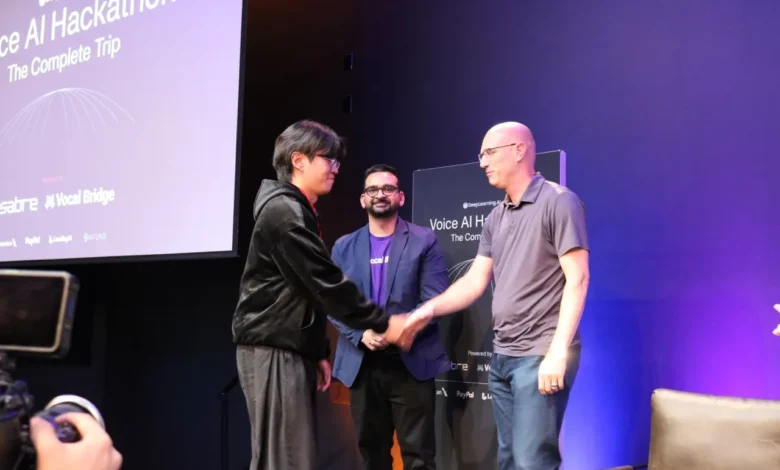
Developers participating in a Sabre hackathon last Saturday didn’t build another search tool; instead, their winning artificial intelligence agents showcased a profound shift in AI’s potential for the travel industry. These sophisticated programs demonstrated capabilities far beyond conventional search, performing complex, real-world tasks such as autonomously calling hotels to secure answers unavailable online, consolidating disparate reservations into a unified itinerary, and dynamically rebuilding travel plans in the face of flight disruptions. The event, held at Sabre’s innovation hub, served as a potent demonstration of how AI could address the long-standing, fragmented challenges inherent in global travel.
For travel industry executives and technology leaders, the hackathon’s outcomes illuminate two critical, interconnected insights. The first is a clearer understanding of where AI agents may genuinely earn their keep: not in the perennially refined search box that the industry ceaselessly rebuilds, but in the intricate, offline, and often invisible coordination that occurs between fragmented systems. This "between-the-systems" operational complexity, historically managed manually by human agents, represents a significant frontier for AI-driven efficiency and customer satisfaction. The second, and perhaps more challenging, revelation is a stark reminder of a persistent industry paradox: while travel talks extensively about the transformative power of AI, it has yet to definitively settle the fundamental question of who gets to build on its foundational systems, particularly concerning the adoption of open development frameworks for AI integration.
The Hackathon’s Breakthroughs: Solving the Unseen Challenges
The Sabre hackathon, part of the company’s ongoing commitment to fostering innovation within the travel tech ecosystem, brought together diverse teams of developers, data scientists, and travel enthusiasts. The challenge was explicitly designed to push the boundaries of AI application beyond mere information retrieval, encouraging participants to tackle real-world pain points that plague both travelers and service providers. Utilizing large language models (LLMs) and various Sabre APIs, the teams were tasked with creating intelligent agents capable of complex decision-making and interaction.
One standout winning project, provisionally dubbed "ConciergeAI," demonstrated an agent capable of navigating the labyrinthine process of obtaining specific, unlisted hotel information. Instead of relying on static online data, this AI agent could initiate phone calls, interact with hotel staff, and extract precise details—such as whether a specific room type had a view of a particular landmark, or if an early check-in could be guaranteed for a non-elite guest—information crucial for high-touch customer service but rarely standardized or digitized. This capability directly addresses a common frustration point for travel advisors and discerning travelers alike, where the digital realm often falls short of specific, nuanced queries.
Another impressive solution, "Itinerary Weaver," tackled the persistent problem of fragmented reservations. A single trip often involves bookings across different airlines, hotel chains, car rental companies, and activity providers, each with its own booking reference and system. Itinerary Weaver showcased an AI capable of ingesting multiple booking confirmations, identifying logical connections, and synthesizing them into a single, coherent itinerary view, proactively identifying potential conflicts or gaps. This significantly reduces the manual effort required for travelers or agents to piece together complex trips and enhances the overall travel experience by providing a unified context.
Perhaps the most impactful demonstration came from "DisruptionSolver," an agent designed to manage real-time travel disruptions. When a flight is delayed or canceled, the ripple effect can be catastrophic, impacting connecting flights, hotel reservations, and ground transport. DisruptionSolver illustrated an AI’s ability to not only detect these disruptions instantly but also to automatically assess the impact on subsequent legs of the journey, search for alternative flights, rebook hotel nights if necessary, and even communicate new itineraries to the traveler, all within minutes. This kind of proactive, end-to-end re-accommodation capability promises to revolutionize how airlines and travel agencies handle irregular operations, potentially saving millions in operational costs and significantly mitigating passenger stress.
A Paradigm Shift: From Search to Operational AI
The implications of these hackathon results extend far beyond mere technological novelty. They signal a fundamental shift in the industry’s understanding of AI’s most valuable applications. For years, the focus of AI in travel has largely been on improving the search experience—making it faster, more personalized, and more predictive. While these advancements are valuable, they primarily address the discovery phase of travel. The Sabre hackathon, however, highlighted AI’s capacity to excel in the execution and management phases.
The travel industry, valued globally at trillions of dollars, operates on an intricate web of legacy and modern systems. A seemingly singular "trip" is, in reality, a mosaic of services provided by separate airline reservation systems, hotel property management systems, restaurant booking platforms, payment gateways, and ground-transport dispatch networks. Historically, travelers themselves, or their human service agents, have acted as the "middleware," manually carrying context and coordinating information between these disparate systems, often through tedious phone calls, emails, and repetitive data entry. This "offline, between-the-systems coordination" has remained a significant bottleneck, resistant to purely digital solutions that rely on standardized APIs alone.
"What we saw at the hackathon was AI stepping into this traditionally human-mediated gap," remarked a Sabre executive, speaking anonymously due to ongoing internal strategy discussions. "These agents aren’t just finding information; they’re acting on it. They’re performing complex, multi-step tasks that require understanding context, making decisions, and interacting with systems and even people, much like a seasoned travel agent would." This capability aligns with broader industry trends where AI is increasingly moving from analytical roles to operational ones, automating complex workflows and enhancing human productivity rather than merely augmenting search queries. According to a recent report by McKinsey & Company, generative AI could add trillions of dollars in value to the global economy, with a significant portion stemming from its ability to automate tasks that require language understanding and complex reasoning.
The Unresolved Question: Open Systems and AI Development
The second, harder-to-ignore takeaway from the hackathon points to a deeper, unresolved tension within the travel industry regarding AI: the debate over open systems. While the potential of AI is widely acknowledged, the industry has yet to settle who truly gets to build on its foundational systems, particularly concerning the integration of external AI tools and developer-led innovation.
The existing travel ecosystem is largely dominated by global distribution systems (GDSs) like Sabre, Amadeus, and Travelport, which serve as crucial intermediaries connecting airlines, hotels, and travel agencies. These systems, while incredibly robust and efficient, are often perceived as proprietary and, at times, rigid. The advent of powerful, versatile AI models, particularly LLMs, presents an opportunity for a new wave of innovation, but it also challenges the established paradigms of system access and data sharing.
"It was important that we had this event, that we started to change the mindset about travel being closed and shifting to open [tools], and being more available," stated a Sabre spokesperson, emphasizing the company’s intent behind the hackathon. This sentiment underscores a growing recognition within the industry that to fully harness the power of AI, a more open, collaborative approach to development and system access may be necessary. The winning AI agents, for instance, relied on the ability to interact with various data sources and potentially external communication channels, highlighting the need for flexible API access and interoperability.
However, the path to truly "open" systems in travel is fraught with challenges. Data security, privacy regulations (like GDPR and CCPA), the complexity of legacy infrastructure, and the competitive landscape all contribute to a cautious approach. Large players are hesitant to fully open their core systems to external developers without robust security protocols and clear governance. Yet, the rapid pace of AI innovation, much of which is happening outside the traditional travel tech giants, suggests that a closed approach risks stifling progress and limiting the industry’s ability to adapt.
Broader Impact and Implications
The hackathon’s results carry significant implications for various stakeholders across the travel spectrum:
- For Travelers: The most immediate benefit would be a dramatically improved, less stressful travel experience. Proactive disruption management, consolidated itineraries, and access to hyper-specific information could transform travel from a series of logistical hurdles into a seamless journey. This aligns with consumer expectations for personalized and effortless experiences, mirroring trends seen in other sectors like e-commerce and finance.
- For Travel Agents and Customer Service: Rather than replacing human agents, these AI tools are poised to empower them. By automating repetitive, time-consuming coordination tasks, AI can free up agents to focus on high-value, empathetic customer interactions, complex problem-solving that requires human intuition, and sales. This could lead to a significant increase in agent productivity and job satisfaction, shifting their role from data entry to strategic travel consultancy.
- For Airlines and Hotels: Operational efficiencies driven by AI agents could lead to substantial cost savings. Reduced call center volumes, faster resolution of irregular operations, and optimized resource allocation could directly impact profitability. Furthermore, the ability to offer more personalized and proactive service can enhance brand loyalty and customer retention in a highly competitive market.
- For the Industry at Large: The hackathon serves as a powerful proof of concept for the next generation of travel technology. It highlights the urgent need for greater interoperability, standardized data formats, and a more robust API economy to facilitate the integration of advanced AI solutions. It also intensifies the pressure on traditional GDS providers and other core infrastructure players to evolve their platforms to support more open and dynamic AI development.
Challenges and the Path Forward
While the potential is immense, several challenges remain. The ethical considerations surrounding AI, particularly data privacy and algorithmic bias, must be addressed proactively. Ensuring that AI agents make fair and equitable decisions, especially in disruption management, will be paramount. The quality and availability of data, as well as the ability to integrate with diverse legacy systems, will also be crucial for the widespread deployment of these advanced AI capabilities.
The Sabre hackathon represents more than just a showcase of technological prowess; it’s a clarion call for the travel industry to redefine its relationship with artificial intelligence. By demonstrating AI’s capacity to tackle the "offline, between-the-systems" coordination challenges, it has shifted the conversation from incremental improvements in search to transformative changes in operational efficiency and customer experience. The critical next step for the industry will be to navigate the complex waters of open system development, fostering collaboration and innovation while ensuring security and stability, ultimately unlocking the full potential of AI to create a truly seamless and intelligent travel ecosystem. The journey has just begun, and the destination promises to be revolutionary.