The global legacy of ancient Greek sculpture continues to captivate historians, archaeologists, and travelers alike, bridging a gap of millennia through its enduring portrayal of the human form, mythological narratives, and technical mastery. While classical antiquity is inextricably linked to the sun-drenched ruins of the Mediterranean, contemporary travelers planning a cultural itinerary may be surprised to learn that many of the world’s most celebrated sculptural masterpieces are housed far beyond the borders of Greece. Major cultural institutions across Western Europe and the United States—including the Louvre in Paris, the British Museum in London, the Vatican Museums, the Glyptothek in Munich, and the J. Paul Getty Museum in Los Angeles—hold significant portions of this classical heritage.

Understanding the distinction between original Greek bronzes, Hellenistic marble masterworks, and Roman-era copies is crucial for both art scholars and tourists. Centuries of political upheaval, archaeological discoveries, and international acquisitions have distributed these artifacts across the globe. This comprehensive guide details where these monumental statues are located today, distinguishes between original works and later reproductions, and provides historical context for planning an educational journey through classical art history.
The Louvre Museum, Paris: Home to Hellenistic Marvels
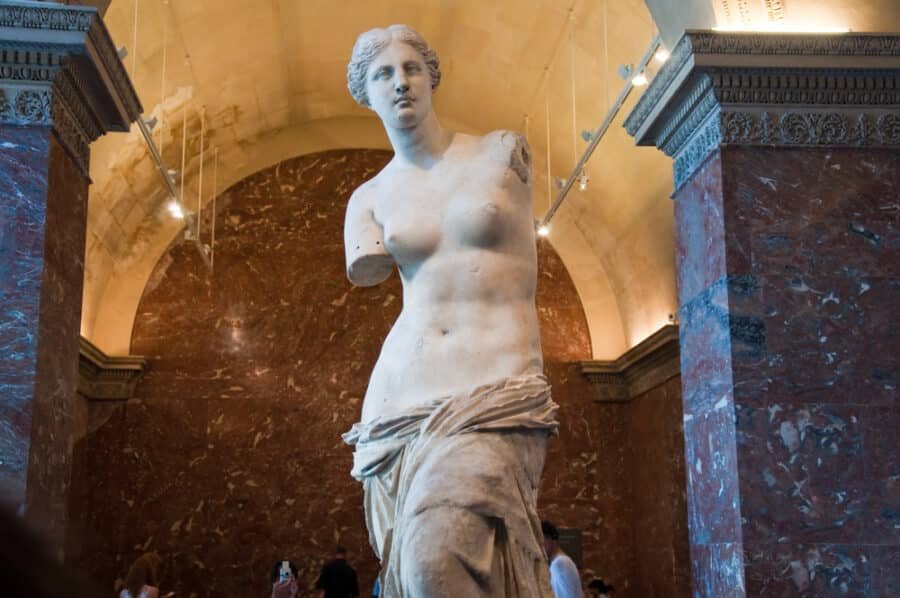
France’s premier cultural institution, the Louvre, holds some of the most recognizable and widely studied sculptures of the ancient world. Among its crown jewels is the Aphrodite of Milos, universally known as the Venus de Milo. Discovered on the Aegean island of Milos in 1820, this 203-centimeter marble sculpture is generally dated to the 2nd century BC, specifically between 160 and 110 BC. Although historically attributed by some scholars to Alexandros of Antioch, the exact authorship remains a matter of academic dispute. The statue is celebrated for its graceful composition and the enduring mystery surrounding the missing fragments of its arms and original setting.

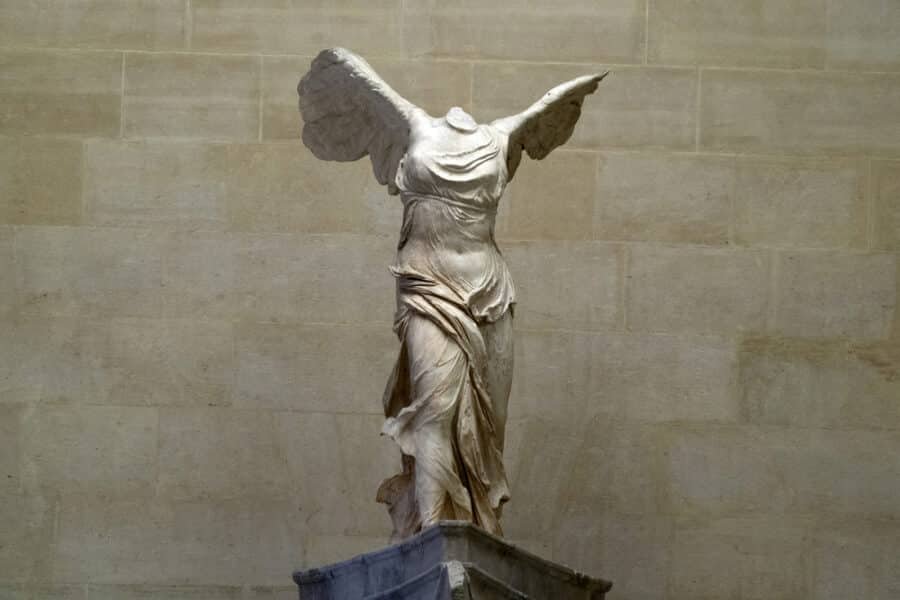
Another monumental Hellenistic sculpture housed in the Louvre is the Winged Victory of Samothrace, also referred to as the Nike of Samothraki. Crafted around 190 BC and discovered in fragmentary condition on the island of Samothrace in 1863, the statue depicts the goddess of victory descending upon the prow of a warship amidst fierce sea winds. Though sometimes linked by art historians to the sculptor Pythokritos of Rhodes, the precise creator remains unverified. The Louvre also displays the Lady of Auxerre, an archaic limestone kore dating back to 650–625 BCE. With an unknown provenance and mysterious archaeological origins, it serves as an early example of the Daedalic sculptural style characterized by stiff, stylized features.
National Archaeological Museums and On-Site Collections in Greece
Greece remains the epicenter for experiencing classical statuary within its original geographic and cultural context. In Athens, the National Archaeological Museum and the Acropolis Museum safeguard pivotal works that chart the evolution of Greek art from the Archaic period through the Classical era.
The Acropolis Museum hosts the Peplos Kore, carved around 530 BCE from Parian marble. Discovered during excavations of the Athenian Acropolis, modern scientific analysis has revealed microscopic traces of the vivid polychrome pigments that originally coated the marble, dispelling the modern misconception that ancient Greek art was strictly monochromatic. Also located in Athens is the Kritios Boy, dated to 480 BCE, which marks a revolutionary turning point in art history as the first known statue to utilize contrapposto—a weight-shift stance that introduced naturalistic asymmetry to the human form.
Further highlights in Athens include the Dipylon Kouros (The Sacred Gate Kouros), dated to approximately 600 BC and carved from Naxian marble, and the Moschophoros (The Calf Bearer), dating to 560 BC. The National Archaeological Museum in Athens also preserves the Artemision Bronze—a magnificent original bronze dating to roughly 460 BC that depicts either Zeus or Poseidon poised to hurl a weapon—alongside the Varvakeion Athena, a Roman-era marble statuette serving as the most faithful surviving miniature copy of Phidias’s lost chryselephantine masterpiece, the Athena Parthenos.
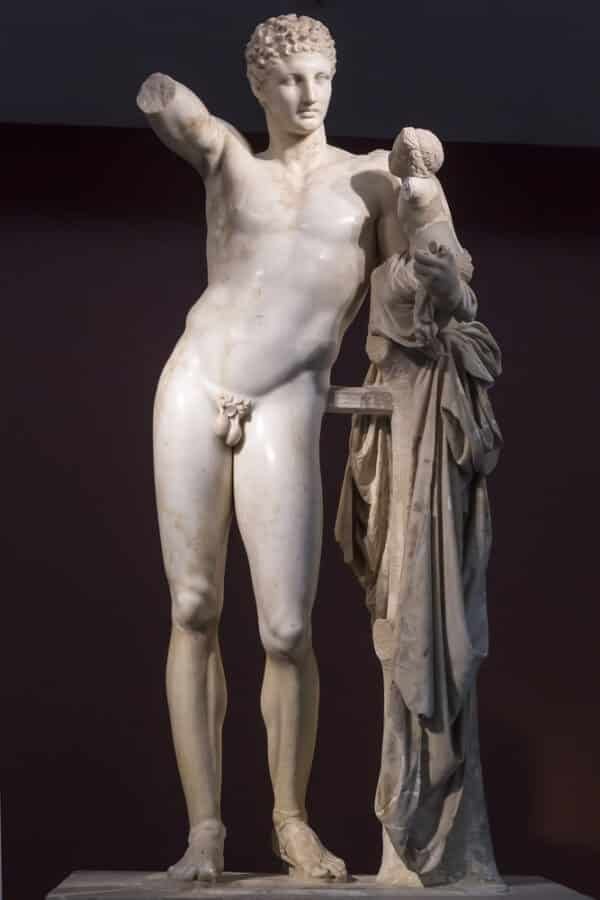
Outside the capital, Delphi and Olympia offer profound archaeological encounters. The Delphi Archaeological Museum houses the Charioteer of Delphi (Heniokhos), a rare and exceptionally well-preserved bronze sculpture dating to 478–474 BC that commemorates a chariot victory at the Pythian Games. Delphi is also home to Kleobis and Biton, monumental archaic twin statues signed by the sculptor Polymedes of Argos and dated to circa 580 BCE. Meanwhile, the Archaeological Museum of Olympia features the Hermes and Dionysus of Praxiteles, a 4th-century BCE masterwork found in the Temple of Hera, celebrated for its subtle play of light, shadow, and emotional nuance.
Italian Institutions: Rome, Naples, and Reggio Calabria
Italy boasts an extraordinary repository of classical sculptures, many of which are Roman-era copies that preserve the compositions of lost Greek bronze originals.
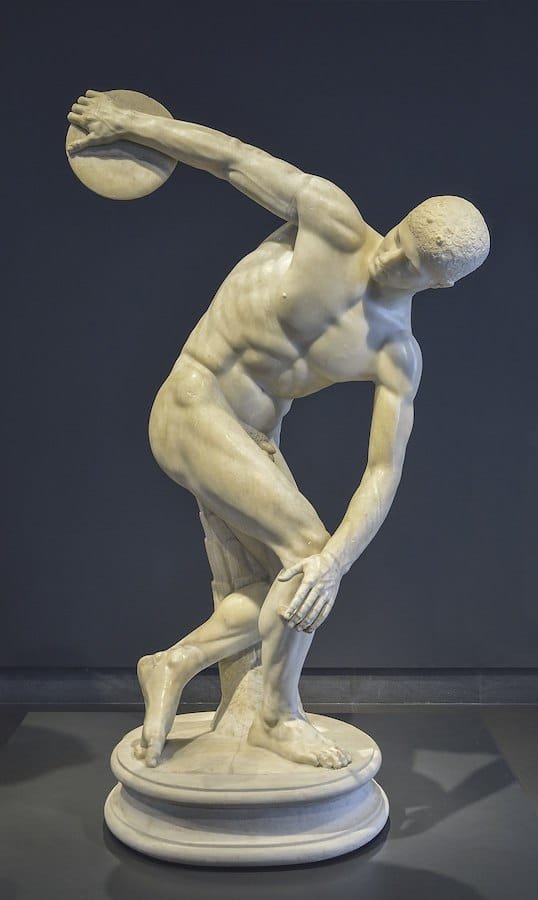
The National Roman Museum, operating across multiple venues in Rome such as Palazzo Massimo alle Terme, displays the iconic Discobolus (Discus Thrower). While the 5th-century BCE bronze original by the sculptor Myron is lost, surviving Roman marble copies capture the explosive athletic energy of a thrower moments before release. The museum is also home to the Boxer at Rest (The Terme Boxer), a Hellenistic bronze sculpture dating to the 1st century BC. Discovered on the Quirinal Hill in Rome, the statue depicts a battered athlete with meticulous detailing of facial bruises, cuts, and cauliflower ears, offering an unvarnished psychological portrait of ancient sport.
In southern Italy, the National Archaeological Museum of Naples houses the Farnese Hercules. This colossal Roman marble statue, signed by the artist Glykon, was based on a Greek original by Lysippos and portrays a weary Hercules leaning on his club after completing his arduous labors. Meanwhile, the National Museum of Magna Graecia in Reggio Calabria preserves the Riace Bronzes. Discovered by a recreational diver on the seabed off the coast of Calabria in 1972, these two full-size 5th-century BCE bronze warriors stand among the most important surviving examples of large-scale Greek metal casting.
International Collections: London, Munich, Berlin, and Los Angeles
Several key artifacts of Greek antiquity reside in major cultural hubs across Northern Europe and the United States.
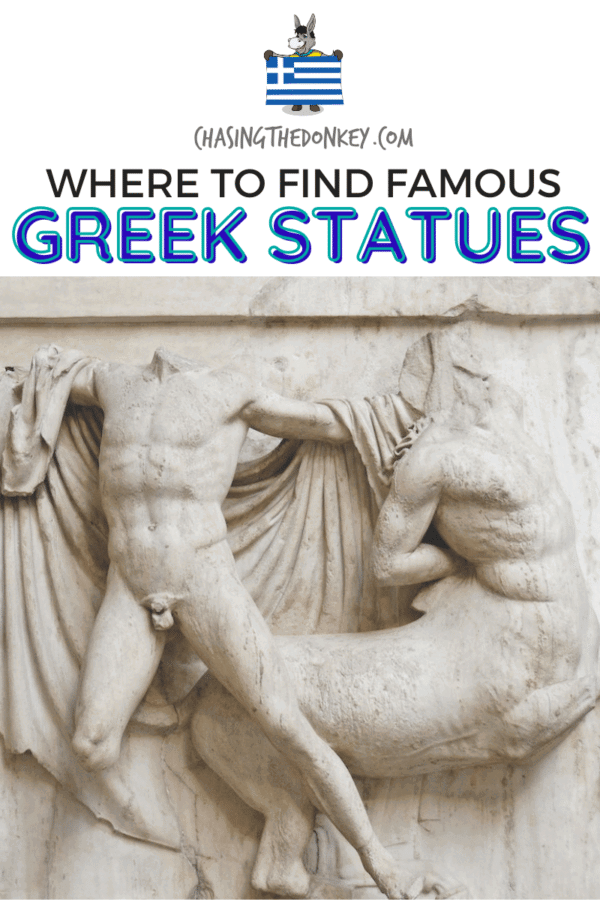
The British Museum in London holds the Parthenon Marbles, which include the iconic Parthenon Metopes—carved marble relief panels created between 447 and 438 BCE under the direction of Phidias. These architectural sculptures, depicting mythological battles, have been the subject of long-standing diplomatic and ethical debates regarding cultural patrimony and the rightful location of transnational heritage.
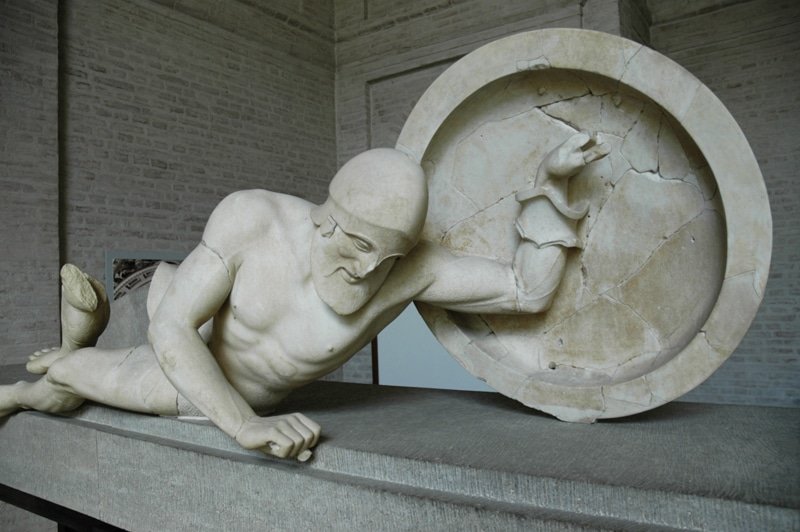
In Germany, the Glyptothek in Munich features prominent Hellenistic and Archaic works, including the Dying Warrior from the east pediment of the Temple of Aphaia on the island of Aegina, dated to 505–500 BCE. The Munich museum also displays the Barberini Faun, a striking Hellenistic marble sculpture of a sleeping satyr that illustrates the artistic shift toward emotional realism and anatomical complexity.
Across the Atlantic, the J. Paul Getty Museum in Los Angeles exhibits Leda and the Swan, a 1st-century AD Roman marble sculpture derived from a 4th-century BCE Greek original attributed to Timotheos, depicting the mythological union of Zeus and Leda.
Lost Masterpieces Known Only Through Historical Record
Not all legendary ancient works survive, even in copy form. The Colossus of Rhodes, one of the Seven Wonders of the Ancient World, was a massive bronze statue of the sun god Helios erected on the island of Rhodes in the 3rd century BC. Toppled by a devastating earthquake in 226 BC, no confirmed physical remains survive today, though visitors to modern Rhodes can explore the historical topography associated with its ancient harbor setting.
Similarly, the Statue of Zeus at Olympia, created by the master sculptor Phidias around 435 BCE, vanished entirely in antiquity. Standing roughly 12.4 meters tall, this chryselephantine marvel constructed of ivory and gold plates over a wooden framework sat within the Temple of Zeus before being lost to history.
Summary Checklist for Cultural Travelers
| Statue / Work | Primary Location | Historical Classification & Notes |
|---|---|---|
| Venus de Milo | The Louvre, Paris | 2nd century BC marble; disputed attribution to Alexandros |
| Winged Victory of Samothrace | The Louvre, Paris | c. 190 BC Hellenistic marble; sculptor unverified |
| Discobolus | National Roman Museum, Rome | Roman marble copies of Myron’s lost 5th-century BCE bronze |
| The Riace Bronzes | National Museum, Reggio Calabria | Original Greek bronze warriors, c. 460–450 BCE |
| Charioteer of Delphi | Archaeological Museum, Delphi | Original bronze victory monument, c. 478–474 BCE |
| Parthenon Metopes | The British Museum, London | Mid-5th-century BCE architectural relief panels |
| Boxer at Rest | National Roman Museum, Rome | Hellenistic bronze original, c. 100–50 BC |
| Colossus of Rhodes | Rhodes (Site Context Only) | Destroyed by earthquake in 226 BC; no physical remains survive |
Related posts: