Bay Area Activists Launch Burma Spring Benefit Film Festival to Support Myanmar’s Democracy Movement Amid Ongoing Crisis

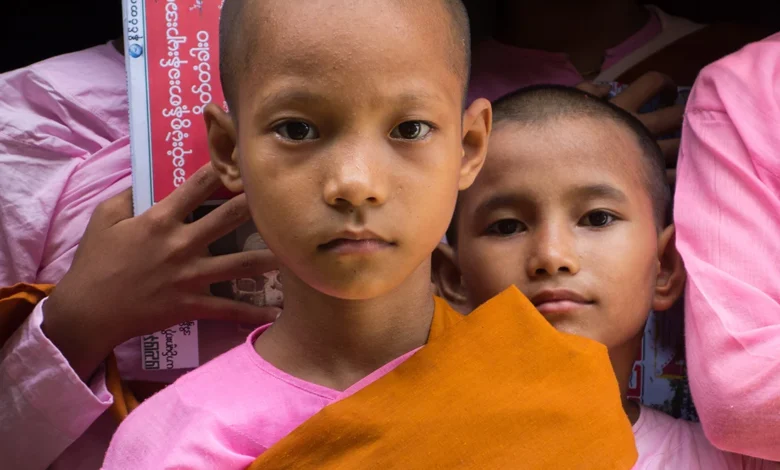
The San Francisco Bay Area has emerged as a vital hub of international solidarity in response to the severe humanitarian and civil rights emergency unfolding in Myanmar. Driven by an urgent desire to support the Southeast Asian nation’s non-violent democracy movement, local activists, artists, and filmmakers have organized the Burma Spring Benefit Film Festival. Streaming online, the festival runs from June 3 through June 20, offering global audiences a deeply curated selection of films alongside daily live discussions. All net proceeds generated from the event are slated to directly support grassroots humanitarian organizations operating inside Myanmar, providing essential aid to those resisting military rule. While ticket purchases and streaming access are tied to donations, organizers have made contributions optional to ensure the broadest possible audience can engage with the programming.
Featuring a robust lineup of over thirty films originating from or focusing on Myanmar—historically known as Burma—the festival aims to honor the resilience of ordinary citizens. Organizers describe the showcase as a tribute to the courage and dignity of the populace as they work non-violently to reclaim control of their nation’s political destiny. The cinematic offerings span documentaries, short films, and fictional dramas, tackling a wide spectrum of critical themes. These include fundamental human rights, environmental conservation, the complex dynamics of ethnic minority groups, traditional Buddhism, LGBTQ+ rights, and pressing women’s issues.
The Genesis and Leadership of the Festival
The realization of the Burma Spring Benefit Film Festival is the result of a collaborative grassroots effort spearheaded by a dedicated volunteer committee. The organizing team brings together a diverse array of academic, artistic, and community leaders with deep ties to the region.
Among the primary organizers is Kenneth Wong, a Burmese-American author, translator, and Burmese language instructor at the University of California, Berkeley. He is joined by Gaetano Kazuo Maida, executive director of the Buddhist Film Foundation; award-winning documentary filmmaker Ellen Bruno; and Jeanne Marie Hallacy, a filmmaker and director specializing in digital storytelling projects for refugees and migrant youth. The committee also features Hozan Alan Senauke, abbot of the Berkeley Zen Center, and Gregg Butensky, operations director of Kirana Productions, co-founder of Ethical Traveler, and principal at Code Refactory.
Reflecting on his connection to the country, Maida noted that he was initially drawn to Burma by its rich historical traditions of Buddhism and the breathtaking architectural expanse of the Bagan valley temples. However, Maida emphasized that the expanding resistance against the military government over recent years has revealed a much broader and multifaceted society. The resistance, he noted, has illuminated the incredible diversity of Burma, encompassing numerous ethnic communities, religions, languages, and creative expressions. The Burma Spring Benefit Film Festival seeks to embrace this rich mosaic while raising international awareness and vital financial support for the pro-democracy movement.
A Cinematic Exploration of Resistance and Resilience
The festival’s programming bridges historical struggles with contemporary acts of defiance, offering viewers a comprehensive look at decades of political turmoil. Among the notable selections is the short documentary Burma Spring 21, a collaborative project capturing the immediate aftermath of the 2021 military coup and the birth of the nationwide Civil Disobedience Movement (CDM).
Kenneth Wong highlights the profound educational value of pairing this contemporary work with classic documentation of past uprisings. Watching Burma Spring 21 alongside Burma VJ, a renowned documentary chronicling the courageous video journalists who documented earlier crackdowns before the widespread adoption of digital technology, provides audiences with a striking contrast. It illustrates how methods of documentation and resistance have evolved across decades, even as the oppressive tactics of the regime have remained stubbornly consistent.
Other powerful selections include I Am Rohingya: A Genocide in Four Acts, a feature wherein fourteen young refugees courageously re-enact the harrowing experiences of their families during the systematic persecution and violence directed against Burmese Muslims. In The Black Zone, the camera follows the perilous, covert journey of a medical team struggling to deliver humanitarian aid amidst active combat zones in the dense jungles of Burma. Meanwhile, A Peaceful Land documents the ongoing struggles of rural farmers resisting aggressive government agricultural campaigns that have historically led to widespread land confiscations and forced labor practices.
Panel Discussions and Political Context
Complementing the film screenings, the festival features a series of daily speaker forums and panel discussions designed to contextualize the crisis. Key sessions include panels on Myanmar Diaspora and the Milk Tea Alliance, Refugees and the Humanitarian Crisis, and a specialized forum featuring members of the National Unity Government (NUG), which was established by elected lawmakers in defiance of the military junta.
Another critical discussion, titled Ethnic Nationalities and the Rohingya: A Search for Justice and Peace, addresses a transformative shift in Burmese society. According to Wong, the events of the coup have forced the majority Bamar population to experience firsthand the brutality of the military. This shared trauma has significantly narrowed the historical divide between the urban majority and ethnic minority populations, many of whom have endured decades of state-sponsored violence in remote border regions far from major metropolitan centers.
Chronology of the Crisis: The February 2021 Coup
To fully understand the urgency driving the Burma Spring Benefit Film Festival, it is necessary to examine the rapid deterioration of the nation’s political landscape. The current crisis stems directly from the military coup d’état staged in the early morning hours of February 1, 2021.
In a sudden move that shocked the international community, the armed forces—known locally as the Tatmadaw—overthrew the democratically elected civilian government. The takeover ousted civilian leader Aung San Suu Kyi, whose party, the National League for Democracy (NLD), had secured a decisive landslide victory in the November 2020 general election. The military justified its unconstitutional seizure of power by alleging widespread voter fraud, a claim thoroughly investigated and refuted by domestic and international election monitors, but which has become an increasingly familiar pretext for authoritarian power grabs globally.
Lee Morgenbesser, an expert on authoritarian politics in Southeast Asia at the School of Government and International Relations at Australia’s Griffith University, noted at the time that the coup abruptly terminated Myanmar’s deeply flawed, yet fragile, decade-long transition toward democratic governance.
Targeting of Cultural Icons and Civil Society
The morning of the coup marked the beginning of a sweeping crackdown on civil society, political leadership, and the arts. Among the first individuals detained by the junta were prominent figures such as President Win Myint and Min Htin Ko Gyi, the founder of the annual Human Rights Human Dignity Film Festival.
As the weeks progressed, the military’s net widened significantly, ensnaring cultural icons, journalists, and entertainers who used their public platforms to voice dissent. Wong points to the imprisonment of beloved comedian Zarganar, romantic comedy film star Min Lu—who was subsequently reported to be held in the notorious Insein Prison—and popular male model and actor Paing Takhon.
The artistic and filmmaking communities have faced particularly harsh retribution. Reports indicate that more than thirty poets have been imprisoned, with several killed in custody, while over one hundred professionals from the local film industry have been placed on military wanted lists. Hundreds of other citizens, ranging from prominent public figures to ordinary workers, have been forced into hiding to escape arbitrary arrest.
According to data compiled by the Assistance Association for Political Prisoners (AAPP), a prominent human rights monitoring organization, the human toll of the junta’s repression has been catastrophic. In the months following the coup, security forces killed well over 800 peaceful protesters, while nearly 12,000 individuals were arrested, arbitrarily detained, charged, or sentenced under draconian penal codes.
The Rise of the Spring Revolution
By May 2021, the swelling tide of public dissent had galvanized into a formidable show of collective force, transforming localized protests into a synchronized nationwide movement known as the Spring Revolution. Embracing the rallying cry, "Shake the world with the voice of Myanmar people’s unity," citizens from all walks of life rejected military governance through widespread strikes, work stoppages, and non-violent civil disobedience.
Wong emphasizes that Myanmar’s creative community has played an extraordinary role in this resistance. Filmmakers, actors, and musicians have not merely offered moral support from the sidelines; they have consistently placed themselves on the front lines of the movement, bearing the heaviest costs for their defiance.
While the 2021 coup served as the immediate catalyst for the current uprising, analysts note that decades of unresolved sociopolitical grievances created a fertile environment for systemic upheaval. The failure of previous administrations to address ethnic conflicts, economic inequality, and institutional corruption laid the groundwork for the widespread rejection of military rule. In recognition of this struggle, international artists and activists, particularly those within the Bay Area diaspora, have mobilized to amplify Burmese voices and document the ongoing atrocities.
Looking Beyond the Headlines: The Cultural Heart of Burma
While the Burma Spring Benefit Film Festival confronts harsh contemporary realities, organizers are equally committed to showcasing the enduring cultural heritage of the nation. Wong expresses a strong desire to reframe public perception, ensuring that global audiences view Burma as much more than a geographical site of violence, military oppression, and international isolation.
In reflecting on the country’s profound cultural legacy, Wong paints a vivid picture of its historical and literary significance. He recalls it as the land that inspired George Orwell to write his seminal anti-colonial novel, Burmese Days; a place where citizens dressed in vibrant sarongs and sweat-stained garments spend hours in neighborhood teashops debating literature and poetry; and a society where traditional spirit mediums dance in ecstatic trances amidst offerings of whiskey made by devoted worshippers.
Looking toward the future, organizers remain hopeful that the resilience of the population will ultimately prevail. Wong anticipates that in the foreseeable future, when the military’s weapons are finally silenced and citizens no longer live under the constant threat of state violence, international audiences who first encountered Burma through the prism of this film festival will have the opportunity to experience the nation in its entirety—discovering an enchanting, multifaceted country far beyond the tragic confines of daily news headlines.
Related posts: