The Ethics of Indigenous Tourism: How Social Media and Content Creation Are Reshaping Cultural Exchange

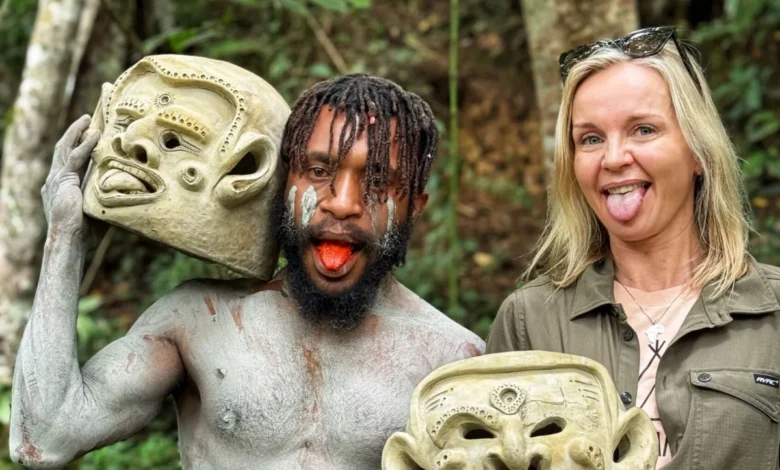
The rapid expansion of global tourism, paired with the omnipresence of digital media and smartphones, has fundamentally transformed how travelers interact with remote populations. While the democratization of travel has allowed individuals to explore previously inaccessible regions, it has also intensified a deeply troubling ethical dilemma. At the heart of this issue is a critical question facing modern explorers: Where is the line between meaningful cross-cultural exchange and the commodification of human beings for social media content?
This tension is felt acutely by Indigenous communities worldwide, who are increasingly finding their daily lives, sacred traditions, and identities packaged into viral videos and bite-sized digital entertainment. Anniina Sandberg, a cultural anthropologist and the founder of Visit Natives, has spent more than two decades examining this delicate dynamic. Drawing from extensive fieldwork alongside communities such as the Maasai and Hadzabe in Tanzania, the Sámi in Norway, Berber groups in Morocco, and Indigenous populations in Papua New Guinea, Sandberg argues that the rise of algorithm-driven content creation has introduced unprecedented vulnerabilities into vulnerable communities.
The Evolution of Indigenous Tourism: From Fieldwork to the Digital Frontier
To understand the current crisis in ethical travel, it is necessary to examine how global tourism has shifted over the last thirty years. In the late 20th century, international travel to remote Indigenous communities was largely the domain of anthropologists, specialized documentary film crews, and intrepid adventure travelers. Trips required considerable logistical planning, financial investment, and time, resulting in a low-frequency, high-impact model of interaction that—while not without its flaws—typically unfolded at the natural pace of the host community.
By the early 2010s, the proliferation of budget airlines, localized infrastructure development, and digital booking platforms dramatically lowered the barriers to entry for remote travel. Simultaneously, the rise of smartphones equipped with high-resolution cameras transformed every tourist into a potential media publisher. Platforms like Instagram, TikTok, and YouTube created powerful incentives—both social and financial—for travelers to capture striking, exoticized visuals.
For Indigenous groups, this shift meant transitioning from localized, community-managed tourism initiatives to becoming involuntary subjects of a global digital economy. Communities that once welcomed visitors for educational exchanges now found themselves contending with waves of travelers whose primary objective was securing engagement metrics rather than cultural understanding. Sandberg notes that while sustainable tourism discussions have historically concentrated on environmental preservation and basic socioeconomic impacts, the psychological and cultural fallout of social media remains severely underexamined.

The Mechanics of Exploitation: Sensationalism and Flattened Cultures
The core danger of modern content-driven tourism lies in the flattening of complex cultures into simplified, exoticized tropes. In the pursuit of clicks, views, and algorithmic visibility, digital creators frequently strip Indigenous practices of their historical, spiritual, and communal context.
For instance, Sandberg observed firsthand the online reaction following her digital documentation of a visit with the Hadzabe hunter-gatherers in Tanzania. Rather than prompting nuanced discussions about the hunter-gatherer lifestyle, environmental pressures, or indigenous land rights, a significant portion of the online discourse treated the community as an entertaining novelty. This dynamic encourages a dangerous form of performative voyeurism. Creators may intentionally frame traditions, clothing, or daily rituals to appear more primitive, ancient, or amusing to Western audiences, directly feeding into colonial stereotypes.
Such misrepresentation carries profound psychological and social consequences. When a culture is reduced to a digital spectacle, the humanity of its members is eclipsed by their utility as content. This creates an asymmetric relationship where the traveler extracts social or financial capital from the image of the Indigenous host, while the host community receives little to no reciprocal benefit—and often bears the burden of enduring reputational distortion.
Rethinking Interaction: Tourism Versus True Cultural Exchange
To combat the superficiality of modern itineraries, experts and ethical operators draw a sharp distinction between conventional tourism and genuine cultural exchange. Standard commercial tourism is typically built around convenience and efficiency: visitors arrive on a rigid schedule, observe or participate in a curated activity, photograph the experience, and depart. This transactional model often forces Indigenous communities to alter their normal routines to accommodate tourist expectations.
In contrast, community-led initiatives championed by organizations like Visit Natives reject fixed itineraries and day-trip models. Sandberg compares authentic cultural exchange to the intimacy of inviting a stranger into one’s home. By sharing meals, engaging in prolonged conversations, and participating organically in the daily rhythms of village life, travelers transition from spectators to temporary participants in a shared human experience.
This immersion-based approach requires time—often weeks or months of sustained presence. It allows relationships to develop naturally, fostering mutual respect and dismantling the power imbalances inherent in brief, extractive visits. By prioritizing long-term presence over transactional sightseeing, cultural exchange shifts from a consumption-based activity to an educational partnership.

The Complexities of Consent in the Age of Global Networks
A central pillar of ethical travel is the concept of informed consent. In traditional Western legal and social frameworks, consent is often treated as a binary transaction: a simple "yes" or "no" delivered in response to a direct question. However, when applied across cultural and digital divides, this model breaks down entirely.
In many remote Indigenous communities, residents may possess little to no comprehension of how social media algorithms operate, the permanence of digital data, or the vast, invisible scale of global internet audiences. A community member may readily grant permission for a photograph, assuming it is meant for a private family album or a small local publication, unaware that the image could be broadcast to millions of users worldwide, monetized by third parties, or stripped of context entirely.
Sandberg emphasizes that true informed consent in the digital age requires deep transparency, comprehensive education, and genuine agency. It demands that travelers and operators explain not just that a photo is being taken, but where it will live, who will see it, and how it might be used. Furthermore, ethical frameworks must include fair compensation models, ensuring that individuals whose images or cultural practices drive digital engagement share equitably in the economic value generated.
Industry Responsibility and the Need for Universal Codes of Conduct
While individual travelers bear personal responsibility for their conduct, experts stress that the burden of ethical oversight cannot rest on tourists alone. The broader tourism industry—including international agencies, booking platforms, and local operators—carries an obligation to establish and enforce rigorous ethical standards.
Many Indigenous communities face compounding systemic challenges, including the displacement of their traditional lands, climate pressures, economic marginalization, and the erosion of their livelihoods. These vulnerabilities can compel communities to accept tourism opportunities that offer immediate financial relief but compromise their long-term cultural and social autonomy.
To counteract this, the tourism sector must develop standardized, enforceable codes of conduct. These guidelines should mandate that tourism initiatives be strictly community-led, respecting local governance structures and prioritizing the collective well-being of the population over the demands of the consumer market. Operators must also take an active role in educating travelers before they set foot in a community, instilling a framework of respect, humility, and digital restraint.

Broader Implications for Global Travel
The intersection of Indigenous rights, tourism, and digital media sits at a critical crossroads. As smartphones become ubiquitous and internet connectivity extends to the most remote corners of the globe, the pressures on traditional societies will only intensify.
The implications of failing to address these challenges extend far beyond the tourism sector. Left unchecked, the commodification of Indigenous cultures accelerates the erosion of global diversity, replacing rich, living traditions with homogenized, commercialized caricatures designed to satisfy digital appetites. Conversely, establishing robust ethical frameworks can transform tourism into a powerful tool for cultural preservation, economic self-determination, and cross-cultural solidarity.
Ultimately, Sandberg’s work suggests that the future of ethical travel is not about restricting access or halting cross-cultural encounters, but about redefining the intent behind them. By approaching the world with humility, respecting local autonomy, and valuing human connection above digital validation, travelers can experience humanity in its richest, most diverse forms—ensuring that the world remains a vibrant mosaic of distinct cultures rather than a flattened backdrop for online content.
Related posts: