Learning to Travel Again: A Reflection on Health, Resilience, and the Evolution of Modern Exploration

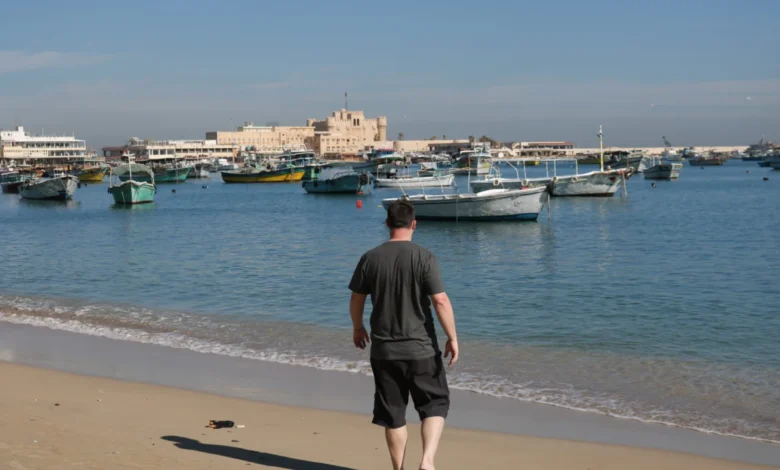
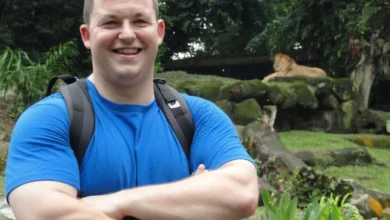
For nearly three decades, Michael Huxley, founder of the prominent travel resource Bemused Backpacker, advocated for a philosophy of urgency, urging his audience to prioritize global exploration over the deferred dreams of retirement or future stability. This long-held conviction, forged through years of independent travel across more than 150 countries, was recently subjected to a profound, life-altering test: a severe medical crisis that necessitated a total reassessment of what it means to engage with the world. Huxley’s journey from a high-intensity, career-driven traveler to a practitioner of "slow travel" serves as a case study in how physical health, psychological resilience, and the digital demands of modern content creation intersect in the lives of professional nomads.
The Chronology of a Life in Motion
Huxley’s career in travel began in his late teens, spanning a period of nearly thirty years. As a former professional in the medical sector—specifically emergency nursing and tropical medicine—his background provided him with a unique vantage point on human mortality. His professional life often brought him into contact with individuals expressing profound regret over postponed life experiences. This clinical exposure fueled his early advocacy for "taking the leap," a philosophy that saw him trekking across deserts, scaling volcanoes, and navigating complex logistical challenges with minimal planning.
The trajectory of his life changed abruptly with an unforeseen illness. While the specific nature of the medical event remains private, its impact was absolute. It interrupted a career that had, over sixteen years, successfully transitioned from personal exploration to a professional enterprise. For years, travel was the primary output of his work; his experiences were filtered through the requirements of documentation, photography, and the digital infrastructure of his platform. The recovery period acted as a forced cessation of this cycle, compelling a shift from the high-velocity, goal-oriented travel of his youth to a more deliberate, restorative mode of movement.

The Intersection of Content Creation and Personal Experience
The transformation of travel from an act of leisure to a professional obligation is a phenomenon increasingly observed within the digital creator economy. According to recent industry data, the "travel creator" sector has grown significantly, with many professionals reporting a "commodification of experience." Analysis suggests that when travel is tethered to professional output—such as search engine optimization (SEO) requirements, social media engagement, and the need for photographic documentation—the psychological reception of the environment shifts.
Huxley’s experience reflects this trend. As he moved through the world to provide content for his platform, his perception became inherently analytical. He was, by his own admission, constantly evaluating his surroundings for their utility as articles or photographic subjects. The illness acted as a catalyst that stripped away the necessity of this professional lens. Stripped of the capacity for high-exertion activity and the pressure to maintain a consistent digital presence, he was forced to confront the "ordinary magic" of travel—the act of observing without the intent to record or monetize.
Medical and Psychological Implications of Slow Travel
The shift toward "slow travel" is not merely a stylistic preference; it is increasingly recognized as a valid therapeutic approach for those recovering from major health events. By reducing the logistical burden of multi-destination itineraries, travelers often experience lower cortisol levels and improved cognitive processing.
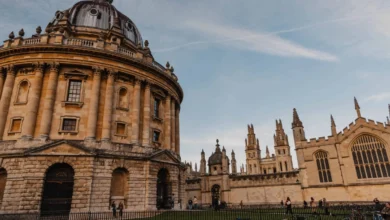
In clinical terms, the transition from high-intensity adventure—which involves high levels of adrenaline and physical strain—to a slower pace allows for what psychologists call "attentional restoration." For Huxley, this manifested in his return to locales like Seville and various Greek coastal towns. These environments, which did not demand physical conquest or exhaustive documentation, allowed for a recalibration of his sensory engagement with the world. He reports that the simple act of observing local customs, such as the social nuances of Greek coffee culture, provided a sense of continuity and connection that more rigorous travel had previously obscured.

Broader Impact on the Travel Industry
Huxley’s pivot highlights a broader shift in the travel industry. Post-pandemic, there has been a marked increase in demand for "meaningful" and "intentional" travel. Tourism boards and independent operators are observing a pivot away from "bucket-list" tourism—which emphasizes checking off destinations—toward immersive experiences that favor extended stays in a single location.
Industry analysts suggest this trend is partially driven by an aging demographic of travelers and a growing awareness of the environmental and psychological impacts of over-tourism. When a seasoned traveler like Huxley, who has visited 150 countries, chooses to prioritize slow, unhurried exploration, it carries weight in the travel community. It signals a move toward the preservation of the traveler’s agency, emphasizing that the value of travel is not found in the distance covered or the summits reached, but in the state of presence the traveler maintains.
Reconciling Past and Present
The challenge for many long-term travelers in the wake of a life-changing event is the reconciliation of their past identity with their current physical reality. Huxley acknowledges that he is not the same individual who once carried a heavy bergen across remote terrains. The "recovery" he describes is not a return to a pre-illness state, but an integration of new limitations into a new identity.
This process involves:

- Redefining Success: Shifting the metric of a trip from "productivity" to "subjective well-being."
- Accepting Physical Constraints: Moving from performance-based travel to accessibility-focused exploration.
- Decoupling Travel from Monetization: Rediscovering the intrinsic motivation for exploration that existed before the professionalization of his life.
Analysis of the "Digital Nomad" Reckoning
The phenomenon of creators stepping back from the digital sphere is becoming more prevalent as the long-term effects of content creation on mental health come to light. The pressure to maintain a constant, curated online persona can be detrimental, particularly during periods of health crisis. Huxley’s decision to distance himself from the noise of online life serves as a critique of the "always-on" culture that dominates the travel blogging industry.
By choosing to engage in journeys that "no one else will ever see," he has reclaimed the privacy of his experience. This is a significant development in the context of modern travel writing, where the value of a destination is often determined by its "Instagrammability." By opting out of this cycle, he provides a model for how to maintain a life of travel that is sustainable, authentic, and, most importantly, personal.
Conclusion: A New Way Forward
The narrative of Michael Huxley is one of transition. From the energetic, risk-taking backpacker of the early 2000s to the reflective, measured traveler of today, his journey mirrors the broader maturation of the travel industry itself. His insistence that travel does not have to be extreme to be meaningful is a necessary reminder in an era of hyper-curated, performance-based exploration.
As he continues to navigate his recovery, his focus remains on the "ordinary magic" of being present. For those who view travel as an essential component of the human experience, Huxley’s evolution offers a pragmatic roadmap: that when the world becomes overwhelming or when health demands a pause, the solution is not necessarily to stop traveling, but to change the way one moves through the world. By embracing a slower, more intentional pace, the traveler finds that the destination—and the act of arriving—becomes, once again, a source of genuine discovery rather than a task to be completed.